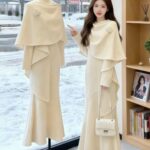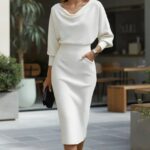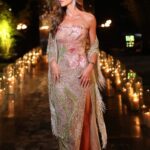
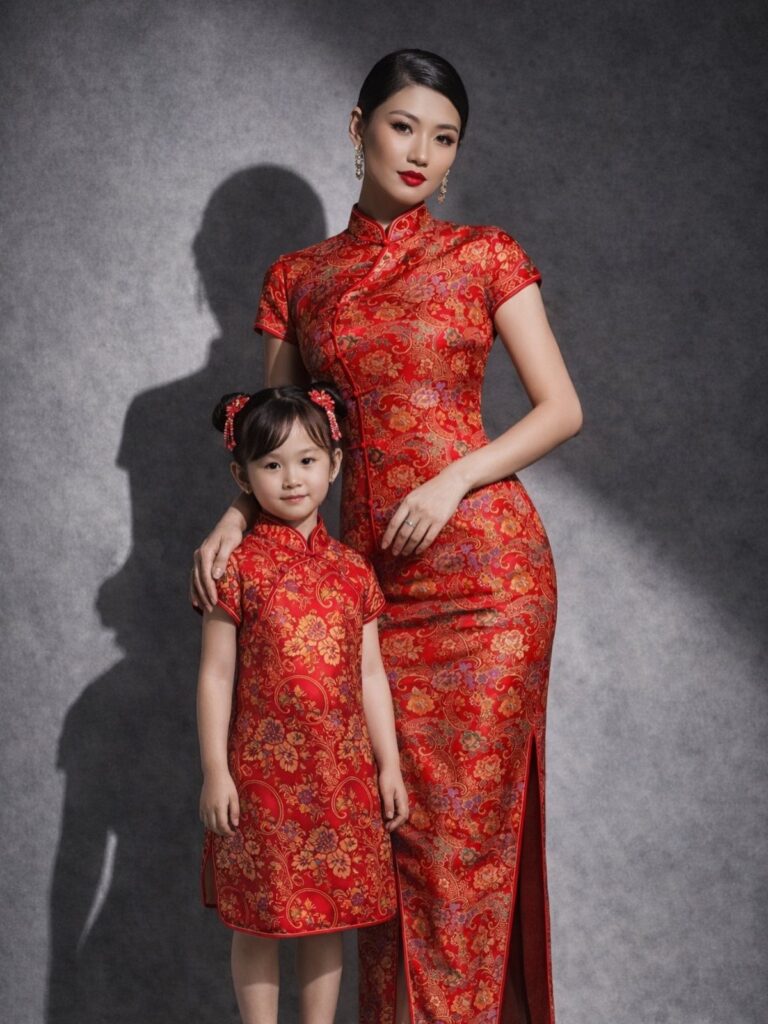
The qipao’s high mandarin collar and fitted bodice flatters straight and hourglass shapes, while Hanfu’s loose, layered robes with wide sleeves suit a wider range of body types through drape instead of shape.
Red dresses with floral embroidery carry the symbolism and work just as well for milestone events as they do for modern everyday wear.
1. Qipao (Cheongsam)
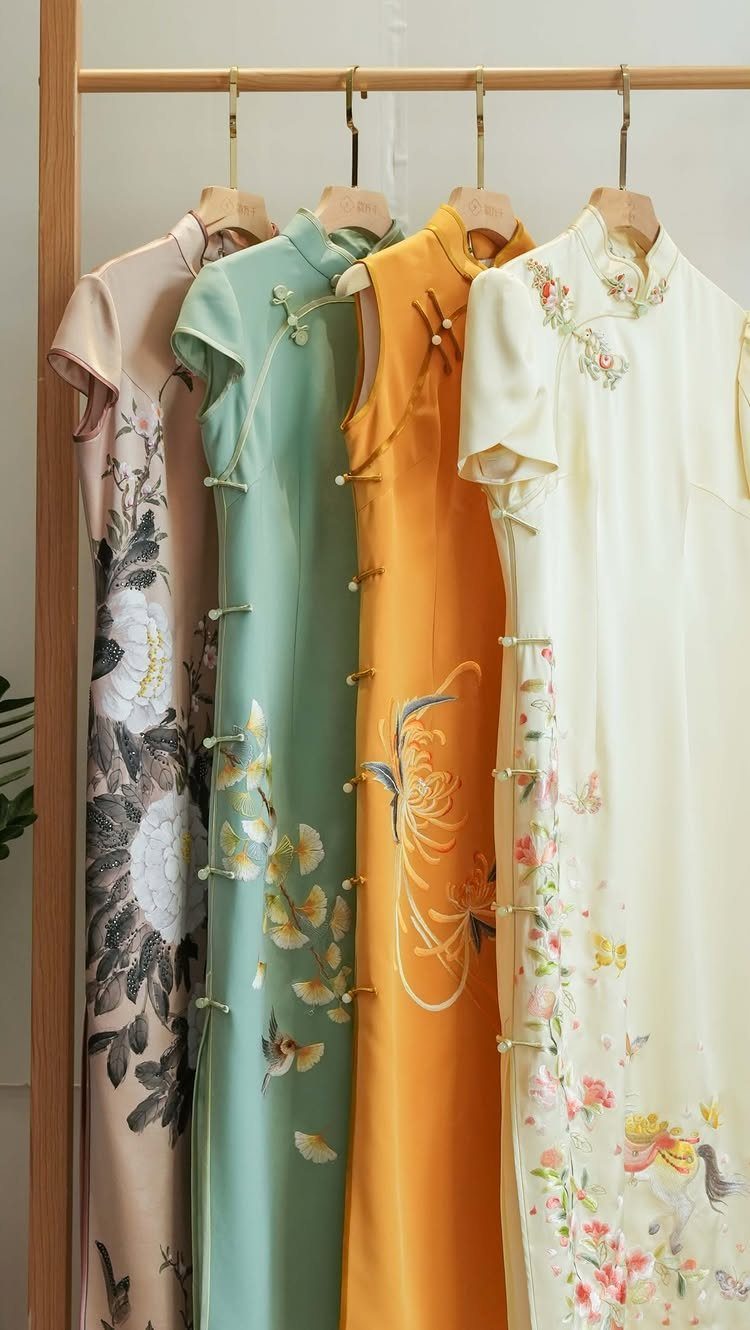
The qipao is the silhouette most people picture when they think of a traditional Chinese dress: high mandarin collar, fitted bodice, side slits that start at the knee or higher.
The close fit makes it flattering on straight and hourglass shapes alike, and the side slits keep it easy to move in despite the narrow cut.
Floral embroidery adds texture without overwhelming the shape, and the beige, green, orange and cream tones feel softer than the boldest red or black options while still reading formal enough for weddings or family events.
2. Hanfu
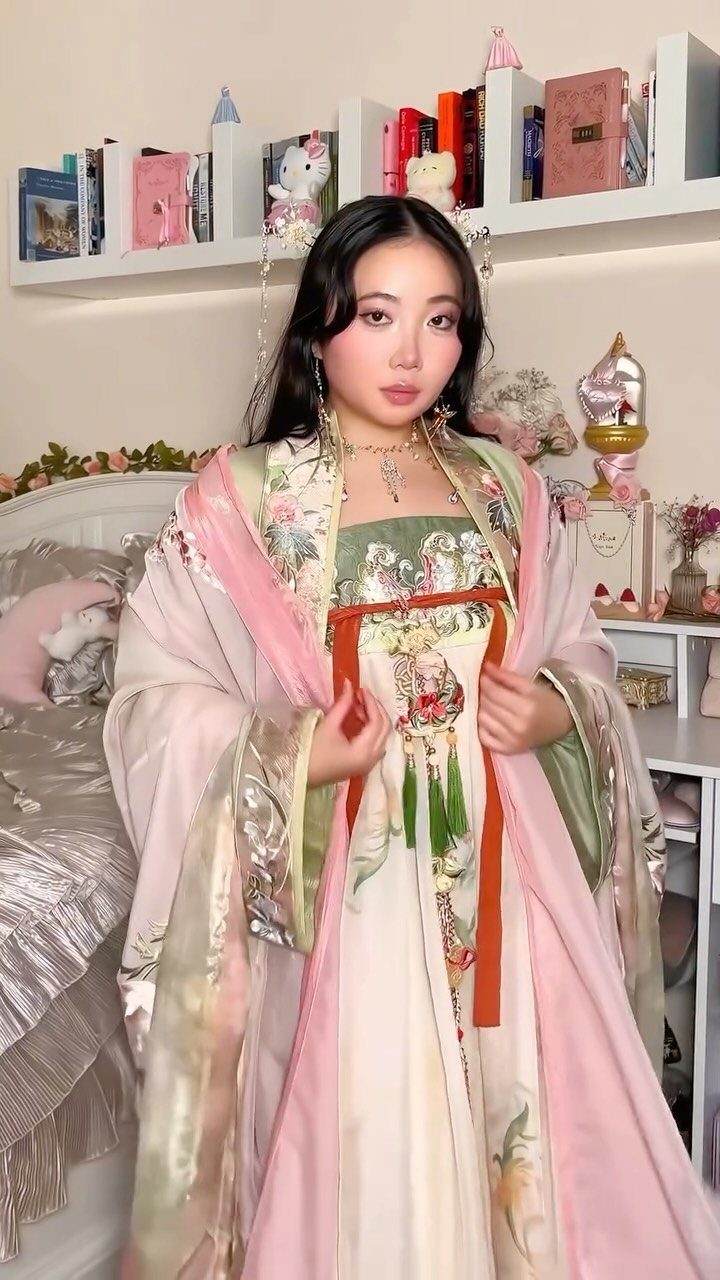
Hanfu predates the qipao by centuries and follows a completely different structure: loose, layered robes with wide sleeves and a sash or belt at the waist instead of a fitted bodice.
The silhouette prioritizes drape over shape, so it suits a wider range of body types and feels more forgiving than the qipao’s narrow cut.
The style builds through color rather than through embellishment, and layering pink and green tones is one way to show that depth.
The floral embroidery stays delicate, and the whole look reads traditional without feeling costume-heavy. Hanfu works for cultural events or formal occasions where you want something distinctly Chinese but less body-conscious.
3. Red Chinese Dress with Floral Patterns
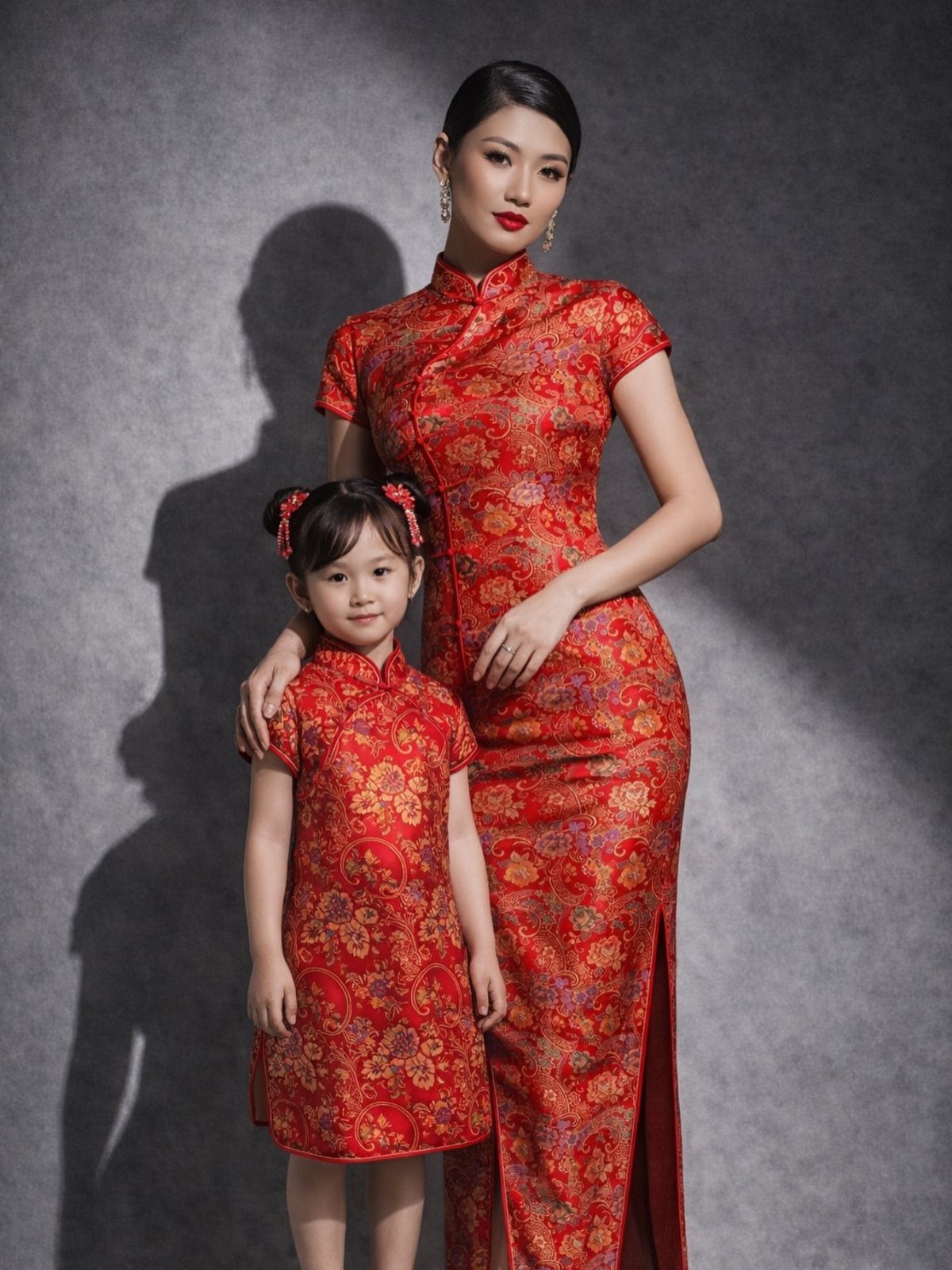
Red holds specific weight in Chinese culture: it signals celebration, luck and formality, which is why red dresses show up at weddings, New Year gatherings and other major family events.
Pairing red with floral embroidery softens the intensity while keeping the symbolic meaning intact.
The floral pattern keeps the red from reading too stark, and the qipao cut gives both dresses structure.
If you’re dressing for a milestone event or want something that photographs well in family portraits, this is the combination that delivers both tradition and visual impact.
4. Black Dress with Red Frog Buttons
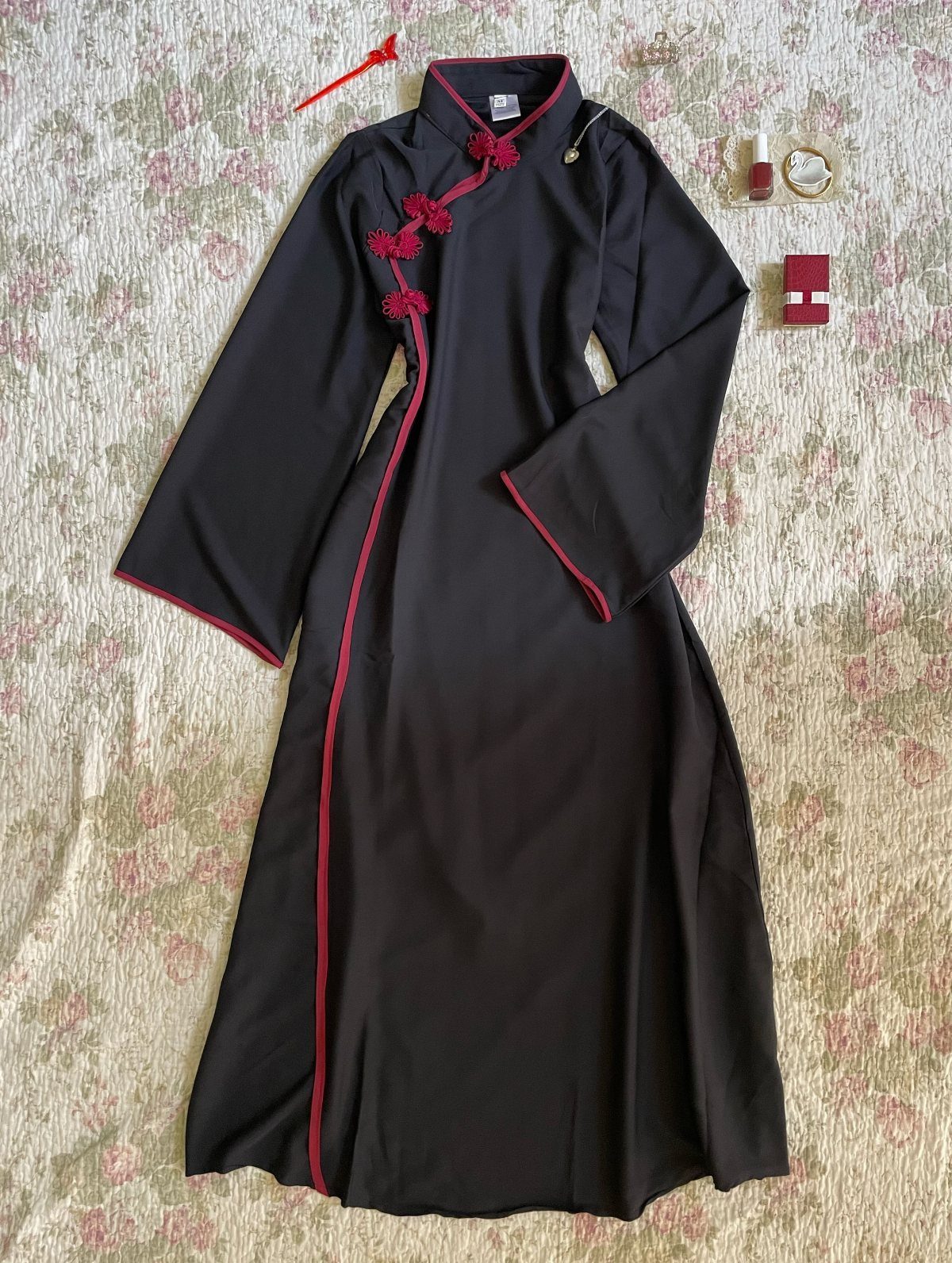
A black base makes the red details read sharper, and the frog buttons add the traditional closures without competing with the piping.
Long sleeves and a high neckline give the dress more coverage, which makes it easier to wear in cooler months or more conservative settings.
Black feels less formal than red in Chinese dress traditions, so this version suits work events, dinners or occasions where you want the silhouette without the full ceremonial weight.
The contrast piping keeps the dress from disappearing into itself, and the frog buttons stay visible enough to signal the style without overtaking the whole look.
5. Rose Gold Metallic Mandarin Collar Dress
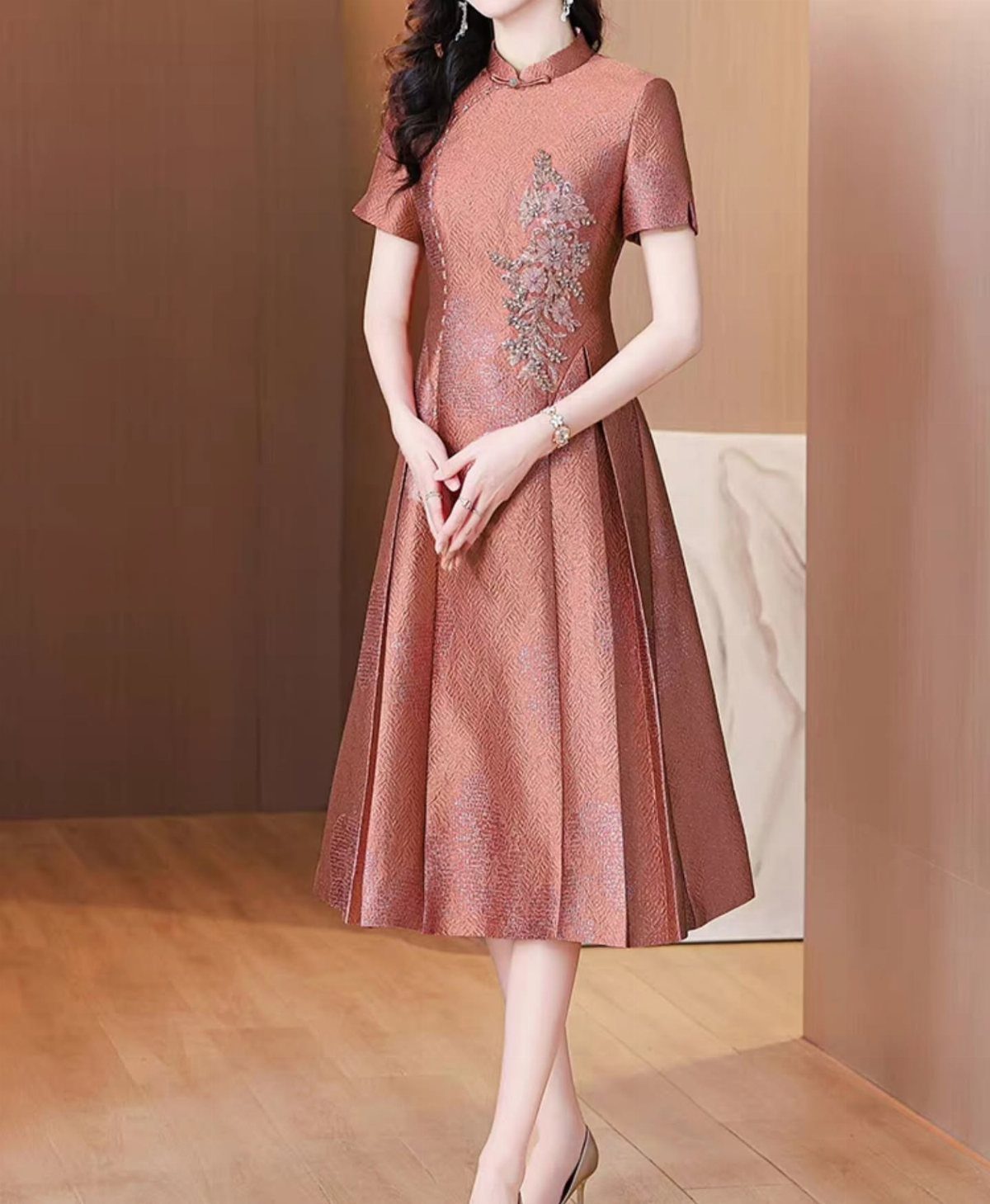
Metallic fabrics shift how a mandarin collar dress reads: the rose gold finish keeps the traditional neckline and embroidery but moves the whole look toward cocktail territory.
The knee-length hem and fitted shape make it easier to wear than floor-length options, and the chest embroidery adds detail without covering the fabric’s sheen.
This version suits evening events or parties where a full qipao would feel too formal.
The metallic finish catches light in a way solid fabrics don’t, so it photographs well and holds up in dim venues. Pair it with simple jewelry so the dress stays the focal point.
Occasions for Wearing
Qipaos appear most often at weddings, where red versions signal celebration and good fortune for the couple or their families.
Chinese New Year and Mid-Autumn Festival are the other occasions where you’ll see both qipaos and Hanfu worn deliberately, particularly by women who want to mark the cultural significance of the day.
The style has roots stretching back more than 4,000 years, and its influence spread beyond China to shape traditional dress in Korea, Japan and Vietnam. Today it shows up in festivals, wedding ceremonies and photo shoots rather than everyday wear.
A black qipao with red details or a metallic mandarin collar dress works for dinners, work events or evening parties where you want the neckline and closures without the full ceremonial presence of red silk and floral embroidery.
Materials Used
Silk is the material most tied to Chinese dress history. Legend credits Leizu, consort of Huangdi, with making cloth from silk over 4,000 years ago, and the fabric became the foundation for both qipao and Hanfu construction.
Satin and chiffon are the modern alternatives when you want the drape and sheen of silk without the cost or care requirements.
Satin works for fitted qipao styles where the fabric needs to hold a close shape and catch light at the same time.
Chiffon suits Hanfu layering, where the looser cut depends on how the fabric moves rather than how it clings.
Rose gold finishes keep the traditional collar and embroidery visible while adding the sheen that photographs well in dim venues.
The Hanfu (‘Han clothing’ — the majority of Chinese are of Han ethnicity) is the oldest of China’s traditional clothes. Legend traces it back to over 4,000 years ago when Huangdi’s consort, Leizu, made cloth with silk.
Styling Tips
A qipao with floral patterns or frog buttons holds enough detail on its own, and adding a heavy necklace competes with the neckline instead of balancing it.
Shoes matter more than you’d expect with a fitted qipao.
The side slits expose your shoes from mid-step onward, so block heels or simple pumps in a neutral color keep the silhouette clean. Hanfu’s floor-length robes hide most footwear, which gives you more flexibility.
Pair a black qipao or metallic mandarin collar dress with modern accessories if you’re wearing it outside a traditional event.
A structured clutch or contemporary earrings move the look toward cocktail territory without losing the collar and closures that define the style.
Frequently Asked Questions
What did traditional Chinese women wear?
Traditional Chinese women wore Hanfu and qipao, depending on the era. Hanfu features loose, flowing layers and wide sleeves held with a sash, a style worn for millennia before the fitted modern qipao silhouette emerged in 1920s Shanghai.
Each garment carried meaning shaped by Confucian ideals, social rank, and the dynasties that rose and fell around them.
Are cheongsam and qipao the same thing?
Yes, cheongsam and qipao refer to the same dress. Qipao translates to ‘Qi gown’ after the Manchu Qi people who wore it, and cheongsam is the Cantonese name for the same dress.
What is a Hanfu dress?
Hanfu is the oldest traditional Chinese clothing style, made up of loose, layered robes with wide sleeves and a sash or belt at the waist.
Some accounts credit its origins to Leizu, consort of the Yellow Emperor, who discovered silk weaving around 2700 BCE. The loose structure prioritizes drape over shape, making it more forgiving across different body types than the fitted qipao.
What are some good Chinese formal dresses for women?
Red qipaos with floral embroidery work for weddings and Chinese New Year celebrations, where the color signals luck and formality. Hanfu layering in pink and green tones reads formal for cultural events while feeling less body-conscious than a fitted qipao.