The silhouettes in this list run from short sequined minis and lace jumpsuits to floor-length satin gowns and embroidered lehengas, with options in traditional white, champagne, metallics and pastels.
1. Sparkly Short Wedding Dresses
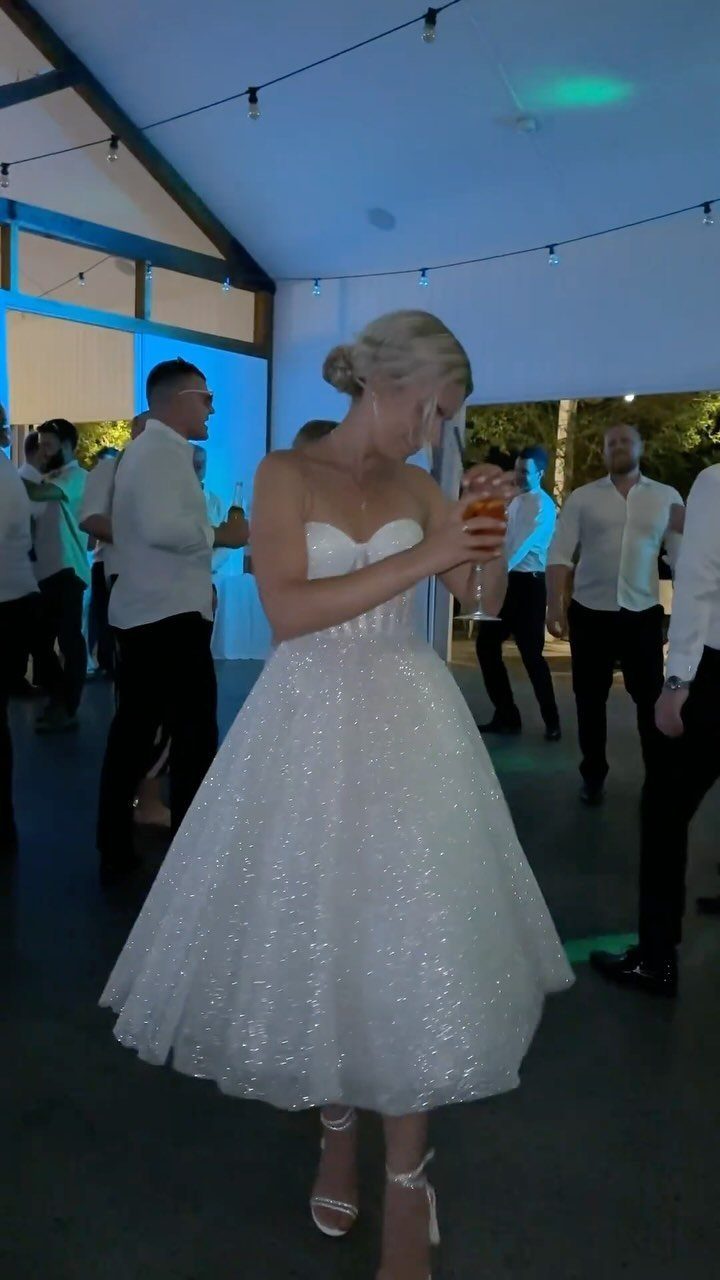
A short sparkly dress gives you all the shine and none of the fabric management once the ceremony wraps.
The sequins catch the light as you move, which matters more once dancing starts, and the shorter hemline gives you full range of motion on the dance floor.
Strapless silhouettes work well if you want to keep jewelry minimal or add a bold earring, and a fitted bodice with a flared skirt balances structure with comfort.
2. Feather-Trimmed Look
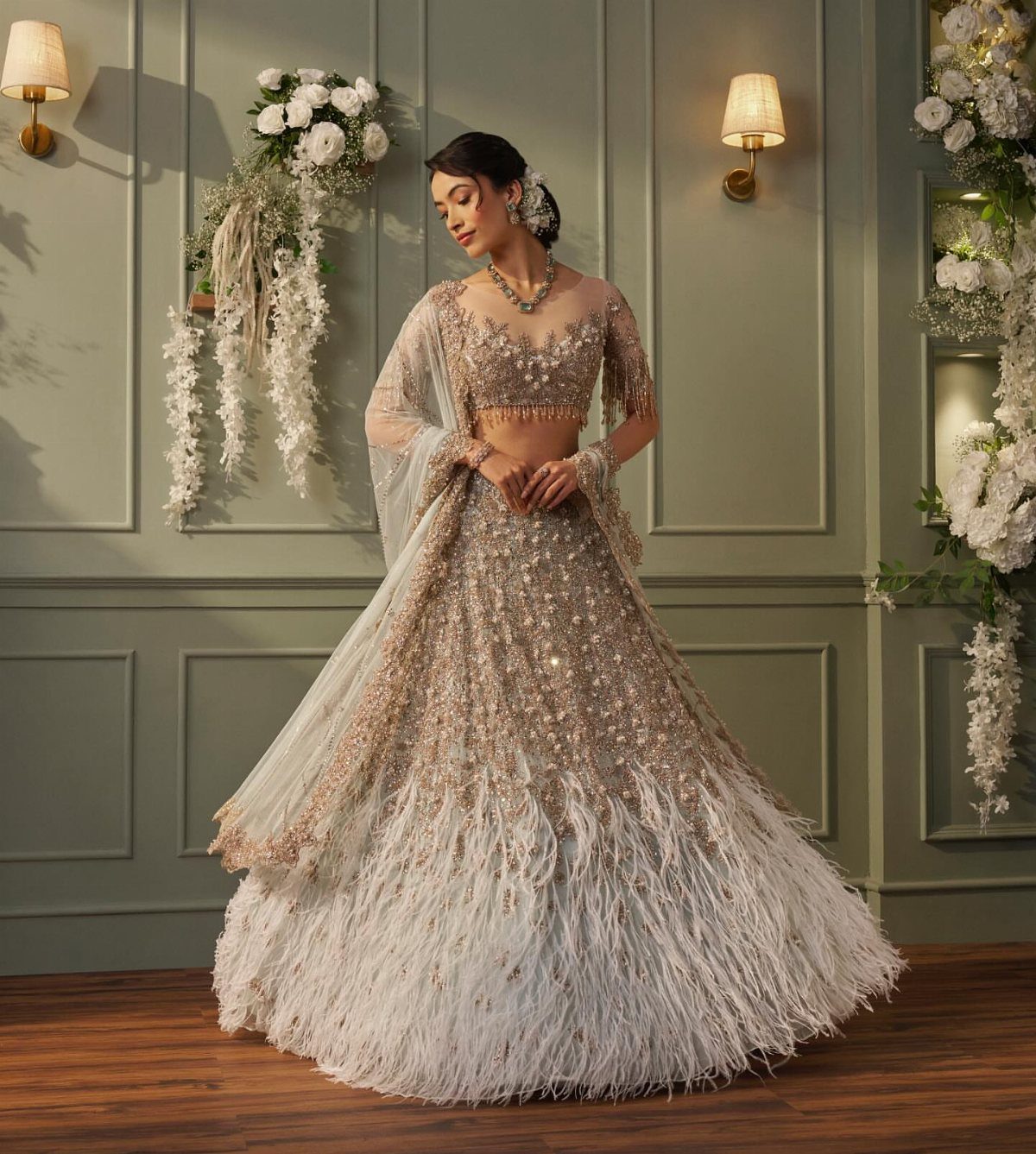
Feather trim reads as celebratory without relying on more sparkle or beading, and the texture gives movement to a reception outfit in a way that embroidery or sequins can’t match.
A feather-edged hem softens the transition between a structured top and the floor, especially when paired with a lehenga or gown that already has metallic or beaded detailing.
The feathers sit at the hemline here, which keeps them out of the way during dinner and adds drama when you’re standing or walking.
White or ivory feathers blend with traditional bridal tones, while dyed feathers in champagne or blush give a warmer finish.
3. After-Party Fashion Look
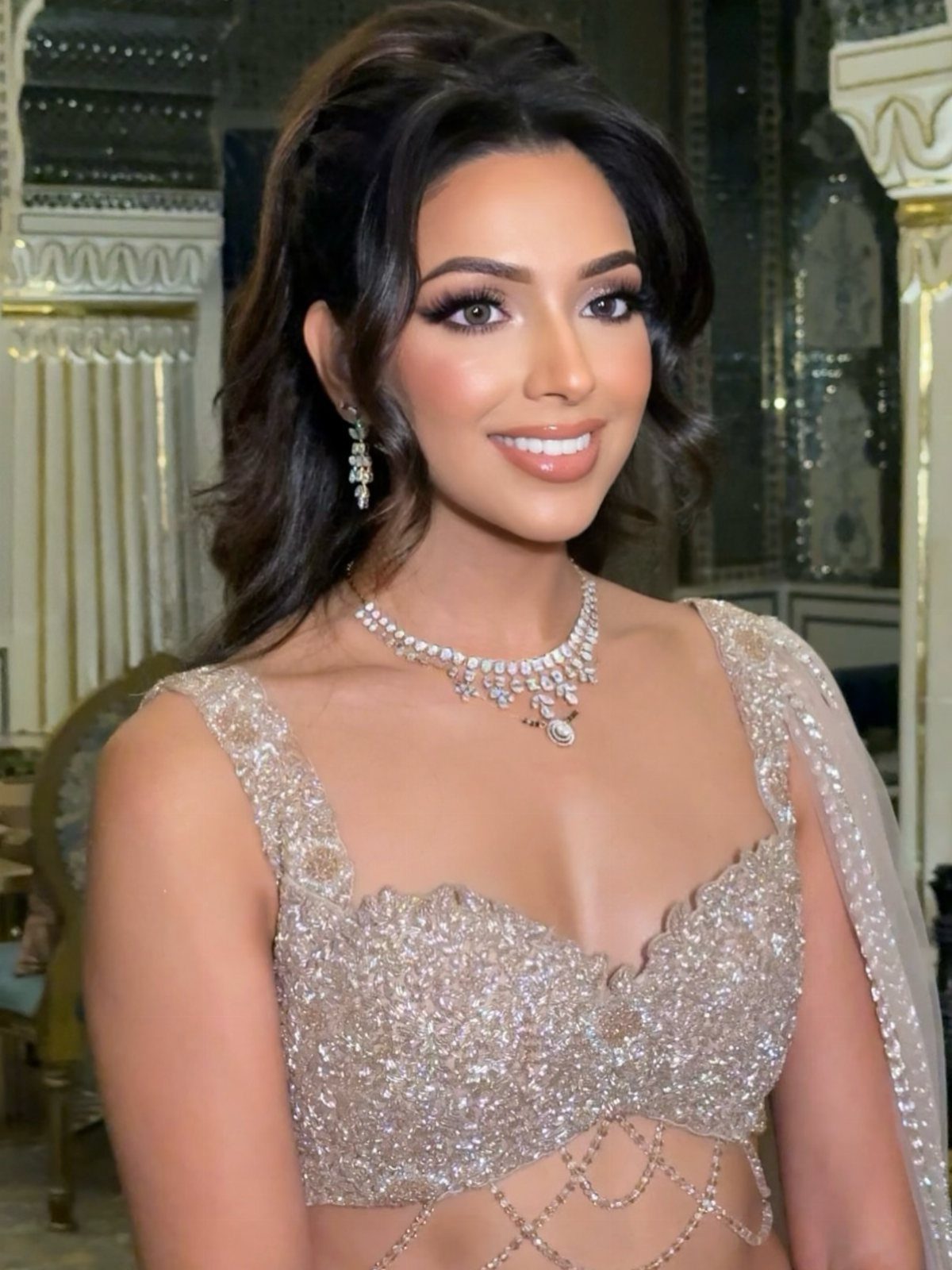
A beaded crop top paired with statement jewelry turns your reception look into something fashion-forward without abandoning bridal elegance.
The cropped silhouette works best with high-waisted bottoms, whether that’s a full skirt, tailored trousers, or a lehenga, and the exposed midriff gives the outfit a younger, more editorial feel.
Heavily embellished tops in gold or champagne tones reflect light well in low-lit reception venues, and the shorter length makes it easier to move and dance.
Pair it with layered necklaces or a choker to fill the space between the neckline and your collarbone.
4. Statement Sleeves Reception Dress
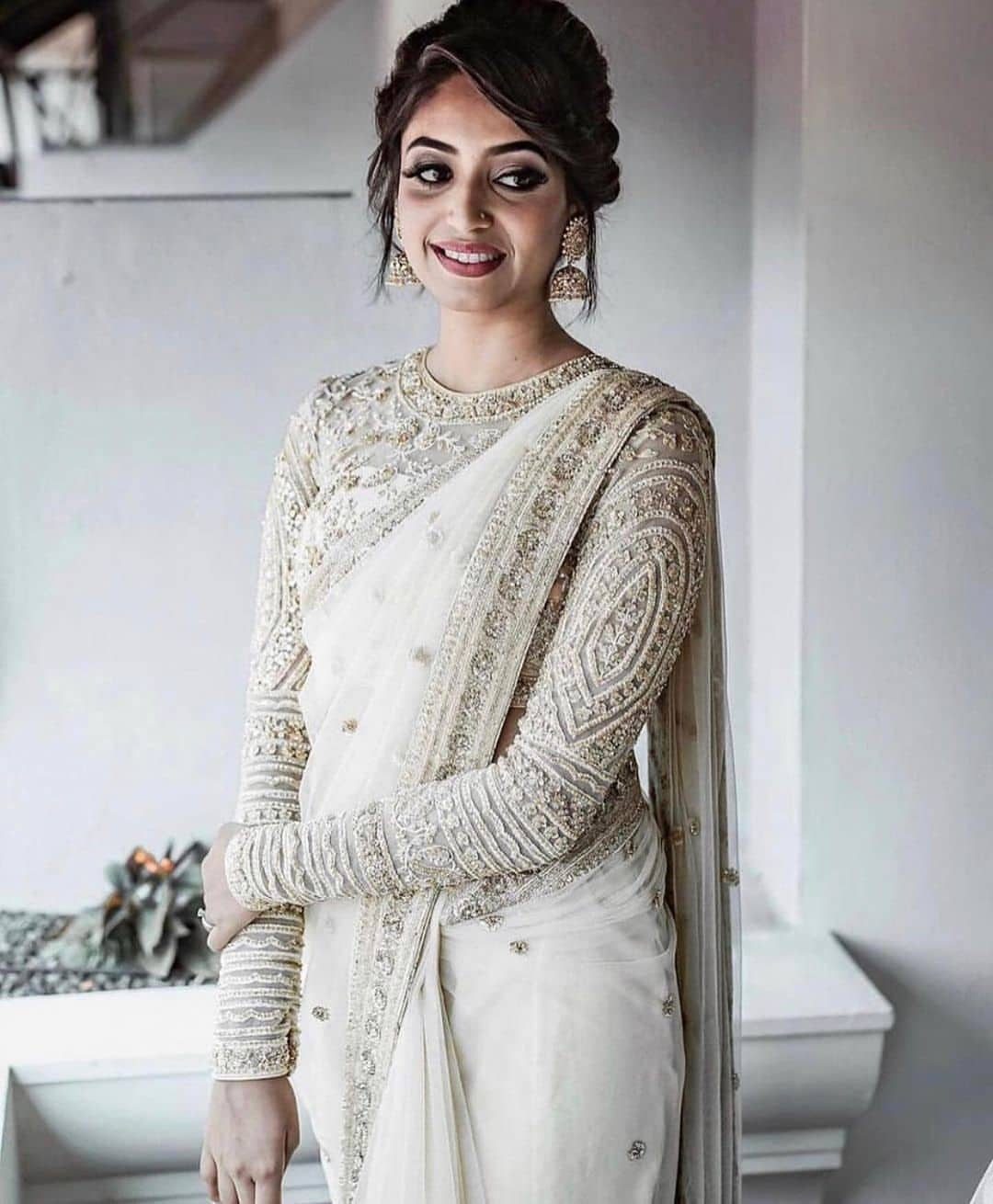
Statement sleeves shift the focus upward and give a reception outfit structure without adding bulk to the skirt or train.
Long sleeves with embroidery, beading, or cutouts keep the look formal while giving you more coverage than a strapless or sleeveless dress.
Sleeves with intricate detailing work especially well with simpler sarees or gowns, where the sleeve becomes the focal point. If your ceremony dress was strapless, a sleeved reception look changes the silhouette enough to feel like a true outfit change.
5. Short Lace Mini Dress
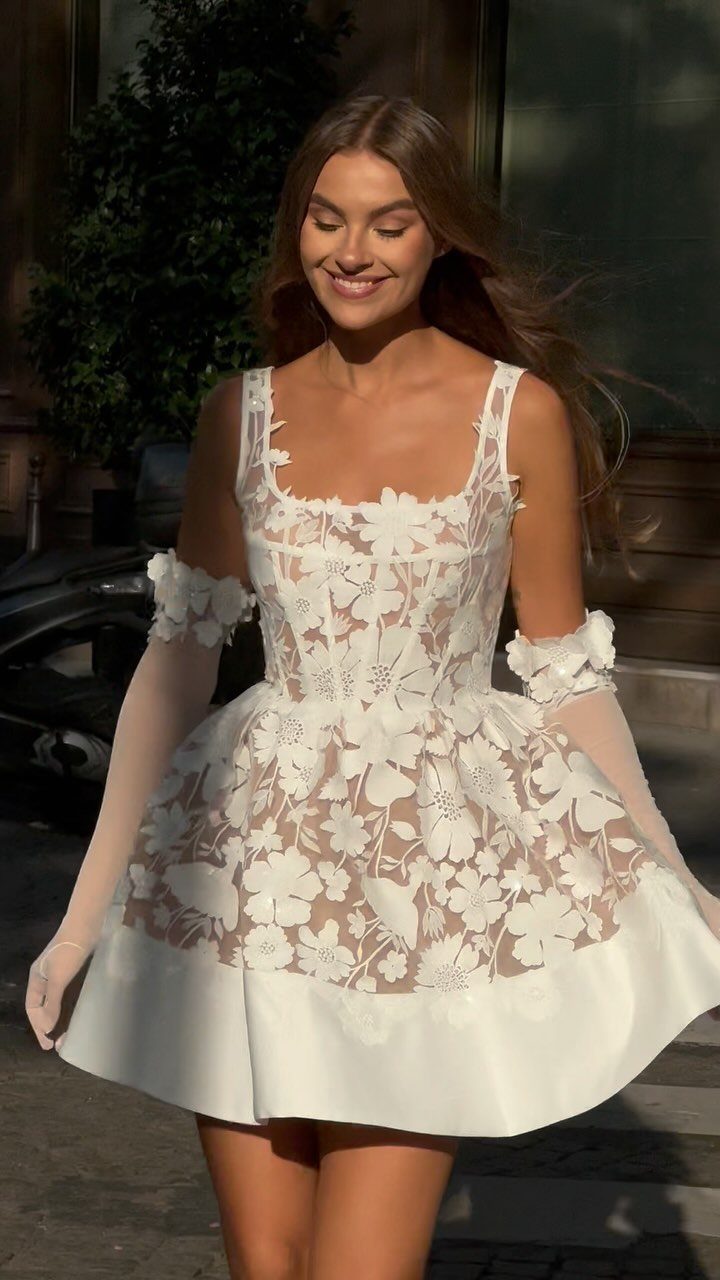
A flared lace mini with textured floral appliqué gives you a bridal look that’s light, easy to move in, and distinct from a full-length gown.
The shorter length works particularly well for outdoor receptions or venues where you’ll be on your feet for hours, and the flared skirt keeps the proportions balanced.
Detached gloves or sheer sleeves add coverage without weighing down the dress, and the lace texture reads formal enough that no one questions whether it belongs at a wedding.
Pair it with low heels or flats if comfort is a priority, since the hemline won’t hide your shoes.
6. Bridal Crop Top and Trousers
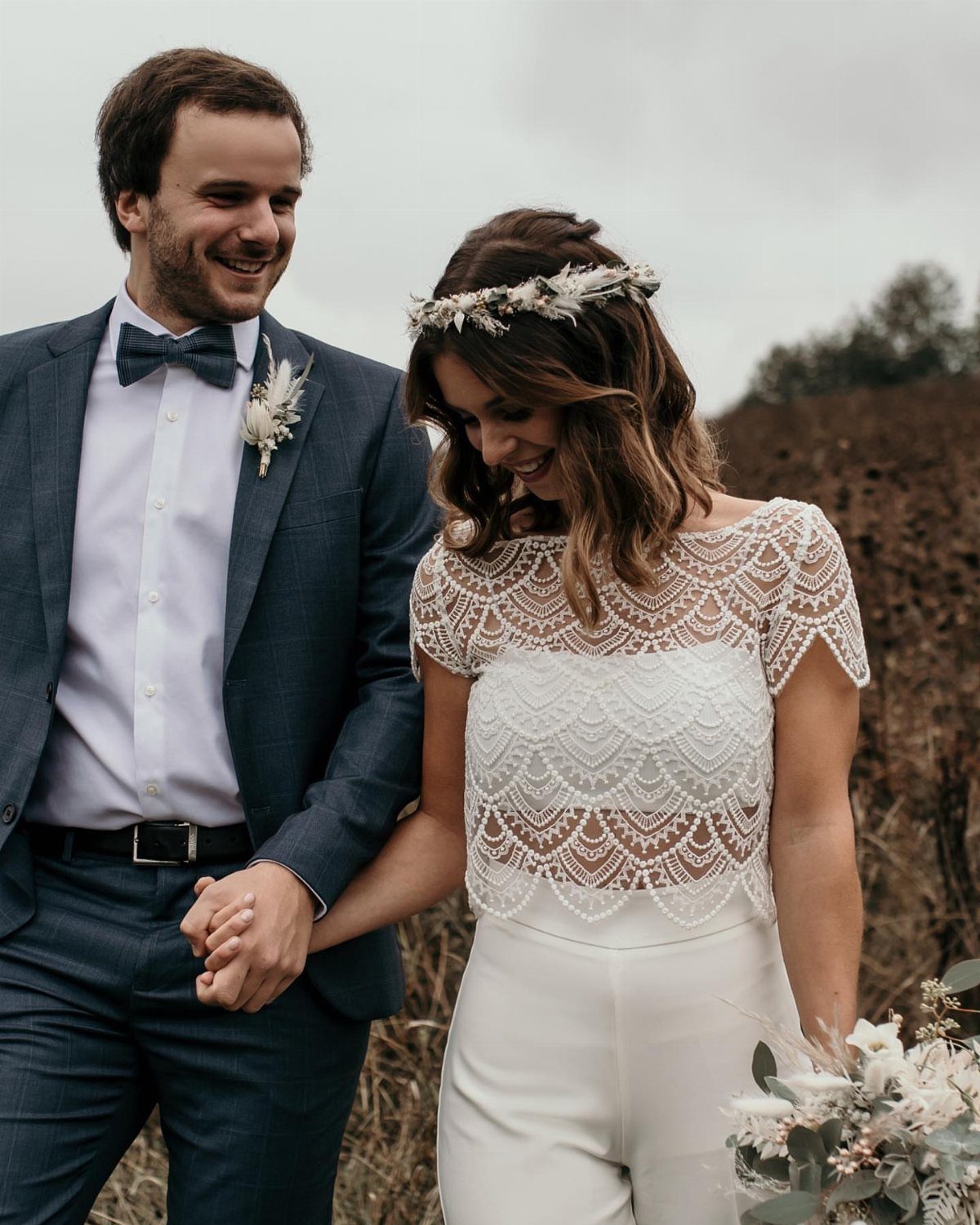
High-waisted white trousers paired with a lace crop top give you a bridal look that’s comfortable, modern, and easy to move in.
The two-piece format lets you adjust each piece independently, which matters if you’re between sizes or want a custom fit, and the separation at the waist breaks up the silhouette in a way that a gown doesn’t.
Lace keeps the top formal, while the trousers give you full mobility for dancing or moving between tables.
This option works well if you want a reception outfit that feels less traditional but still reads as bridal, and it’s one of the few silhouettes that lets you sit comfortably without adjusting layers of fabric.
7. 3D Floral Cocktail Dress
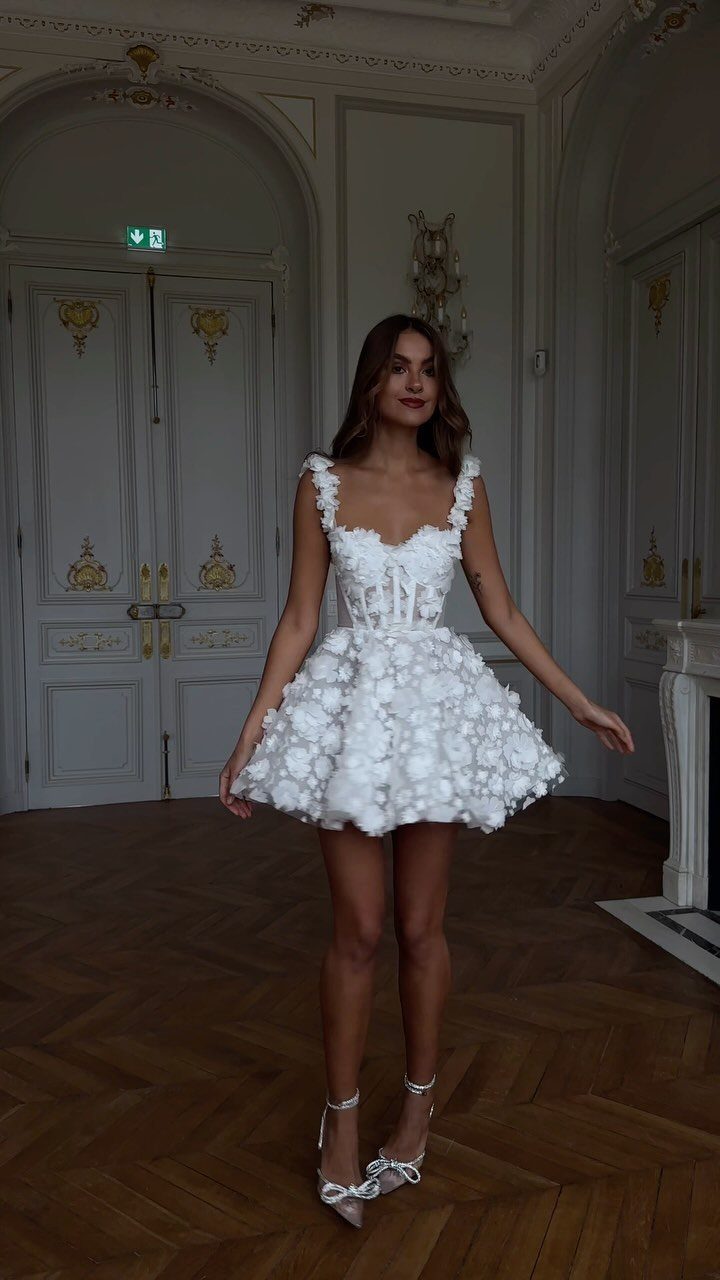
A short dress covered in dimensional fabric flowers gives you texture and volume without beading or sequins. The flowers sit raised off the base fabric, which catches light differently than flat embroidery and adds movement as you walk or turn.
Thin straps keep the neckline simple and let the floral detailing do the work.
The short hemline makes this one of the easiest reception options to dance in, and the all-white palette keeps it bridal while the 3D texture makes it feel less traditional than lace.
8. Sparkling Champagne Reception Gown
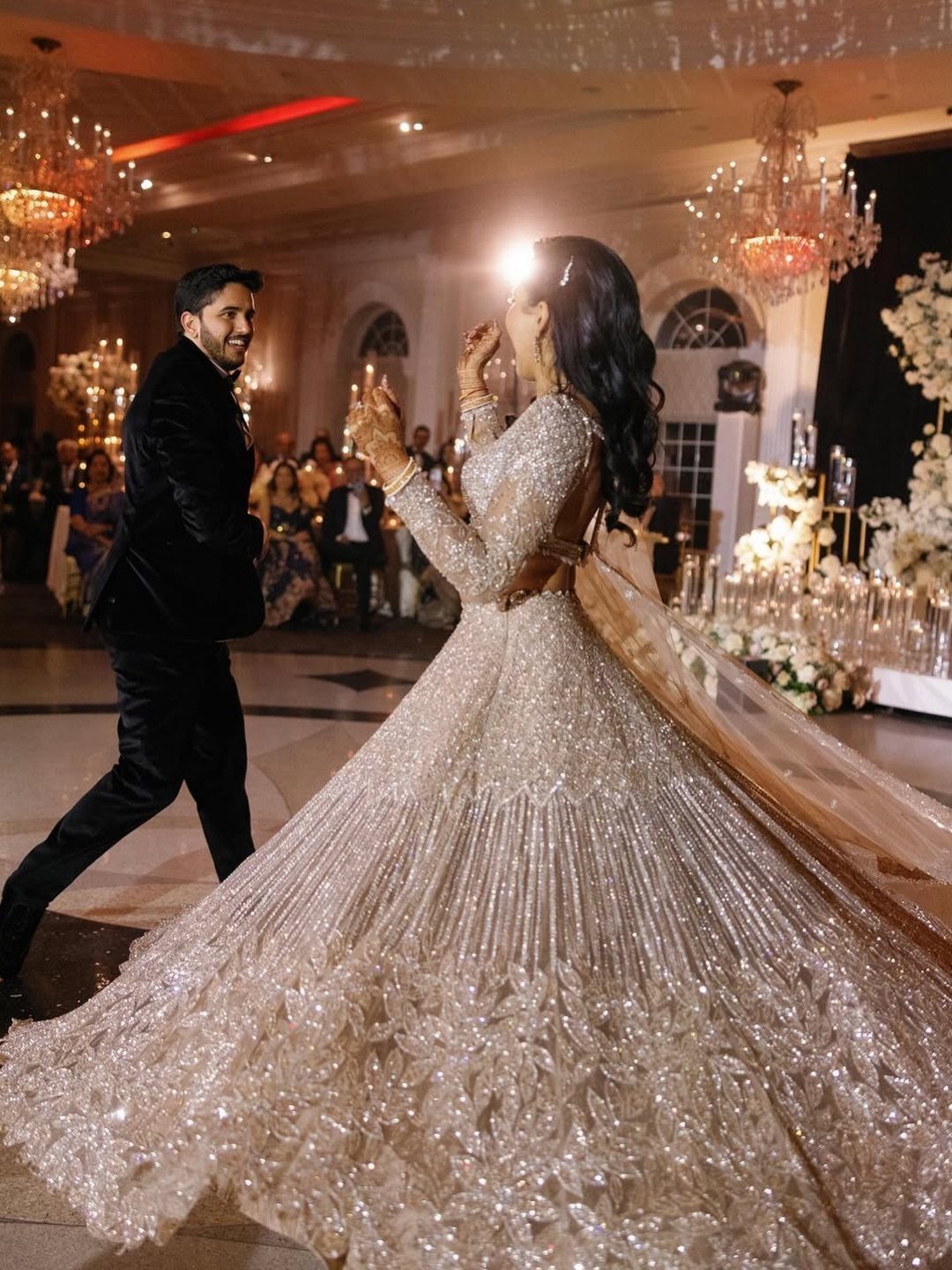
Champagne tones warm up a reception look while keeping it formal, and a fully sequined gown reflects light from every angle once you’re under dim venue lighting.
The color reads as soft gold or blush depending on the room, which gives you more flexibility than stark white.
A fitted silhouette with embroidery layered over sequins adds texture to the shine. This works well if your ceremony dress was matte or unembellished, since the champagne gown gives you a completely different finish without changing the formality level.
9. Intricate Gold Reception Lehenga
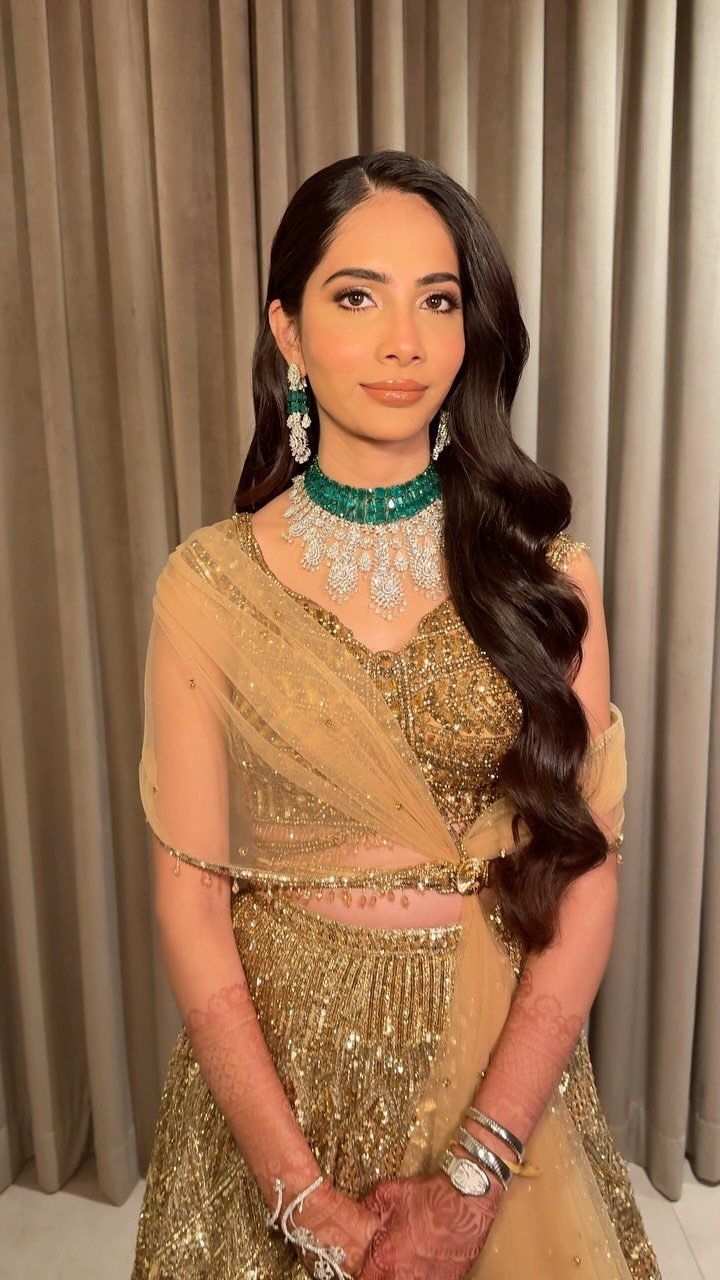
A gold lehenga heavy with sequins and embroidery gives you a reception look that holds its own next to a traditional ceremony saree.
The metallic finish reflects candlelight and works well in low-lit ballrooms, and the three-piece format lets you adjust the dupatta drape as the night goes on.
Pairing it with statement jewelry in emerald or diamond draws the eye to the detailing without competing with the gold base.
The blouse here is cropped, which balances the volume of the skirt and makes sitting more comfortable than a longer choli.
10. Short Bubble Skirt Dress
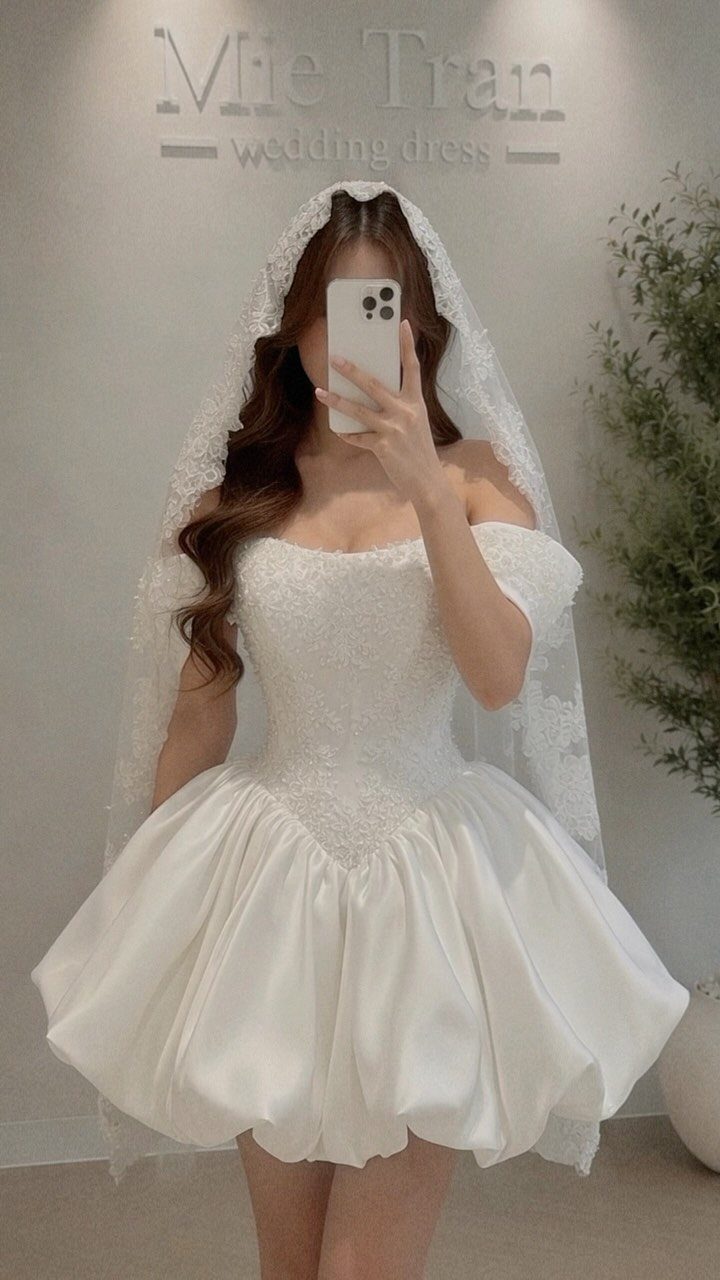
A bubble skirt paired with a fitted lace bodice gives you volume without tulle or a petticoat, and the gathered hem sits higher in front than a standard mini.
The puffed shape adds drama to a short silhouette, which works if you want a playful reception look that still reads as bridal.
The lace bodice keeps the top structured, and the contrast between the fitted torso and the rounded skirt makes the proportions feel balanced.
This is one of the few short dresses that gives you a full skirt effect without adding length.
11. Strapless Slit Column Gown
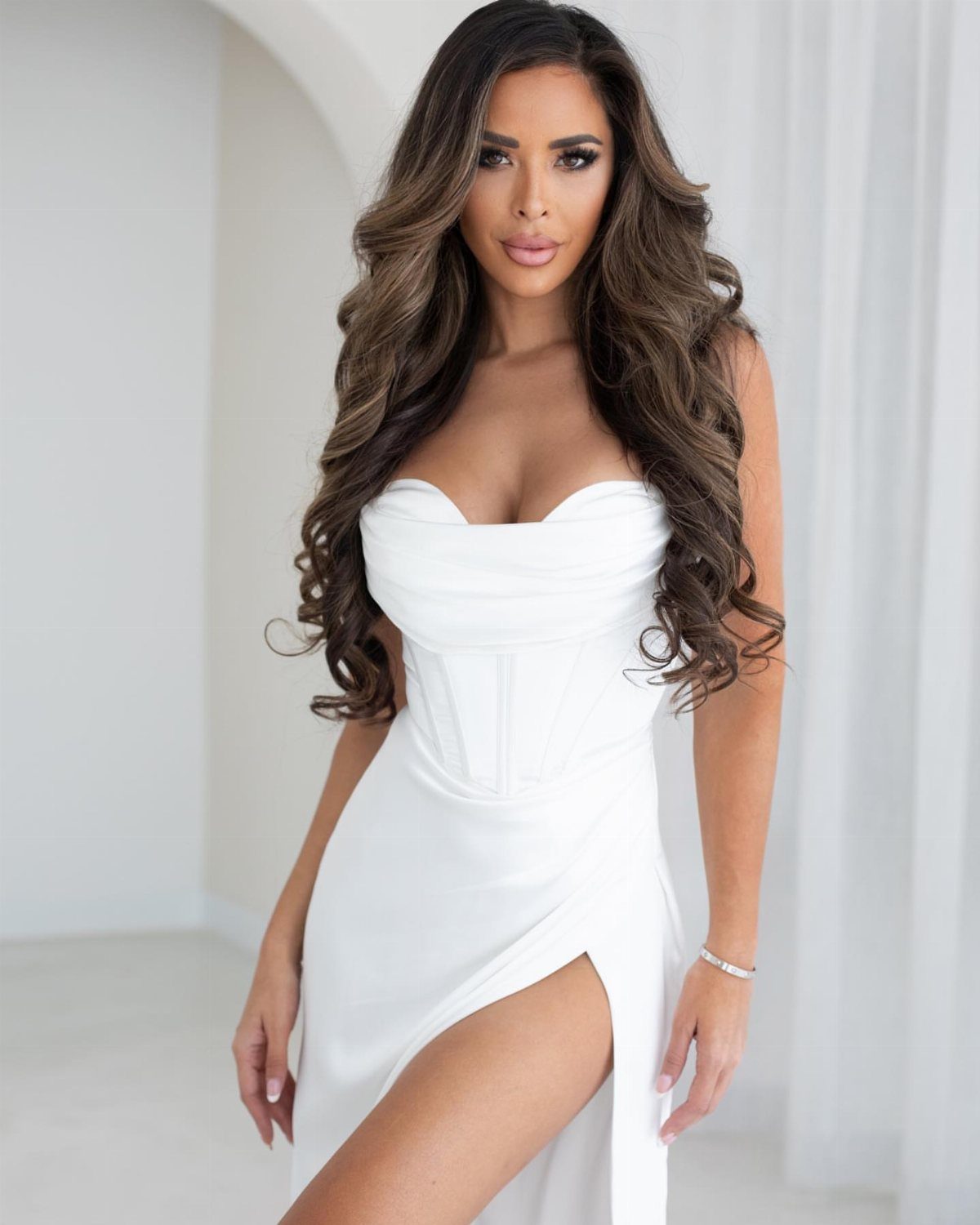
A strapless column gown with a high slit keeps the silhouette sleek while giving you full mobility when you’re walking or dancing.
The slit sits high on the thigh, which breaks up the vertical line of a floor-length dress and makes it easier to move without lifting the hem.
The fitted cut works best if you’re comfortable in a strapless neckline and want a reception dress that feels modern without adding embellishment.
This is a good option if your ceremony look was heavily detailed, since the clean lines let the shape do the work.
12. Bridal Lace Jumpsuit
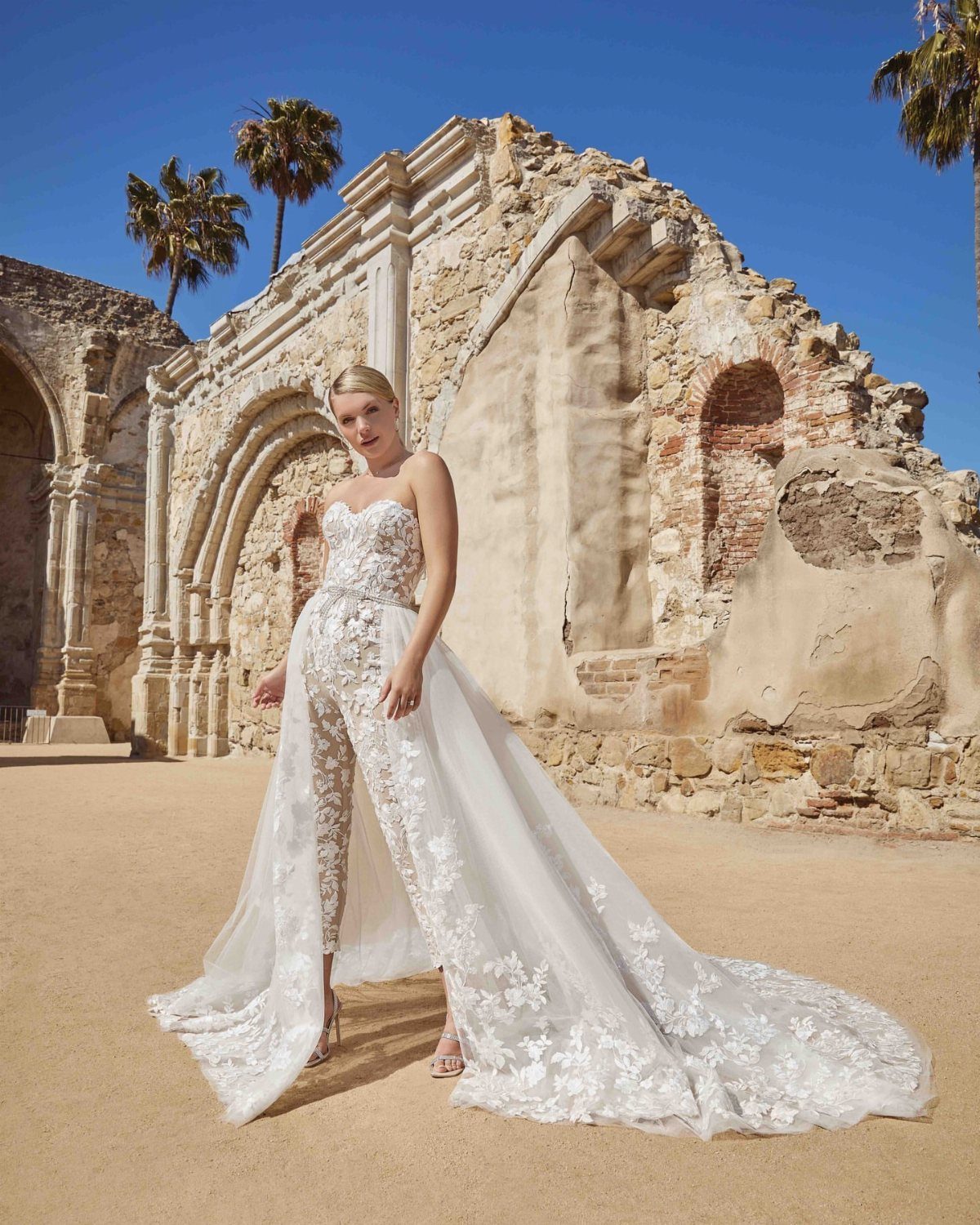
A strapless lace jumpsuit pairs the structure of trousers with the coverage of a gown, and the floral lace keeps it formal enough for a reception.
The jumpsuit format means no skirt to manage when you’re sitting or moving between tables, and the fitted legs give you a tailored look that separates this from a dress.
A detachable train adds length for photos and ceremony moments, then comes off once dancing starts. The strapless neckline keeps jewelry visible, and the lace texture reads bridal without relying on white satin or tulle.
13. Tailored Bridal Pantsuit
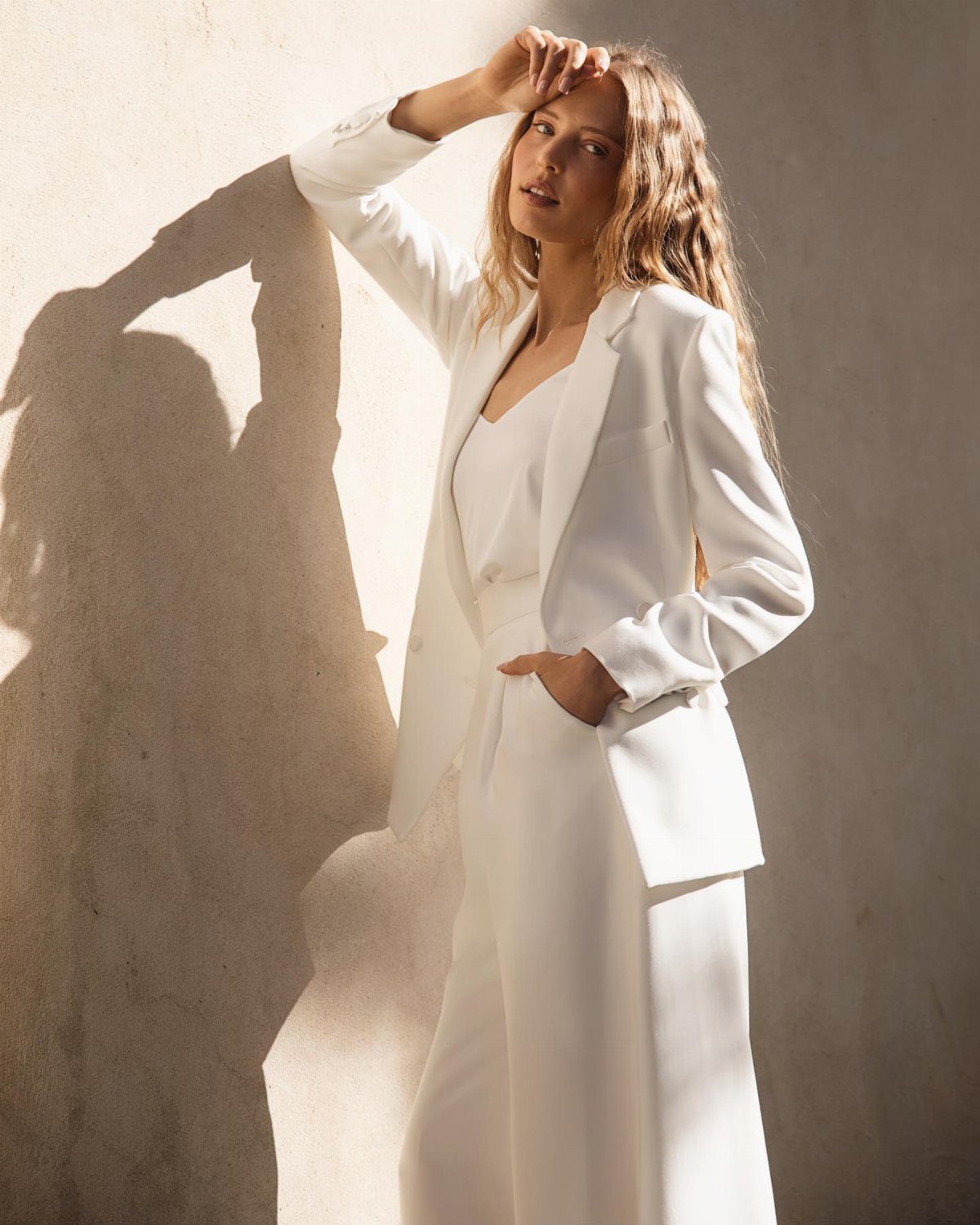
Pair it with pointed-toe heels to keep the proportions clean, and add statement earrings or a bold lip if you want to shift the look away from suiting and closer to bridal.
14. Short Dress with Statement Bow
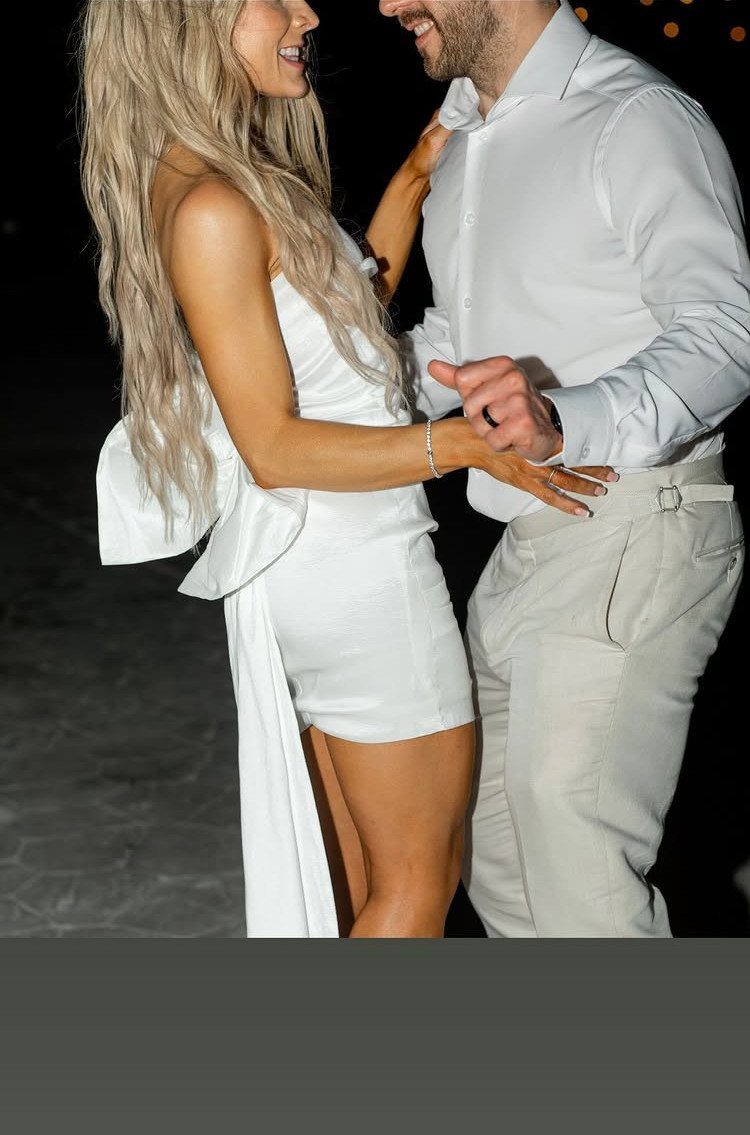
An oversized bow attached to the side or back of a short dress adds volume and detail to a simple silhouette without embroidery or beading.
The bow sits at the waist or hip here, which draws the eye and breaks up the clean lines of a mini dress.
The short hemline keeps you mobile for dancing, and the bow gives you a focal point that photographs well from the side.
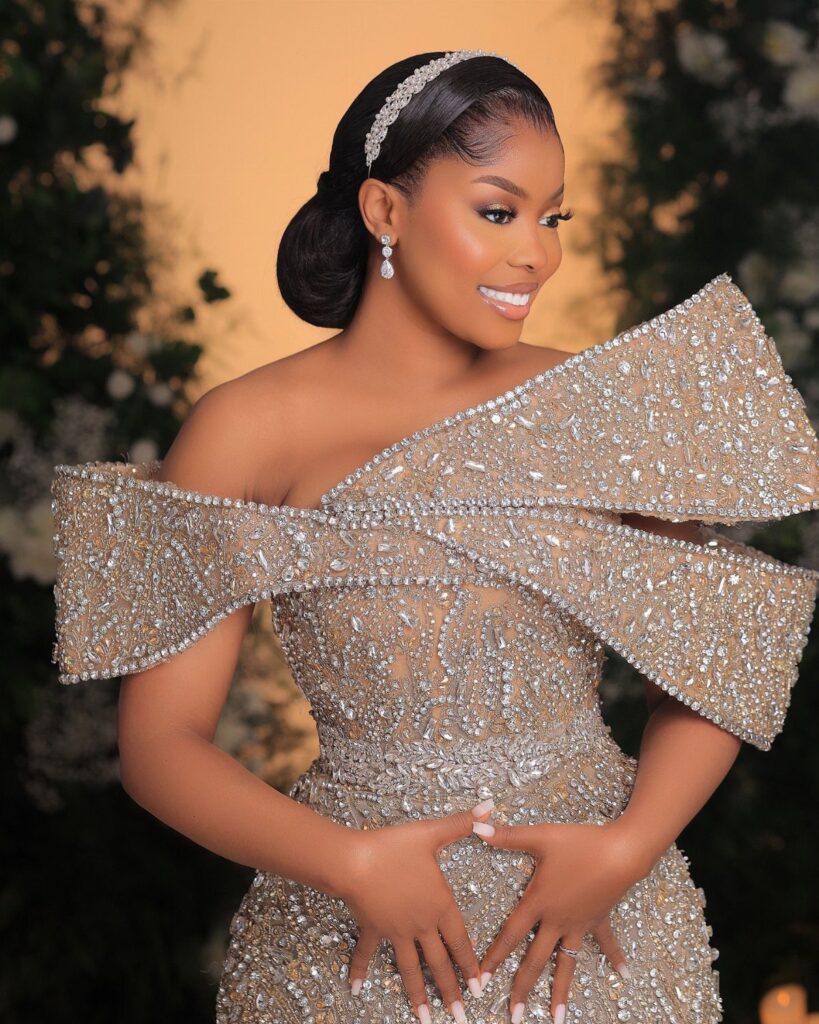
15. Metallic Silver Reception Gown
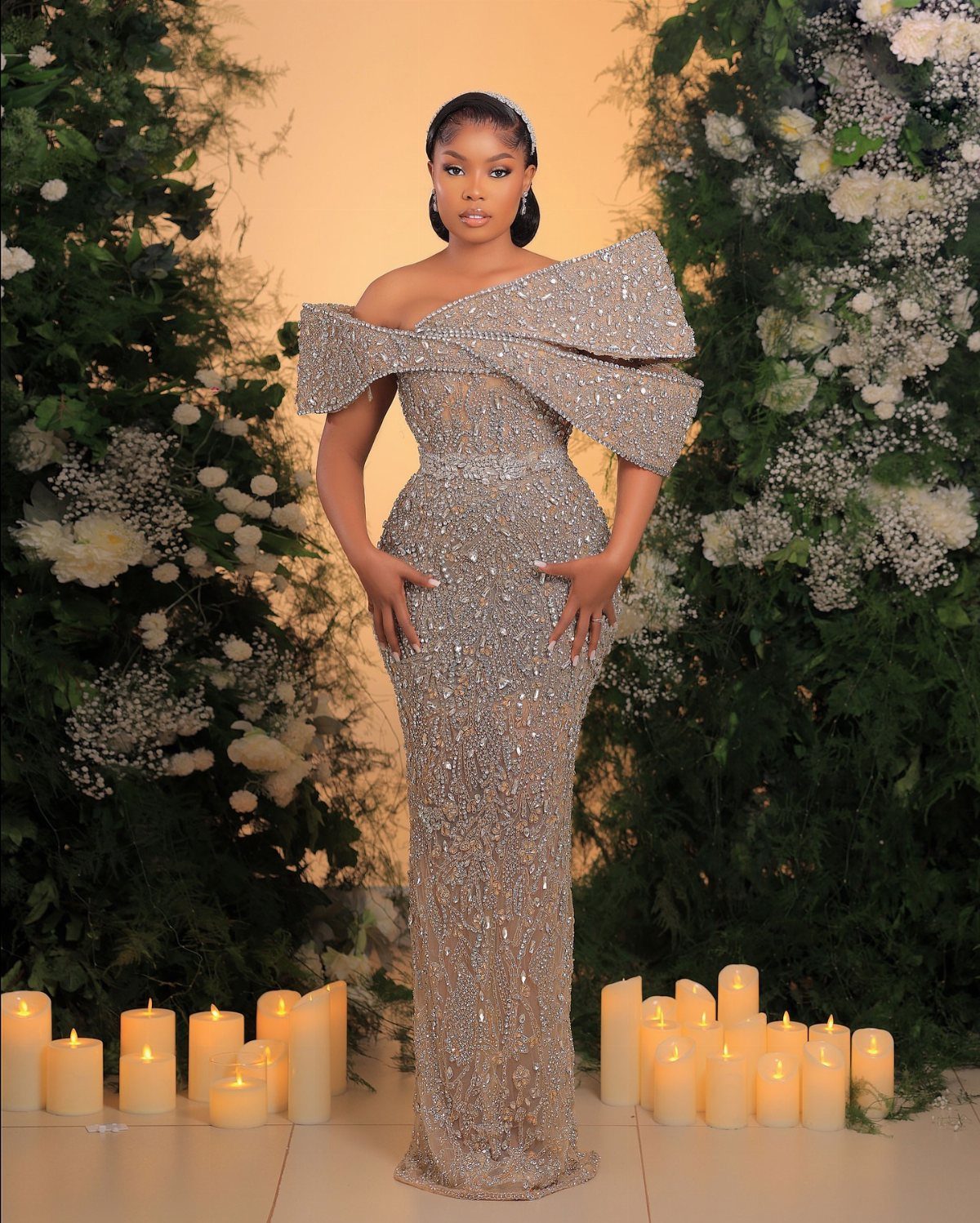
Silver sequins over a fitted gown reflect light differently than champagne or gold, reading cooler and more modern under evening lighting.
The off-the-shoulder neckline adds structure without straps, and the floor-length cut keeps the formality high while the metallic finish separates this from a traditional white gown.
The structured bow at the back or side adds dimension to a fitted silhouette.
16. Shimmering Lavender Reception Lehenga
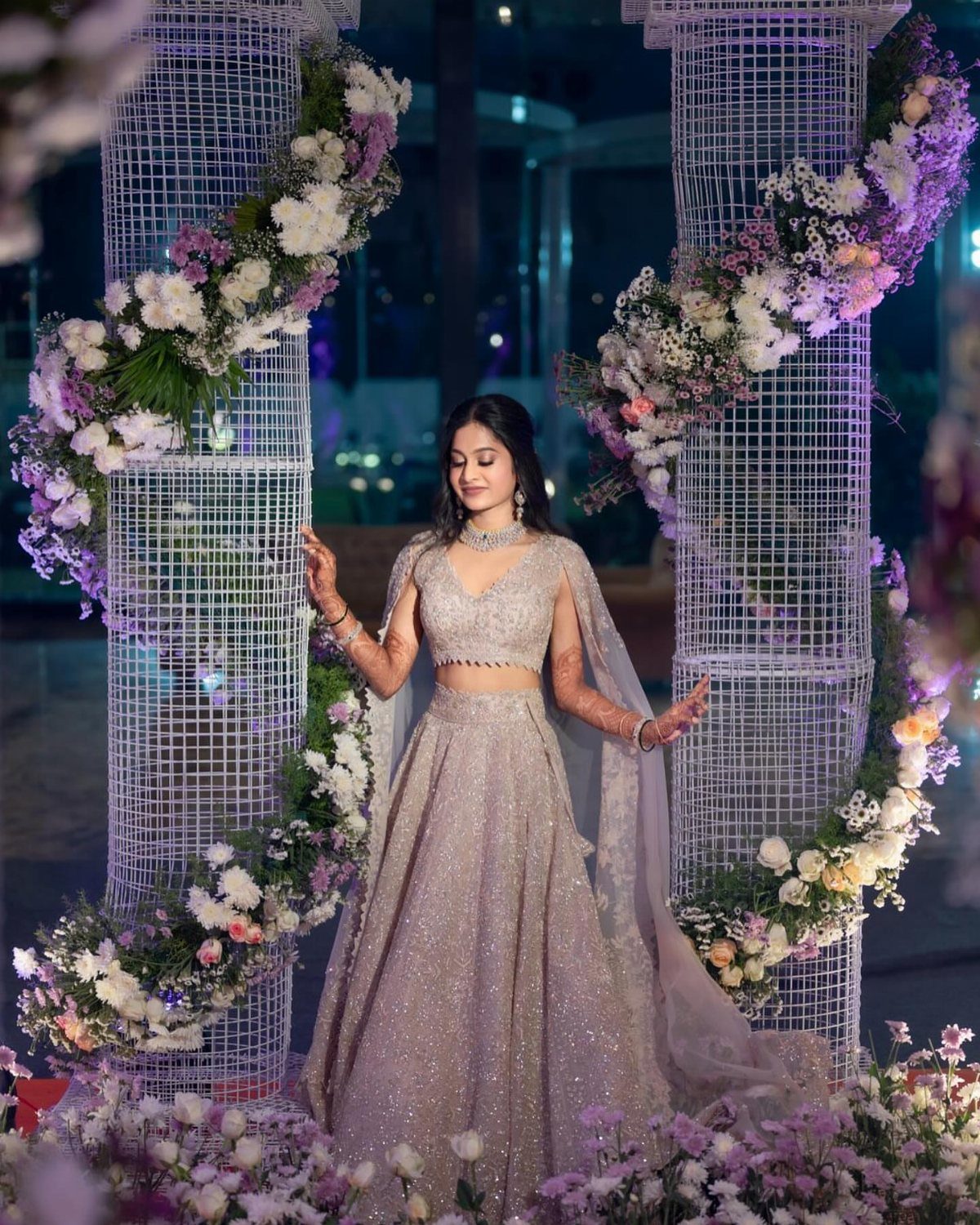
A lavender lehenga breaks from traditional bridal tones but delivers the same embellishment and structure you expect from a formal reception outfit.
The sequined finish catches light well in dim venues, and the cropped top paired with a high-waisted skirt delivers the same proportions as a gown without the weight of a single piece.
The color reads soft enough to stay bridal but distinct enough to feel like a true outfit change.
Pair it with silver or diamond jewelry to complement the purple base, and consider a cape or dupatta for added coverage during photos.
17. Pastel Blue Satin Gown
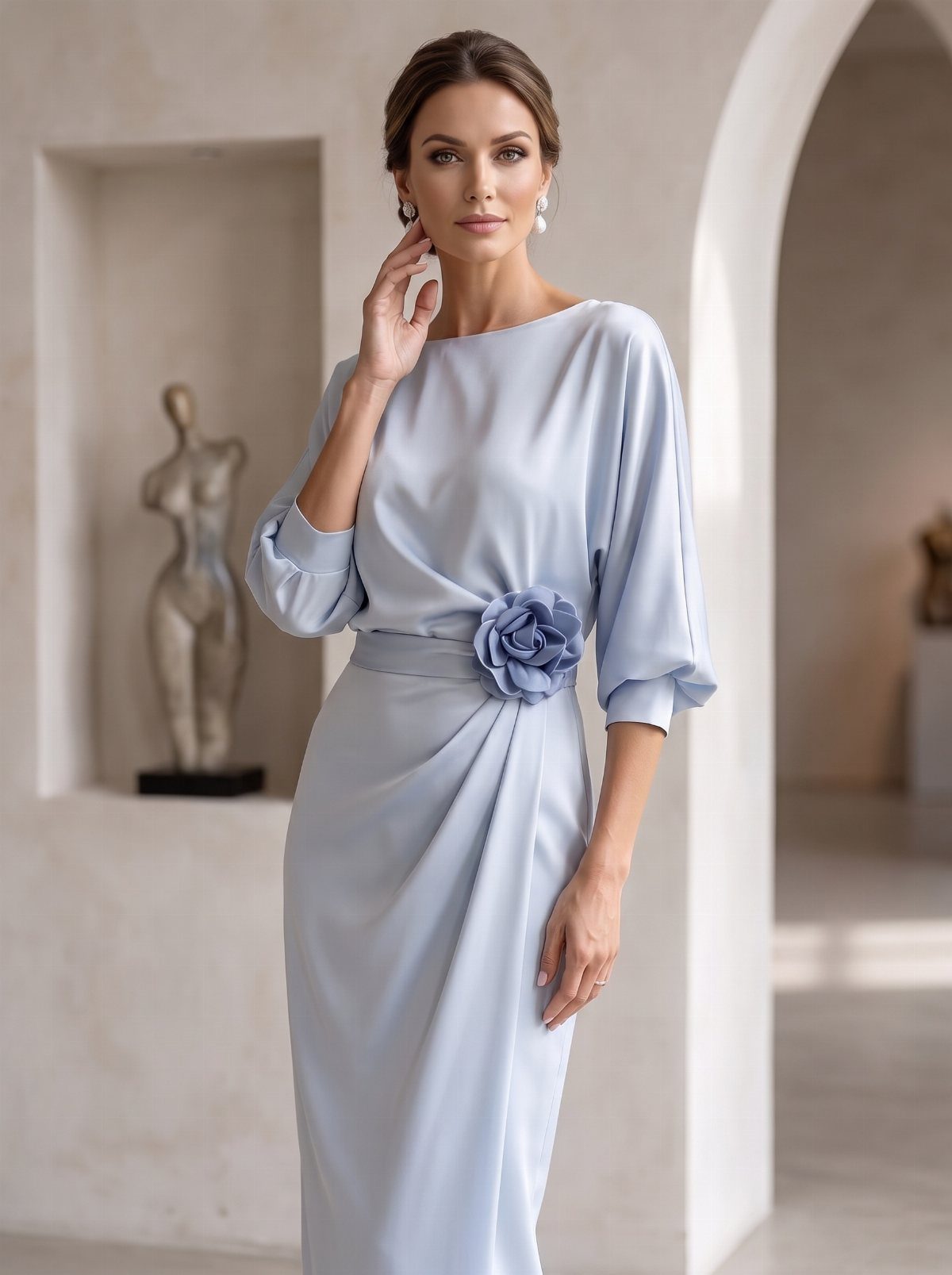
Pastel blue satin offers a soft, non-traditional bridal color that still reads formal, with long sleeves that add coverage without relying on lace or sheer fabric.
The satin finish catches light smoothly, which works well in both natural and low lighting, and the sculpted floral detail at the waist adds texture to an otherwise minimal silhouette.
The fitted cut through the bodice and skirt maintains a sleek profile, and the floor-length hemline balances the simplicity of the satin. This works well if you want a reception dress that feels elegant and understated rather than heavily embellished.
Choosing the Right Dress
Your body type steers you toward silhouettes that balance your proportions.
If you have defined shoulders and a narrow waist, fitted bodices with open necklines or bare shoulders work well. A straighter frame benefits from dresses that create waistline definition, like belted styles or cropped tops paired with high-waisted bottoms.
The venue matters more than most brides expect. Outdoor receptions or spaces where you’ll be standing for hours call for shorter hemlines or jumpsuits.
Complexion affects how certain shades read on you. If you have fair skin, warmer tones like champagne or blush soften the contrast better than stark white.
Fit trumps the size label, especially if you’re shopping plus-size. Check actual measurements, fabric stretch, and whether the dress offers built-in support before you commit.
Dress Personalization
Neckline changes the focal point more than any other alteration. A deep V-neck suits flowing fabrics like silk or chiffon, while off-the-shoulder styles work if you have visible collarbones.
Backless cuts demand good posture and read as formal despite showing skin, but they photograph better than they feel after hours of wear.
Sleeve length comes down to how much you’ll be moving. If dancing is a priority, sleeveless or short sleeves keep you cooler and give you more range of motion.
Embellishment level should shift from your ceremony look.
If your first dress was heavily detailed, a second dress with clean lines and minimal beading feels like a real change. The reverse works too: a simple ceremony gown followed by sequins or 3D floral appliqué.
Dress Functionality
Reception dresses are lighter and less restrictive than ceremony gowns, which matters once you’re moving between tables or spending time on the dance floor.
Short hemlines give your legs full range and make it easier to navigate crowded spaces without lifting fabric.
Detachable elements add flexibility. Strapless necklines free up your arms but require a good fit through the bodice to stay secure while you move.
In fact, the best thing about a reception dress is the flexibility it offers: Keep things sleek and understated in a silky mini or make a statement with sequins and embellishments.
— Vogue
Frequently Asked Questions
What is a reception wedding dress?
A reception wedding dress is a second outfit you wear after the ceremony, separate from your ceremony gown.
Brides change into it for the reception to get something easier to move in, more comfortable for dancing, or simply to show a different side of their style.
The switch gives you a look built for celebrating rather than standing still for photos.
When should you change into your reception dress?
Most brides change after the ceremony and formal photos wrap, which puts you in the new dress before the grand entrance.
Another option is changing after the first dance, especially if you want your ceremony gown in more of the reception photos.
The timing depends on how long you can tolerate your ceremony dress and when you want the outfit shift to happen.
Do you need a second dress for your wedding reception?
No, a second dress is optional. It makes sense if your ceremony gown is heavy, has a long train, restricts your movement, or if you simply want another bridal look.
Plenty of brides wear one dress all day, and that works fine if your ceremony gown is comfortable enough to dance in.