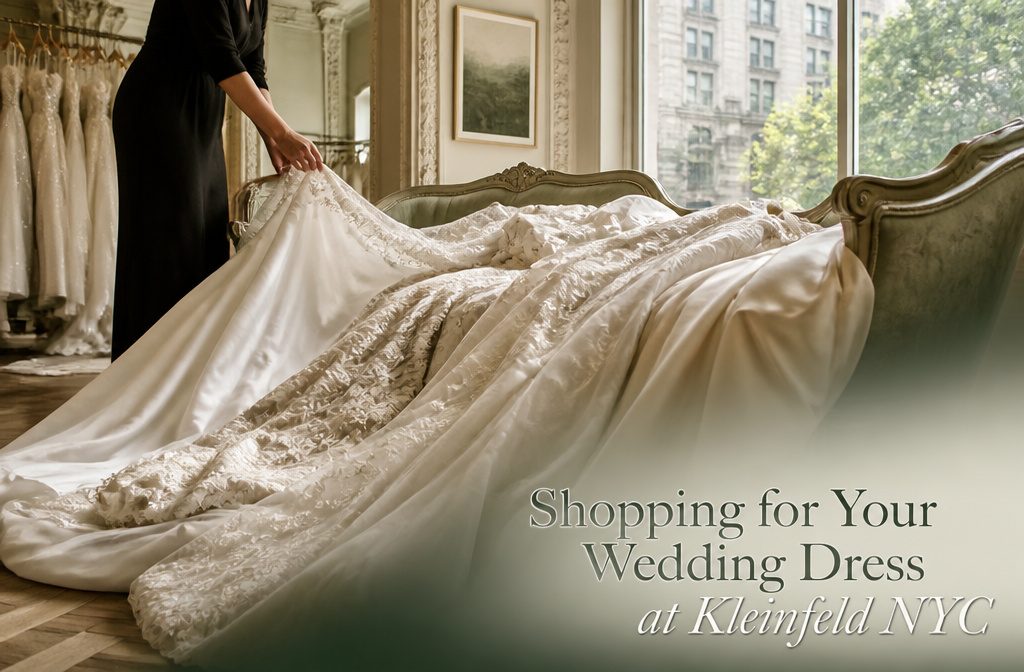
Kleinfeld is the Manhattan bridal salon featured on Say Yes to the Dress, carrying hundreds of designers with gowns that start around $2,000 and climb to $80,000.
The experience is calmer and more personal than the show suggests: your consultant spends ninety minutes listening to what you want and pulling dresses within the budget you name upfront, not testing whether you’ll stretch past it.
What Shopping at Kleinfeld Actually Feels Like
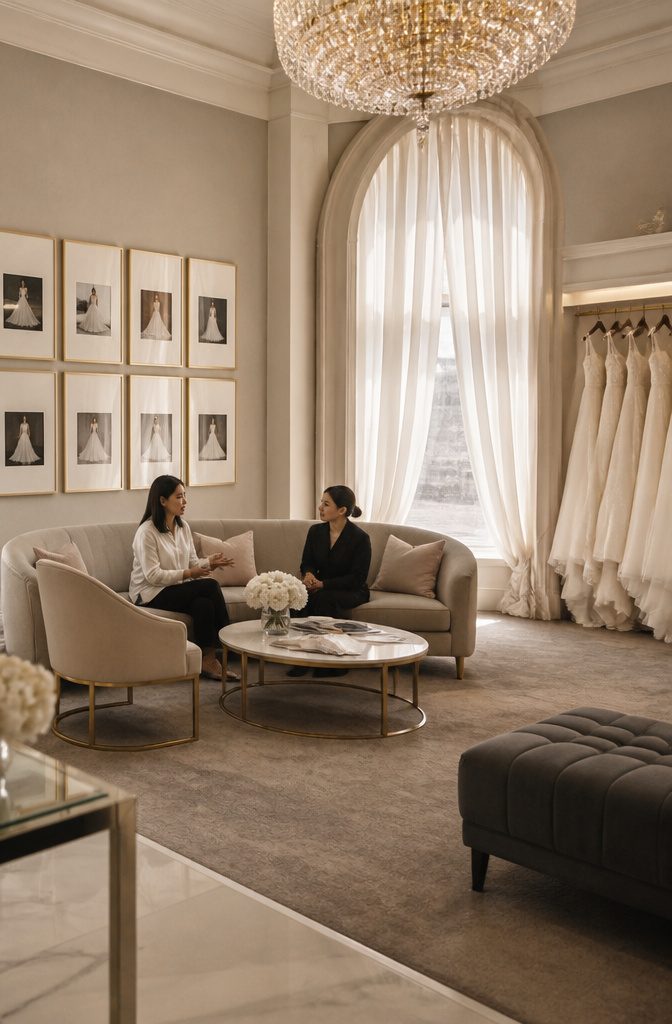
Your consultant sits with you for the full ninety-minute appointment, and the first fifteen minutes aren’t spent pulling dresses.
They’re spent listening. You describe what you picture, what you want to avoid, and what matters most about how you feel when you walk down the aisle.
The experience is calmer and more personal than the TV show suggests. Bride Lemor put it plainly: "I thought I’d walk in to see some cameras with women saying ‘Yes!’ to the dress, but it wasn’t cheesy or tacky."
Kleinfeld serves approximately 17,000 brides each year, and the consultants treat the appointment like it belongs to you alone. Want to modify a gown or skip the public parade in front of cameras?
They accommodate. One consultant described the place as feeling like a small business despite being a household name, and the celebratory energy in the showroom is real.
You see brides saying yes, their consultants just as excited, and it matches what the show got right rather than what it exaggerated.
The Range of Dresses You’ll See
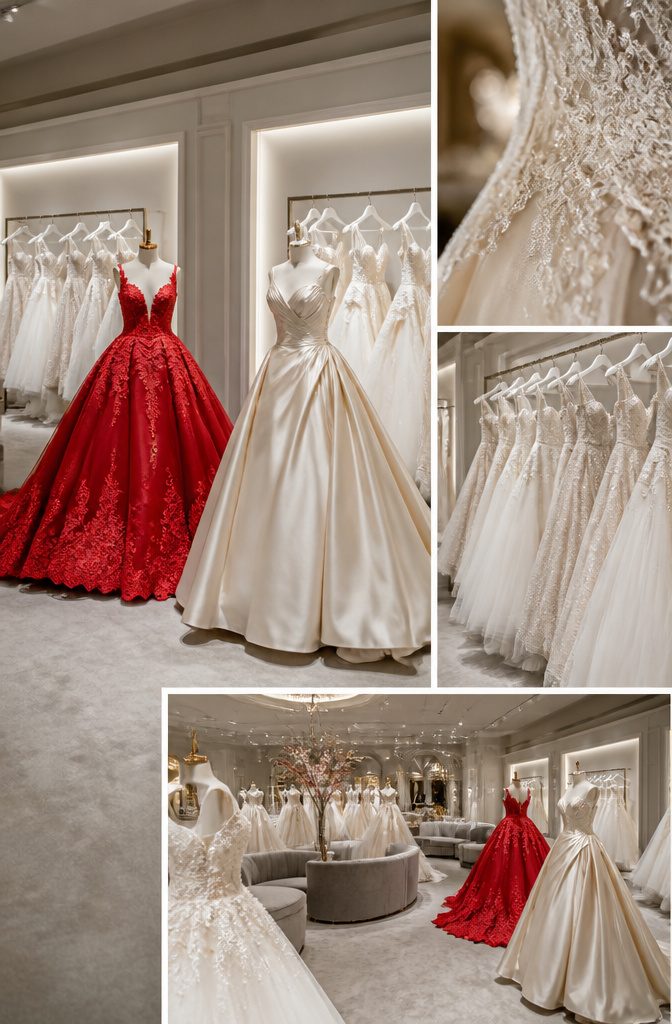
The store carries hundreds of designers, and the range is wide enough that you’re likely to find something no matter what silhouette you’re imagining.
Gowns start at around $2,000 and can reach $80,000, with the most expensive piece being a Pnina Tornai dress at that upper ceiling.
Mid-range options fill out most of the floor: an Anne Barge gown sits at $2,410, Martina Liana at $3,658, and Pnina Tornai styles land around $7,000 for many of her pieces.
Rubinetti described Tornai as Kleinfeld’s "most important designer," as she has an exclusive relationship with the store. Brides can’t buy Tornai’s gowns anywhere except for Kleinfeld.
That exclusivity matters if you want one of her ball gowns or lace-heavy bodices, because you won’t find them anywhere else.
The breadth of the collection means you’re not locked into a single aesthetic, and the price spread gives you room to work within different budgets without feeling like the options narrow too quickly.
How Consultants Work Within Your Budget
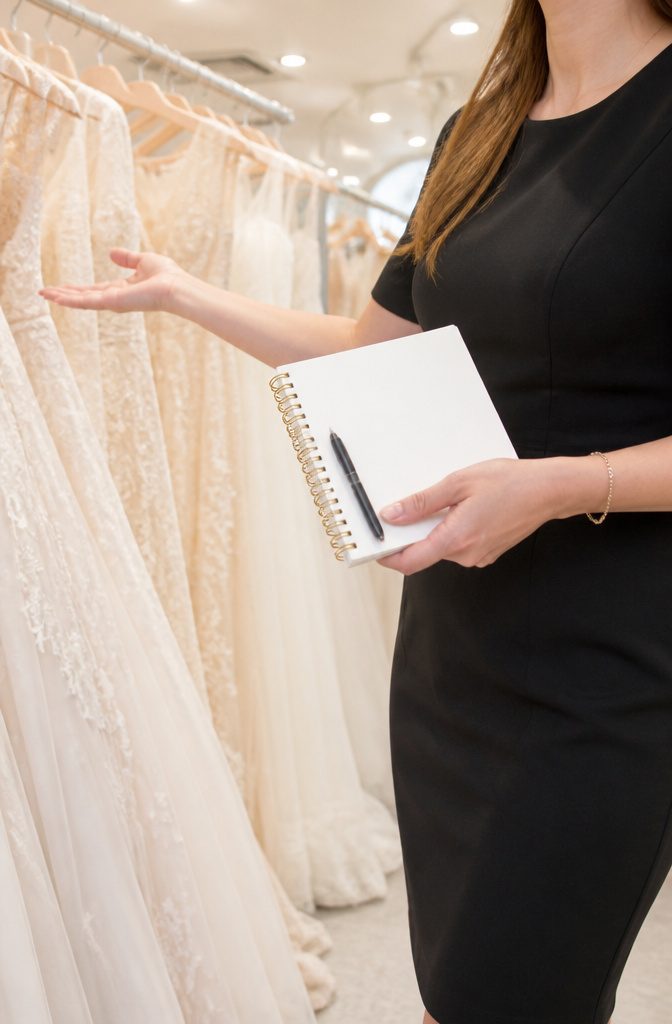
Consultants at Kleinfeld work within the budget you name upfront, and brides repeatedly describe how much that matters in a city where most shops push you past it.
You tell your consultant your range at the start of the appointment, and she pulls dresses that fit within it rather than testing whether you’ll stretch.
The staff knows the inventory well enough to match what you’re looking for without forcing a different silhouette or style.
If you say you don’t like a detail on a dress, your consultant either understands immediately or asks specific follow-up questions to narrow down what will actually work for you.
Several brides mentioned consultants pointing out when something didn’t look right before they had to say it themselves, which built trust fast.
By the end of the ninety-minute appointment, most brides felt their consultant had become part of the entourage rather than someone selling to them.
Alterations and Custom Modifications
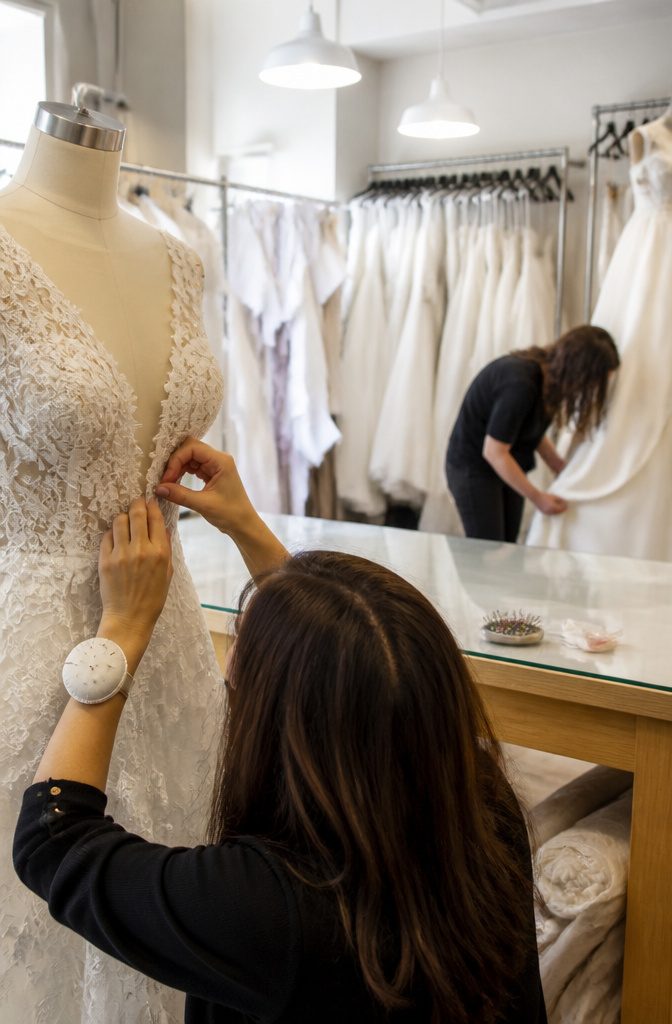
The alterations department runs deep, with more than 90 seamstresses working out of the Chelsea location. Each dress alteration takes an average of 30 hours, which explains why the fit you walk out in feels so precise.
The team handles everything from standard hem and bustle work to full custom modifications, including modest dress builds for brides who need higher necklines and longer sleeves.
Consultant Rochel Leah Katz works exclusively with brides requiring modest alterations, so the process isn’t treated as an afterthought or a reluctant accommodation.
The customization options mean you can start with a sample you love and adjust the coverage, silhouette, or details to match what you actually want to wear, rather than settling for something close enough off the rack.
The Bridal Wonderland Atmosphere
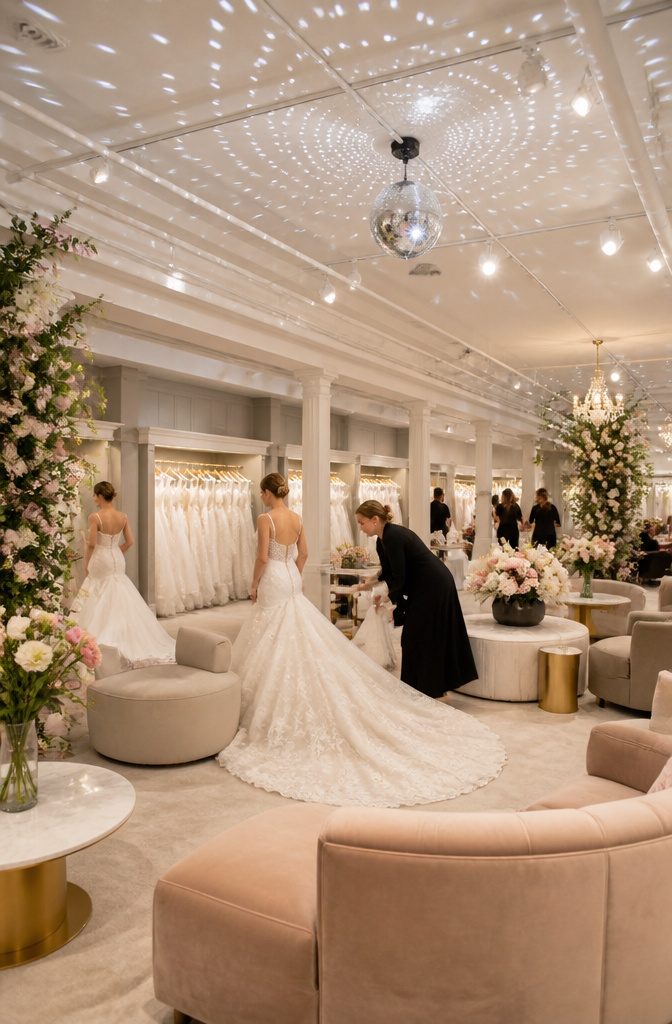
The store radiates a different kind of energy from the minute you walk in.
One bride described Kleinfeld as "a bridal wonderland," and it’s hard to argue with that when you’re standing in a space designed entirely around finding the dress.
Another called it "basically everything you dream wedding dress shopping to be," which is the exact feeling the store seems engineered to deliver.
What sets the atmosphere apart is the commitment behind it. Brides notice that consultants want them to leave happy, not just checked off a list.
The energy isn’t transactional. It’s focused on making the experience feel as special as the decision itself, and that intention shows in how the appointments unfold.
You’re treated like a real bride from the moment you sit down, even during behind-the-scenes tours where the outcome isn’t a sale.
That consistency matters when you’re spending hours trying on gowns and need to feel like the process is worth the time.
From Fur Salon to Bridal Destination
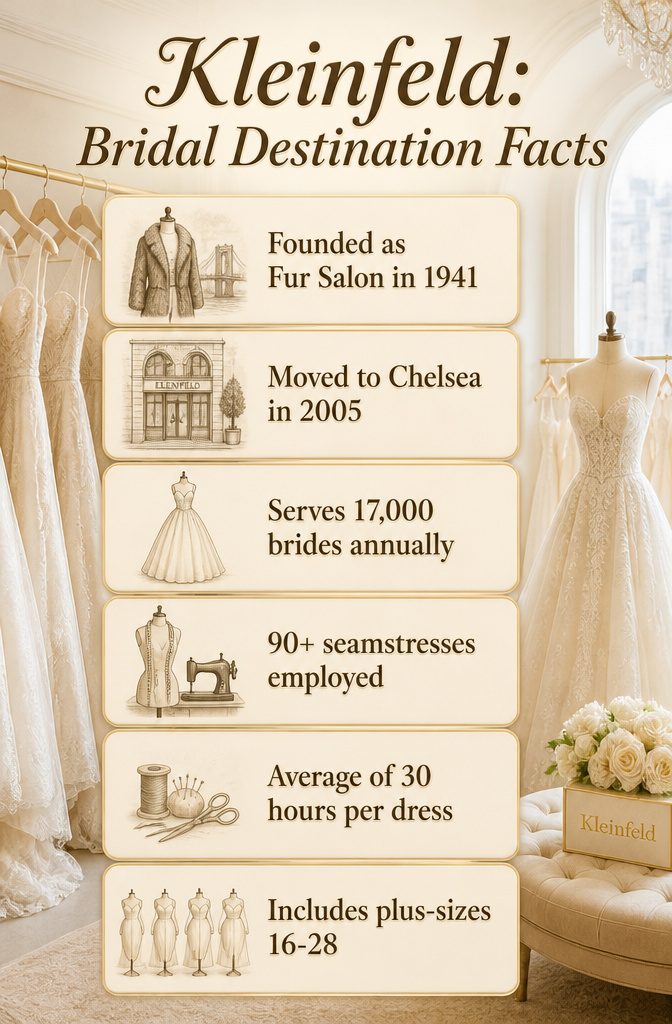
Kleinfeld started as a fur salon in Brooklyn in 1941, and the transition to bridal happened gradually over decades.
The salon relocated to its current Chelsea location in 2005, cementing its place as Manhattan’s most recognized bridal destination. That move brought the space and infrastructure to serve 17,000 brides a year, a volume that demands serious alterations capacity.
The alterations department employs more than 90 seamstresses, and each dress gets an average of 30 hours of work.
That investment covers everything from hemming to structural changes, and it means the dress you try on in a sample size can be rebuilt to fit your measurements and preferences.
Kleinfeld also keeps a consultant, Rochel Leah Katz, devoted entirely to modest brides who need longer sleeves and higher necklines. The sample inventory includes a strong plus-size selection, with sizes 16–28 available to try on rather than simply order sight unseen.
VIP Rooms for Larger Groups
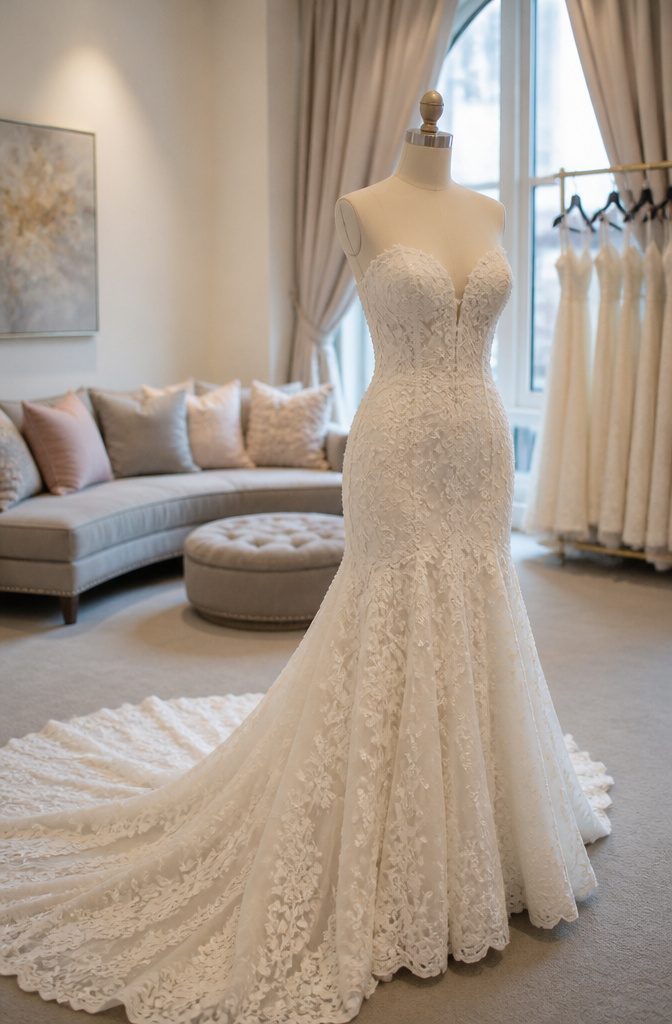
Kleinfeld keeps VIP rooms for brides bringing more than three guests, offering a larger, more private space where the entire appointment can happen away from the main floor.
Standard fitting rooms open directly onto the communal area where entourages watch from couches and consultants ferry dresses back and forth.
That works fine for smaller groups, but it gets tight fast once you’re managing opinions from four or five people packed into the corridor.
The VIP setup gives you room to breathe and talk through options without competing for floor space or feeling like you’re on display.
If you know your group runs large or you want the appointment to feel more contained, mention it when you book. Kleinfeld assigns VIP rooms based on party size, so the ask is straightforward and the benefit is immediate.
Exclusive Designers You Can Only Find Here
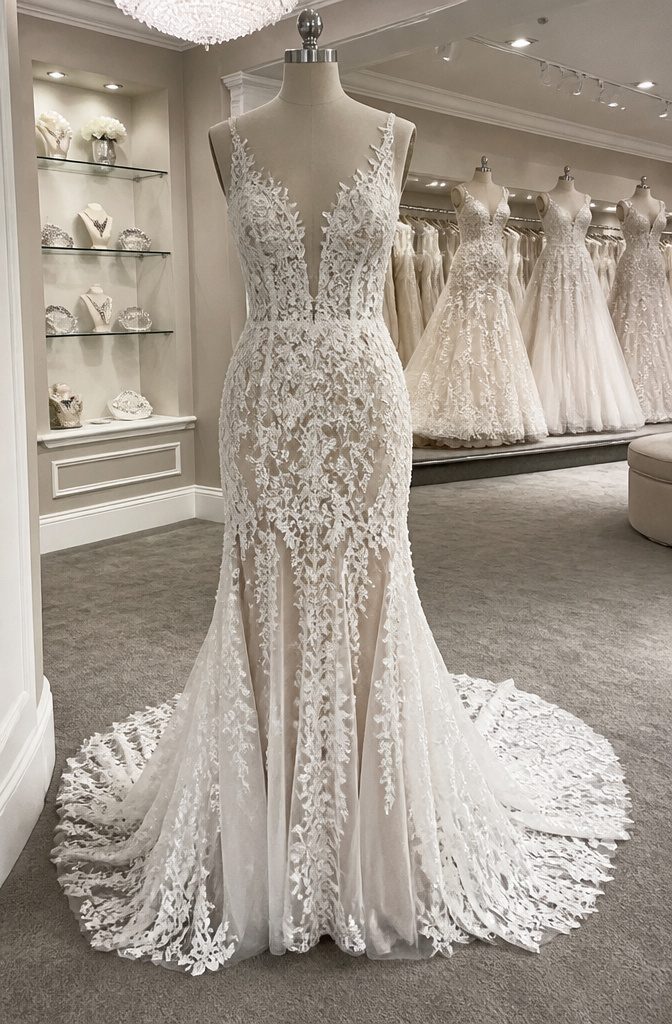
Pnina Tornai sells exclusively through Kleinfeld, which matters if you’ve been tracking her gowns on Instagram or flipped through bridal magazines and landed on one of her dramatic, lace-heavy designs.
You can’t walk into another boutique and try on a Tornai dress. The store even dedicates an entire boutique to her work, and consultants describe her as Kleinfeld’s most important designer for good reason.
That exclusivity cuts both ways. If you love her aesthetic, you know exactly where to go, and the appointment becomes less about hunting and more about finalizing which silhouette and which level of embellishment.
But if you’re not sure yet, or you were hoping to compare her gowns against similar styles at other stores, that comparison shopping doesn’t exist. You either book the Kleinfeld appointment or you move on to designers with wider distribution.
The trade-off shows up in how you plan your shopping. Brides who’ve fallen for a specific Tornai look often treat Kleinfeld as the anchor appointment and schedule everything else around it.
The exclusivity delivers certainty about where to find what you want, but it also means the budget conversation happens in one place, with one set of prices.
Frequently Asked Questions
What is the experience like at Kleinfeld?
Your consultant spends the full ninety minutes with you, starting with fifteen minutes of listening before pulling any dresses.
The experience feels calmer and more personal than the TV show suggests, with consultants who work within your stated budget and treat the appointment like it belongs to you alone.
Brides consistently describe feeling like their consultant became part of the entourage rather than someone selling to them.
How much do wedding dresses at Kleinfeld cost?
Gowns start at around $2,000 and can reach $80,000, with the most expensive piece being a Pnina Tornai dress at that upper ceiling.
Mid-range options fill out most of the floor, with Anne Barge gowns at $2,410, Martina Liana at $3,658, and many Pnina Tornai styles landing around $7,000.
What kind of alterations does Kleinfeld offer?
The alterations department employs more than 90 seamstresses, and each dress gets an average of 30 hours of work.
The team handles everything from standard hem and bustle work to full custom modifications, including modest dress builds with higher necklines and longer sleeves.
Is Kleinfeld Bridal still in business?
Yes, Kleinfeld is still in business and serves approximately 17,000 brides each year from its Chelsea location. The salon relocated to its current Manhattan address in 2005 after starting as a fur salon in Brooklyn in 1941.