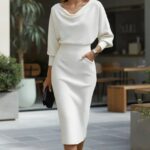
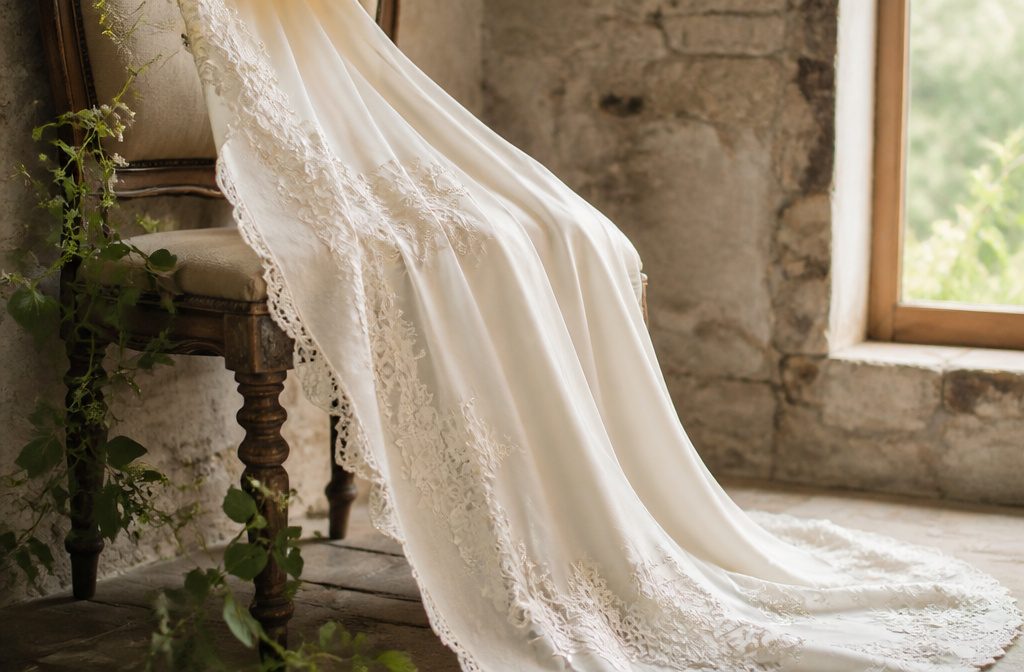
Wedding dress styles describe the overall shape a gown takes on the body, determined by where it fits close and where it adds volume or drape.
The silhouette you choose affects how you move, which venues make sense, and whether the dress reads as formal or relaxed.
A-line remains the most popular choice among US brides because it skims the hips without clinging, but mermaid and sheath cuts require near-perfect tailoring to avoid visible fit problems.
A-Line
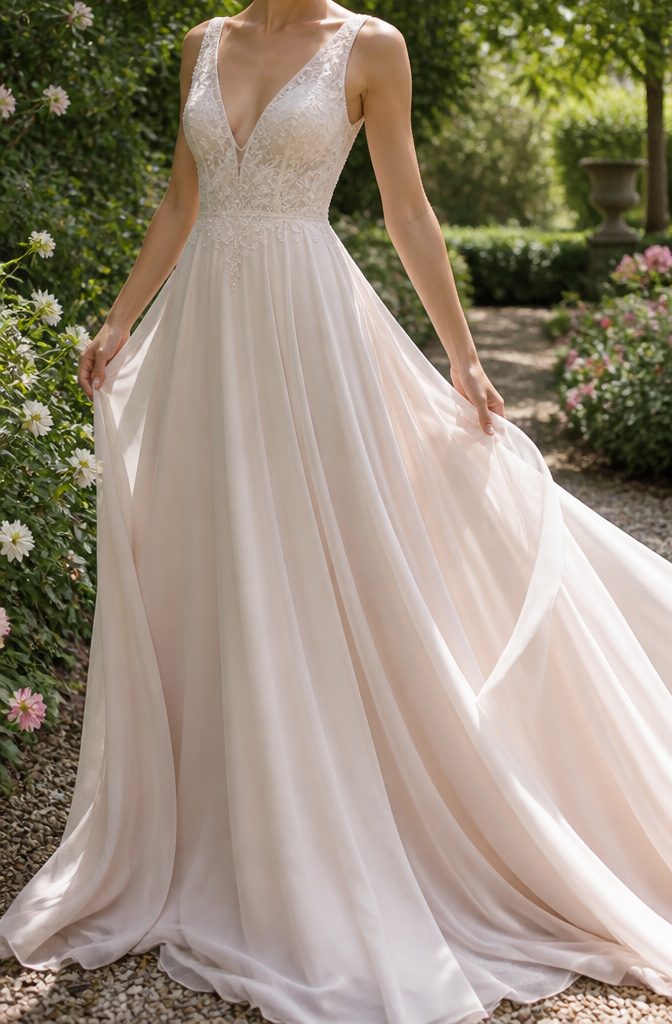
The A-line fits through the bodice and flares gradually from the waist, tracing the shape of a capital letter A all the way to the hem.
It skims over hips and thighs without clinging, which is why it consistently ranks as the most popular wedding dress silhouette among US brides.
The structure shows your waist while balancing out wider hips, making it particularly flattering on pear and apple shapes, though it genuinely works on most body types.
The flare starts at the natural waistline, or slightly above, and petite brides should make sure it doesn’t drop lower than that or the proportion shortens the legs.
The A-line works in almost every venue. Garden, barn, ballroom, beach, church—the silhouette photographs cleanly and moves gracefully without the volume of a ballgown or the restriction of a mermaid.
Fabric choice changes the effect: chiffon gives you movement, crepe reads sleek, and lace overlay leans romantic. If you’re unsure where to start, you start here.
Ball Gown
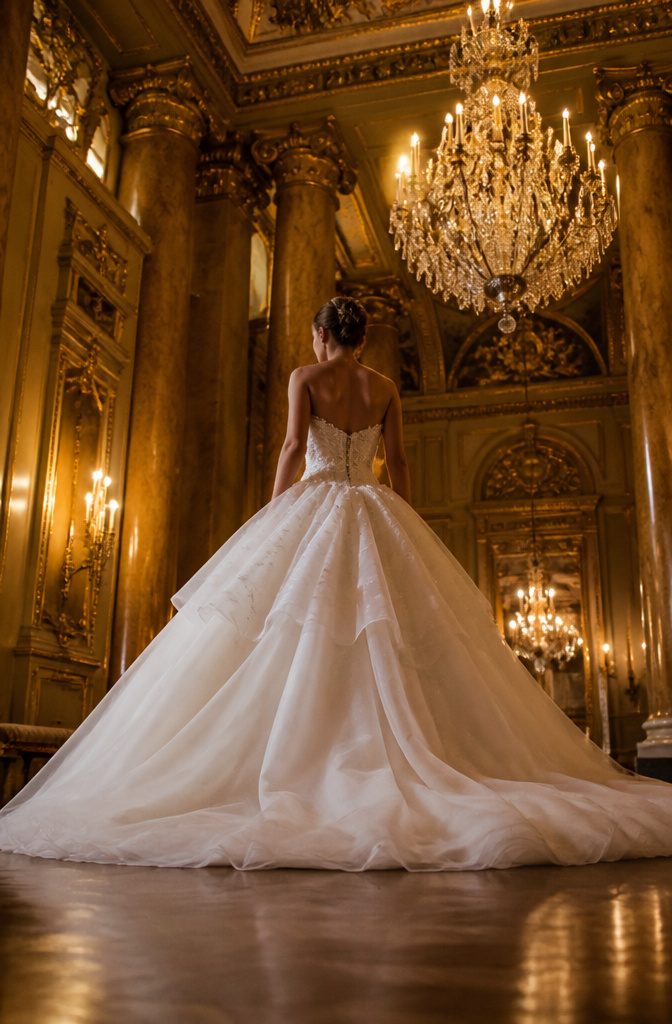
The ball gown is the princess dress in wedding form: a fitted bodice that meets a voluminous, full skirt flaring out at the natural waist.
The skirt typically builds its shape with layers of tulle or silk rather than the heavy crinoline common in earlier decades, though some styles still call for a hoop skirt underneath.
This silhouette creates drama by contrast, making the waist look smaller against all that volume below.
Ball gowns work particularly well for pear-shaped figures, since the fitted bodice emphasizes how small you are up top while the skirt provides coverage for hips and lower stomach.
Taller brides can handle the volume without it shortening their frame, and the elongated figure balances the shift from bodice to skirt. Petite brides, on the other hand, risk being overwhelmed by the sheer size of the skirt.
This is the most formal silhouette in bridal, suited to ballroom receptions and cathedral ceremonies where the skirt has room to move.
Ball gowns do not travel well and struggle on grass or sand, so save this style for indoor venues with space.
Mermaid
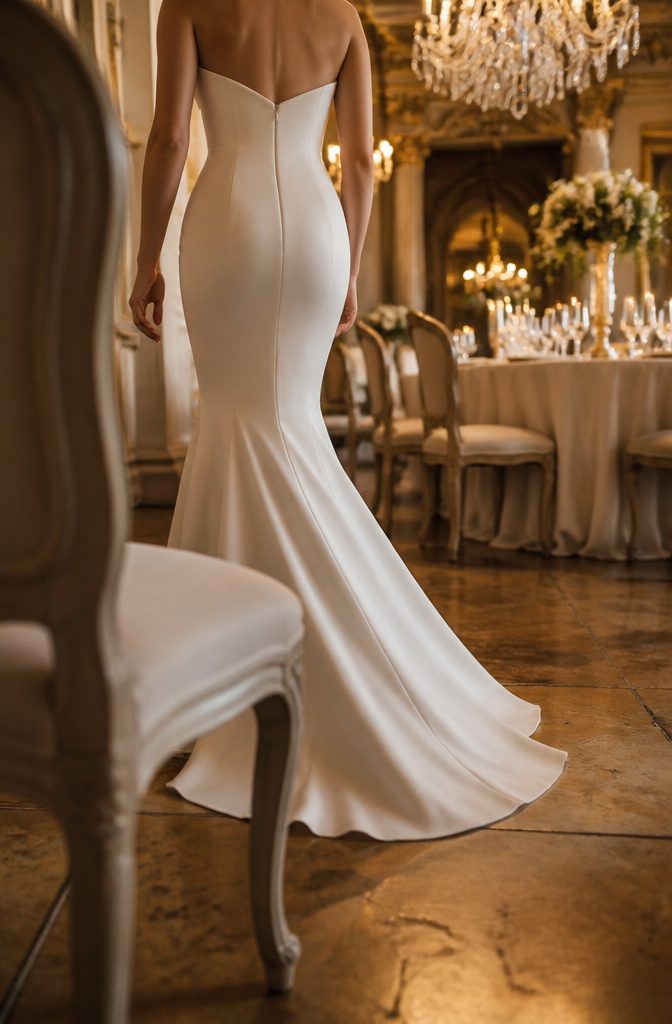
The mermaid silhouette fits tight from the bust through the hips and down to the knee, then flares out dramatically below the knee in a sweep of fabric that hits the floor.
It is the most sculptural of the wedding dress shapes, built to display curves rather than skim past them.
This cut works best on hourglass and pear figures, bodies that have the curves to fill the structure. A mermaid photographed from the back is striking, especially when the fabric is minimalist rather than heavily beaded.
Silk crêpe, matte lace, and crash chiffon read as modern. Stretch lace gives body-hugging definition, sequin fabric delivers full glamour.
You give up some movement. That tight hip-to-knee section means smaller steps, and sitting, dancing, and climbing stairs all take more effort.
A trumpet silhouette starts its flare higher, typically mid-thigh, and offers more freedom on the dance floor while keeping the curve-hugging effect. For brides who want drama but need to move, the trumpet is the better call.
Trumpet
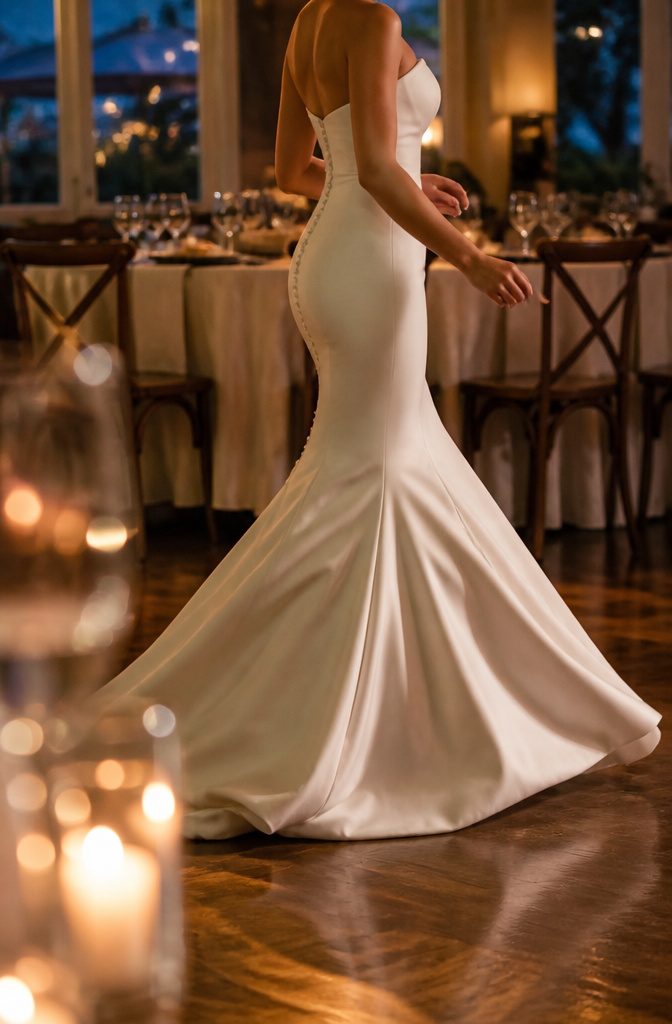
The trumpet flares from mid-thigh rather than the knee, which puts it somewhere between the mermaid and the fit-and-flare in how much fabric moves with you.
It still hugs the bust, waist and hips the same way a mermaid does, but releases higher, so you get most of the drama without quite as much restriction when you sit, walk or dance.
I think of it as the choice for brides who want the curve-following silhouette but also want to actually enjoy their reception.
The fit through the torso is close, so careful alterations matter here just as much as they do on a true mermaid.
The difference shows up at the knee: a trumpet gives you meaningfully more freedom of movement, and it photographs as slightly softer and less overtly fitted through the lower half.
Hourglass, tall and long-torso figures tend to carry this silhouette best, and it works across most venue types without feeling impractical for a long day.
Sheath
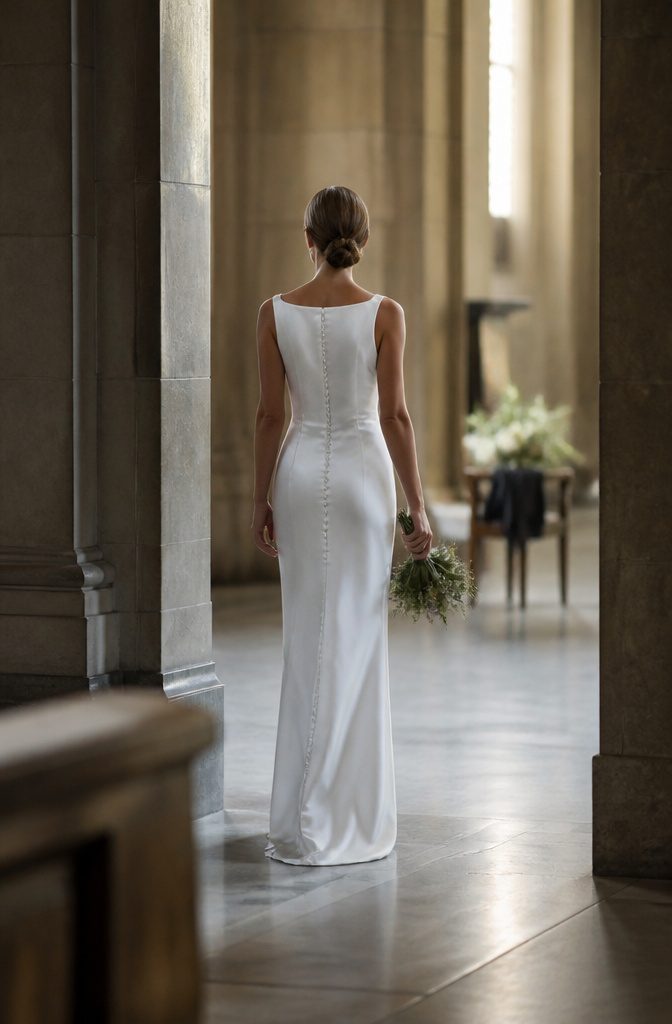
A sheath follows a straight vertical line from shoulder to hem, with no flare, no gathering, and no break in the fabric.
The silhouette relies entirely on fabric weight and cut precision rather than structure or volume, so silk charmeuse, stretch crepe, and silk satin are the materials that actually work.
The result is architecturally minimal and, when the fit is right, one of the most expensive-looking silhouettes in bridal.
Sheaths favor tall figures and elongated body types, though the continuous line also creates the illusion of height on shorter brides.
The straight cut emphasizes every curve and reveals fit problems instantly, so this is not a silhouette that tolerates off-the-rack shortcuts. The fit must be perfect.
Best for modern, minimalist aesthetics: city halls, intimate dinners, destination weddings, and venues where refined simplicity reads louder than traditional volume.
Fit-and-Flare
Fit-and-Flare
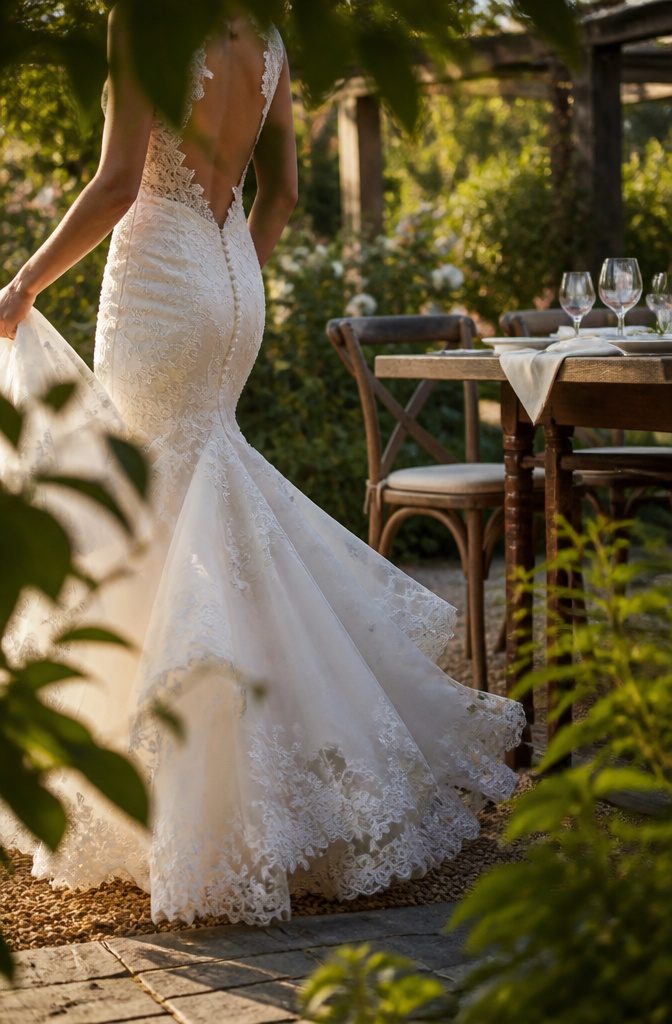
The fit-and-flare sits somewhere between A-line and trumpet. The bodice follows your natural waist and hip, then flares softly below the hip rather than dropping straight from the waist or hugging all the way to the knee.
You get a defined waist without the full commitment of a mermaid.
What makes this silhouette work for most body types is how it balances structure with movement.
The fitted bodice highlights your upper body while the flared skirt adds volume and motion, creating a slight hourglass curve without the drama of a ball gown.
It photographs particularly well when you’re moving, since the flare catches light and movement without overwhelming the frame.
One thing to watch: the term gets used loosely in the industry. Always check the exact fit on the hip, which is what actually distinguishes fit-and-flare from a simple A-line.
Empire
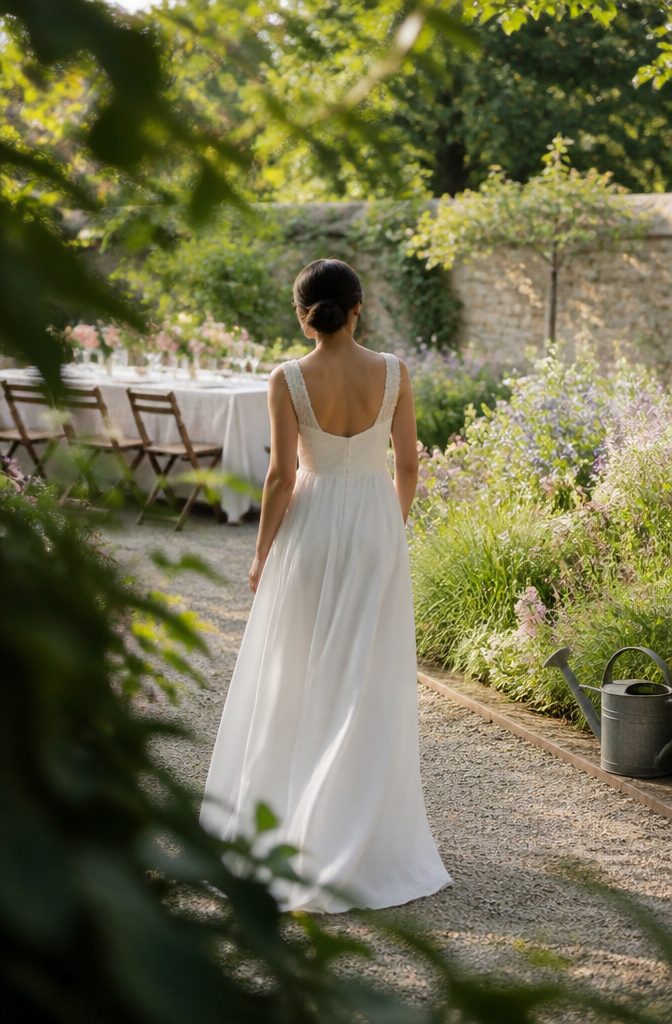
The waistline sits just below the bust, and from there the fabric falls in a single unbroken line to the hem.
That high placement is what makes the empire silhouette so forgiving: it skips the midsection entirely, lengthens the legs visually, and flatters petite, pear, and apple figures without requiring structure or boning.
Pregnant brides reach for this cut often, and it holds up well at destination and garden weddings where a fitted bodice would be impractical in heat.
The look has roots in Regency-era gowns and the draped garments of classical antiquity, which is part of why it reads as romantic and ethereal rather than structured or dramatic.
I’d call it the most universally flattering silhouette in bridal, but placement matters: a seam that sits even an inch too low can flatten the chest or emphasize the wrong area, so the fit under the bust is the one thing worth getting right.
Grecian
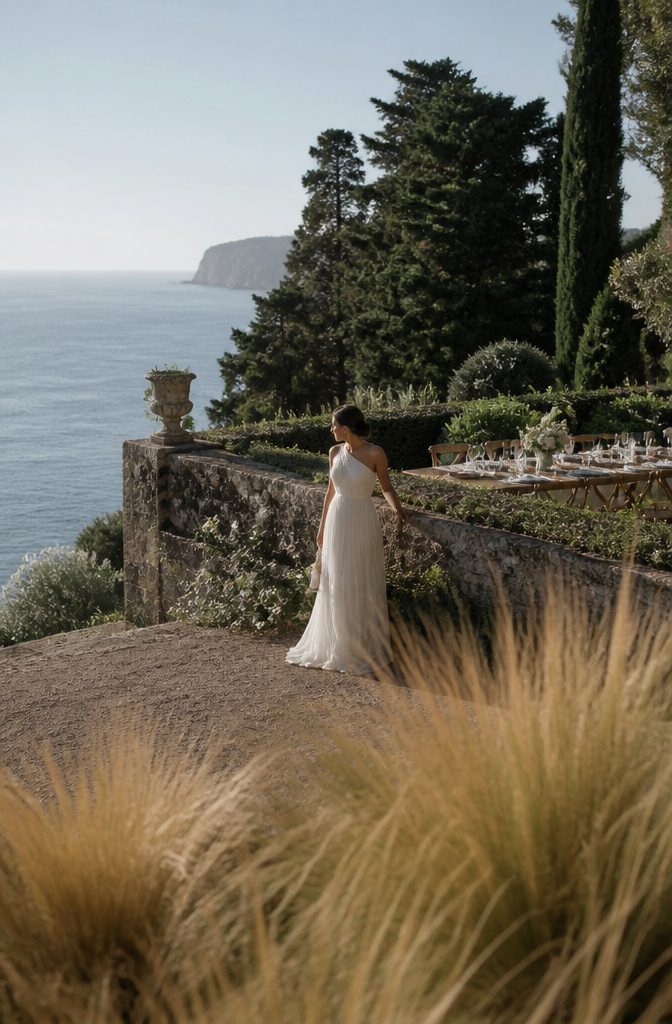
Grecian
The Grecian gown is technically an empire silhouette, but the soft pleats and asymmetric draping give it a distinctly different feel.
You get the high waistline that sits just below the bust, plus visual movement from the pleating or a single-shoulder strap that references classical Greek dress.
The draping gives the eye somewhere to travel, which makes this silhouette more interesting than a plain empire line while keeping the same comfort and flow.
I find Grecians work best for destination weddings, garden ceremonies, and beach venues. The soft, gathered fabric suits warm months and outdoor settings where you want relaxed elegance without sacrificing structure.
The pleating must be in high-quality silk or silk georgette, though. Cheaper fabric will not hold the pleats cleanly, and the whole silhouette depends on how well the draping falls.
Most body types can wear this style, and it flatters brides who want ease with more sculptural detail than a simple empire offers.
Two-Piece
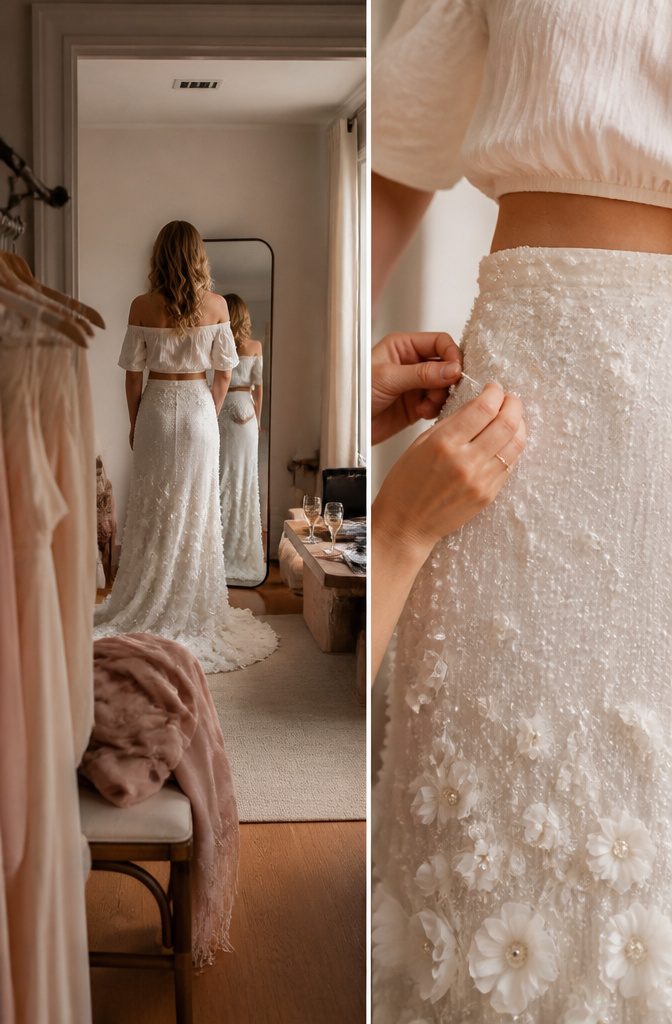
A crop top and skirt worn as separate pieces offers the most flexible approach in bridal.
You can pair one fitted lace or beaded top with multiple skirts, swap pieces between ceremony and reception, and pack them separately for a destination wedding. The seam between them becomes a design feature rather than something to hide.
The Laetisse from Spells of the Whispering Forest pairs an off-shoulder silk crash chiffon blouse with a beaded tulle skirt that has hand-stitched silk flowers at the hem.
The Miryelle from the same collection is offered as a full gown or as separates—a silk top, lace top, and silk skirt that can be combined in different ways across a wedding day.
The Mýwony Peony skirt is made to be paired with any lace top in the collection, and the Calypso Daylight matches a sleeveless top with a champagne volumetric tulle skirt over ivory satin.
Both pieces must be fitted together. The seam line is what makes or breaks the look.
Mini and Short
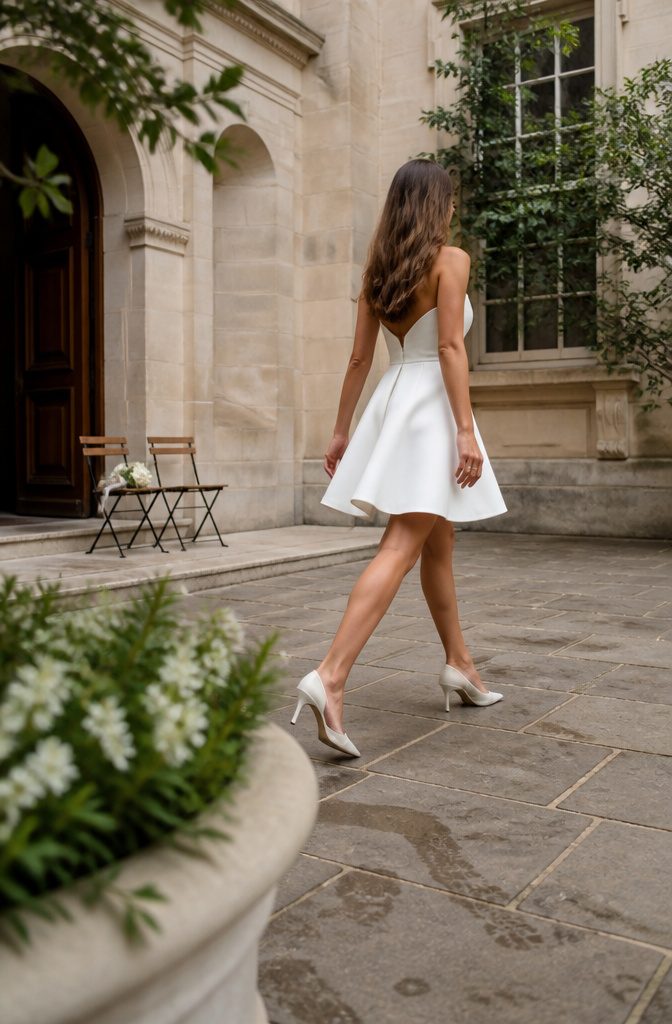
Mini and Short
Any silhouette can be cropped above the knee, and the result reads as its own category.
The hemline changes the feel so completely that mini, midi, and tea-length gowns get called out separately even though the structure beneath might still be A-line, sheath, or fit-and-flare.
Short dresses show up most often at courthouse ceremonies, destination weddings, and as second-look reception pieces. Brides choosing them cite movement freedom first: you can dance, walk on sand, and sit without managing a train.
Celebrities like Kourtney Kardashian and Lily Allen have worn short styles as their main ceremony dress, and more brides are following that lead rather than saving the hemline for the afterparty.
The shorter the dress, the more visible the shoes become. They’re part of the overall silhouette now, not an afterthought beneath tulle.
Fabrics that read unmistakably bridal help keep the look formal: silk crêpe, embroidered tulle, or fine lace all hold up better than cotton voile when the dress is doing less visual work.
Necklines That Change the Look
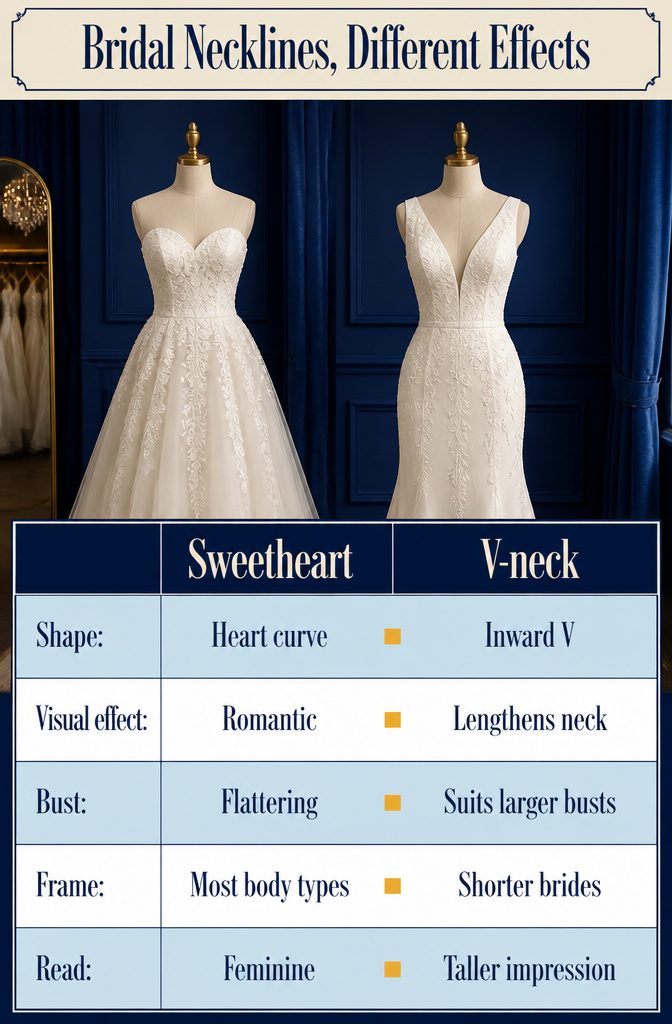
The neckline you choose sets the tone before anyone looks at the rest of the dress. A sweetheart neckline curves to mirror the top of a heart and reads romantic and feminine on most body types.
It’s the bestselling option in bridal for good reason: the shape flatters the chest without pushing toward drama you might not want.
V-necks pull the eye inward and down, which makes them particularly flattering if you have a larger bust.
The vertical line lengthens your neck and torso, and on shorter brides the effect adds the illusion of height. Pair a V-neck gown with a nude heel and the vertical read strengthens.
High necklines sit at or above the collarbone and work well on brides with smaller busts or taller frames.
They provide coverage across the chest while leaving room for a dramatic open back if that’s the balance you’re after. The look skews editorial rather than soft.
Off-the-shoulder styles graze the arms and collarbone with a drape that feels both romantic and relaxed.
Boat necks run horizontally from shoulder to shoulder, following the curve of the collarbone, and they create the illusion of a broader upper body on brides with smaller busts.
Both read classic and vintage-inspired, especially when paired with long or cap sleeves.
Sleeve Options
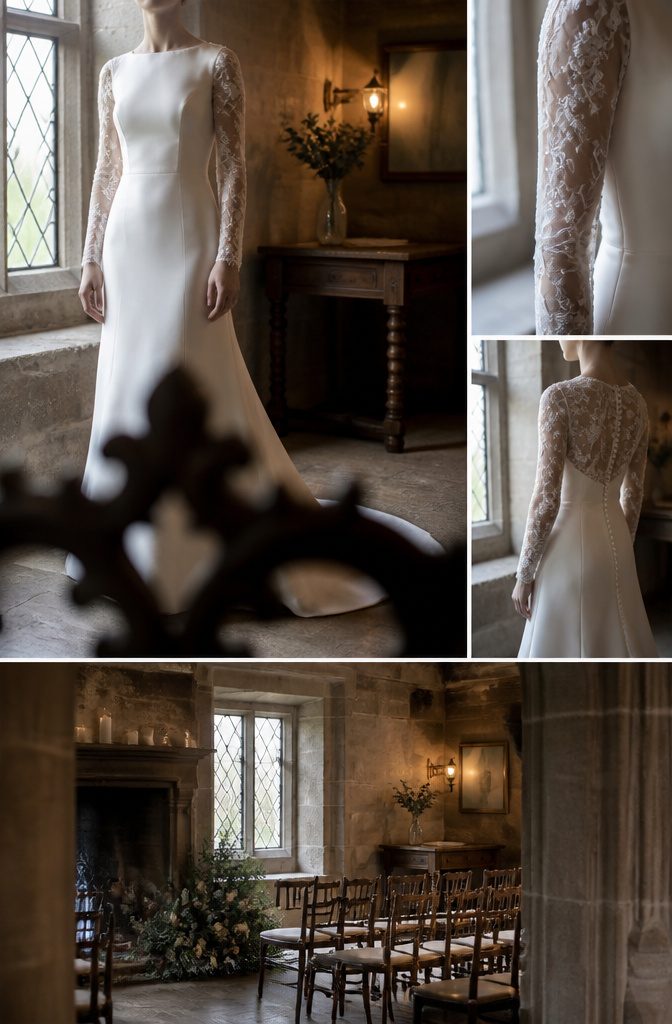
Sleeves change the formality and the season of a wedding dress faster than almost any other detail. Long sleeves bring structure and quiet drama, especially when they’re cut from sheer lace or fitted satin.
They read as elegant rather than covered up, and they work particularly well for winter weddings or ceremonies in historic venues where a little more formality feels right.
The fabric matters here: a long sleeve in heavy crepe or body-skimming satin feels polished, while sheer lace or tulle keeps the silhouette lighter and more romantic.
a long-sleeved wedding dress should read as elegant and assured, never frumpy
— Vogue
That distinction holds up. A long sleeve should elongate the arm and create a continuous line from shoulder to wrist, not add bulk or make the dress feel stiff.
Short sleeves sit at the opposite end of the formality scale. They suit civil ceremonies and backyard weddings where the whole event skews more relaxed, and they still add coverage without the weight of a full sleeve.
Short sleeves also work well for brides getting married in cooler months who want some modesty without committing to a gown that feels overly formal.
Bell sleeves flare from the elbow or upper arm down to the wrist, and they come in lengths from three-quarters to full.
The shape adds movement and a bit of glamour, particularly when paired with a simpler silhouette that lets the sleeve do the talking.
Spaghetti straps go the other direction entirely: minimal, delicate, and ideal for highlighting the shoulders. They keep the overall silhouette light and work especially well on column or slip dresses.
Strapless styles remain a bridal standard because they put the focus squarely on the neckline and the bust, but they do require a secure fit and often a well-constructed bodice to stay comfortable through a long event.
How Fabric Shapes the Silhouette
How Fabric Shapes the Silhouette
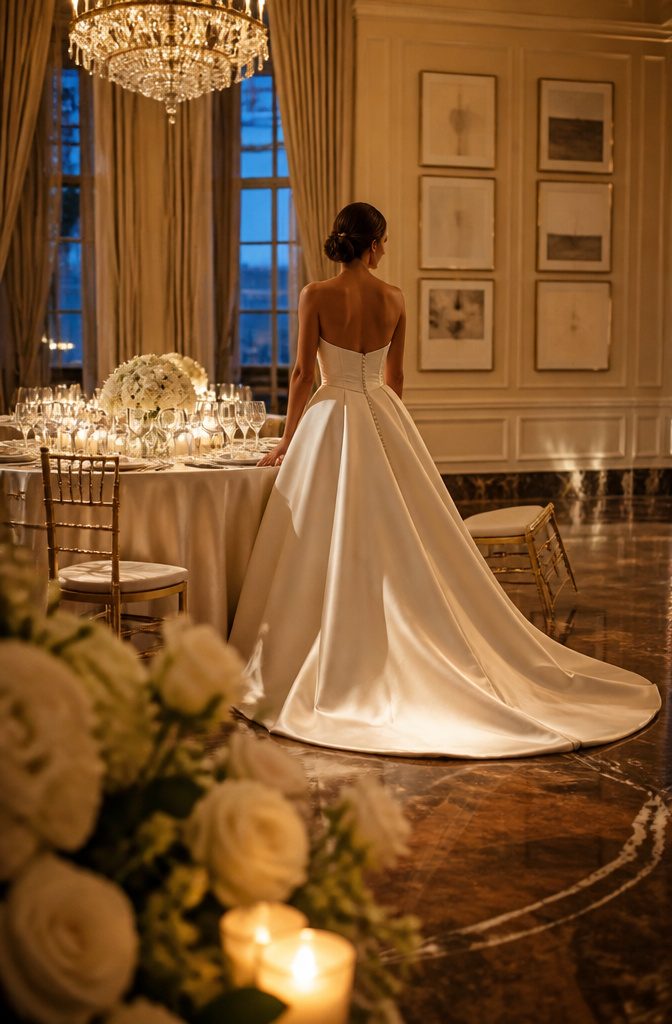
The same cut in different materials can read entirely different ways. A ballgown in tulle feels like a fairy tale; the same silhouette in duchess satin reads regal.
Fabric affects structure, drape, and how much volume the skirt holds, which means you can rule a shape back in just by switching what it’s made from.
Tulle layers to create volume without weight.
Chiffon flows and drapes with a bohemian feel. Mikado holds its shape with a modern, structured look, while organza adds crisp, sheer texture.
Charmeuse has that liquid-like drape that says luxury. Lace can be stretchy or structured, and it reads romantic either way.
Fabric weight matters practically, too.
A heavy silk ballgown at an outdoor summer ceremony means heat, and a chiffon sheath at a black-tie winter event risks feeling underdressed. Think about your venue season alongside silhouette and fabric together, not as separate decisions.
Matching Silhouette to Body Shape
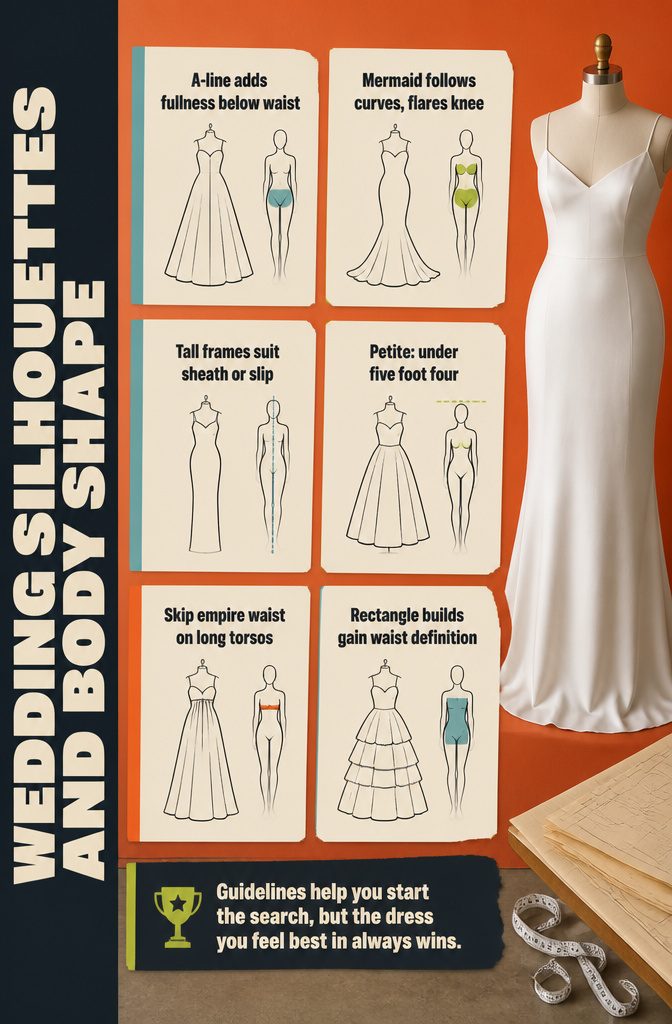
The silhouette that works best comes down to where you want the volume and where you want a clean line.
A-line and ball gown styles add fullness below the waist, which balances a narrower hip or makes a pear shape read as an hourglass.
Mermaid and fit-and-flare styles follow the body closely through the torso and hips before flaring at the knee, so they show off curves rather than creating them.
If you’re tall or long-waisted, a sheath or slip dress works with your proportions instead of cutting them short.
Drop-waist, basque, and trumpet styles give you room through the torso without shortening it visually. Skip empire waistlines, which sit just under the bust and compress the space you actually have.
Petite brides under five foot four do well with A-line, empire, sheath, or tea-length cuts. These keep the line unbroken and don’t pile on tiers or train length that reads heavy.
Rectangle or athletic builds gain definition from ball gown, mermaid, tiered, or fit-and-flare silhouettes, all of which create shape at the waist or hips. A-line works here too if the bodice is fitted or has a basque waistline.
Guidelines help you start the search, but the dress you feel best in always wins.
Choosing for Your Venue
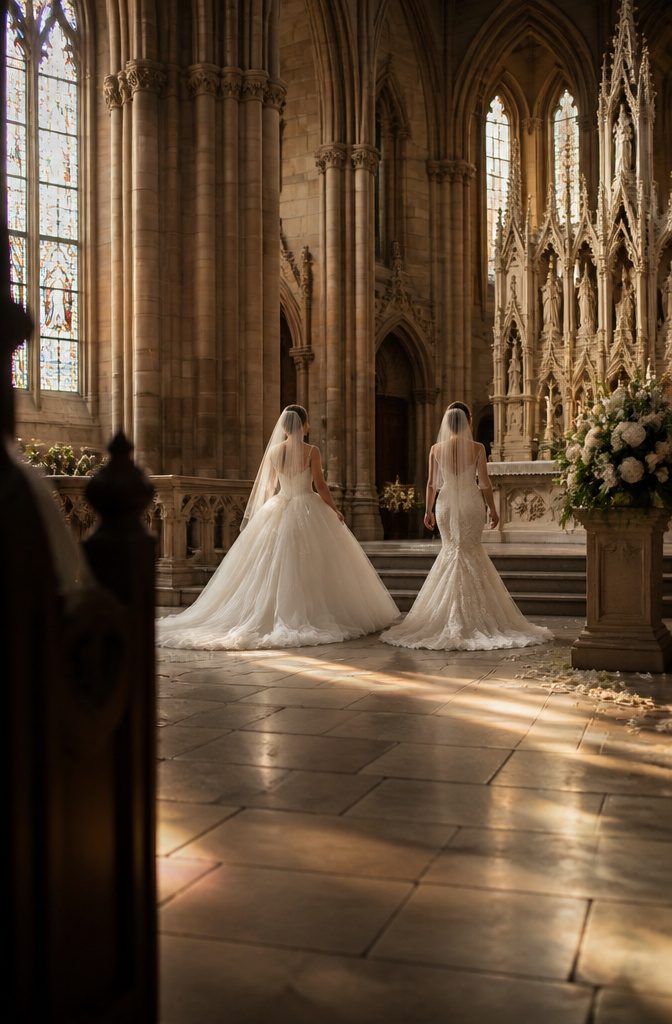
The ballroom silhouette doesn’t translate to sand. Ball gowns and mermaid dresses photograph beautifully in formal settings but become impractical the moment you step onto grass or uneven ground.
I look at venue the same way I look at body shape: a filter that narrows the field before you ever step into a fitting room.
For gardens, meadows, or forests, A-line and empire waistlines give you structure without the bulk. Tiered skirts and Grecian draping work here too, light enough to move through uneven terrain without dragging.
Beach and seaside ceremonies call for slip dresses, sheaths, or tea-length hems that won’t collect sand. Grecian styles handle wind better than anything with loose tulle.
Ballrooms and cathedrals are where ball gowns, mermaids, and trumpets finally make sense.
The formality supports the structure, and a smooth floor means a train becomes an asset rather than a liability. For courthouse or city hall, tea-length, slip, and sheath silhouettes scale down appropriately.
If you’re getting married in peak US summer, lightweight fabrics paired with A-lines or sheaths allow air to circulate. Heavily structured gowns with thick crinoline become uncomfortably warm in high temperatures.
Frequently Asked Questions
What is the most popular wedding dress silhouette?
The A-line silhouette consistently ranks as the most popular wedding dress style among US brides.
It fits through the bodice and flares gradually from the waist, flattering most body types by skimming over hips and thighs without clinging. The silhouette works across nearly every venue type and photographs cleanly while allowing easy movement.
How do I choose the right wedding gown for my body type?
Start by identifying where you want volume and where you want a clean line.
A-line and ball gown styles add fullness below the waist and balance narrower hips, while mermaid and fit-and-flare styles follow curves closely through the torso and hips before flaring at the knee.
Petite brides under 5’4" do well with A-line, empire, sheath, or tea-length cuts that keep the line unbroken, while tall or long-waisted figures suit sheaths, slip dresses, and trumpet styles that work with their proportions.
What wedding dress style is best for a pear-shaped body?
A-line and ball gown silhouettes work best for pear-shaped figures.
Both fit through the bodice and add volume to the skirt, which balances wider hips and makes the waist look smaller. The structure shows your waist while the flare provides coverage for hips and thighs without clinging to them.
How many wedding dress appointments does it typically take?
Most brides need 2 to 4 appointments before choosing a dress.
Knowing your silhouette shortlist, fabric preferences, and venue style before you go can cut this number down. Many brides who research thoroughly before their first appointment make a decision within 1 to 2 visits.
When should I start shopping for my wedding dress?
Most designers and boutiques recommend starting 9 to 12 months before your wedding date. This allows time for ordering, production, and alterations, which can take several months depending on the designer and any customization you request.
What are the different types of wedding dress silhouettes?
The primary silhouettes are A-line, ball gown, mermaid, trumpet, sheath, fit-and-flare, empire, Grecian, two-piece, and mini or short styles.
Each has a distinct shape: A-line flares from the waist, ball gown has a full skirt from the natural waist, mermaid fits tight to the knee then flares, and sheath follows a straight line from shoulder to hem.
The silhouette you choose affects how the dress moves, photographs, and flatters your body type.
What’s the difference between a mermaid and a trumpet wedding dress?
A mermaid fits tight from bust through hips down to the knee, then flares out dramatically below the knee.
A trumpet flares from mid-thigh instead, which gives you more freedom to sit, walk, and dance while keeping the same curve-hugging effect through the torso.
Both silhouettes display curves, but the trumpet releases higher and offers less restriction during a long reception.