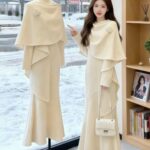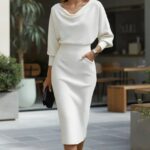
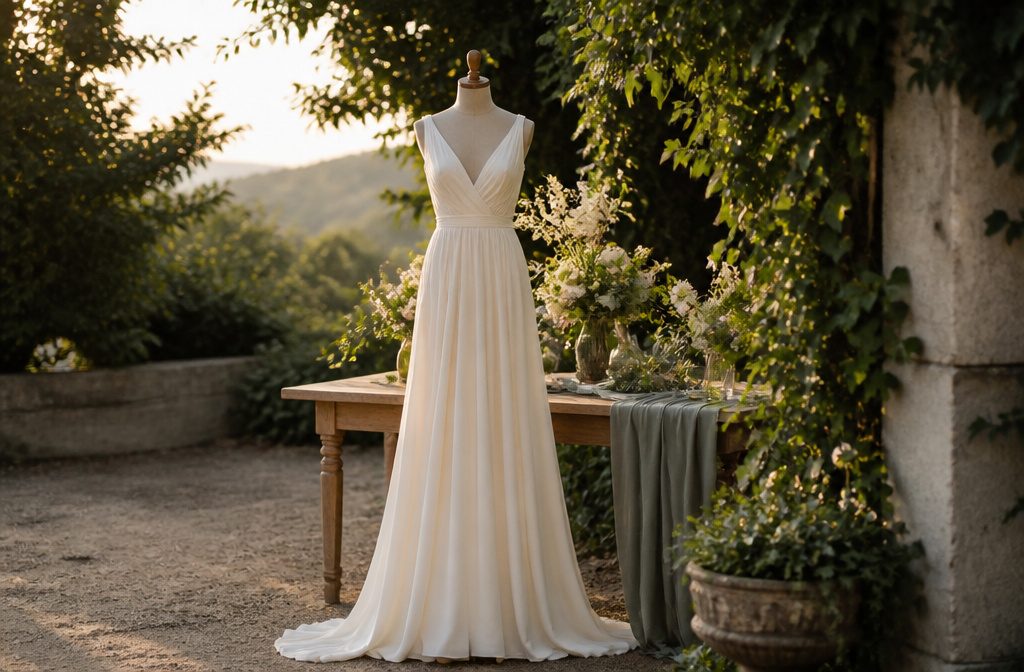
Wedding dress formal attire refers to the outfit a guest wears to a formal wedding, and the dress code printed on the invitation determines whether that means a floor-length gown, a midi dress, or something in between.
Black tie and white tie both require full-length gowns, while formal and semi-formal codes leave room for elegant cocktail dresses or tailored jumpsuits in fabrics like satin and crepe.
1. Floor-Length Evening Gown
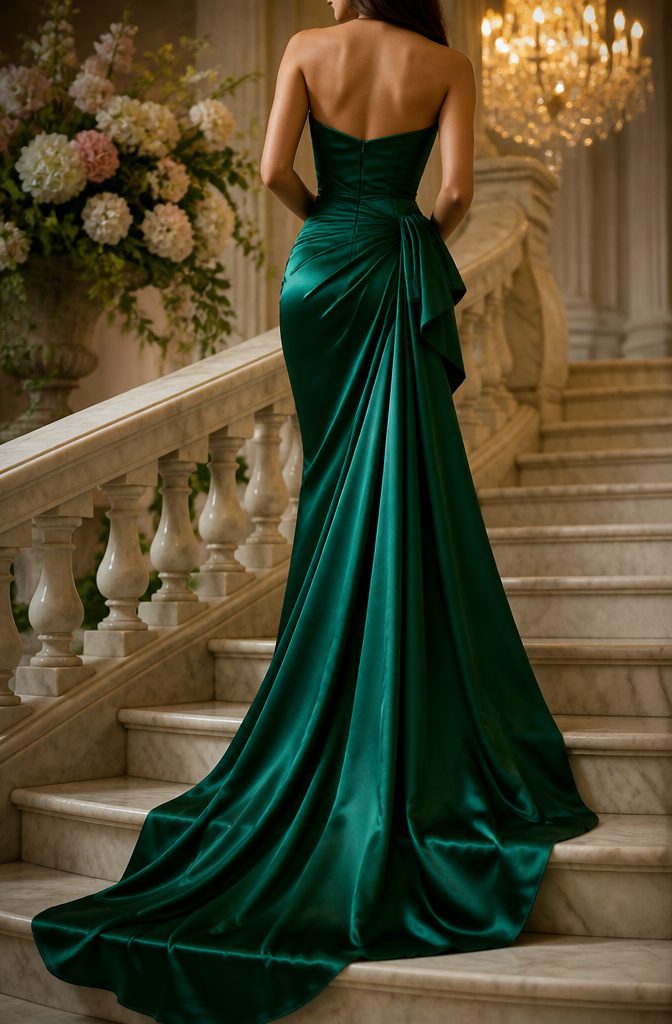
White tie and black tie events are where a floor-length gown is required, and white tie stands as the rarest and most formal dress code you’ll encounter at a wedding.
A full-length evening gown or ball gown is the only appropriate length here. Anything shorter reads as underdressed, and that’s the last thing you want at an event this formal.
Black tie gives you slightly more room to move. A floor-length gown still works best, but you can choose from fabrics like satin, crepe, and velvet depending on the season.
Velvet feels right for winter weddings, while satin and crepe work across most of the year. The silhouette should be refined, and the fabric should look luxurious.
Save casual textures and short hemlines for cocktail or semi-formal weddings. Long gloves remain a traditional option for white tie, though most modern weddings skip them.
2. Long Dress or Elegant Cocktail Dress
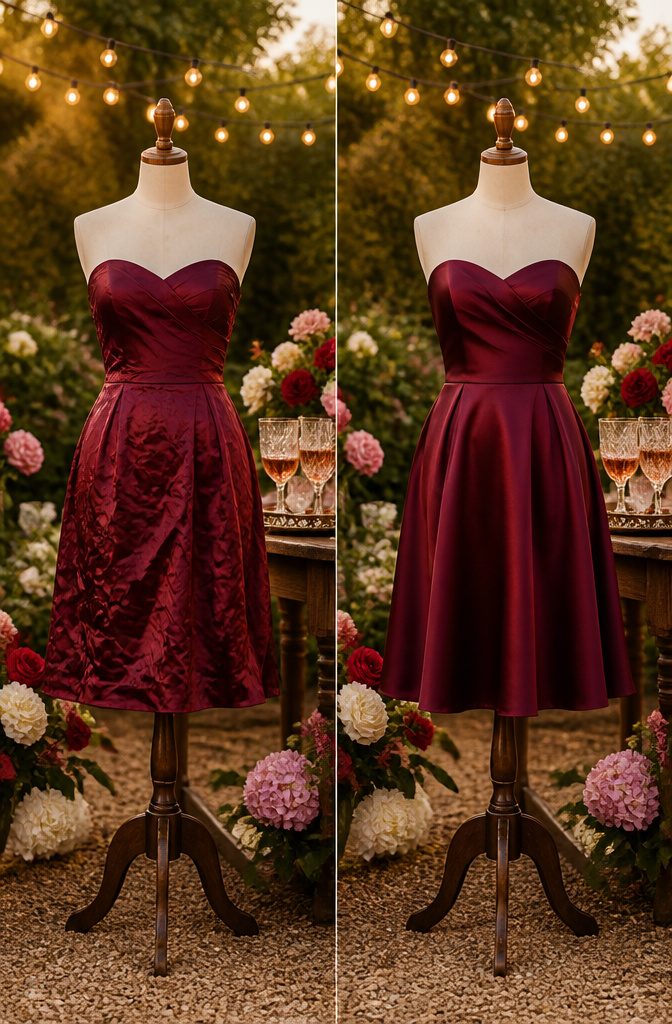
Black tie optional and formal weddings are where this choice pays off. The dress code puts floor-length front and center, but it explicitly leaves room for a polished cocktail dress if the silhouette feels right.
That flexibility matters when you already own something that works or when a shorter hem suits the venue better than dragging fabric across grass or uneven flooring.
Floor-length reads as the safer pick at black tie optional, since the hosts will be dressed to that standard. A cocktail dress clears the bar when the cut, fabric and detail level match what an evening gown would bring.
Rich satin, structured bodices and deliberate hemlines keep a knee-length or midi option in the same weight class as something that hits the floor. A flowy sundress length does not.
3. Midi Dress
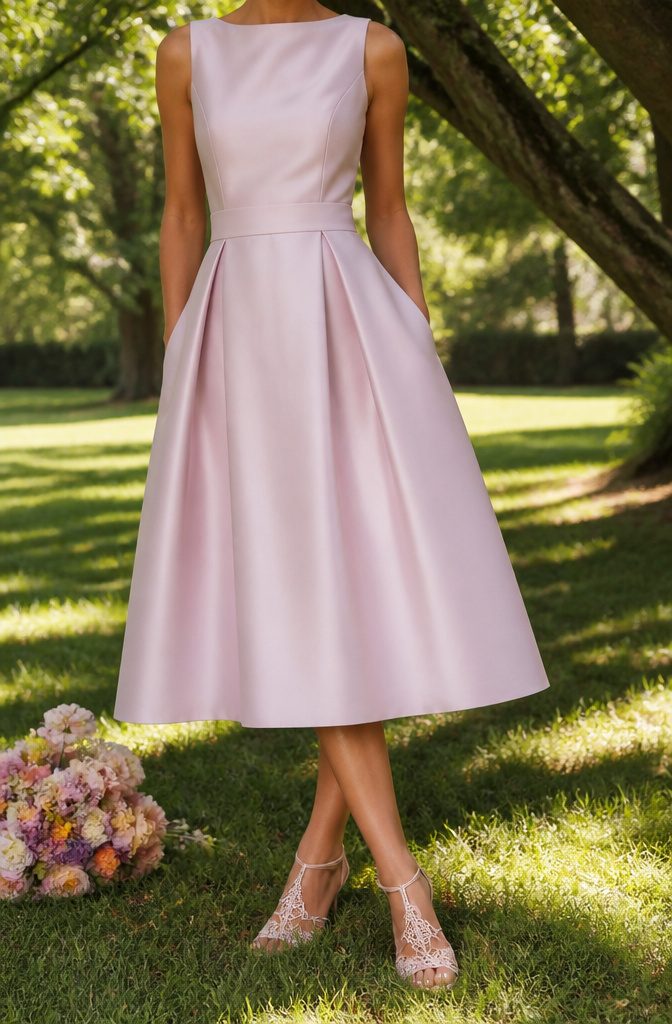
The knee-length to midi dress works for semi-formal and cocktail weddings, and it’s one of the most versatile lengths you can wear as a guest.
A knee-length dress fits cocktail attire and semi-formal codes without the commitment of a floor-length gown, and a midi hits the middle of the calf in a way that reads polished for evening receptions while still feeling appropriate for daytime ceremonies.
Cocktail attire sits a step below black tie and a step above semi-formal, so a midi cocktail dress in a structured fabric like faille gives you the formality the occasion asks for.
A simple floor-length dress works for an evening cocktail wedding too, but the midi gives you more flexibility if you’re moving between indoor and outdoor venues or dancing through the night.
For daytime weddings, a pastel or a print in this length feels right without looking too casual.
4. Dressy Jumpsuit
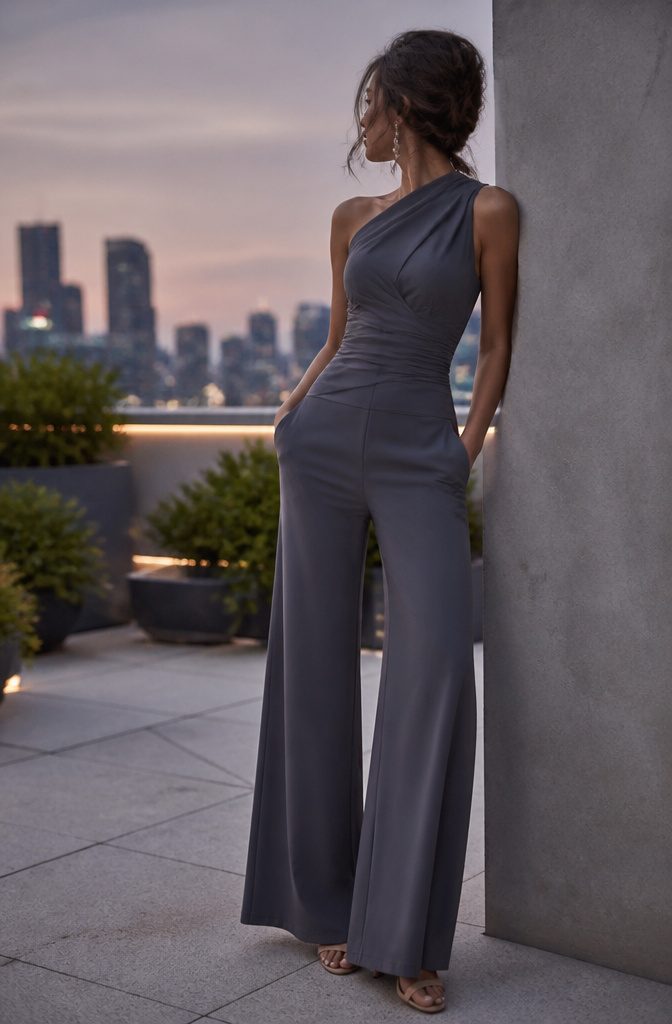
A tailored jumpsuit in satin or crepe reads formal when the fit is right and the fabric has weight.
Wide-leg styles with a cinched waist carry the structure you need for a formal wedding, and the silhouette keeps things polished without feeling stiff.
I’ve seen these work beautifully at evening ceremonies, especially when the couple has leaned modern with the venue or the overall tone.
The fabric choice matters more than you’d think.
Soft, drapey materials pull the look back toward casual garden-party territory, which is fine for a relaxed celebration but feels underdressed at a black-tie or formal affair. Stick with something that holds its shape, and you’re in solid standing.
5. Dressy Separates
Dressy Separates
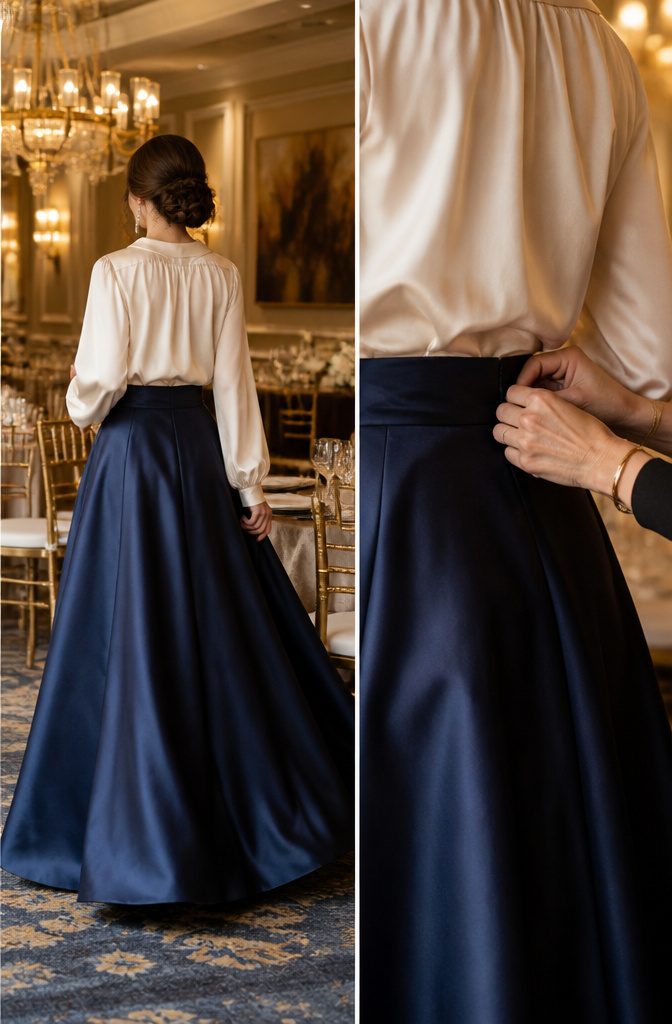
A silk blouse with a floor-length satin skirt reads formal when the fabric carries the weight. The skirt needs structure—bias-cut silk, structured taffeta, or heavy crepe—not the ponte knit you’d wear to the office.
Look for skirts that fall with enough body to hold a shape, and pair them with a top that shows some intention: a blouse with covered buttons, a shell with an interesting neckline, or something in silk charmeuse rather than cotton poplin.
The waistline matters more than you’d expect. A high-waisted skirt that meets the blouse cleanly, with no gap and no bunching, pulls the outfit into one gesture instead of two pieces that happen to share a body.
Tuck the blouse fully or leave it out entirely; a half-tuck tips the whole thing back toward casual. Monochrome helps, but contrasting pieces work when the textures are both formal—black silk on ivory satin, not chambray on anything.
6. Casual Dress for Relaxed Weddings
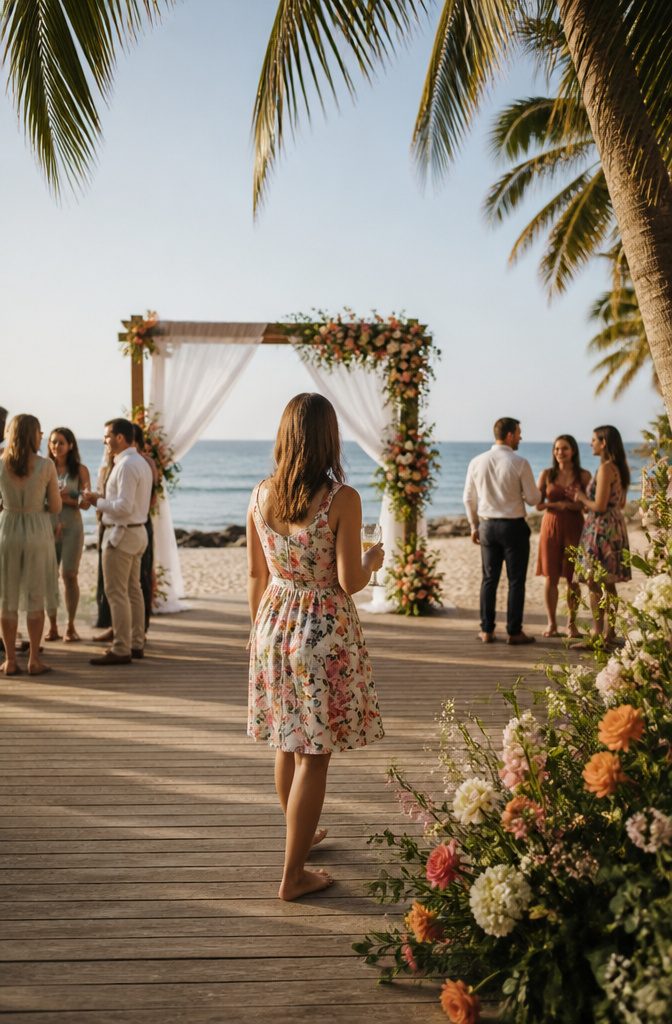
A beach ceremony or backyard wedding gives you room to step away from full length and heavy fabric.
A knee-length or tea-length dress in linen, cotton poplin, or a lightweight crepe keeps you polished without the formality of a ballroom gown.
I look for cuts that still hold structure: a fitted bodice, a defined waist, sleeves that sit cleanly at the shoulder.
The relaxed setting does not mean casual in the weekday sense. Skip anything you would wear to brunch alone, and treat it more like a garden party where polish still counts.
Researching the venue helps calibrate how far to relax. An outdoor wedding on the beach allows softer colors and breathable fabrics, but you still want a silhouette that photographs well and moves through the evening without looking rumpled.
A smart day dress in a soft fabric or a printed midi works when the invitation lands somewhere between dressy casual and casual, which still means dressing up.
Reading the Dress Code
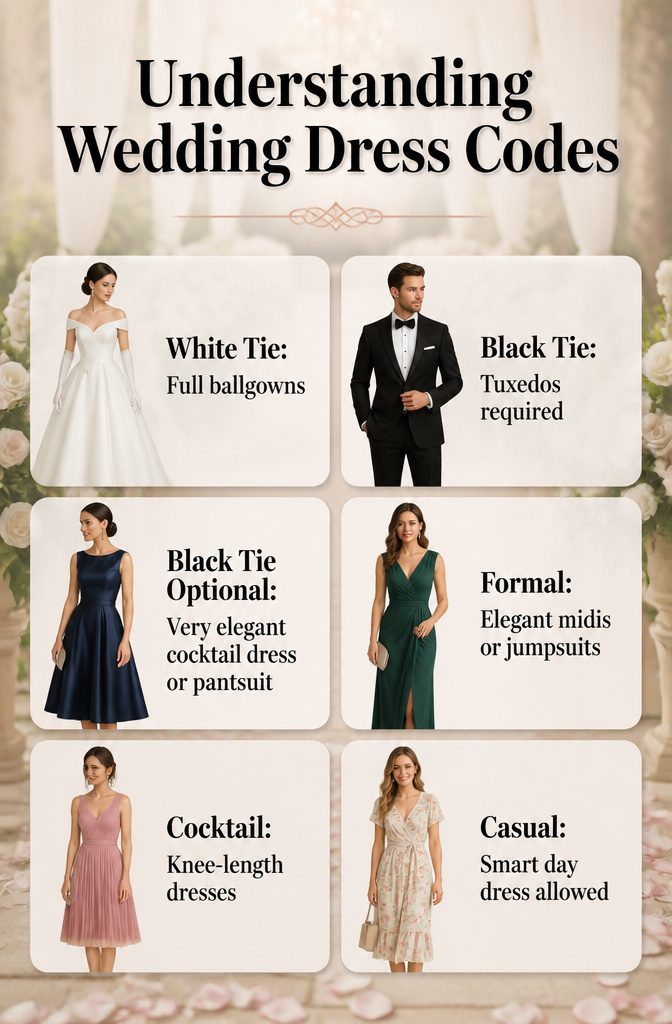
The invitation usually states the dress code somewhere near the ceremony details, and what it says matters. Here’s what each term expects:
- White tie: The most formal level and rarely used. Full ballgowns for women, tailcoats for men. Floor-length is the only acceptable hemline.
- Black tie: Floor-length evening gowns or formal cocktail dresses. Men wear tuxedos. No negotiation on formality.
- Black tie optional: The hosts dress in black tie, but guests may wear a very elegant cocktail dress, a tea-length dress or a tailored pantsuit instead of a floor-length gown. Men can substitute a dark suit for a tuxedo.
- Formal: Long dresses, elegant midis or structured jumpsuits. Not a synonym for black tie. This is the polished middle ground between cocktail and black tie.
- Semi-formal and cocktail: Knee-length to midi dresses work here. Less dramatic than formal.
- Casual: A smart day dress is appropriate.
Colors to Avoid and Colors That Work
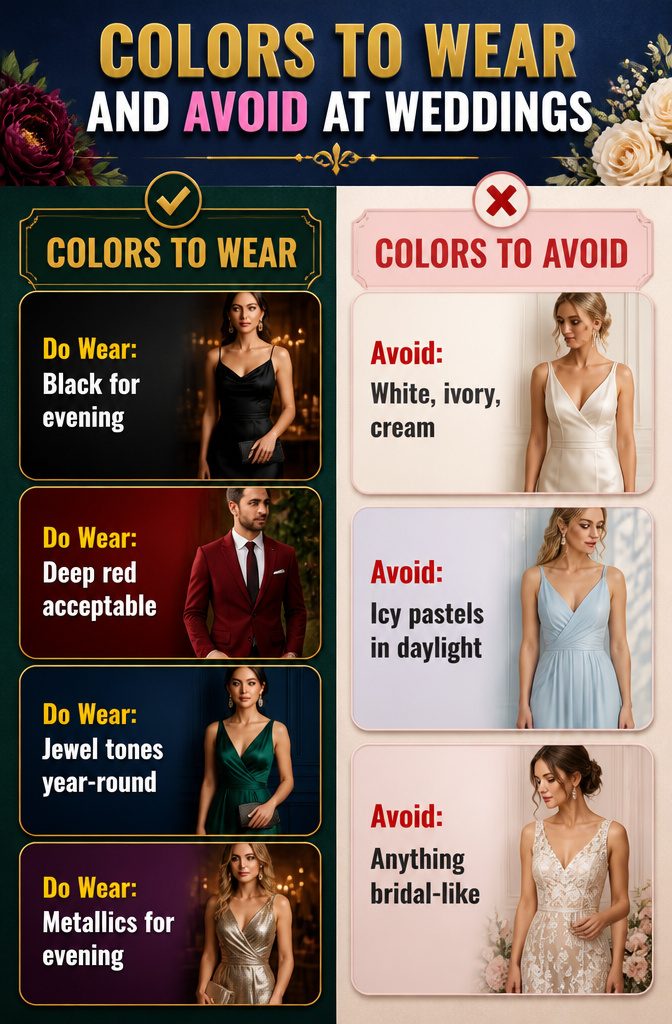
The biggest no-go is white, ivory, cream, and very pale champagne. Those belong to the bride, and anything that could read as bridal in photos stays home unless the couple explicitly asks everyone to wear white.
Icy pastels can photograph white under natural light, so check your fabric in daylight before the event if you’re leaning toward something soft.
Black works for evening weddings and anything listed as black tie.
Red is fine at most modern weddings, though a deeper shade draws less attention than a very bright one if the wedding skews traditional. Jewel tones like emerald, sapphire, and plum are reliable year-round.
Dusty pastels and soft florals suit spring daytime weddings, while burgundy and navy fit fall and evening celebrations. Metallics hold up for evening events in any season.
Picking Fabric by Season
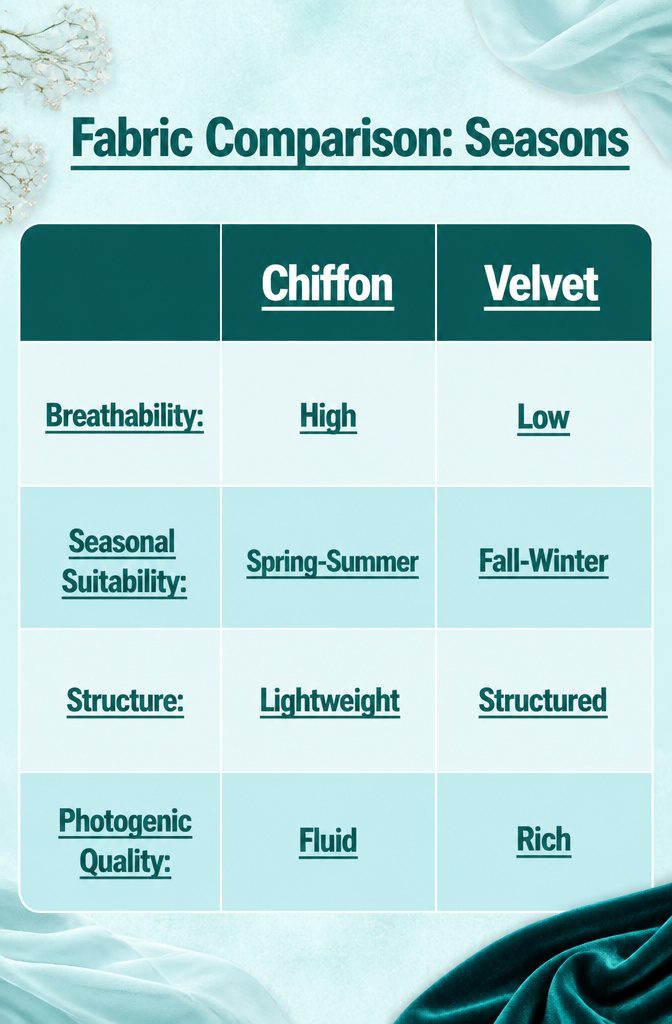
Chiffon and organza are what you want when the wedding falls between April and September.
Both fabrics breathe, they move in a way that photographs beautifully, and they won’t leave you overheated during an outdoor ceremony or cocktail hour on a terrace.
Crepe works here too if you prefer something with a little more structure that still reads as lightweight. I’ve found that breathable fabrics like chiffon handle warm weather far better than anything with a lining that traps heat.
Velvet, satin, and heavier beaded fabrics come into play for fall and winter weddings.
Velvet especially suits the season because it photographs richly and holds its shape in cooler air without feeling out of place. Faille is another option that works well when you want weight without bulk.
The fabric you choose changes how comfortable you’ll be standing through a ceremony and dancing later, so match it to the season rather than trying to make a summer dress work in December with a wrap.
Shoes That Hold Up at Outdoor Weddings
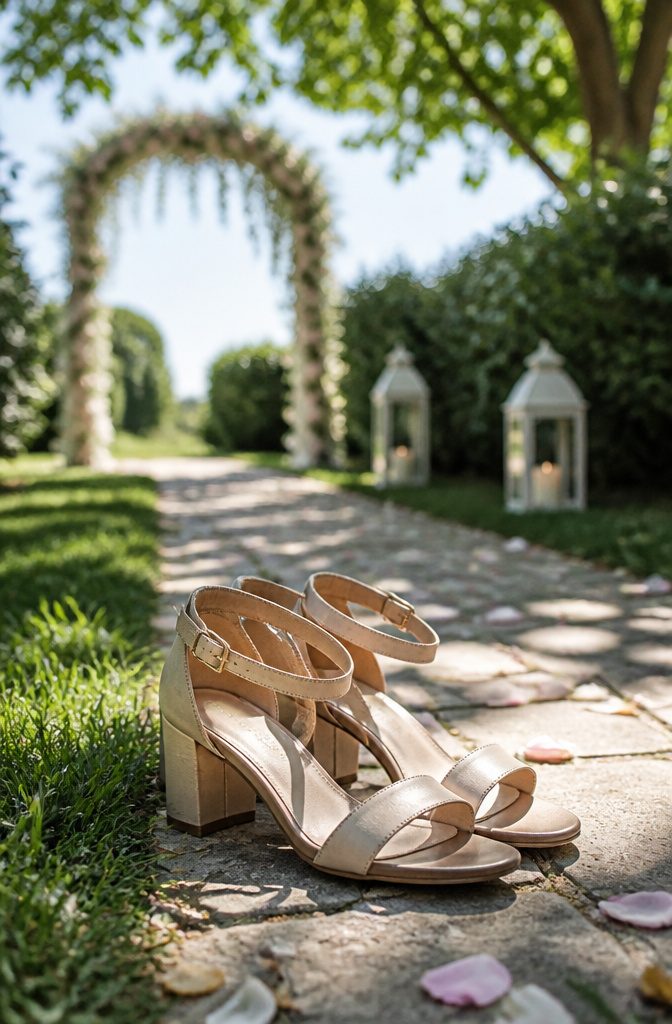
Block heels or dressy flats are the shoes that actually work when a wedding takes you onto grass or garden paths. Stilettos sink straight into soft ground, and you spend the ceremony shifting your weight instead of watching the couple.
Block heels distribute pressure across a wider base, so you stay level. Wedges do the same thing and look just as polished in metallic, nude, or black.
Comfort matters past the venue surface. You’ll be standing through the ceremony and moving around the reception, and shoes you can dance in beat shoes you have to kick off by the second song.
For an indoor wedding, any heel holds up fine. Outdoor celebrations call for the shoe that keeps you steady without compromise.
Keeping Accessories Simple
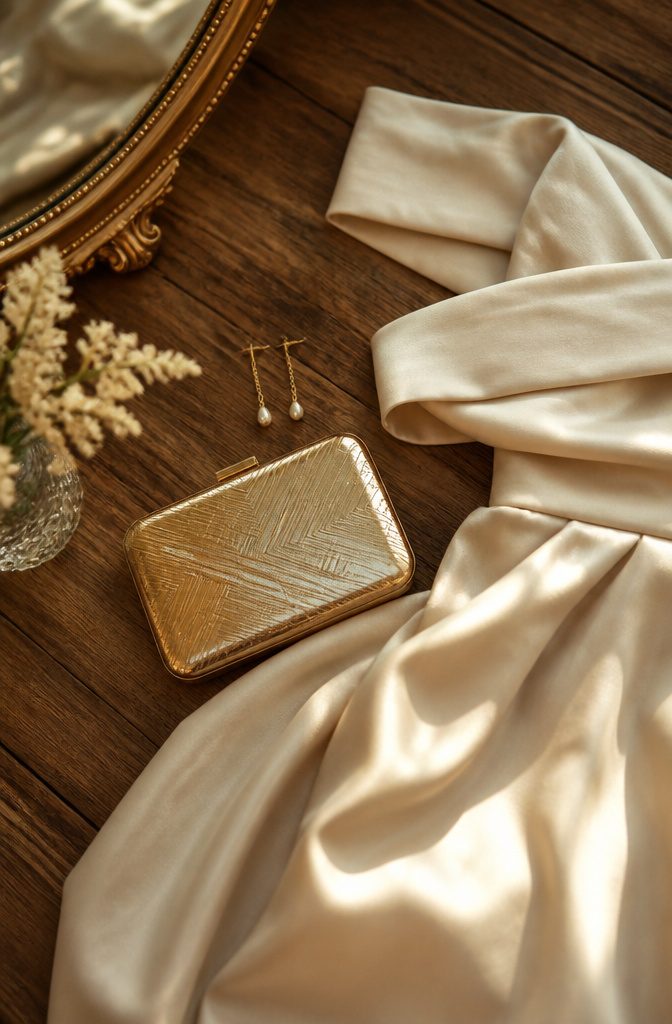
A small clutch and dainty earrings are the default, and they work because they let the dress finish the sentence. Metallic tones in gold or silver add just enough shine without pulling focus.
The rule flips when the dress itself is spare: a black column gown or a clean A-line can carry one statement piece, whether that’s a gold clutch, a structured updo that shows off an off-shoulder neckline, or a single bold bracelet.
More than that and the accessories start competing with each other instead of supporting the look.
When the silhouette already has architectural detail, peplum folds or color blocking, I keep jewelry minimal and let the dress do the work.
The upside of restraint here is that you avoid the wedding guest trap of looking like you tried too hard.
Formal doesn’t mean loud, and a tasteful bracelet reads better than a full jewelry set when the event calls for polish over personality.
Frequently Asked Questions
What should I wear as a wedding guest?
Follow the dress code stated on the invitation.
White tie requires a floor-length ballgown, black tie calls for a floor-length evening gown, formal allows long dresses or elegant midis, cocktail and semi-formal suit knee-length to midi dresses, and casual weddings call for a smart day dress.
Avoid white, ivory, cream, and very pale champagne at all weddings.
Can I wear black to a wedding?
Yes, black works for evening weddings and any event listed as black tie. It reads as polished and appropriate at most modern weddings, though it fits evening celebrations better than daytime ceremonies.
What is the difference between black tie and black tie optional?
Black tie requires a floor-length gown with no room for shorter options.
Black tie optional allows guests to wear a very elegant cocktail dress, a tea-length dress, or a tailored pantsuit instead of a floor-length gown, though the hosts will still dress in black tie.
What does formal attire mean for a female wedding guest?
Formal sits between cocktail and black tie.
It calls for a long dress, an elegant midi, or a structured jumpsuit in a refined fabric like satin or crepe. It’s more polished than cocktail attire but doesn’t require the full ballgown formality of white tie.