
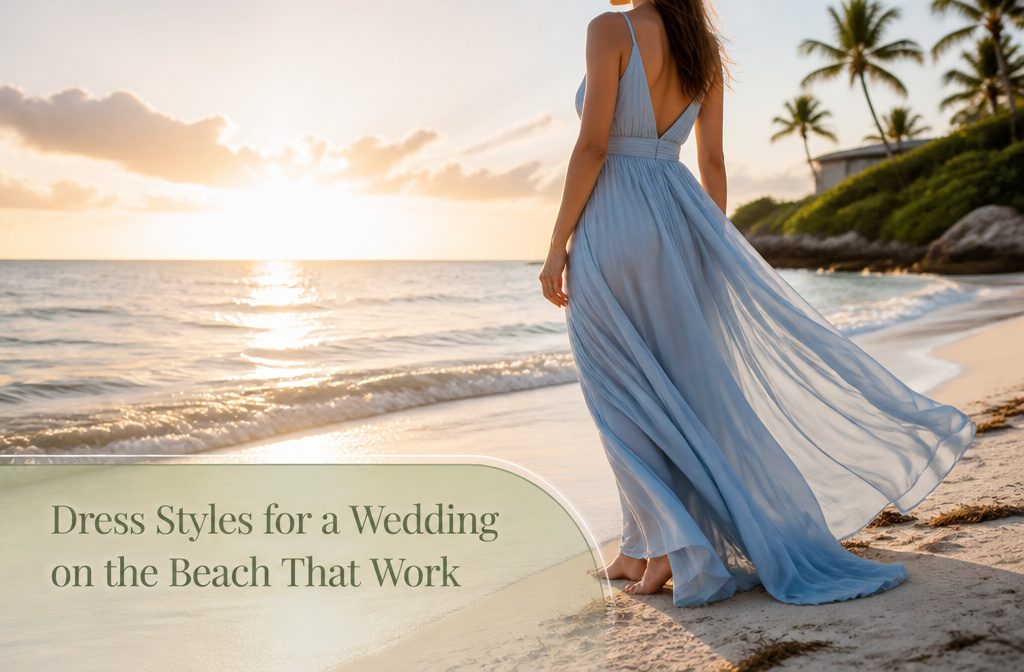
The dress that works for a beach wedding is lighter, looser and lower to the ground than what you’d wear indoors.
Chiffon maxis and linen jumpsuits move with wind instead of fighting it, and wedges keep you stable on sand where stilettos sink.
Casual beach ceremonies call for cotton sundresses in florals or pastels, while formal invitations still mean floor-length gowns, just in silk or organza rather than heavy satin.
1. Beach Casual Attire
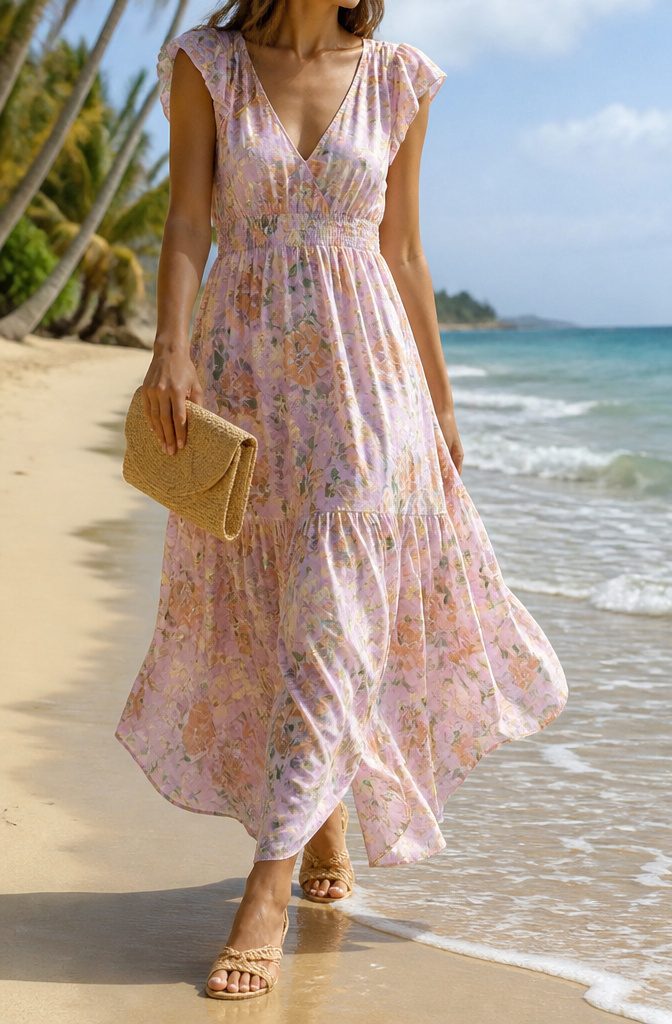
Cotton and linen are the fabrics that make beach casual work. Both breathe in the heat, move easily in wind, and keep you comfortable through a ceremony on sand followed by a waterfront reception.
Maxi dresses in pastel tones or flowy sundresses with floral or tropical prints hit the right note for a relaxed beach wedding without looking too casual.
A tiered midi dress works just as well, especially if the fabric has enough weight to stay put in a breeze without clinging.
Chic jumpsuits are another strong option. A linen jumpsuit styled with a statement necklace and a straw clutch looks polished and feels practical, particularly if you’ll be walking between the ceremony site and a reception area.
Floral midi sundresses paired with wedge espadrilles or flat sandals keep the look wedding-appropriate while giving you stable footing on uneven ground.
Skip anything structured or made from heavy synthetic fabrics. The setting calls for ease, and a cotton or linen piece that moves with you will photograph better and wear more comfortably than something fighting the elements.
2. Beach Formal Attire
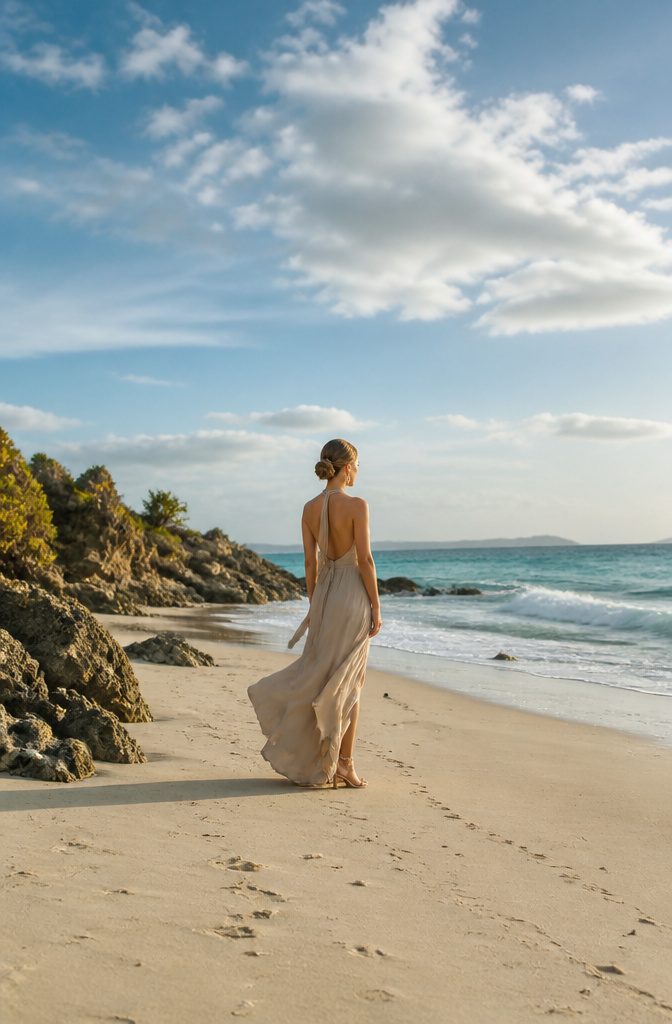
Beach formal attire strikes a balance that sounds impossible until you see it work: floor-length elegance that still moves in the wind.
The fabric matters more than the silhouette here. Silk, chiffon, and organza stay breathable without reading casual, and they catch the breeze instead of fighting it.
A floor-length gown in chiffon with a halter neckline or asymmetrical hem works, as does a slip dress in satin. Midi dresses are the other option worth considering if you want formality without quite that much fabric on sand.
The choice is simple. Heavy satin and overly embellished gowns look out of tune with the setting, no matter how formal the invitation reads.
Refined simplicity wins: clean lines, an open back, soft draping. Pair the dress with statement earrings and minimalist jewelry rather than stacking on sparkle.
A sleek low bun or pinned-back soft waves holds up better than loose hair in breezy conditions, and metallic sandals finish the look without the risk of stilettos sinking into sand.
3. Semi-Formal Beach Attire
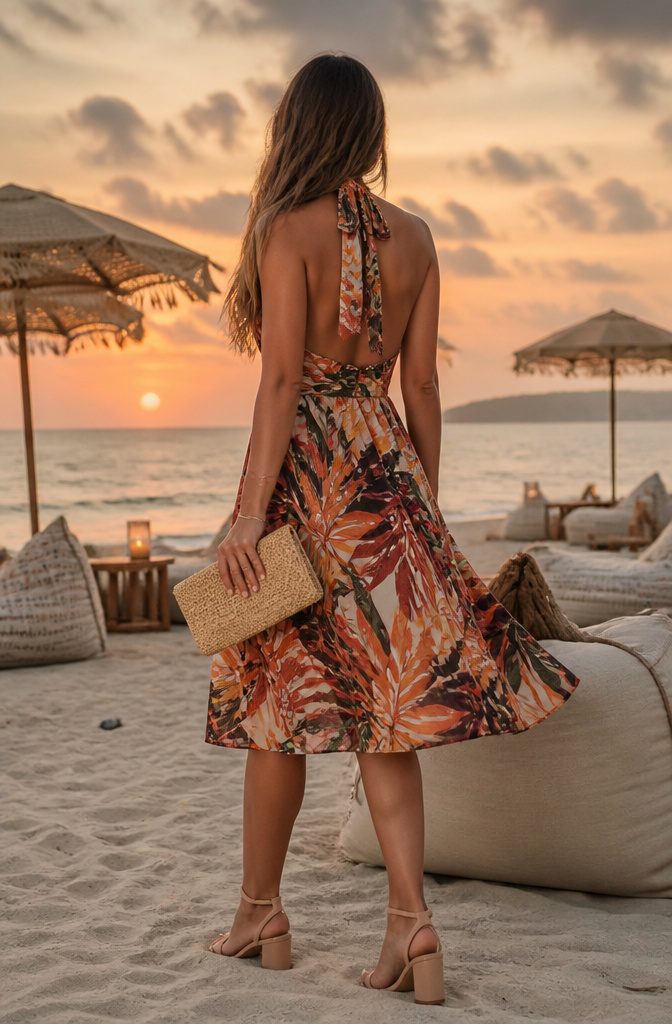
Semi-formal beach attire splits the difference between laid-back and polished, which makes it the trickiest call of the three. You’re aiming for refined without being too formal, and the terrain still rules out anything heavy or overly structured.
Mid-length dresses in chiffon handle this best. A knee-length or midi hemline reads dressier than a maxi, and chiffon keeps the weight light.
A halterneck or a lace-bodice cocktail dress works, as does a high-low hem in a tropical print if the fabric stays refined. Wrap dresses in lightweight material with block-heeled sandals hit the same register.
Tailored jumpsuits are the alternative if you want polish without a dress. Look for a wide-leg cut with a structured bodice, dressy but not stiff.
Semi-formal gives you room for accessories: colorful jewelry, a chic sunhat, wedge heels or dressy flats. The formula that always works is a floral chiffon midi, metallic sandals, a raffia clutch, and statement earrings.
4. Footwear for Sand
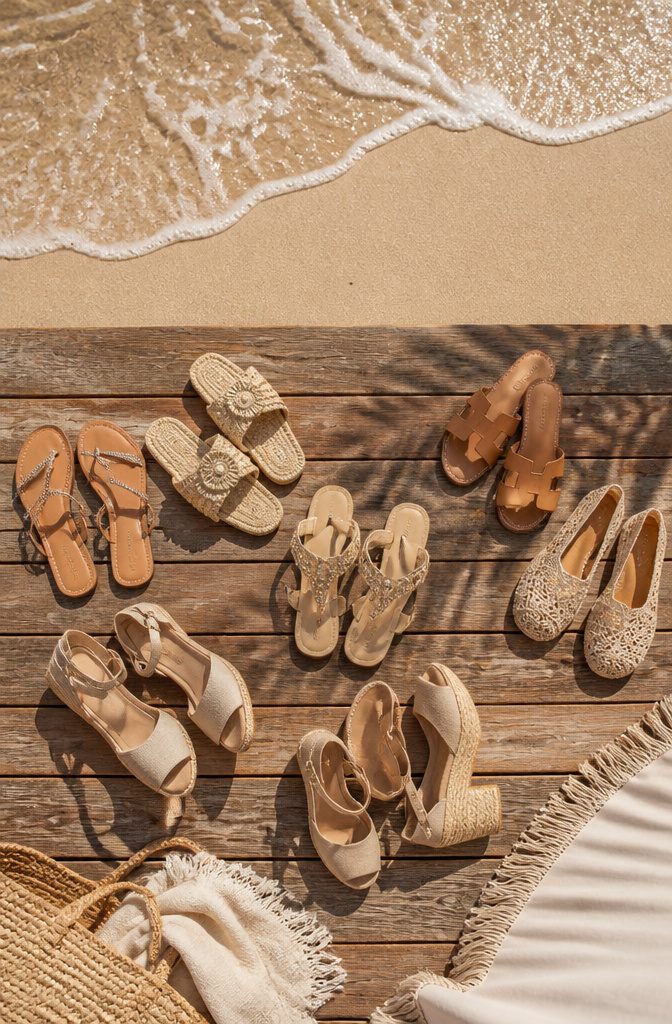
Flat sandals, espadrilles, and wedges are the shoes that work here.
Stilettos sink straight into sand the moment you step off a path, and narrow heels follow them down. The physics are simple: a thin point concentrates all your weight into a tiny surface area, and soft sand gives way.
Wedges spread that load across a wider footprint, so you stay on top of the surface instead of punching through it. Block heels do the same thing, though they still sink more than a full wedge sole.
Flat sandals solve the problem entirely, and embellished styles keep the look polished without fighting the terrain.
Some beach ceremonies are barefoot-friendly, so you can skip shoes altogether if the invitation signals that. Barefoot sandals work for that setup too.
5. Accessories That Work
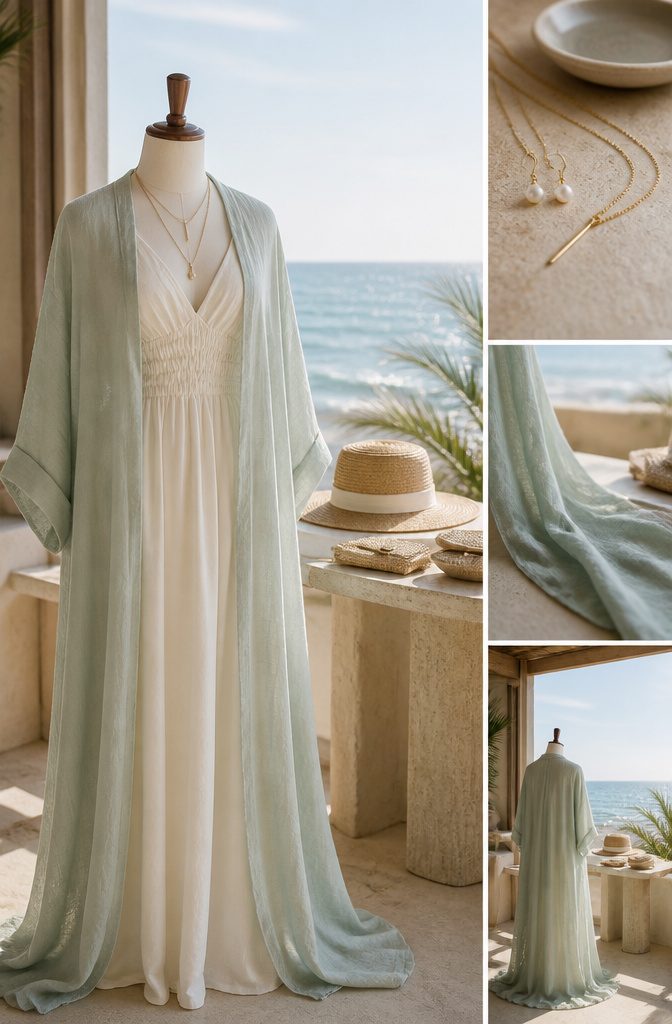
A lightweight wrap saves you when the breeze picks up after sunset or the air conditioning inside the venue runs cold.
A linen or silk kimono works better than a structured blazer because it folds into a bag and doesn’t add bulk.
Choose something that reads as part of the outfit rather than an afterthought, in a color that either matches your dress or sits close enough on the palette that it looks intentional.
Minimal jewelry handles humidity and wind better than stacked pieces.
Pearl or shell earrings, a single gold-toned necklace, or layered delicate chains keep the look polished without competing with the setting. Heavy sets look out of place, and anything that tangles or weighs you down becomes a distraction.
A sun hat is practical for daytime ceremonies, especially if you’re sitting in direct light. Go for a wide brim in a neutral straw or raffia, something that stays secure if the wind picks up.
Sunglasses are non-negotiable for outdoor vows, and a woven or raffia clutch ties the look together without reading too formal for sand.
Reading the Dress Code
The invitation is your starting point. Most beach weddings spell out the dress code directly, but when they don’t, the design and wording still give you clues.
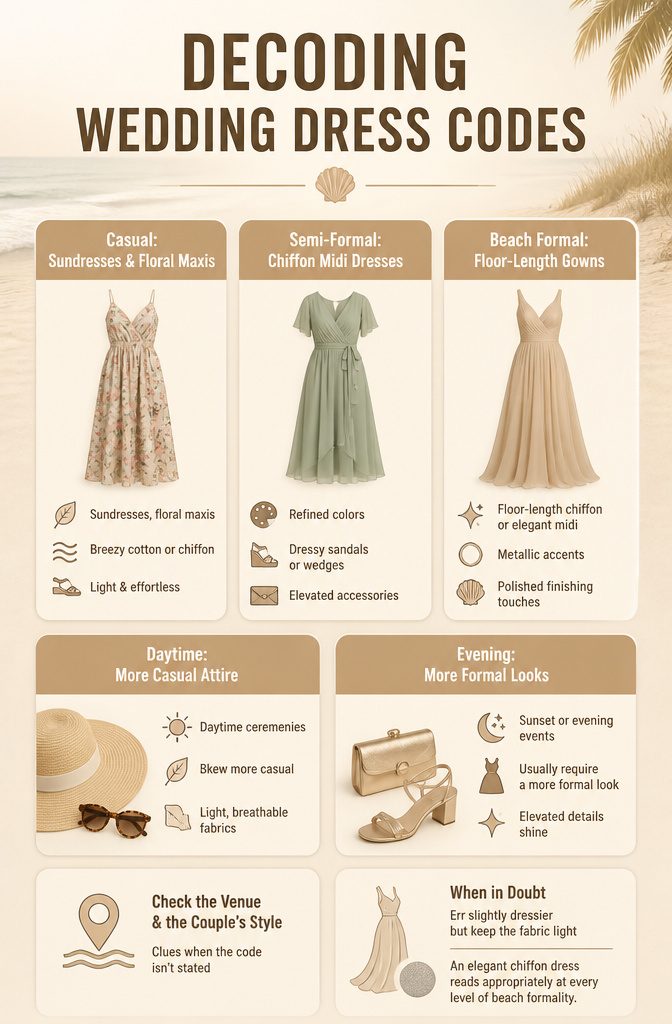
Casual beach weddings call for sundresses, floral maxis, or anything in breezy cotton or chiffon. Semi-formal asks for something more polished: a chiffon midi or knee-length dress in refined colors, dressy sandals or wedges, and elevated accessories.
Beach formal means floor-length chiffon or an elegant midi with metallic accents and polished finishing touches, though you still skip heavy satin and stilettos.
Daytime ceremonies tend to skew more casual, while sunset or evening events usually require a more formal look. When the code isn’t stated outright, I check the venue and the couple’s style for hints.
If you’re still unsure, err slightly dressier but keep the fabric light. An elegant chiffon dress reads appropriately at every level of beach formality.
Fabrics That Breathe
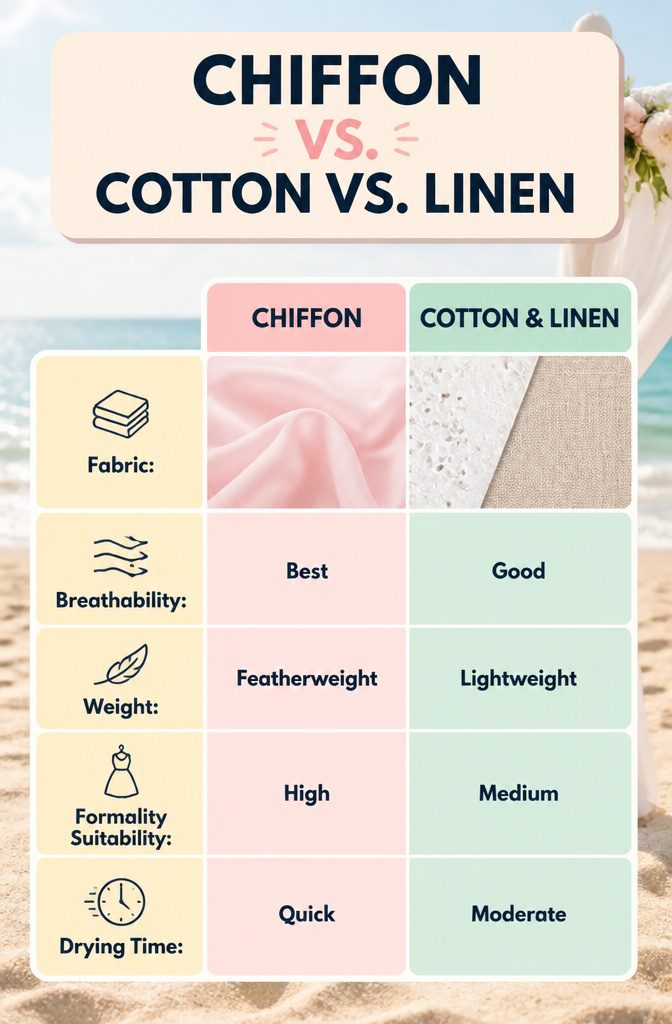
Chiffon, cotton, and linen are the fabrics that actually perform when the temperature climbs and you’re standing on sand in full sun.
Chiffon is the most widely recommended for beach weddings because it’s featherweight and moves with ocean breeze instead of clinging in humidity.
A layered chiffon dress dries quickly if you’re near the surf and doesn’t weigh you down. Cotton voile and eyelet read more relaxed but still breathe well, which makes them better suited to casual beach ceremonies than formal ones.
Linen brings structure without bulk, and it works for both jumpsuits and midi dresses when you want something polished but not precious. Lightweight lace and georgette also appear often, though they carry slightly more weight than chiffon.
The common thread across all of them is airflow: open weaves and natural fibers that let heat escape rather than trapping it against your skin the way satin or heavy crepe would.
Colors to Wear and Skip
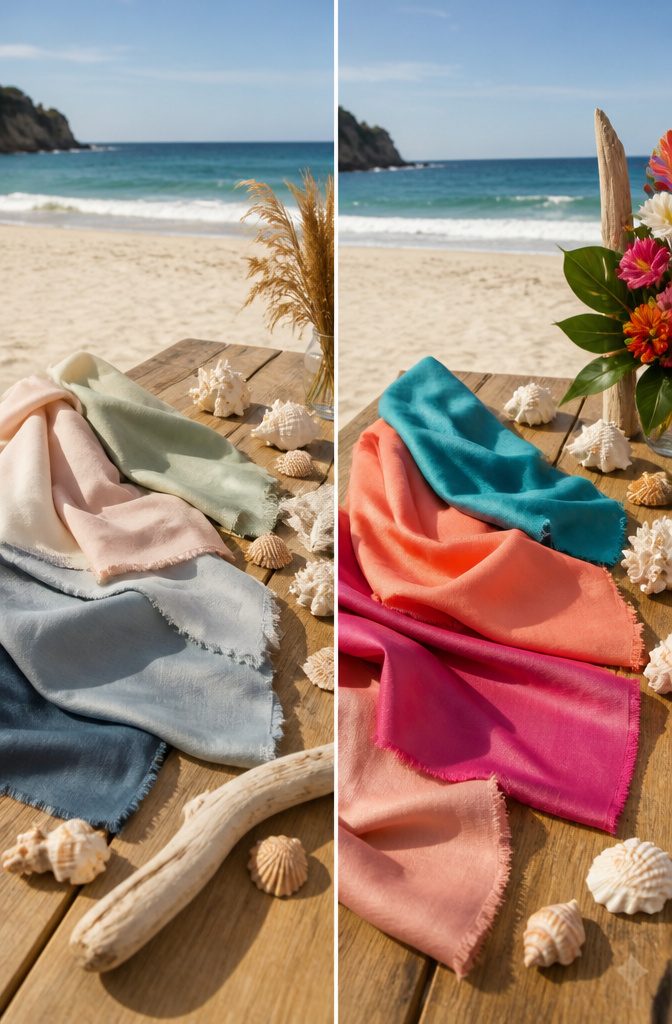
Soft pastels stand out beautifully against sand and water. Blush, sage, dusty blue, and seafoam suit romantic ceremonies without competing with the setting.
If the vibe skews tropical, saturated shades work even better: turquoise, coral, fuchsia, mango, and leaf green pop against ocean scenery. Bright pastels and elevated neutrals like aqua also make the short list.
White and ivory belong to the bride, full stop.
Skip anything that might read as white in photos, including light-colored fabrics that aren’t saturated enough to hold their own color. The couple may specify otherwise on the invitation, but absent that, assume those shades are off-limits.
Best Dress Styles for Beach Weddings
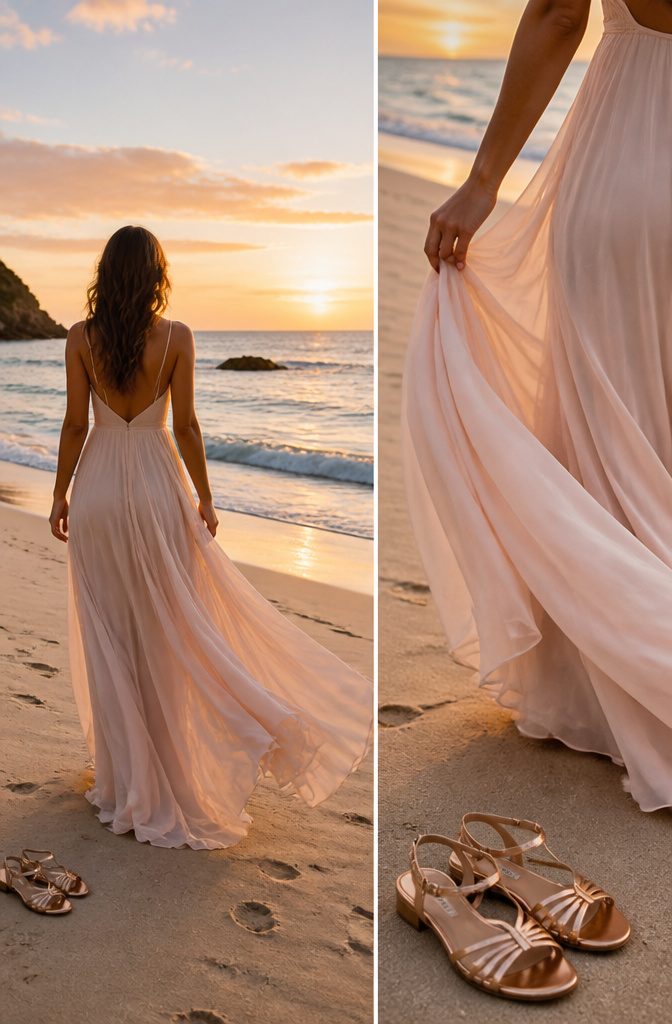
Three silhouettes consistently win on sand. A-line dresses fit through the bodice and flare gently from the waist, flattering most body types without adding bulk or fighting the wind.
The shape photographs well and walks easily across uneven ground, which matters more than you’d think when your heel keeps sinking.
Empire waist styles sit just under the bust and fall into a long, loose skirt. The raised waistline keeps fabric away from your body in heat, and the flowing hem suits boho ceremonies without reading too casual.
Flowy maxi dresses offer full coverage without weight. The sweeping length looks elegant against the horizon, and the loose cut moves naturally in ocean air rather than clinging in humidity.
Structured ball gowns and heavy mermaid shapes fight the environment. Softer construction always wins on sand.
Hair and Makeup That Lasts
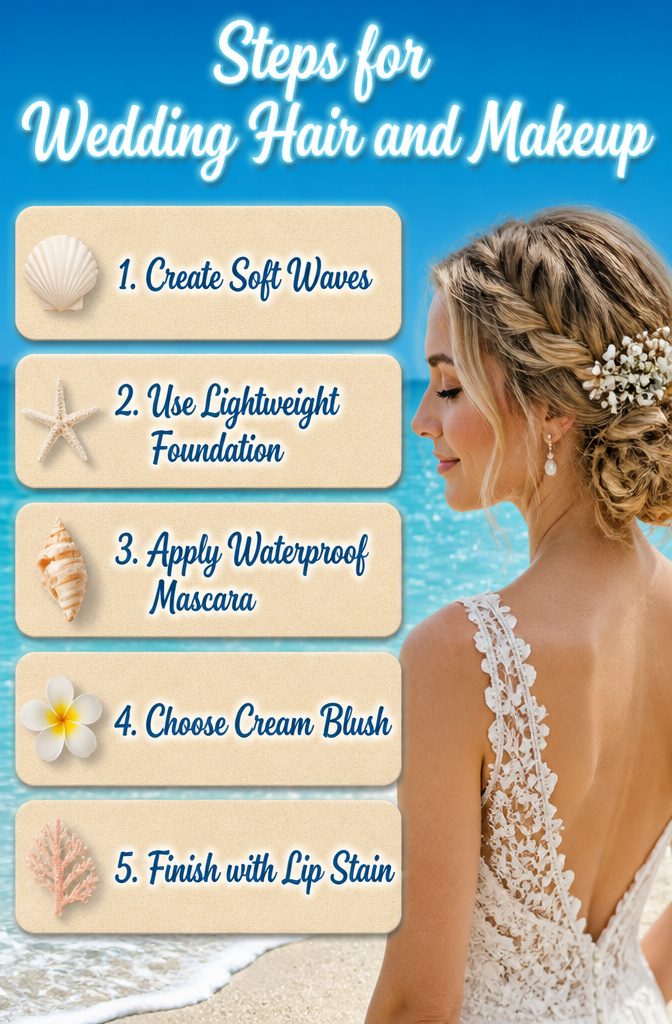
Soft waves hold up better than anything ironed flat, and I would lean toward them over a low bun if the ceremony runs past an hour.
Salt air and humidity undo most structure within twenty minutes, so styles that start a little loose look intentional rather than wilted by the reception.
Braids work especially well because they gain texture as the day goes on instead of losing it, and a braid pinned loosely at the nape stays put without feeling formal.
Keep makeup lighter than you would for an indoor event. The combination of heat, sunscreen reapplication, and wind means anything layered too heavily will slide or cake by cocktail hour.
A tinted moisturizer with SPF, waterproof mascara, and a cream blush give enough definition without needing constant touch-ups, and a lip stain outlasts anything glossy once the champagne starts flowing.
Frequently Asked Questions
What should I wear to a beach wedding?
Lightweight dresses in breathable fabrics like chiffon, cotton, or linen work best. A floral maxi, chiffon midi, or tailored jumpsuit paired with flat sandals or wedges suits the terrain and keeps you comfortable through heat and wind.
What is the appropriate beach wedding guest dress code?
Beach wedding dress codes fall into 3 categories: casual (sundresses and floral maxis in cotton or chiffon), semi-formal (refined midi or knee-length dresses in chiffon with dressy sandals), and formal (floor-length gowns in chiffon or silk with polished accessories).
The invitation typically spells out which one applies, and daytime ceremonies tend to skew more casual while evening events read more formal.
Can I wear heels to a beach wedding?
Stilettos and narrow heels sink straight into sand, so flat sandals, wedges, or block heels are the better choice. Wedges spread your weight across a wider footprint so you stay on top of the surface instead of punching through it.
What colors should I avoid at a beach wedding?
White and ivory belong to the bride, so skip those shades and anything light enough to read as white in photos.
Soft pastels like blush, sage, and dusty blue or saturated tropical colors like turquoise, coral, and fuchsia all photograph beautifully against sand and water.
How should I style my hair for a beach wedding?
Soft waves or braids hold up better than structured styles because salt air and humidity undo most ironed-flat looks within 20 minutes.
A braid pinned loosely at the nape or waves that start a little loose will look intentional rather than wilted by the reception.