A petite evening gown works when it keeps the vertical line unbroken from neckline to hem, and that means choosing a silhouette that lengthens rather than interrupts.
Monochromatic dressing in black, navy blue, or deep red keeps the eye moving down without stopping at the waist, and a V-neck drops that line lower on the torso to balance out shorter proportions.
1. Midi Formal Gowns
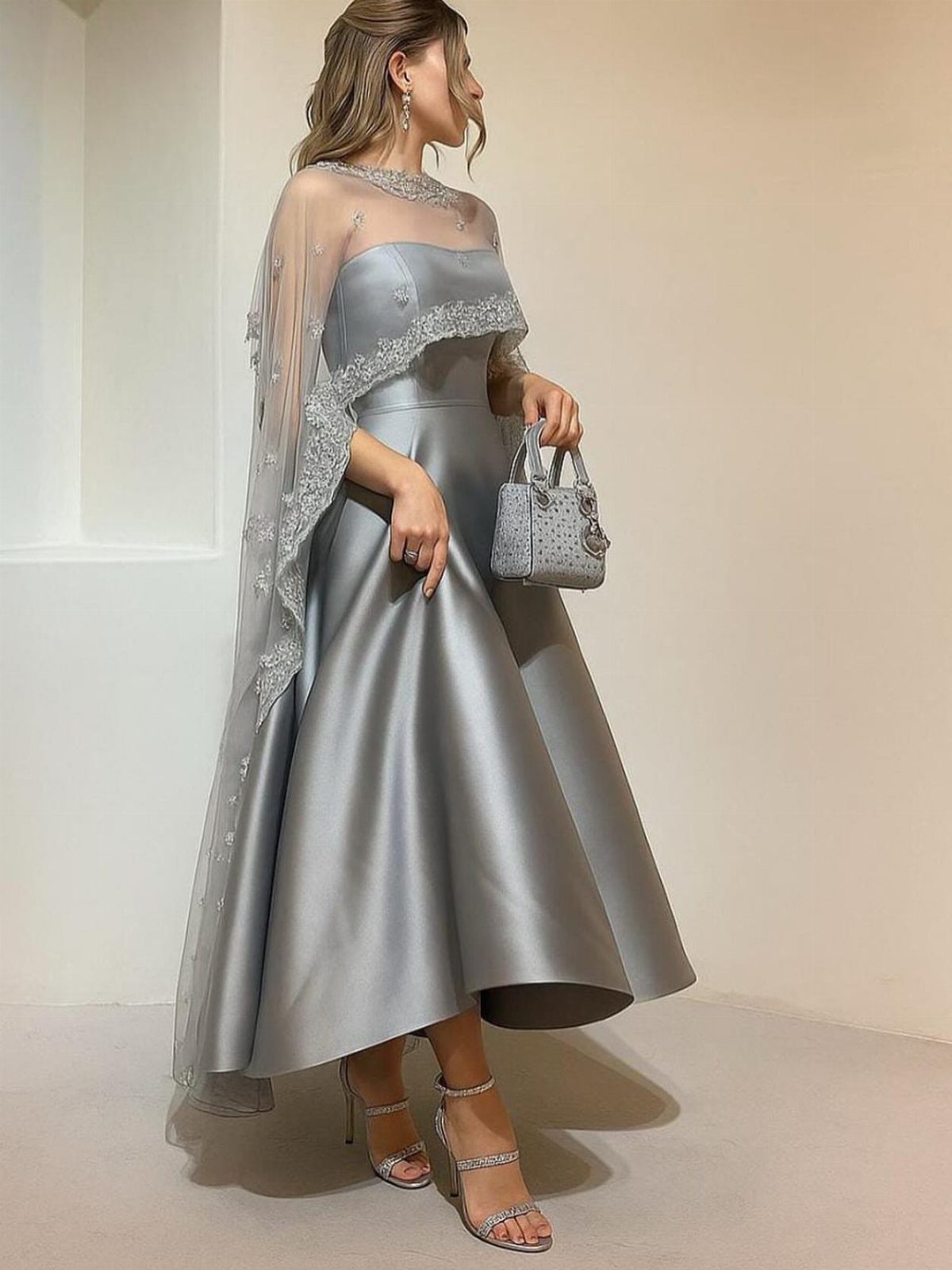
The hemline on a midi gown falls somewhere between the knee and ankle, and its exact placement changes how the leg reads.
A hem that stops mid-calf can shorten the line, while one that skims just above the ankle keeps things moving downward.
Paired with a pointed heel, the silhouette stays clean and lengthens the frame without requiring floor-length fabric.
2. Mermaid Formal Dresses
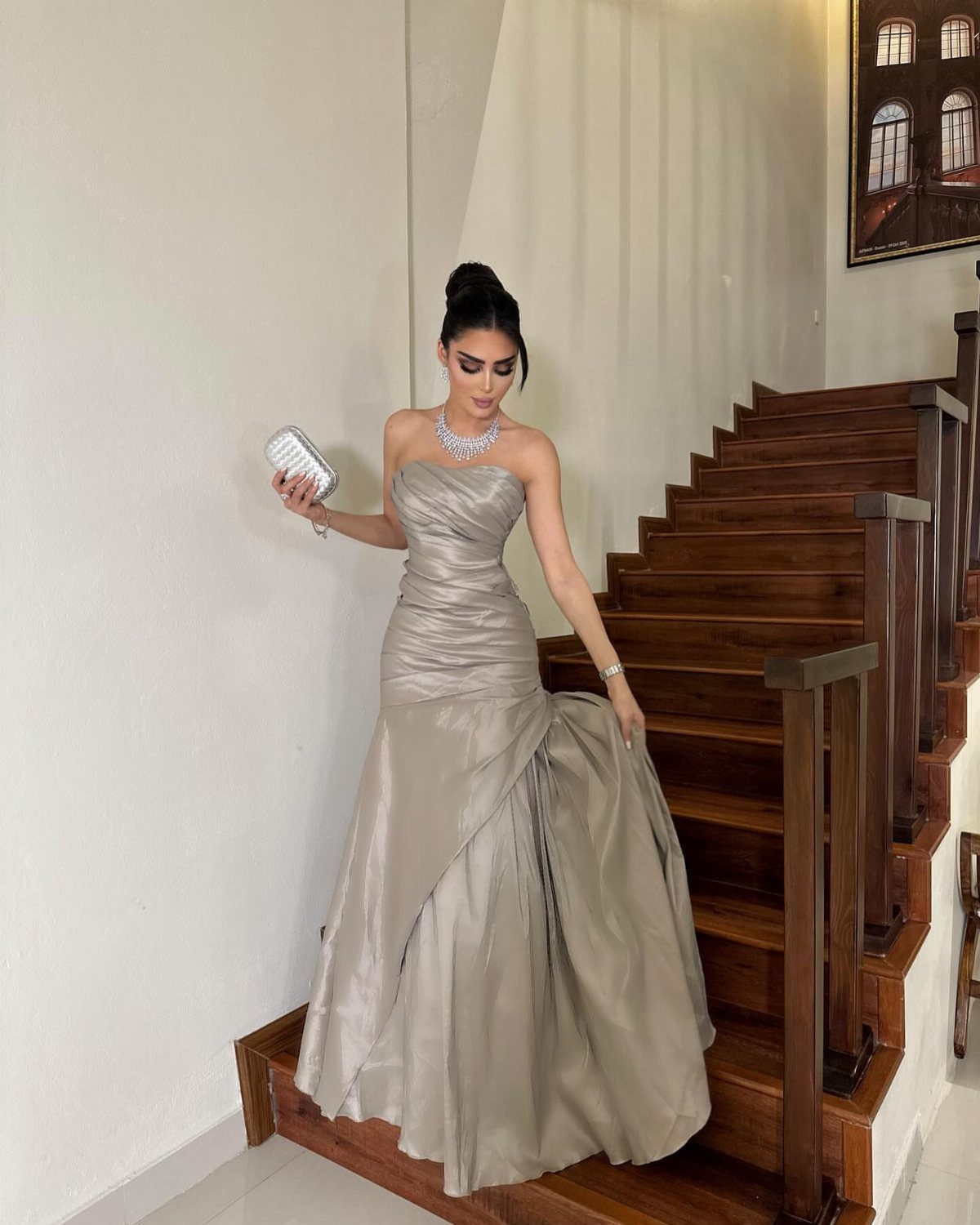
A mermaid silhouette fits close from waist to knee and flares below, so the proportions have to be right or the flare reads as added bulk.
On a petite frame, that flare needs to start low enough to keep the leg line long but high enough that the skirt doesn’t pool at the floor.
Strapless styles like this one keep the torso uninterrupted, which helps when you’re working with less vertical space. The champagne satin reflects light without adding texture, so the shape does the work.
Each dress features tailored cuts and elegant details that cater specifically to petite frames, ensuring a perfect fit without compromising on style.
3. V Neck Evening Gowns
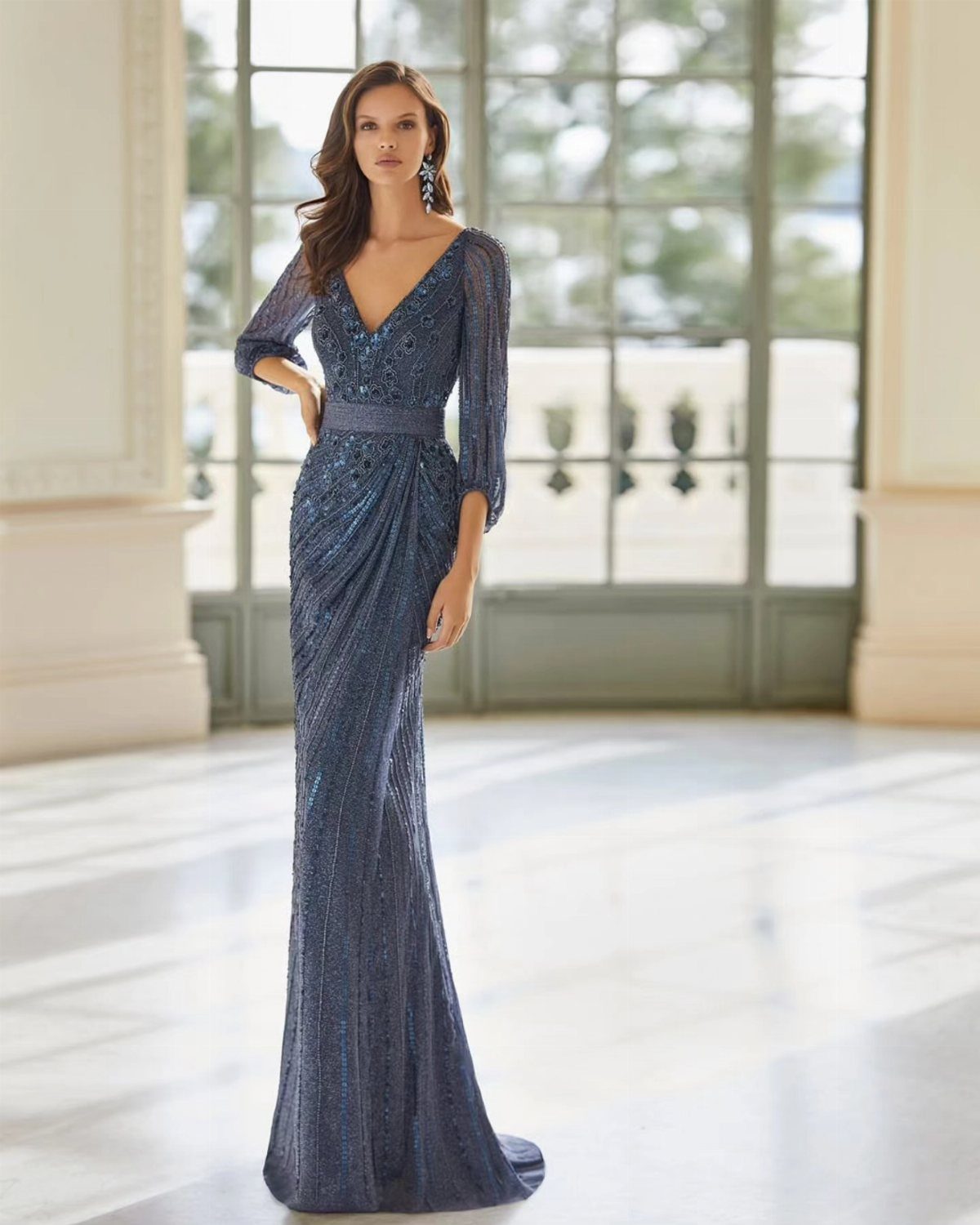
A V-neck drops the eye line lower on the torso, which lengthens the upper body and balances out shorter proportions.
The deeper the V, the more vertical pull you get, though it has to suit the event and your comfort level.
Long sleeves in a fitted sequin fabric keep the silhouette streamlined, and the sparkle draws attention without breaking up the line. Navy reads formal and works across seasons, which makes this a gown you can wear more than once.
4. Empire Waist Gowns
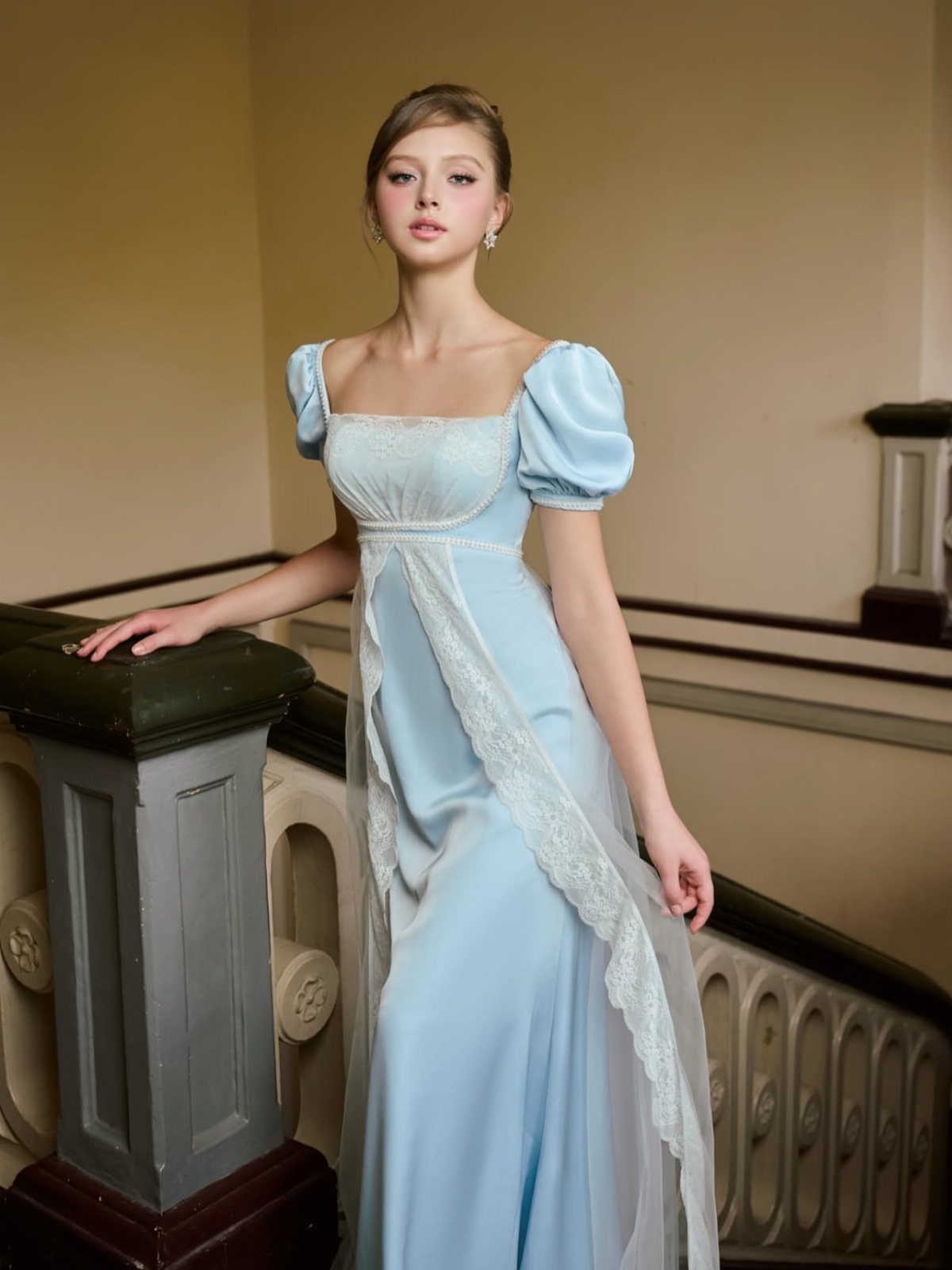
An empire waist sits just below the bust and skims over the midsection, so the eye moves straight from the neckline to the hem without stopping. That works well when you want a soft, flowing silhouette that doesn’t cling.
Empire waist gowns suit petite frames because they don’t rely on waist definition to create shape, and the skirt falls without excess fabric pooling at the bottom.
5. Slit Formal Gowns
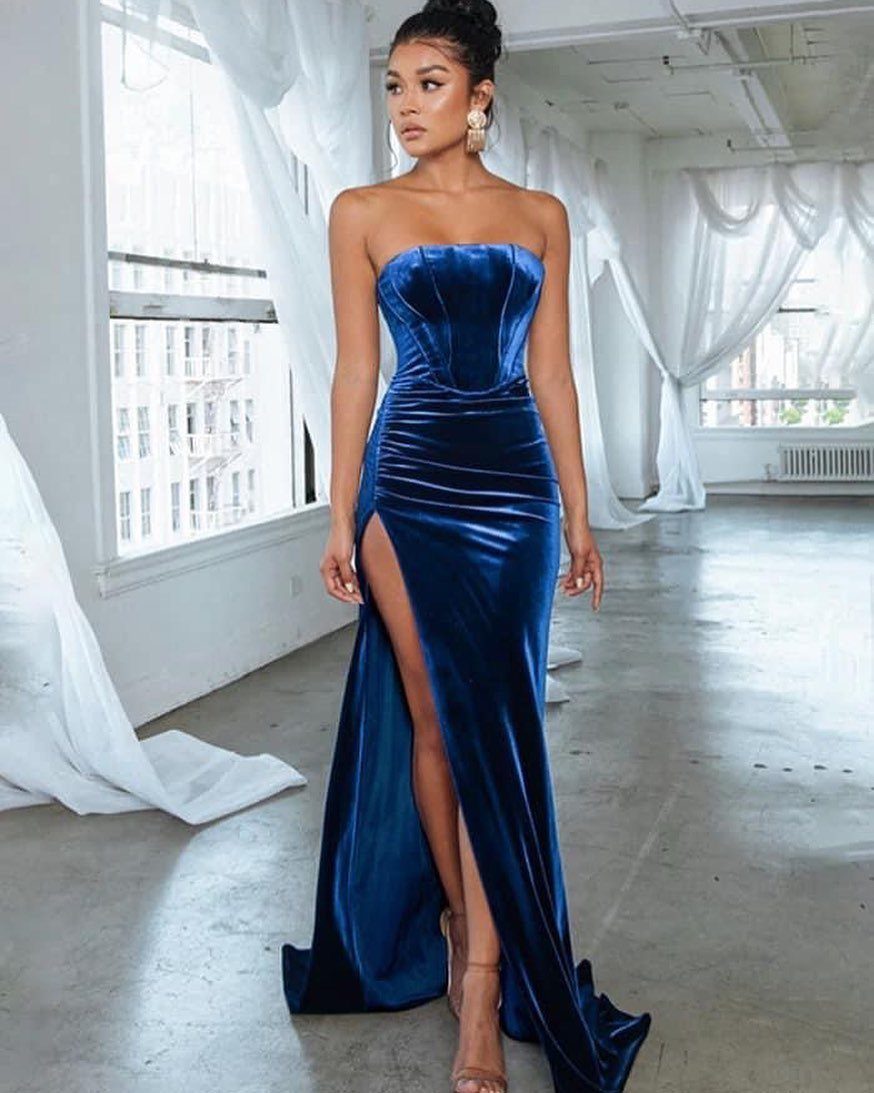
A slit breaks up the fabric and shows leg, which adds a vertical line that runs longer than a solid hemline. The higher the slit, the more leg you show and the more movement you get when you walk.
Velvet in royal blue stays rich without needing embellishment, and the strapless neckline keeps the top half simple so the slit becomes the focal point.
This works well for petite frames because the leg becomes the longest unbroken line in the outfit.
6. Silk and Satin Gowns
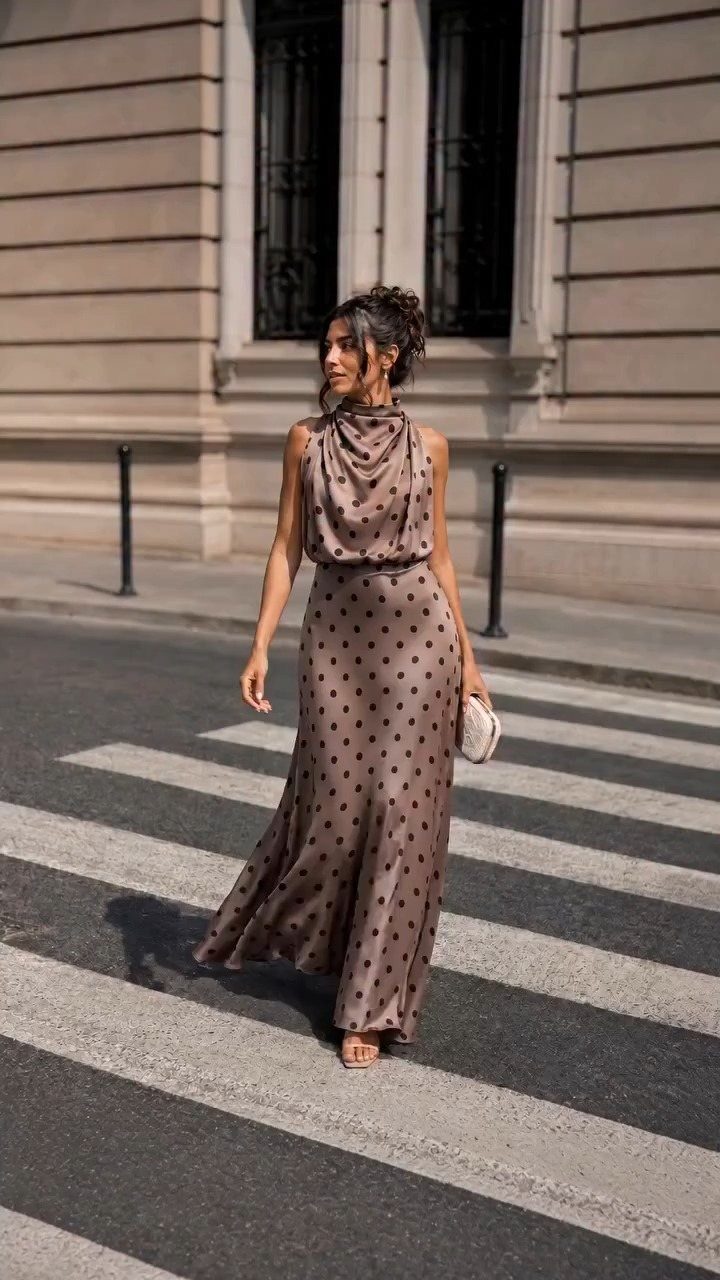
Silk and satin drape close to the body and catch light differently than matte fabrics, which gives the gown presence without added volume.
The polka dot pattern here keeps the surface interesting without breaking up the vertical line the way a larger print would.
Satin in taupe or neutral tones works across formal settings and pairs easily with gold or silver accessories. The fabric itself does most of the work, so the silhouette can stay simple and the gown still reads as finished.
7. Gowns with Vertical Details
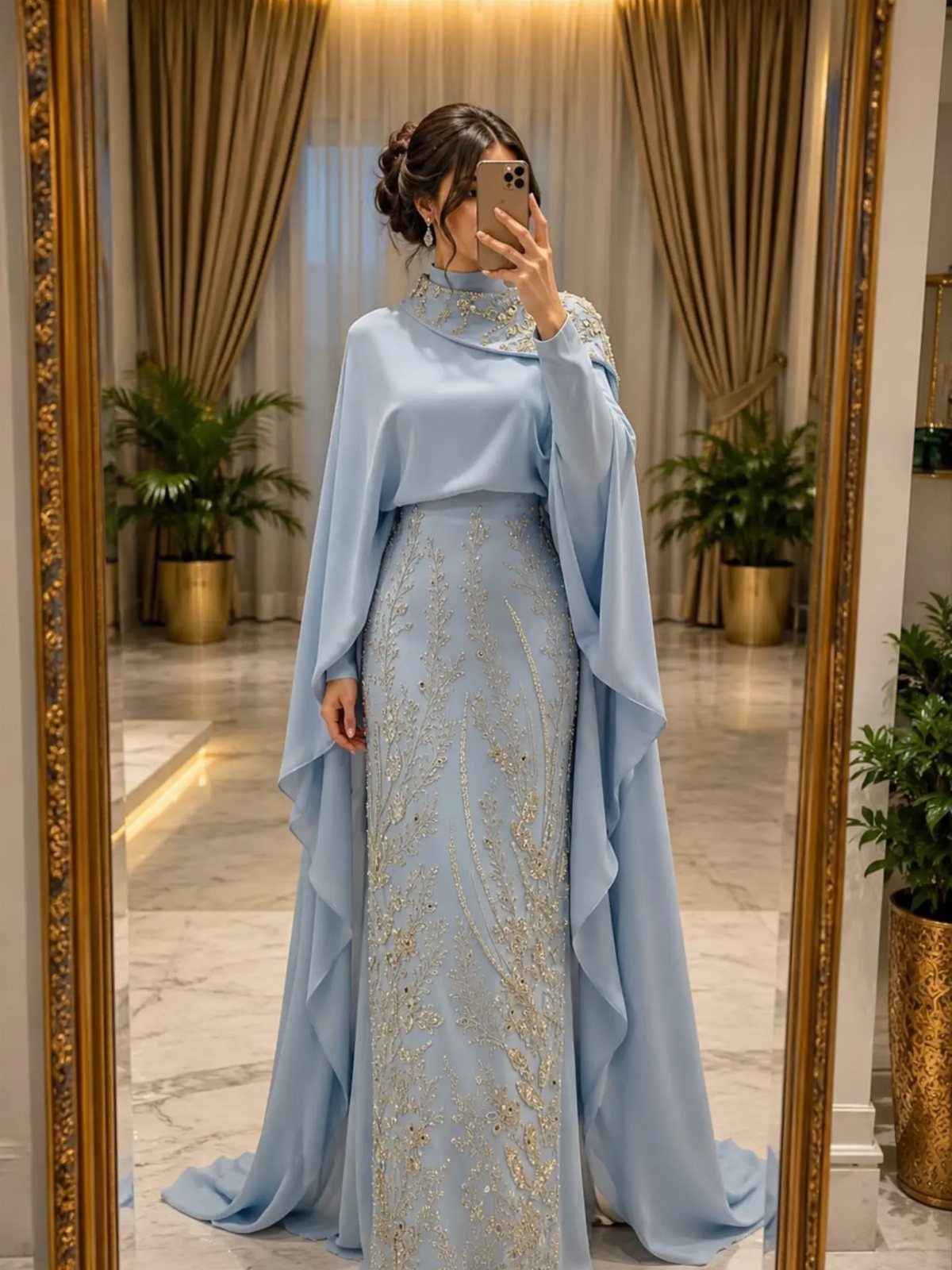
Vertical embroidery or beading draws the eye up and down instead of side to side, which helps when you’re trying to add length without adding height.
The silver detail here runs in narrow lines from neckline to hem, so the gown reads taller than it is.
Cape sleeves add drama without breaking up the vertical movement, and light blue stays soft while the metallic thread catches light at formal events.
8. Off-the-Shoulder Evening Gowns
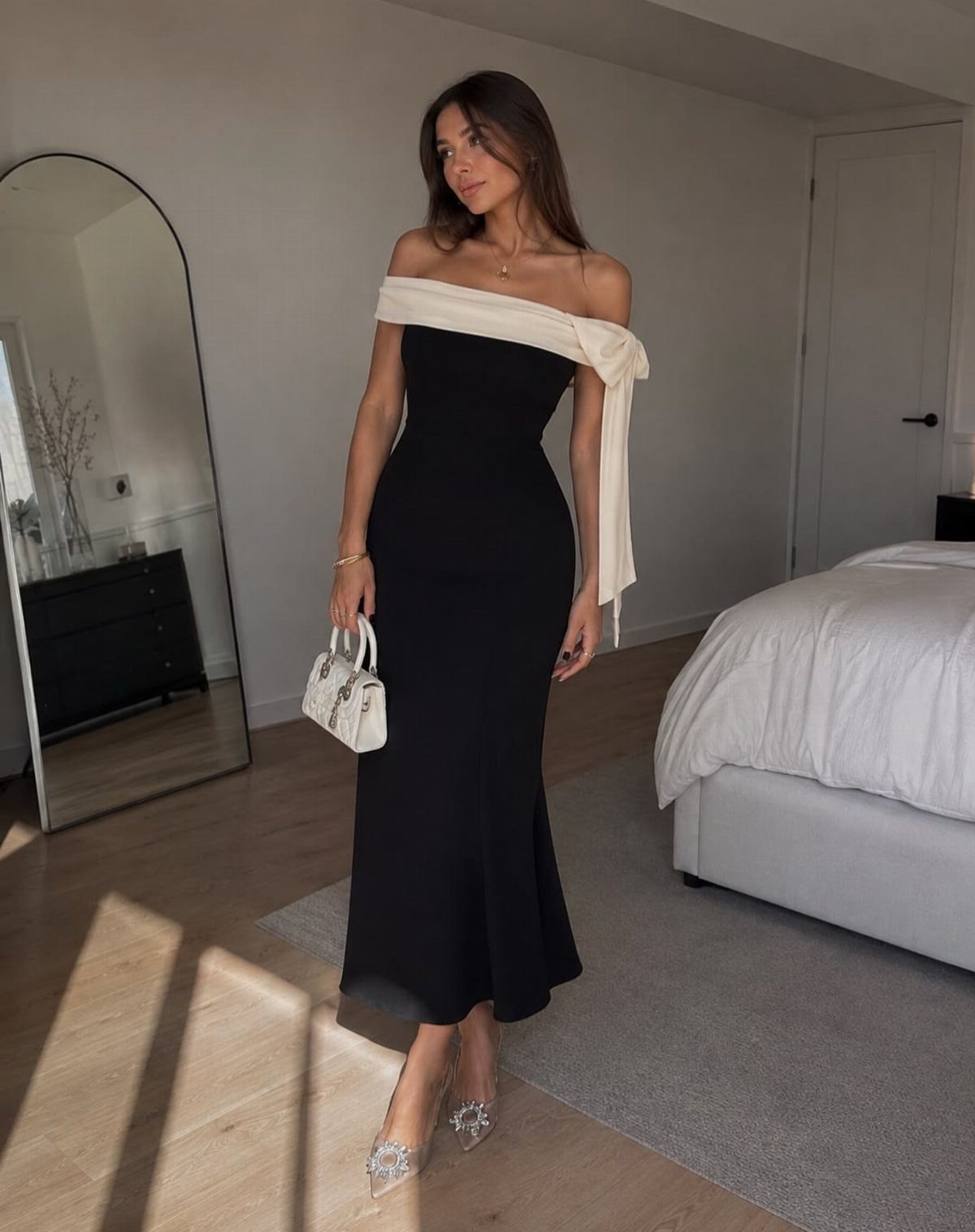
Off-the-shoulder styles drop the neckline lower and expose the collarbone and shoulders, which pulls attention up and creates a longer vertical line from shoulder to floor.
The black fabric keeps the focus on the silhouette, and the white wrap at the neckline adds contrast without cluttering the look.
This works well for petite frames because the exposed shoulder line widens the upper body just enough to balance the skirt, and the fitted bodice keeps everything in proportion. Silver accessories tie in without competing.
9. Gowns with Sheer Illusion Backs
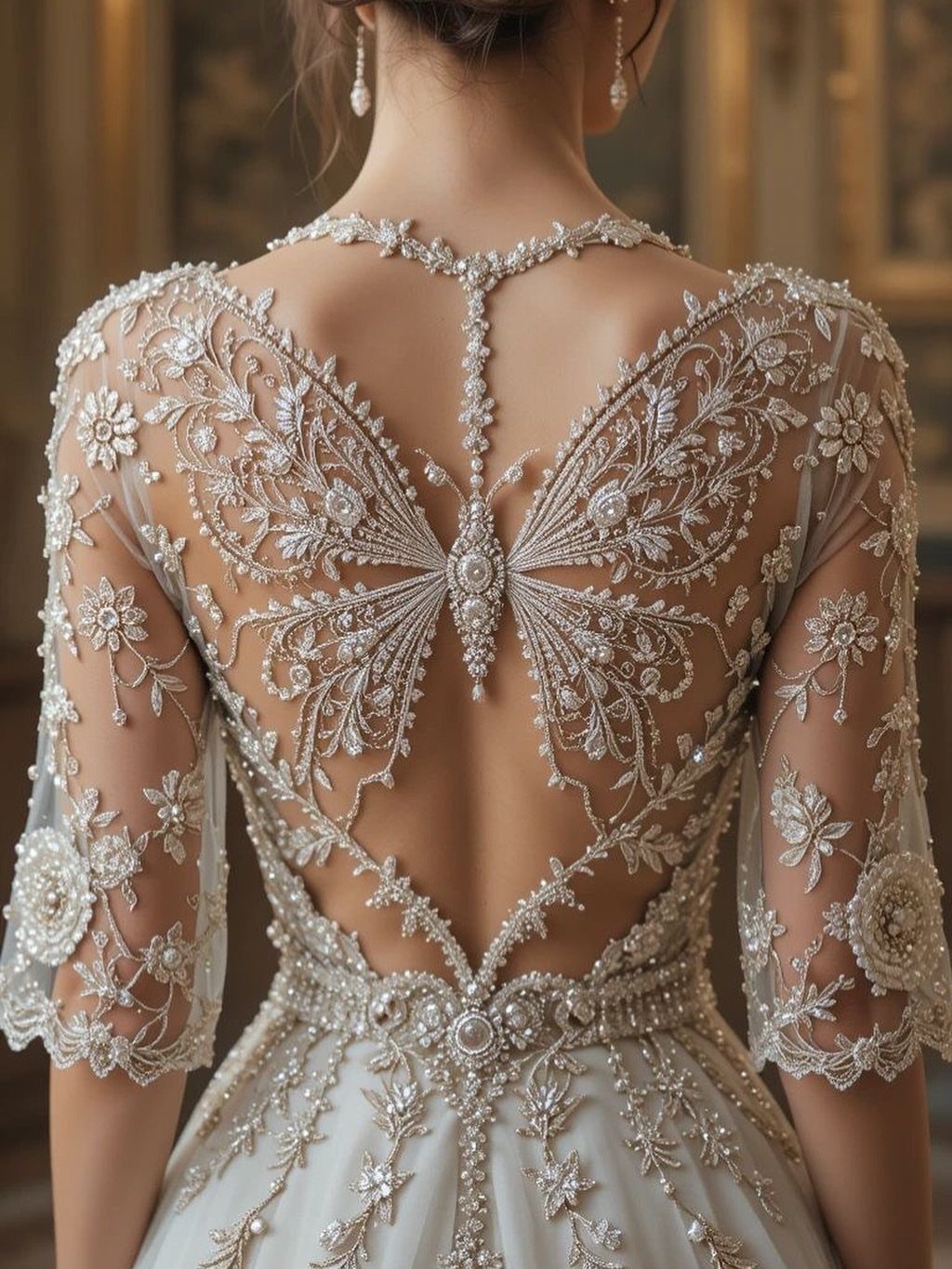
Sheer illusion fabric on the back adds detail without weight, so the gown stays light while the beading gives it structure.
The lace butterflies here sit over the sheer panel and catch the light, which makes the back just as finished as the front.
Sheer backs suit petite frames because they add visual interest without requiring more fabric or volume, and the beading keeps everything anchored. This reads formal but not heavy, and it gives you something to show when you turn around.
Color Strategy
Monochromatic dressing creates an uninterrupted line from neckline to hem, which reads longer than a gown that breaks up color at the waist or bodice.
Black stays the most reliable option for this, and deep red, navy blue, or rich green work the same way when you keep accessories in the same tonal family.
White, pink, and beige work when the silhouette stays clean and the fit is precise.
A pale gown with a loose or overly draped fit will read soft rather than elegant, so structure matters more here than it does with darker fabrics.
You want as few visual breaks as possible from neckline to hem. If your shoes, bag, or wrap introduce a new color, place them where they won’t cut the vertical line at the ankle or waist.
Frequently Asked Questions
What type of dress flatters petite women the most?
A-line gowns, mermaid styles with a high-set flare, and fitted straight silhouettes work best because they hold a clean vertical line and stay slim through the torso.
Shapes that cling or flare too wide break up that line and shorten the frame.
What dress length is best for a short woman?
Floor-length creates the longest unbroken line from shoulder to hem, which reads taller than a shorter hemline.
A hem just above the knee also works because it shows leg and keeps the proportion clean. Mid-calf is the hardest length to get right because it lands at the widest part of the leg.
Can petite women wear long evening gowns?
Yes, and floor-length often reads taller than a shorter hemline because it stretches one continuous line from shoulder to floor.
Look for a waistline that sits slightly high, and have the hem tailored so it just grazes the floor in your event shoes. Proper fit keeps the gown from pooling at the bottom.