A work dress needs to move between formal meetings and desk work without requiring a midday wardrobe change, which is why fabric, fit, and functional details matter more than the silhouette alone.
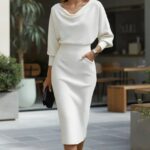
The sheath skims the body without clinging, while the shift hangs straight from the shoulders and packs well without wrinkling.
1. Wrap Dresses
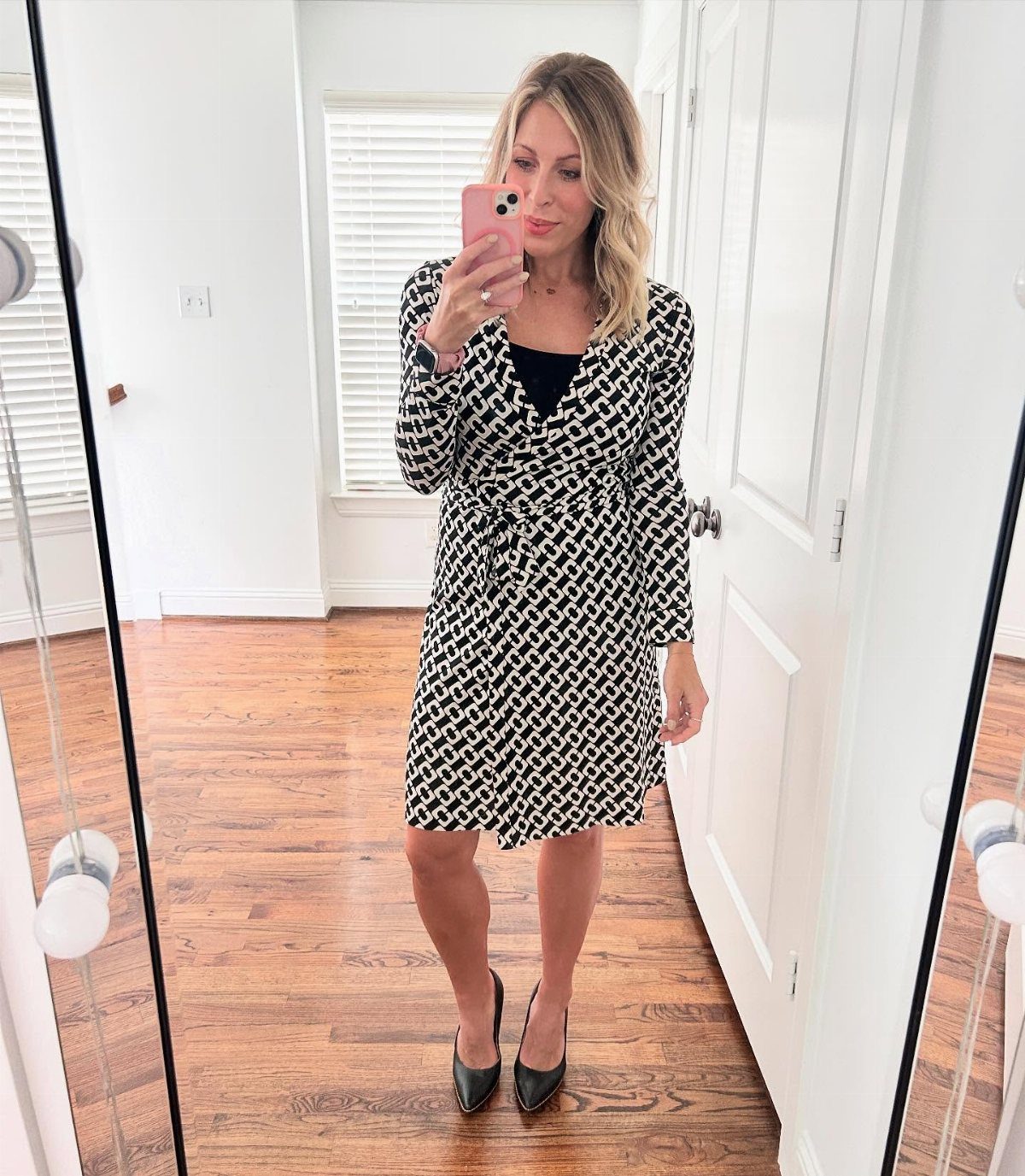
The wrap dress adjusts at the waist with a tie closure, so the fit shifts with you rather than locking you into one size.
That adjustability makes it work across body types, and the V-neckline it creates lengthens the torso without extra tailoring.
Pair black and white pattern with pointed heels for a combination that reads formal enough for client meetings but relaxed enough for desk work. If your office runs cooler, a blazer layers over it without breaking the waistline.
2. Sophisticated Shirt Dress
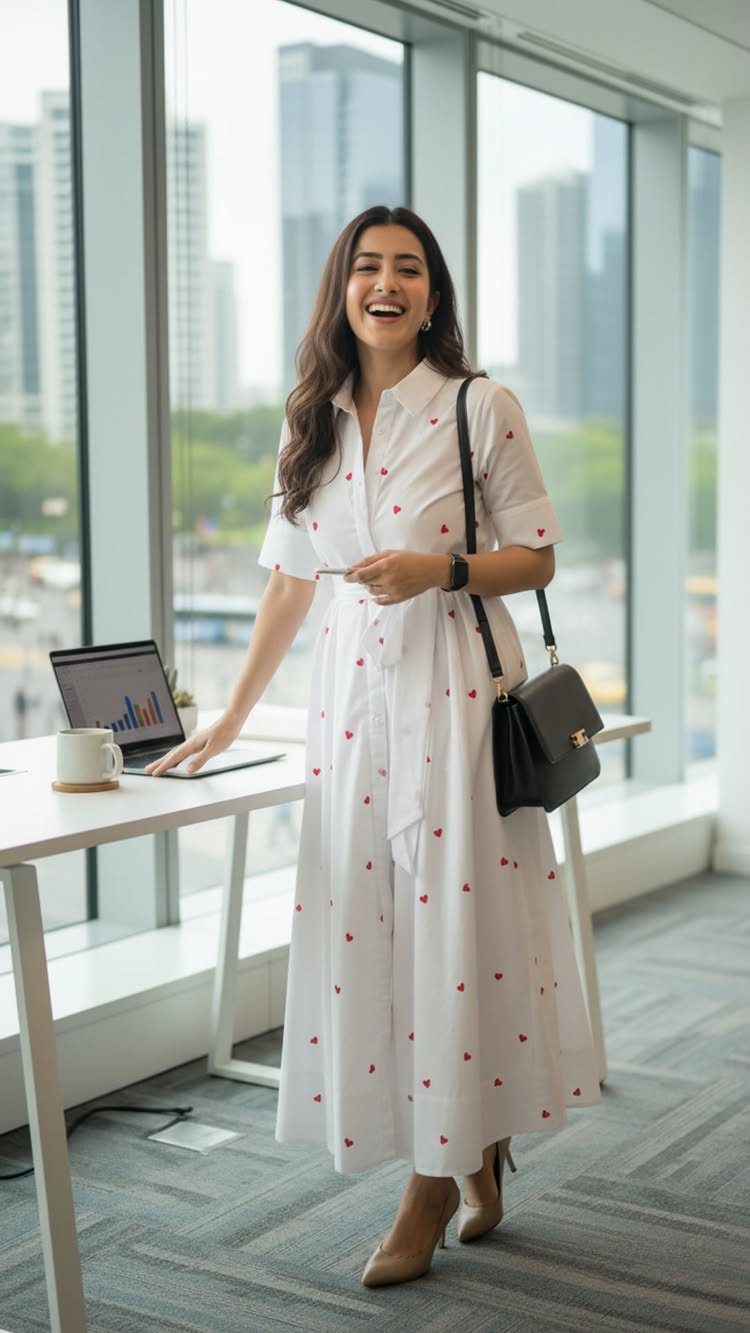
A shirt dress borrows the collar and button placket from menswear shirting, then adds the length and ease of a dress.
The result feels pulled together without reading as formal, which is why it works for offices that have moved away from traditional suiting.
The white base with small red hearts here keeps the pattern subtle enough for most workplaces. If your office skews more conservative, a solid or stripe will read cleaner, but the silhouette itself stays adaptable.
Defined by a neat point collar, crisp cotton fabric, and charming buttons along the front, a shirt dress has a professional foundation that makes it a non-negotiable workwear item.
3. Midi and Maxi Dresses
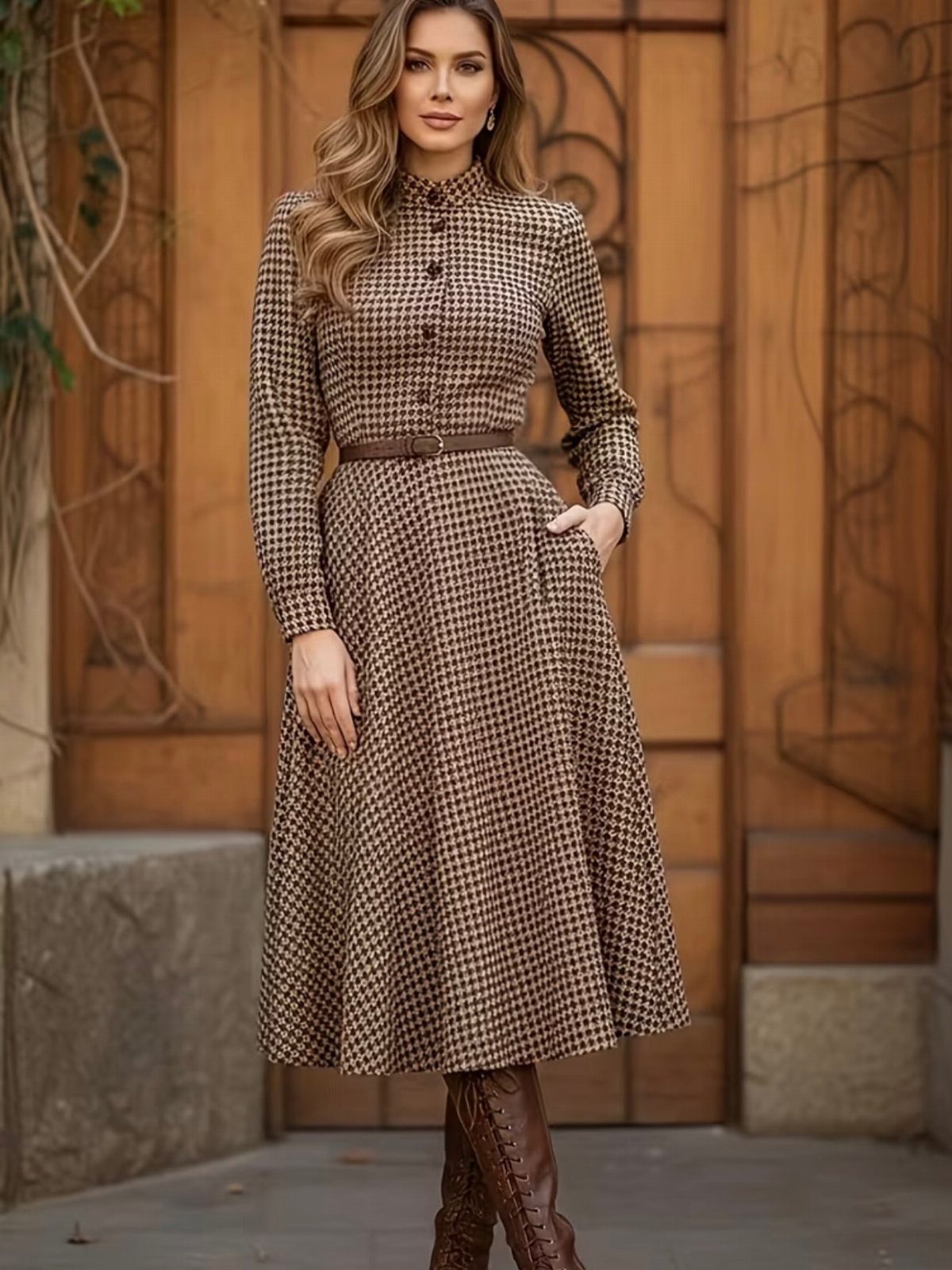
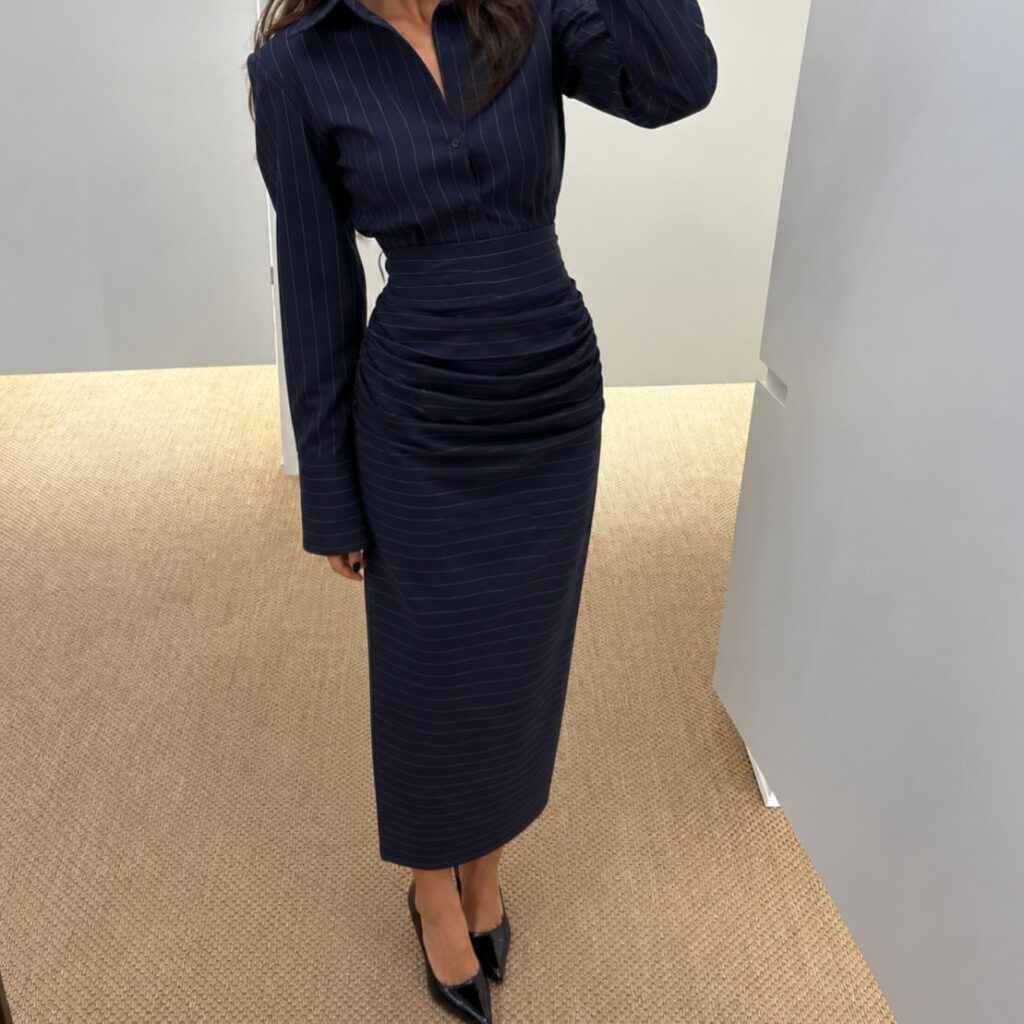
Midi and maxi hemlines fall below the knee, giving you more coverage without the weight of pants.
That extra length reads more polished in conservative offices, and it removes the question of whether your hem hits the right spot when you sit.
Brown check works with boots for cooler months, but the same silhouette in a solid or smaller print transitions into summer with sandals. A belt at the waist keeps the proportions clear when the dress runs longer.
4. Sheath Dresses
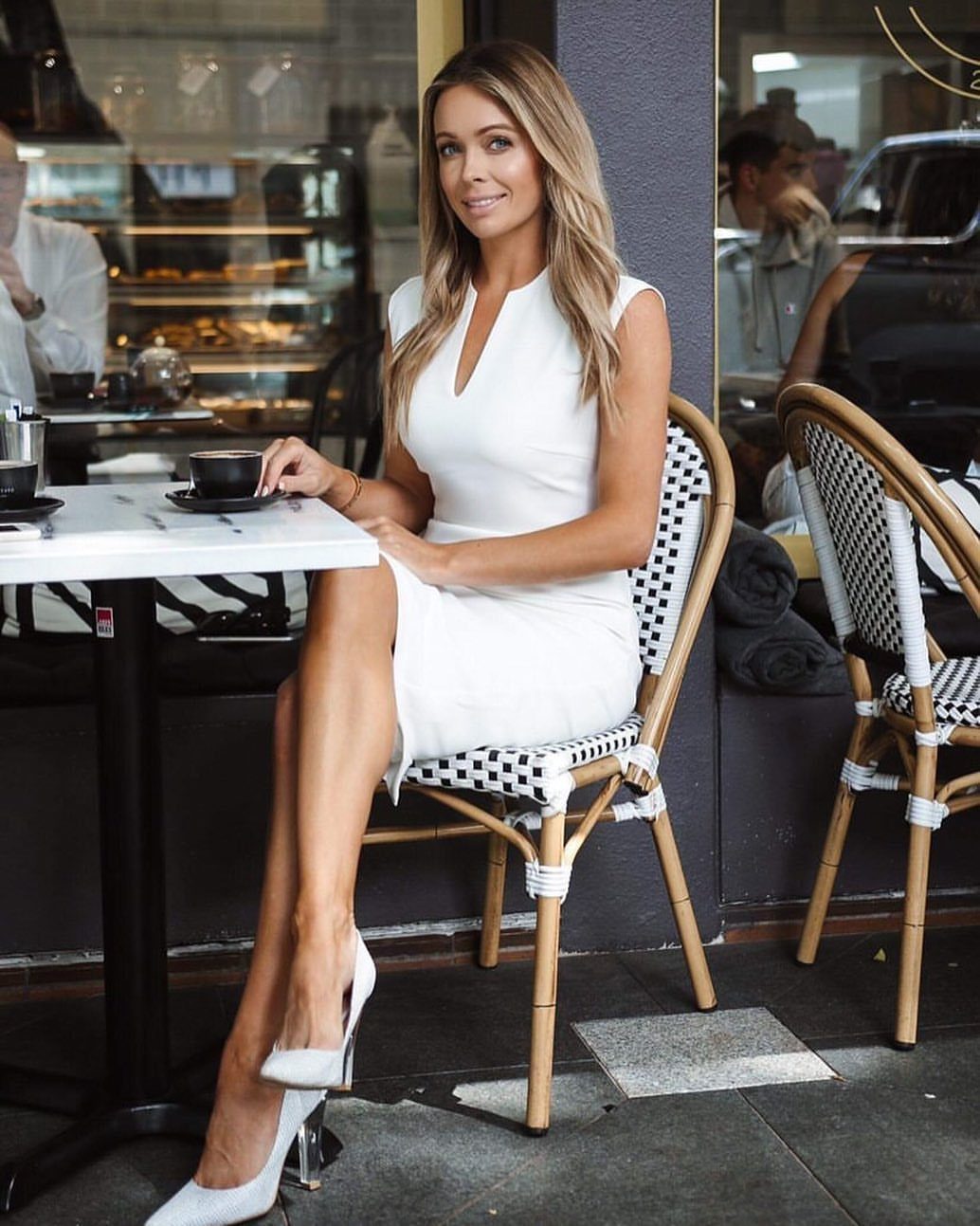
The sheath dress follows the body’s natural line without clinging or adding volume. It skims rather than hugs, which is why it reads as polished in most professional settings.
The sleeveless white version here pairs with a blazer or cardigan when you need more coverage. If you prefer something with sleeves built in, look for a cap or short sleeve, both keep the same clean silhouette.
The shape works for hourglass and rectangular body types, but if you carry more width through the hips, an A-line or shift will feel more balanced.
5. Elegant A-Line Dress
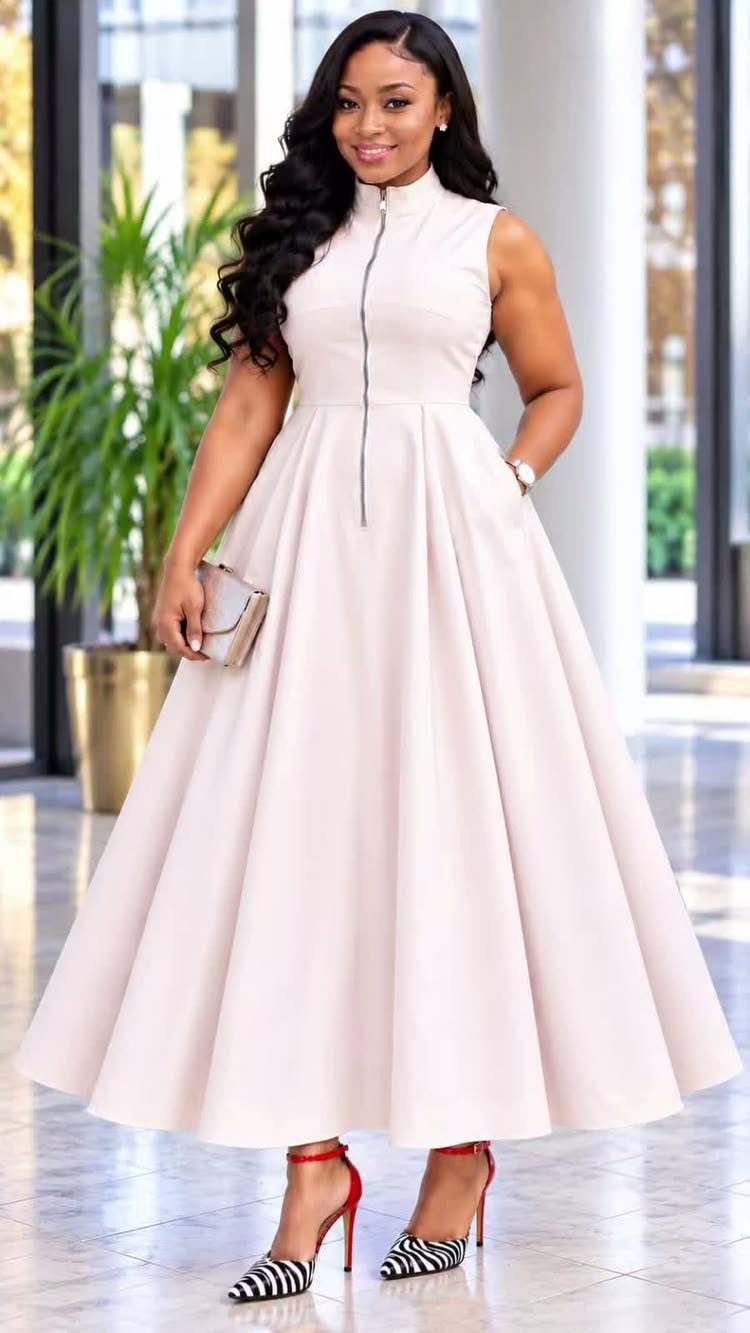
An A-line dress fits close through the bodice, then flares from the waist. That flare creates the appearance of an hourglass figure, which is why it suits pear and rectangle body types particularly well.
A high neckline with no sleeves works for warmer offices.
If your workplace runs formal, a version in navy or charcoal will read more conservative. The flared skirt has enough room for movement, so it holds up through a full day without restricting your stride.
6. Shift Dresses
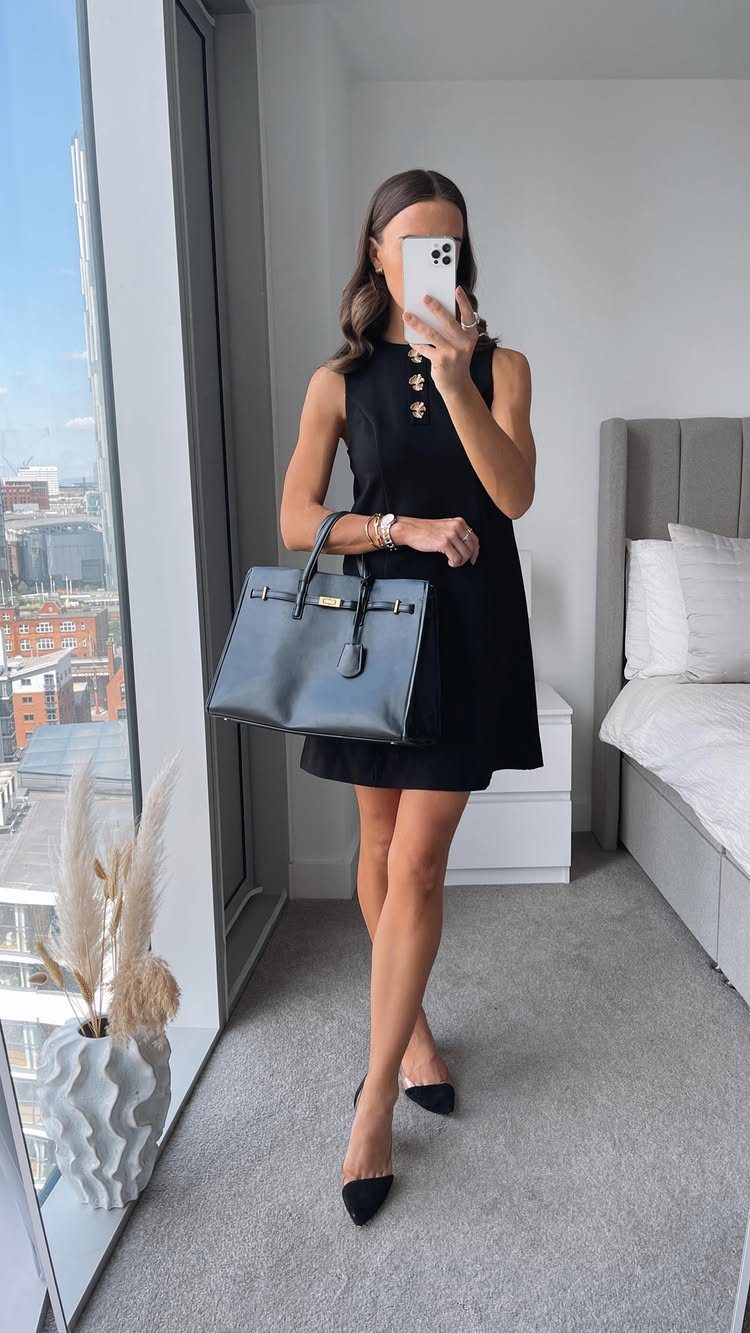
A shift dress hangs straight from the shoulders without nipping in at the waist, so it skims the body rather than following it.
That loose fit makes it comfortable in warm weather, and the lack of structure means it packs well without wrinkling.
Black works with heels and a structured bag for meetings, but the same silhouette in a lighter fabric or softer color will feel less formal.
If you prefer more definition, a thin belt at the waist adds shape without losing the ease that makes the shift practical.
7. Polished Peplum Dress
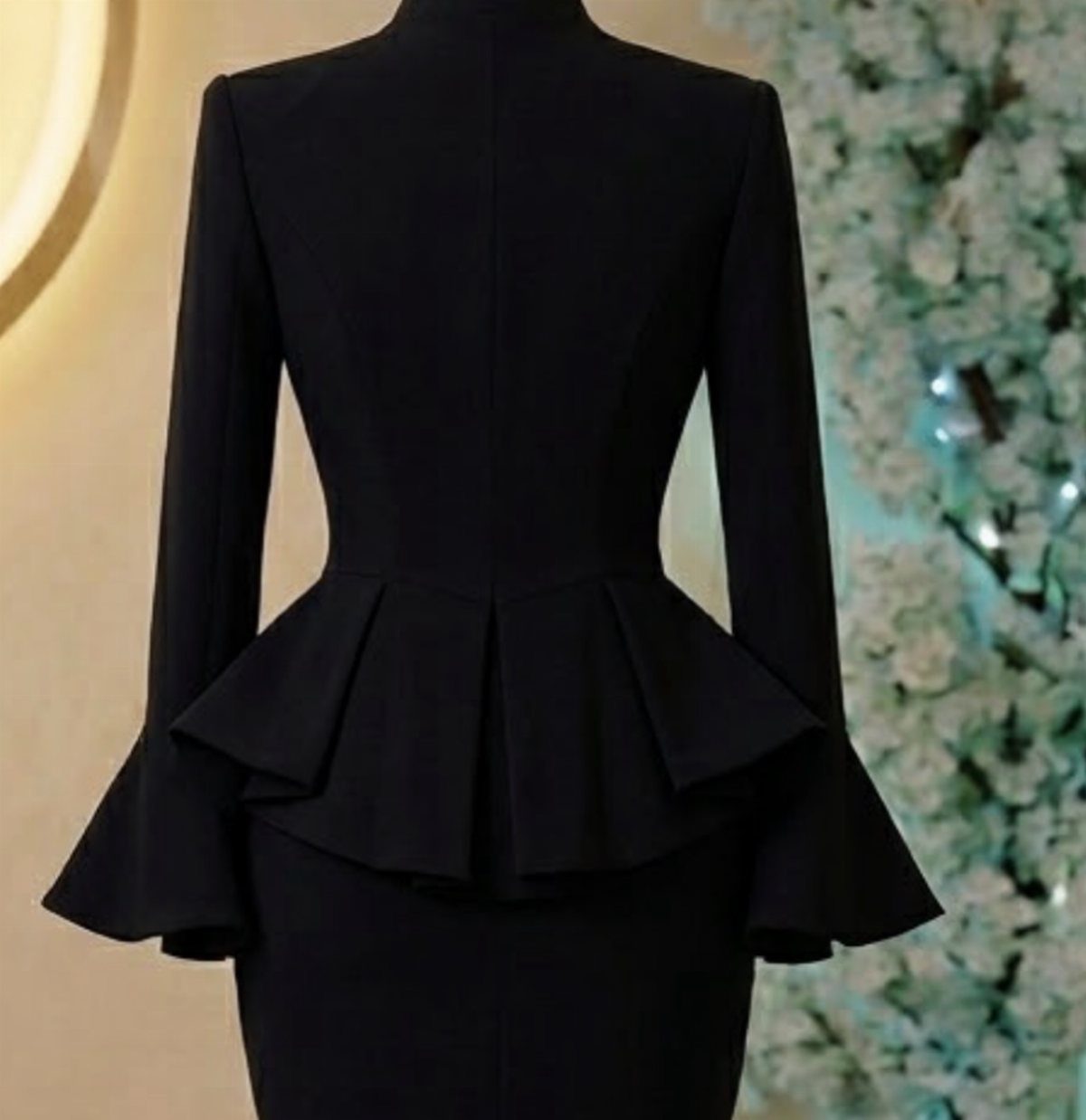
A peplum dress adds a flared ruffle at the waist, creating volume that balances the hips and draws the eye to the narrowest part of the torso.
Long sleeves make this style work in cooler offices, and a black base keeps it formal enough for client meetings.
The flare itself softens a straight or rectangular body shape by adding curve where tailoring alone won’t.
If your workplace leans conservative, the silhouette still reads polished because the structure stays close everywhere else. Pair it with heels and minimal jewelry so the waist detail does the work.
8. Chic Belted Dress
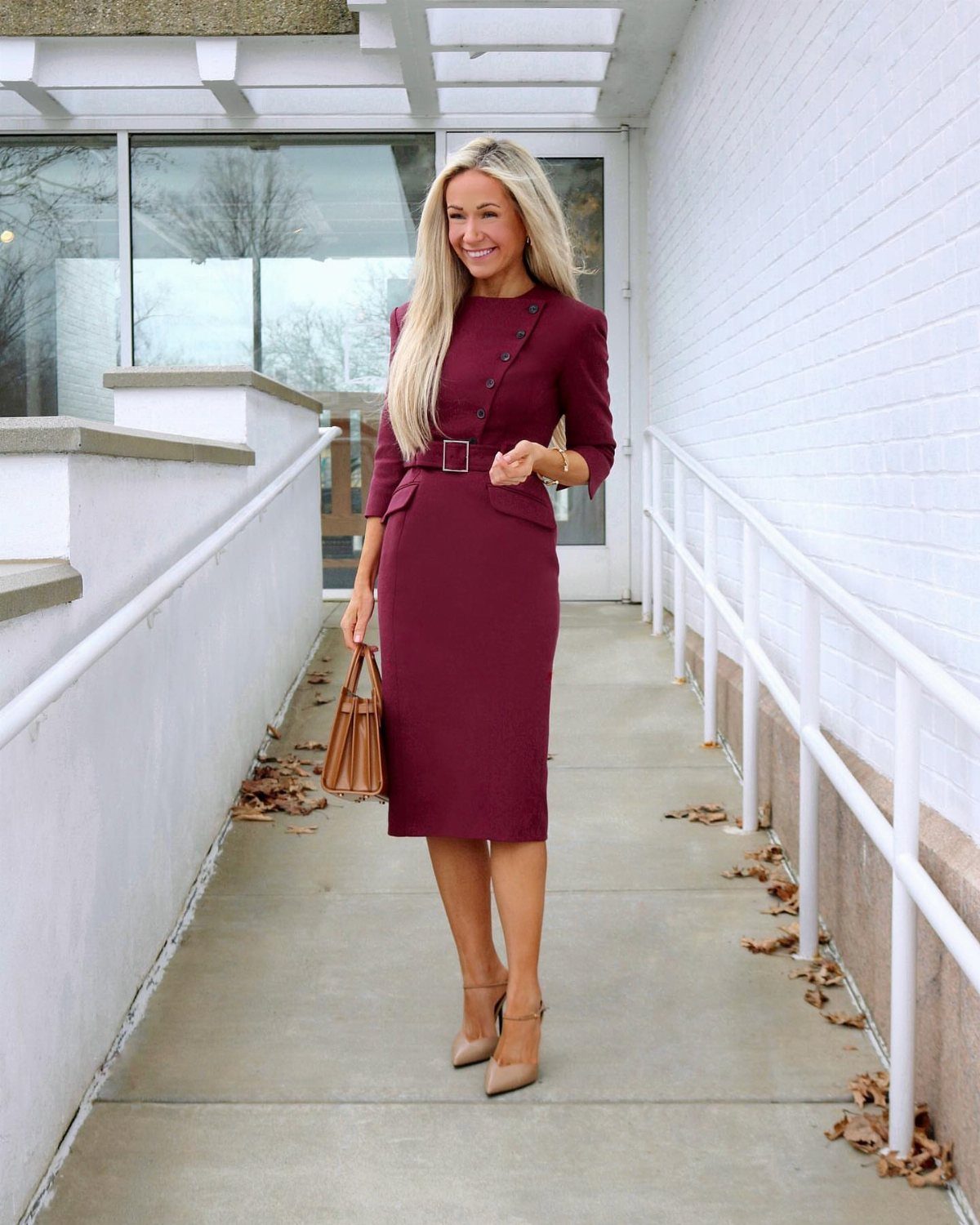
A belt at the waist turns a simple sheath into something that defines your proportions, which is why it works for body types that don’t naturally nip in at the center.
The maroon here reads richer than black or navy, and the self-belt keeps the look cohesive.
If the dress comes without a belt, add one in the same color family or a neutral leather.
The buckle should sit at your natural waist, not your hips, so the line stays clean when you sit. Nude heels stretch the leg line without competing with the dress.
9. Printed Dresses
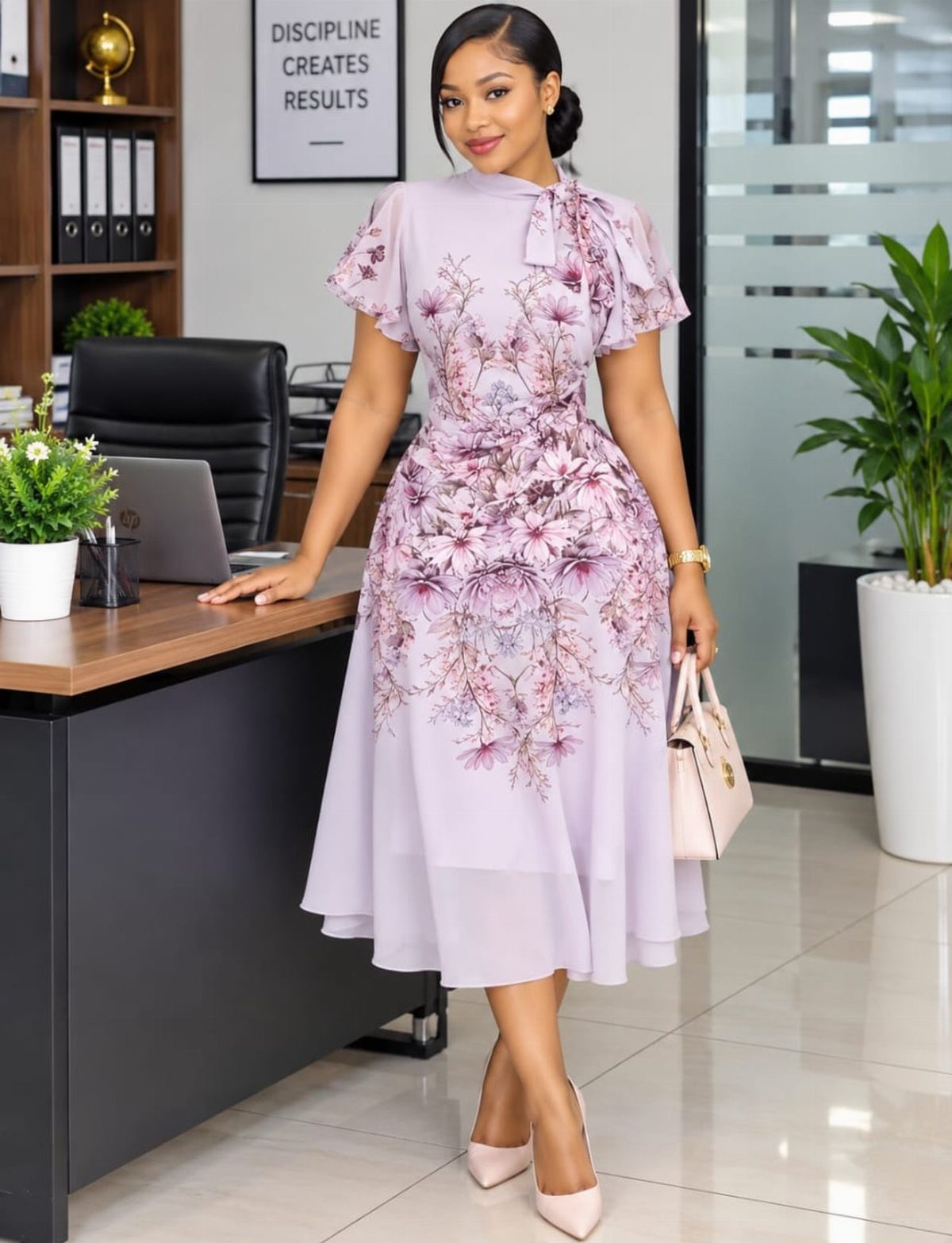
A printed dress gives you pattern without requiring separates, which cuts down on decision time in the morning. Small-scale florals on a dark background stay office-appropriate where larger, brighter prints read too casual.
If your office skews formal, look for prints with smaller motifs or geometric patterns instead of large florals.
The midi length keeps it professional, and the flowy fit works in warmer months when structured fabrics feel too heavy. A solid bag and simple shoes let the print stay the focus.
Choosing the Right Dress
Your workplace culture sets the baseline for what works.
A law office or finance firm expects more coverage and darker colors than a tech startup, and that difference shows up in hem length, neckline depth, and how closely the dress follows your shape.
Match that baseline to what you actually reach for.
Structure lovers will find a sheath or belted silhouette more natural than a shift. If you run warm or work in high humidity, skip silk and look for cotton, linen, or synthetic blends that wick moisture instead of showing it.
Color matters in conservative settings. Navy, charcoal, and black hide sweat marks and panty lines better than pastels or light neutrals, which means less concern over what shows through during a long day.
Fabric Considerations
Cotton and linen breathe better than synthetic fabrics, which makes them the better choice for summer or offices without strong air conditioning. Both absorb moisture without clinging to skin, and linen in particular releases heat faster than heavier weaves.
Offices that run warm year-round call for moisture-wicking synthetics or cotton blends. These fabrics pull sweat away from the body and dry faster than natural fibers alone, which keeps you comfortable through back-to-back meetings.
Wrinkle resistance becomes more important if you sit for most of the day or travel between offices.
Ponte knits, jersey blends, and treated cottons hold their shape better than linen or untreated natural fabrics, which means less time spent smoothing out creases before a meeting.
Functionality in Design
Pockets in a work dress mean you can carry a phone, keys, or a lip balm without adding a bag every time you move between rooms.
Side-seam pockets sit flat and stay invisible under most fabrics, while patch pockets on a shift or shirt dress add visible detail but can bulk up if overfilled.
Look for dresses with built-in belts or belt loops if you prefer a defined waist. A detachable belt gives you the option to adjust the fit or skip it entirely on days when you want a looser silhouette.
Machine-washable fabrics cut down on dry cleaning costs and make it easier to rotate the same few dresses through a work week.
Check the care label before buying, especially for structured styles that might require steaming or pressing after each wash.
Frequently Asked Questions
What are the best work dresses for summer?
Shift dresses and midi or maxi styles work best in warm weather. The shift’s straight cut skips the waist entirely, which means less fabric clinging to your body and fewer creases when you pull it from your bag.
A longer hemline covers your legs without adding the bulk or heat of trousers, and both styles work with flat sandals when it’s too hot for anything closed-toe.
How do you style a work dress?
A blazer or cardigan changes the formality in seconds and adds a layer when the office air conditioning drops too low.
A blazer adds structure to sleeveless styles like the sheath or A-line, while a cardigan softens the look for offices that run less formal. Keep shoes and bags simple so the dress stays the focus.