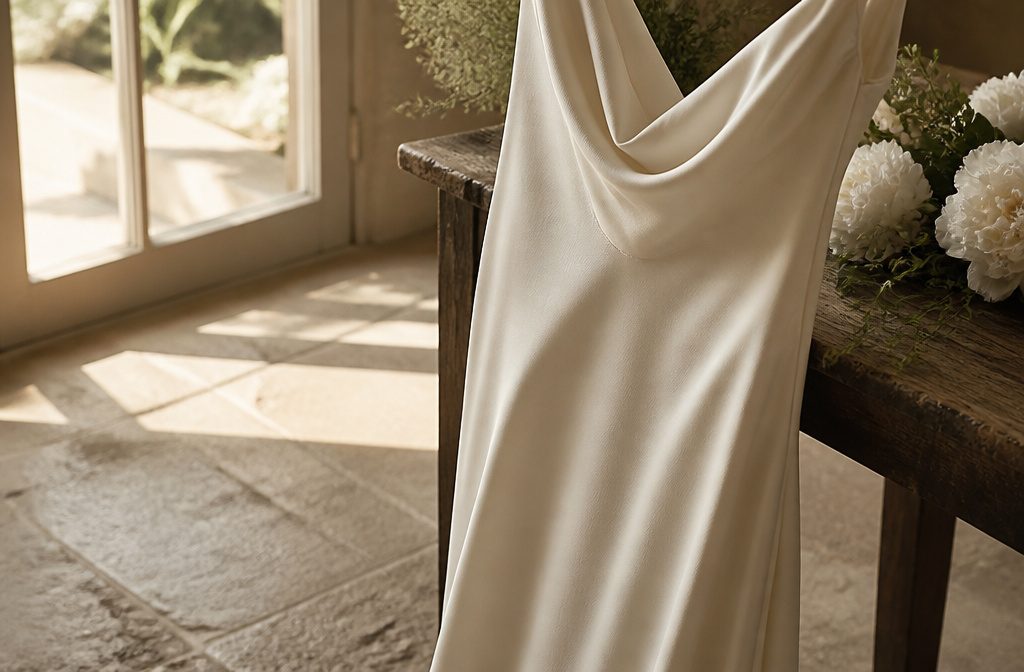
The Carolyn Bessette wedding dress was a pearl-white silk crêpe slip gown with a cowl neckline, designed by Narciso Rodriguez for her September 21, 1996 wedding to John F. Kennedy Jr. on Cumberland Island.
What made it revolutionary was what it left out: no lace, no beading, no volume, just bias-cut silk that moved with her body and a pair of crystal-beaded Manolo Blahnik sandals for the only sparkle.
A Pearl-White Silk Crêpe Gown Cut on the Bias
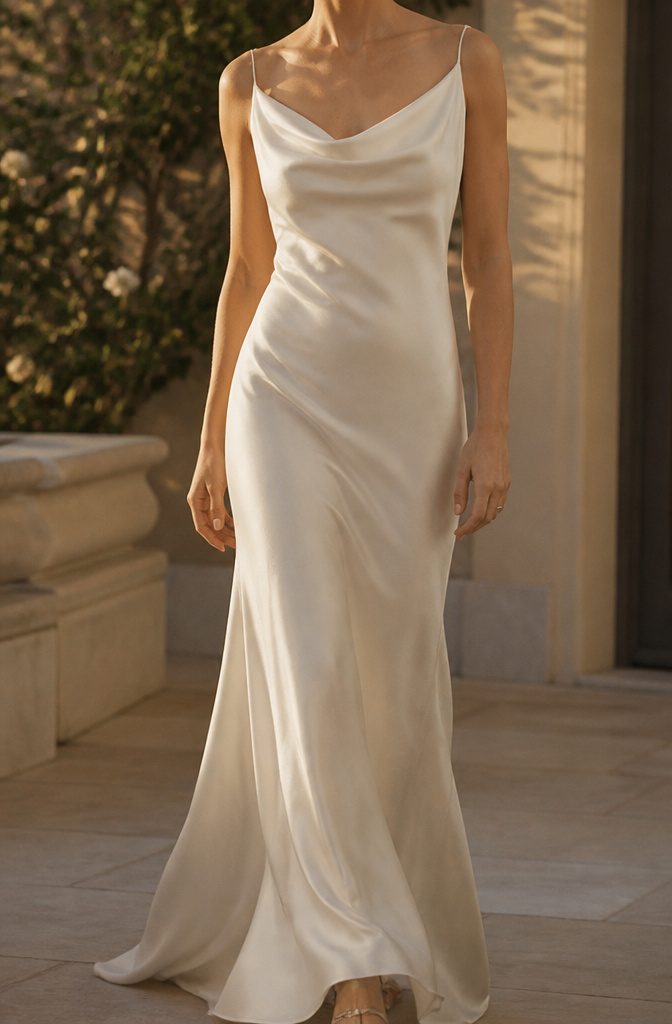
Rodriguez worked the dress from pearl-white silk crêpe cut on the bias, and that construction choice is what gave the gown its defining fluidity.
A bias cut runs diagonally across the fabric’s grain rather than straight along it, which lets silk crêpe cling and drape without stiffness. The result was a silhouette that moved with Bessette rather than standing away from her body.
The cowl décolletage followed the same logic. Instead of structured lace or boning, the neckline draped in soft folds that relied entirely on the fabric’s weight and the precision of the cut.
Rodriguez described it as seductive for a wedding dress, and he was right: the dress showed skin and shape without anything holding it in place but gravity and tension.
In 1996, that approach felt revolutionary. Most brides were still wearing embellished gowns with volume and tulle, the lingering influence of Princess Diana’s 1981 wedding.
Bessette’s dress had none of that. The silk was substantial enough to hold its line but fluid enough to puddle lightly at the floor, fitted through the hips and flowing from there.
Vera Wang had started moving toward cleaner silhouettes earlier in the decade, but this took it further. The dress wasn’t just minimal; it was architectural in a way that required serious tailoring to pull off.
The Cowl Neckline That Replaced Lace and Beading
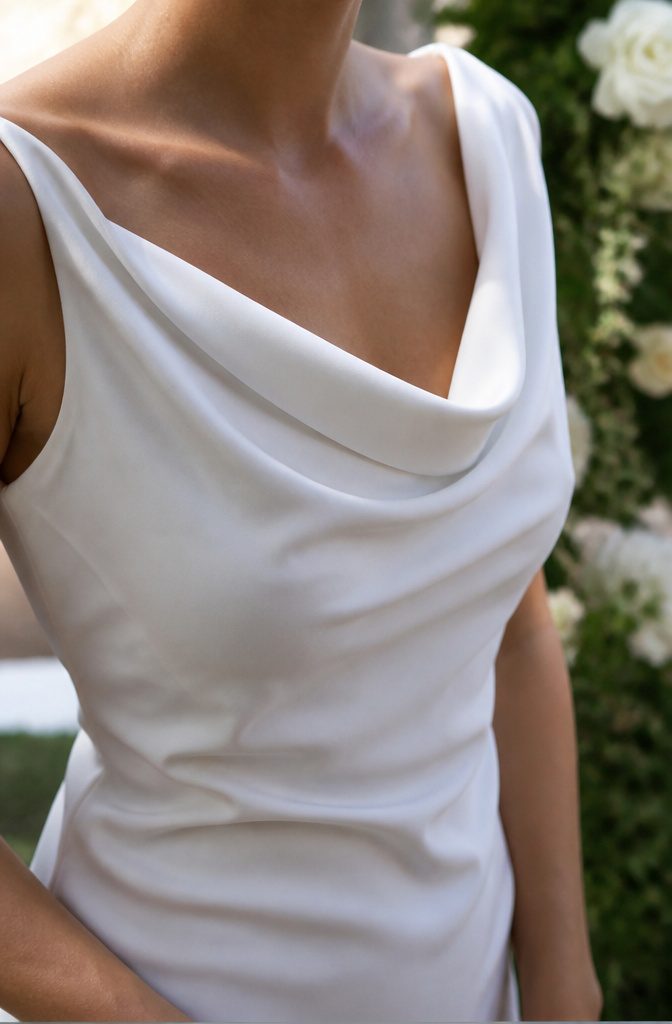
The cowl neckline was the detail that made the dress feel like Carolyn Bessette rather than a bridal uniform.
A draped cowl décolletage sat against the collarbone and fell in soft folds, adding movement and a slightly sexy touch to what could have been a too-simple silhouette.
Narciso Rodriguez said it outright: "It’s pretty seductive for a wedding dress, wouldn’t you say? It shows Carolyn’s personality: clean, classic, sexy, seductive."
The cowl worked structurally with the bias cut. Silk crêpe cut on the diagonal already moves with the body, and the cowl gave that fluidity somewhere to show itself right at eye level.
The draping continued at the back, with exposed skin and soft folds that kept the dress from reading as stark.
What made this choice feel radical in 1996 was what it replaced. Most wedding dresses of that era leaned heavily on embellishment, volume, and tulle.
Princess Diana’s dramatic gown had set the tone for the 80s and carried into the early 90s. Bessette-Kennedy skipped all of it.
No lace, no beading, no high neck to soften the structure. Bridal designer Danielle Frankel put it plainly:
There’s something to be said for a bit of shock; it recalibrates things.
— Vogue
That recalibration is why the cowl still shows up in bridal collections thirty years later. It gave brides permission to look like themselves rather than fit a mold.
Long Tulle Veil and Sheer Gloves
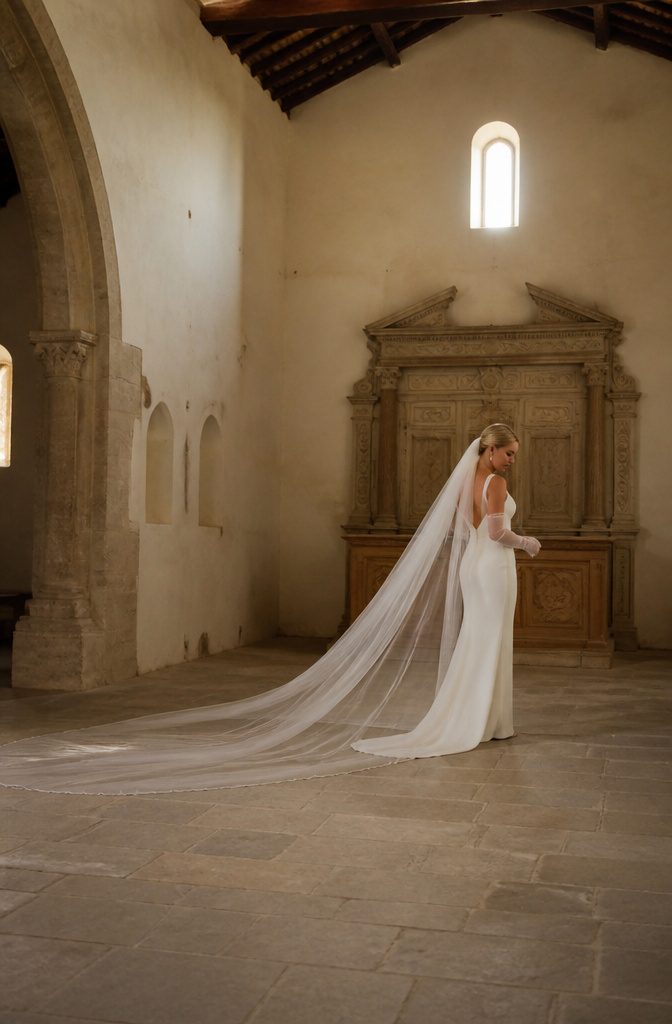
The accessories brought the tradition Bessette-Kennedy stripped from the gown itself. She wore a long silk-tulle veil and sheer-mesh opera-length gloves, both of which read unmistakably bridal without adding embellishment.
The gloves, which extended past the elbow, turned what could have passed for a sleek cocktail dress into something clearly meant for a ceremony.
Rodriguez sourced both pieces from a manufacturer that kept sketches of Bessette-Kennedy’s hand on file, ensuring the fit was precise rather than generic.
The veil fell long and simple, no lace edge or appliqué to compete with the gown’s clean lines. It added formality through length and volume alone, the kind of gesture that signals a wedding without requiring beading or scalloped trim.
Together, the veil and gloves carried the weight of convention so the dress could stay spare, a division of labor that let Bessette-Kennedy honor the occasion without compromising the minimalism that made the look work.
Crystal-Beaded Manolo Blahnik Sandals
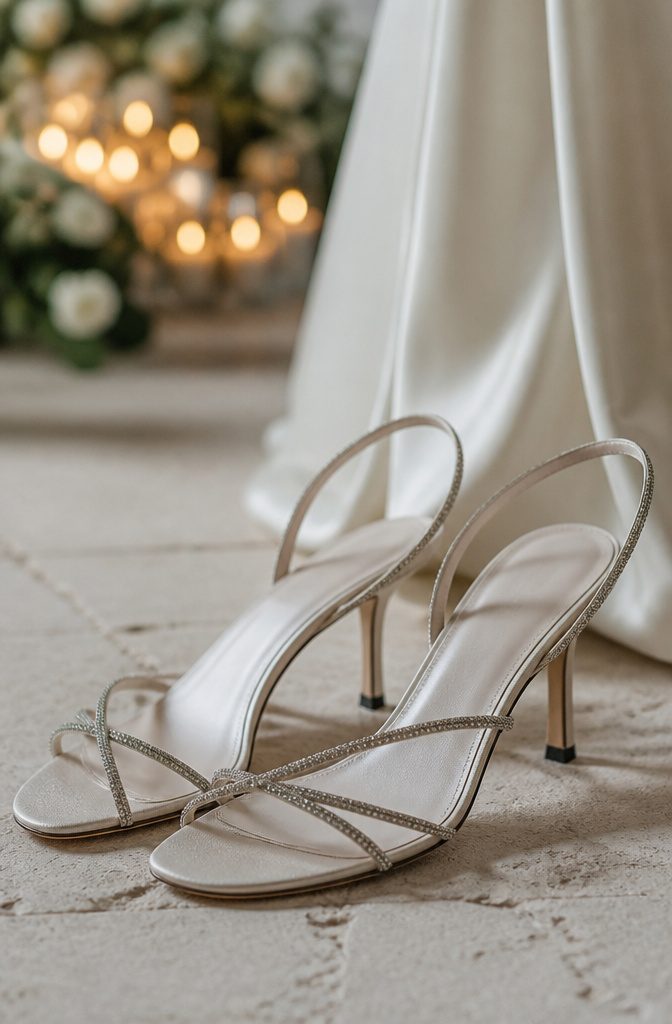
The Manolo Blahnik sandals with crystal beading were the only piece of the outfit that carried any sparkle at all.
Carolyn wore a pair of satin sandals dotted with crystals, similar in shape to the Callasli style the Spanish designer still makes today. The rest of the look was matte silk, sheer tulle, and nothing else that caught the light.
That decision matters because it anchors the whole approach. Most bridal looks scatter shine across multiple surfaces: beading on the bodice, a jeweled belt, drop earrings, maybe a tiara.
Carolyn put it all in one place and let the shoes do the work. You noticed them when she moved, not from across the room, and that restraint is what made the outfit feel deliberate rather than bare.
The sparkle existed, but it didn’t announce itself. Her relationship with Manolo Blahnik later led to a slingback named in her honor, though she didn’t wear that exact pair for the ceremony.
Lily of the Valley Bouquet
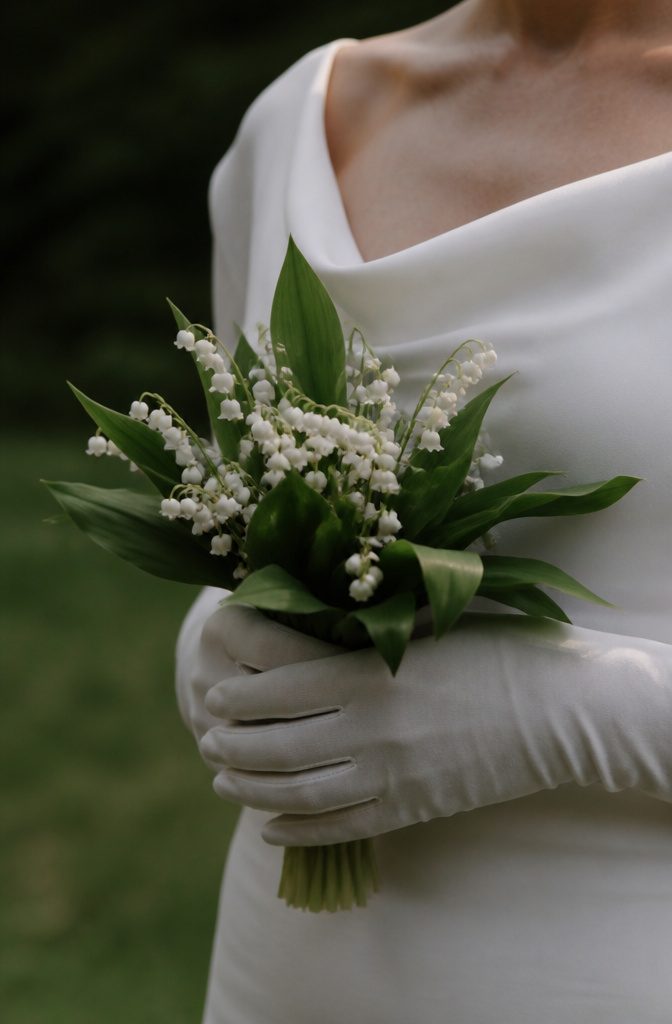
Carolyn carried a tight clutch of lily of the valley, and the choice was deliberate on two counts.
The flowers held personal meaning: Jackie Kennedy Onassis had loved them enough to keep them on her breakfast tray each morning, and Carolyn honored that connection.
But the bouquet also worked because of what it left out. A large, sprawling arrangement would have competed with the gown’s clean lines and the way the silk fell without interruption from neckline to floor.
Lily of the valley reads as green and white, small in scale, and easy to hold in one gloved hand.
It gave her something to anchor the gesture without breaking the silhouette or adding visual weight where the dress had already done the work.
Narciso Rodriguez Designed It After a Casual Request
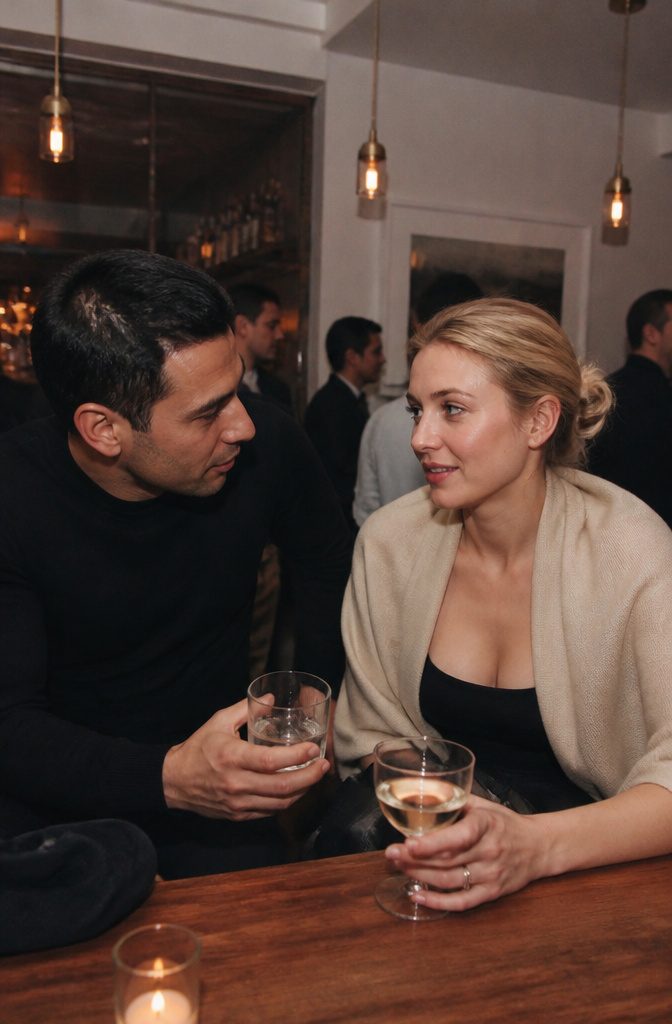
Narciso Rodriguez was a close friend of Bessette-Kennedy and designed the dress after she requested it during a casual meeting at Odeon, where the two sat at the bar drinking cosmos.
She told him that John had proposed and asked simply if he would make her dress.
The request came naturally: Rodriguez had been her colleague at Calvin Klein, and they had lived in the same apartment building for years, close enough that her apartment became her shoe closet while she lived out of his.
Rodriguez gave her a couple of ideas for the gown. She thought one was too architectural, pulled the neckline down, and the dress was born.
The design was straightforward, personal, and shaped entirely by how well they knew each other. For Rodriguez, it was the love of his life marrying the love of her life, which made the project emotional rather than transactional.
The September 21, 1996 wedding launched his career, in part because Bessette-Kennedy insisted the press photo show the dress and credited her dear friend as its designer.
September 21, 1996, Cumberland Island, 40 Guests
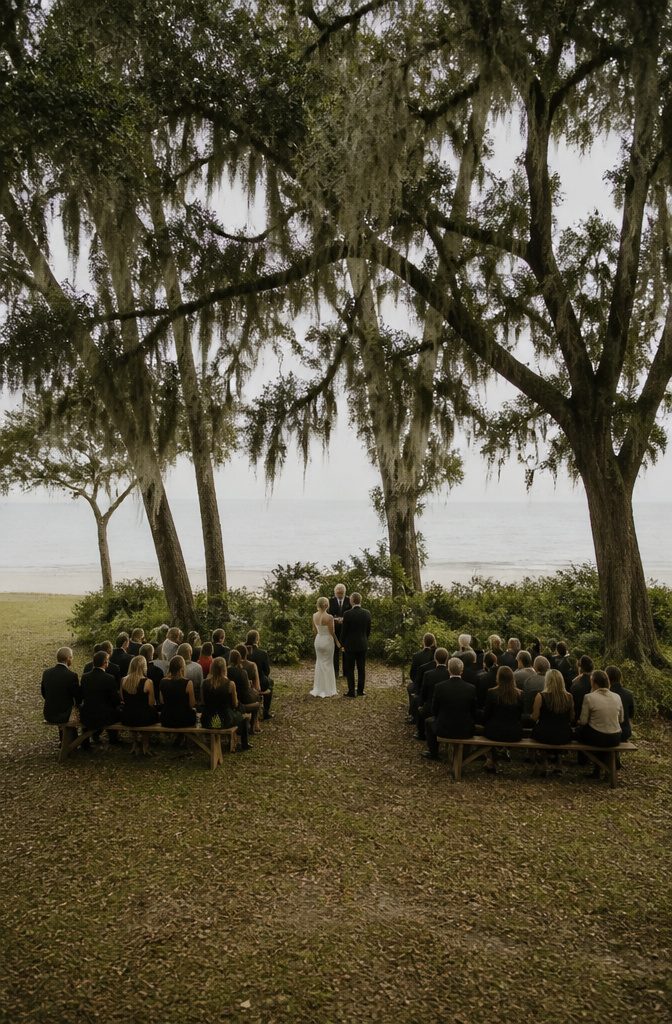
The ceremony took place September 21, 1996, on Cumberland Island, a small barrier island off the Georgia coast, with about 40 guests in attendance.
John and Carolyn managed to keep the entire event secret from the press, which only amplified the impact when photographs finally surfaced. The intimacy of the setting made the simplicity of the dress feel even more intentional.
Instead of staging a public spectacle befitting "America’s Prince," the couple chose a private ceremony where the focus landed squarely on the people who mattered to them.
That privacy is part of why the dress became so iconic.
When Bessette-Kennedy finally agreed to release one image from the weekend, photographer Denis Reggie later told Vanity Fair that she requested only one thing: "Show the dress. My dear friend designed the dress."
The secrecy meant the gown wasn’t diluted by weeks of speculation or competing angles. It arrived fully formed, and the understated slip silhouette felt all the more revolutionary for having been chosen in such a deliberately quiet moment.
How It Changed Wedding Dress Design for Three Decades
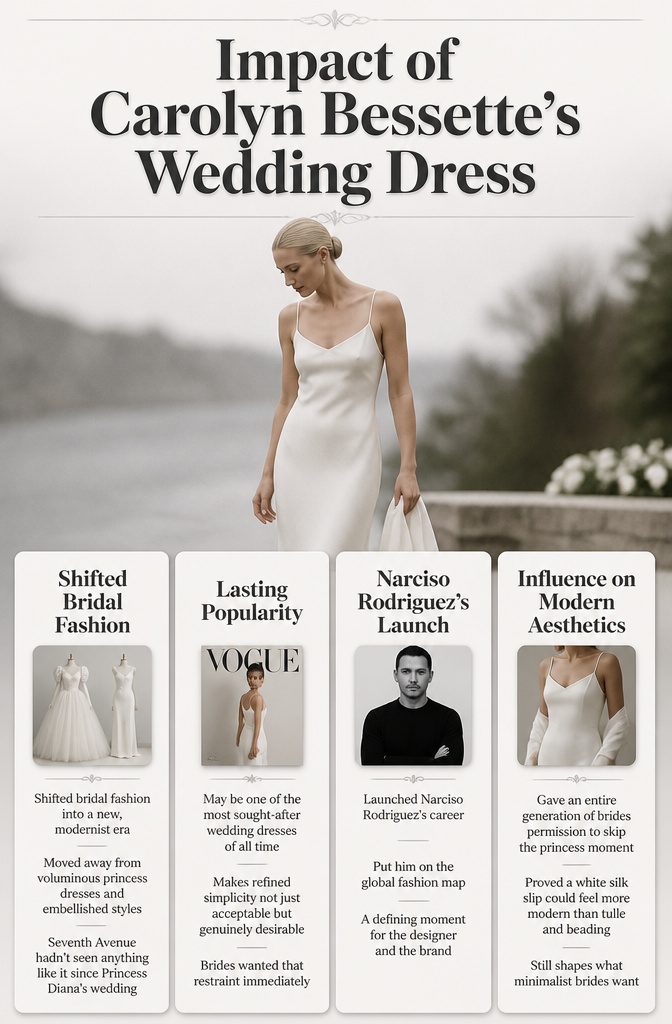
Bessette’s gown reset what brides reached for.
Women’s Wear Daily called it the moment that shifted bridal fashion into a new, modernist era, moving away from the voluminous princess dresses and embellished styles that had dominated the 80s and early 90s.
The dress proved that a white silk slip could feel more modern than tulle and beading, and brides wanted that restraint immediately.
Alan Millstein, a fashion newsletter editor at the time, said Seventh Avenue hadn’t seen anything like it since Princess Diana’s wedding.
Over three decades later, the gown still shapes what minimalist brides want. Vogue noted it may be one of the most sought-after wedding dresses of all time, making refined simplicity not just acceptable but genuinely desirable.
Meghan Markle described it as "everything goals," and her own 2018 wedding reception dress drew direct comparisons to Bessette’s slip-style gown. The dress launched Narciso Rodriguez’s career and gave an entire generation of brides permission to skip the princess moment.
Meghan Markle Cited It as Inspiration
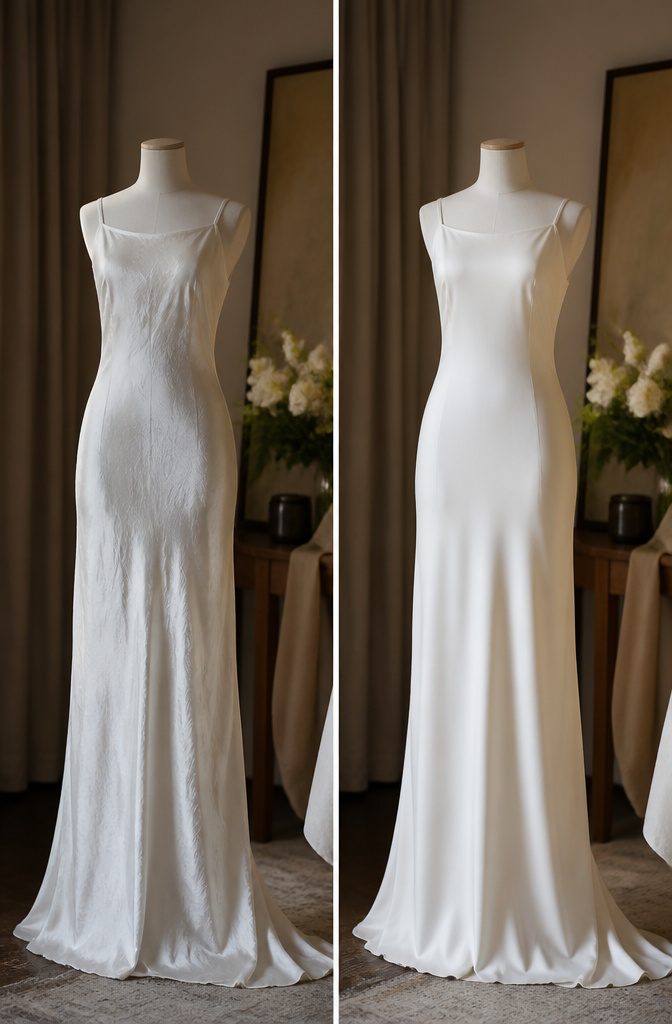
Meghan Markle cited Bessette-Kennedy’s gown as her favorite celebrity wedding dress of all time, a choice that makes sense when you look at the reception dress Markle wore in 2018.
That silk crepe bias-cut silhouette carries the same restrained confidence, the same refusal to lean on embellishment. When a royal bride names a downtown minimalist as her touchstone, the impact of that 1996 dress becomes clear.
The gown’s reach extends beyond real weddings. Ryan Murphy’s FX series Love Story recreated the dress for episode six, treating it as a turning point in the narrative.
Costume designer Rudy Mance felt a responsibility not just to honor Bessette-Kennedy’s legacy but to pay respect to Narciso Rodriguez and Gordon Henderson, the Calvin Klein colleagues she entrusted with her wedding look.
The pressure to get it right shows how much weight the dress still carries. It represented a couple determined to forge their own path outside the Kennedy dynasty’s expectations, and that tension plays out in the recreation.
Frequently Asked Questions
Who designed Carolyn Bessette-Kennedy’s wedding dress?
Narciso Rodriguez designed the dress after Bessette-Kennedy asked him during a casual meeting at Odeon in New York City.
Rodriguez was a close friend and former colleague from Calvin Klein, and they had lived in the same apartment building for years. The dress was a gift from Rodriguez valued around $40,000.
Why is Carolyn Bessette-Kennedy’s wedding dress so famous?
The dress reset bridal fashion by proving that a simple white silk slip could feel more modern than tulle and beading.
Women’s Wear Daily called it the moment that shifted bridal fashion into a new, modernist era, moving away from the voluminous princess dresses that had dominated the 80s and early 90s.
Over 3 decades later, it remains one of the most sought-after wedding dresses of all time.
How much did Carolyn Bessette’s wedding dress cost?
The dress was valued around $40,000 and given as a gift from designer Narciso Rodriguez. Two 3-hour couture fittings for the gown took place in Paris.
Why didn’t Calvin Klein design Carolyn Bessette’s wedding dress?
Bessette-Kennedy chose her close friend Narciso Rodriguez instead, asking him to design the dress during drinks at The Odeon Restaurant.
Rodriguez had been her colleague at Calvin Klein, and they were close enough that her apartment became her shoe closet while she lived out of his.
When she finally agreed to release one photo from the wedding, she requested only one thing: show the dress and credit her dear friend as its designer.