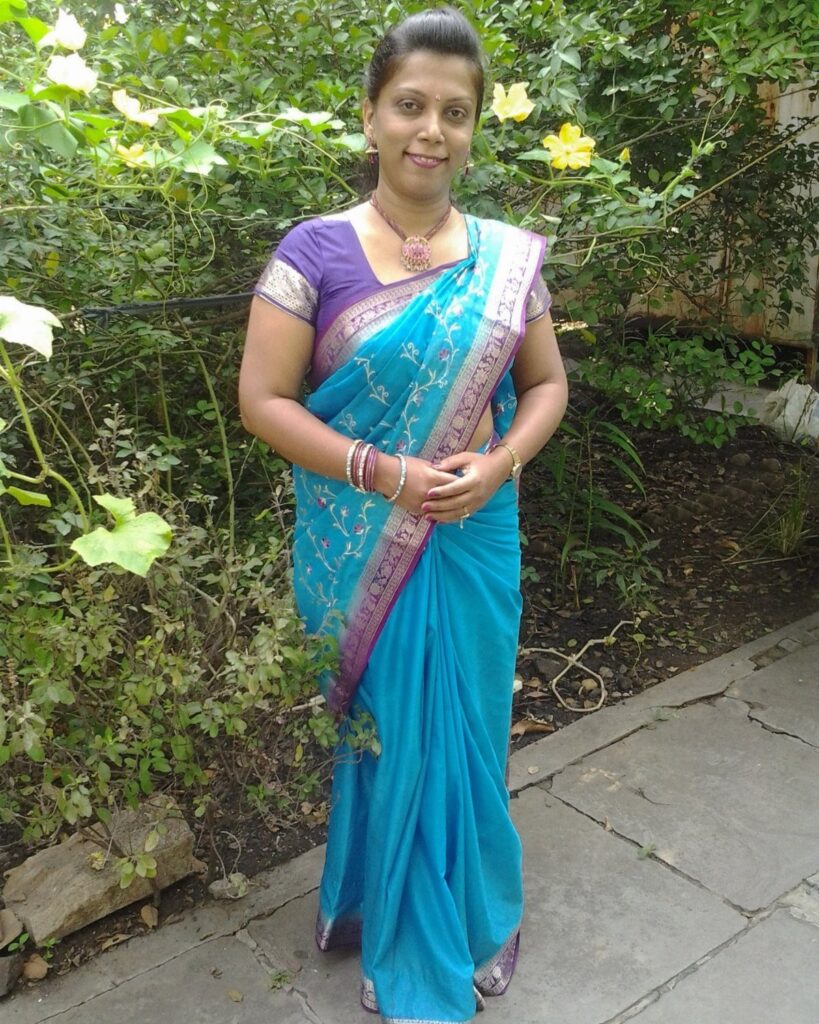
Indian attire dresses range from the draped elegance of a saree to the palazzo suit’s wide-leg comfort, and the distance between casual cotton and formal silk changes how each silhouette performs.
1. Saree
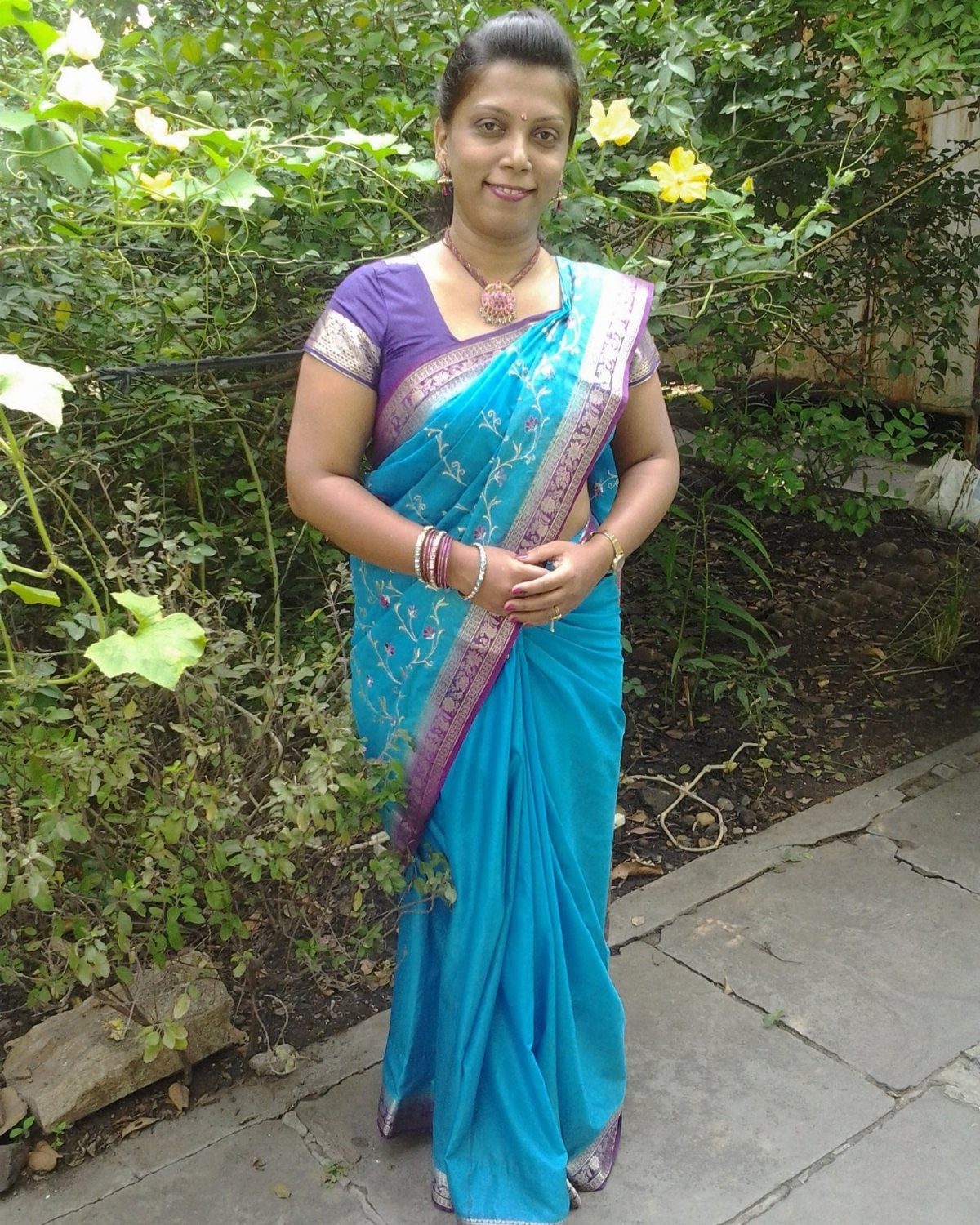
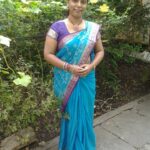
The saree wraps 5 to 9 yards of fabric into a single unstitched drape, pleated at the waist and thrown over one shoulder, worn with a fitted blouse and a petticoat underneath.
A contrasting blouse, rather than one that matches the saree exactly, multiplies the ways you can wear it.
If you’re new to draping, a pre-stitched saree saves time and holds the pleats in place.
Otherwise, pin the pleats at the waist and the shoulder end to keep everything secure through the day. Cotton works for casual wear, silk and chiffon suit weddings and formal events.
2. Lehenga Choli
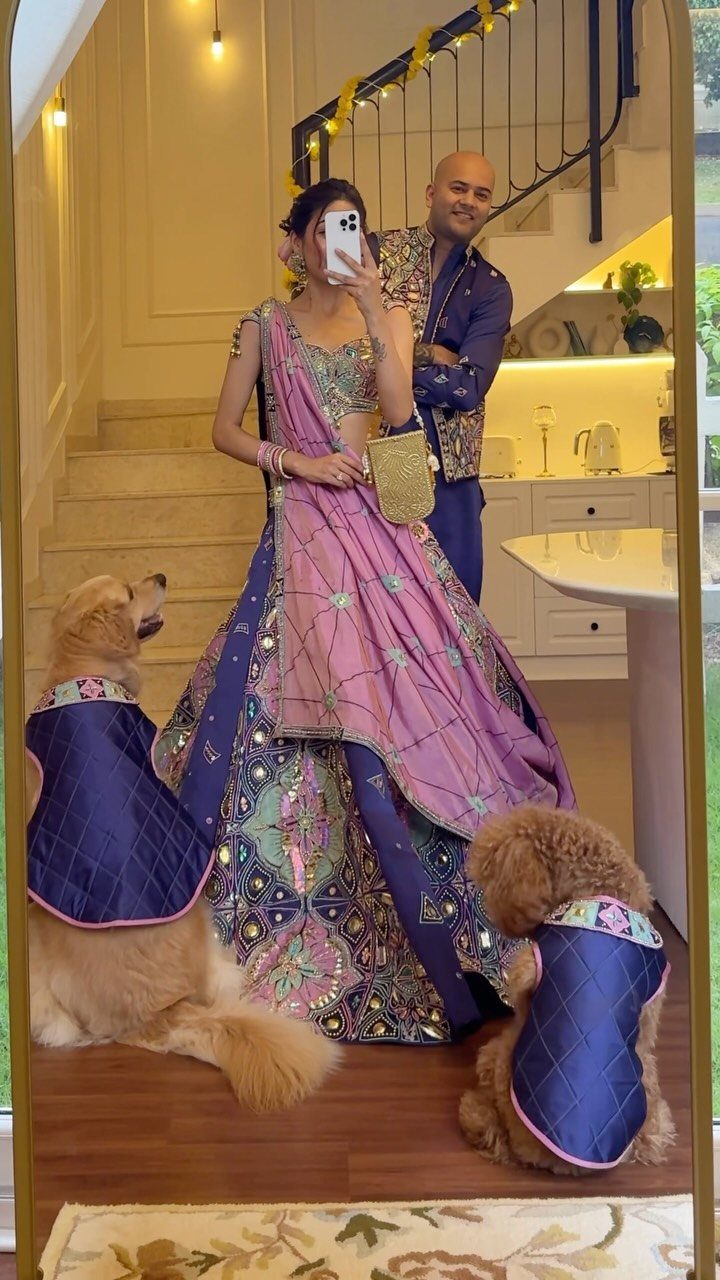
A lehenga choli splits into three pieces: a long, flared skirt, a cropped fitted top, and a dupatta that drapes over one shoulder or across both.
The structure gives you room to move while the embroidery and heavy fabric keep it formal enough for weddings and festivals.
Velvet, silk, and georgette are the usual fabrics, and the waistband on the skirt should sit at your natural waist to balance the cropped top. Heels help with the length, but you can hem the skirt if it drags.
3. Salwar Kameez
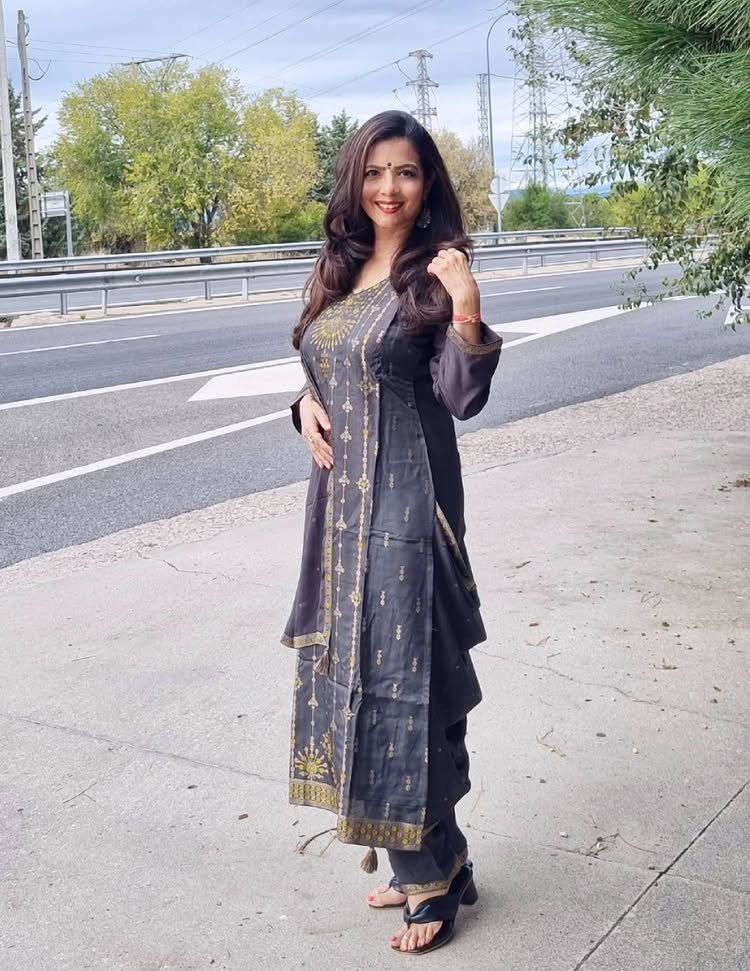
Salwar kameez pairs a long tunic with loose trousers and a dupatta you can pin at the shoulder or let hang loose.
The silhouette sits somewhere between casual and formal, which makes it useful when you’re not sure how dressed up the occasion will be.
Cotton and lawn fabrics keep it breathable for daywear, silk and georgette dress it up. The trousers taper at the ankle, which works better with flats or low heels than wider cuts do.
4. Anarkali Suit
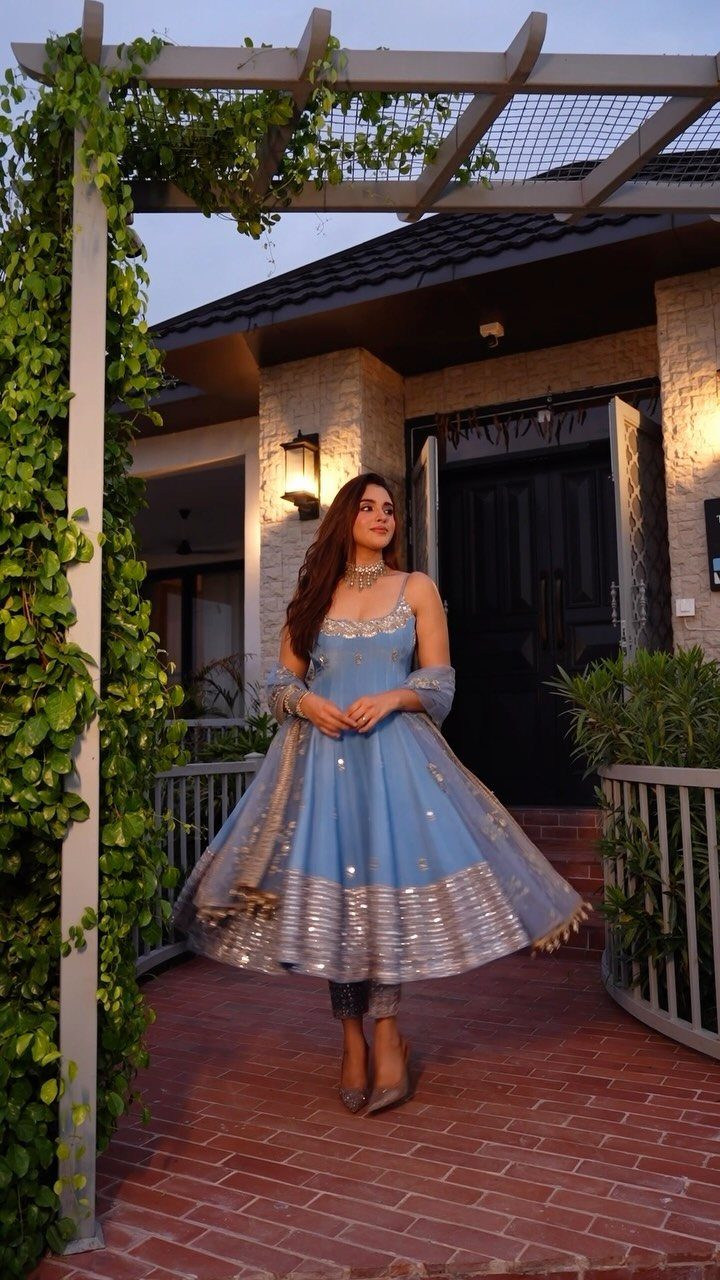
An Anarkali suit builds volume into the tunic itself, flaring from the bust or waist into a floor-length hemline that moves when you walk.
The fitted bodice and full skirt give it a formal shape, and the churidar trousers underneath stay close to the leg so the silhouette stays balanced.
The light blue fabric here has silver embroidery at the neckline and hem, which keeps the detail where it shows without weighing down the whole piece.
Georgette and chiffon drape well, heavier silks hold more structure. The length should skim the floor when you’re wearing heels.
5. Sharara Suit
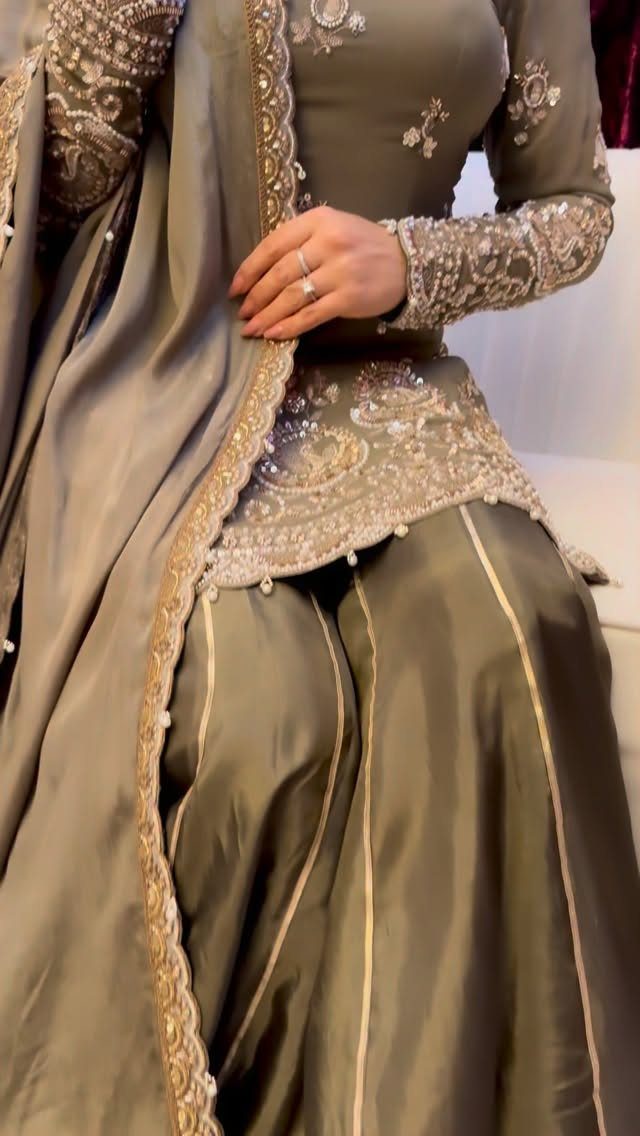
Sharara suits swap the straight trousers for wide-legged pants that flare from the knee, paired with a short kurta that hits at the hip or mid-thigh.
The silhouette reads formal but gives you more room to move than a lehenga does.
The olive green fabric here has gold embroidery running down the kurta and along the hem of the pants, enough to carry the look without adding a lot of jewelry.
Silk, georgette, and brocade hold the structure in the pants, and the dupatta can drape across the front or over one shoulder. The short kurta shows the waistband, so the fit there matters more than it does in longer styles.
6. Indo-Western Dress
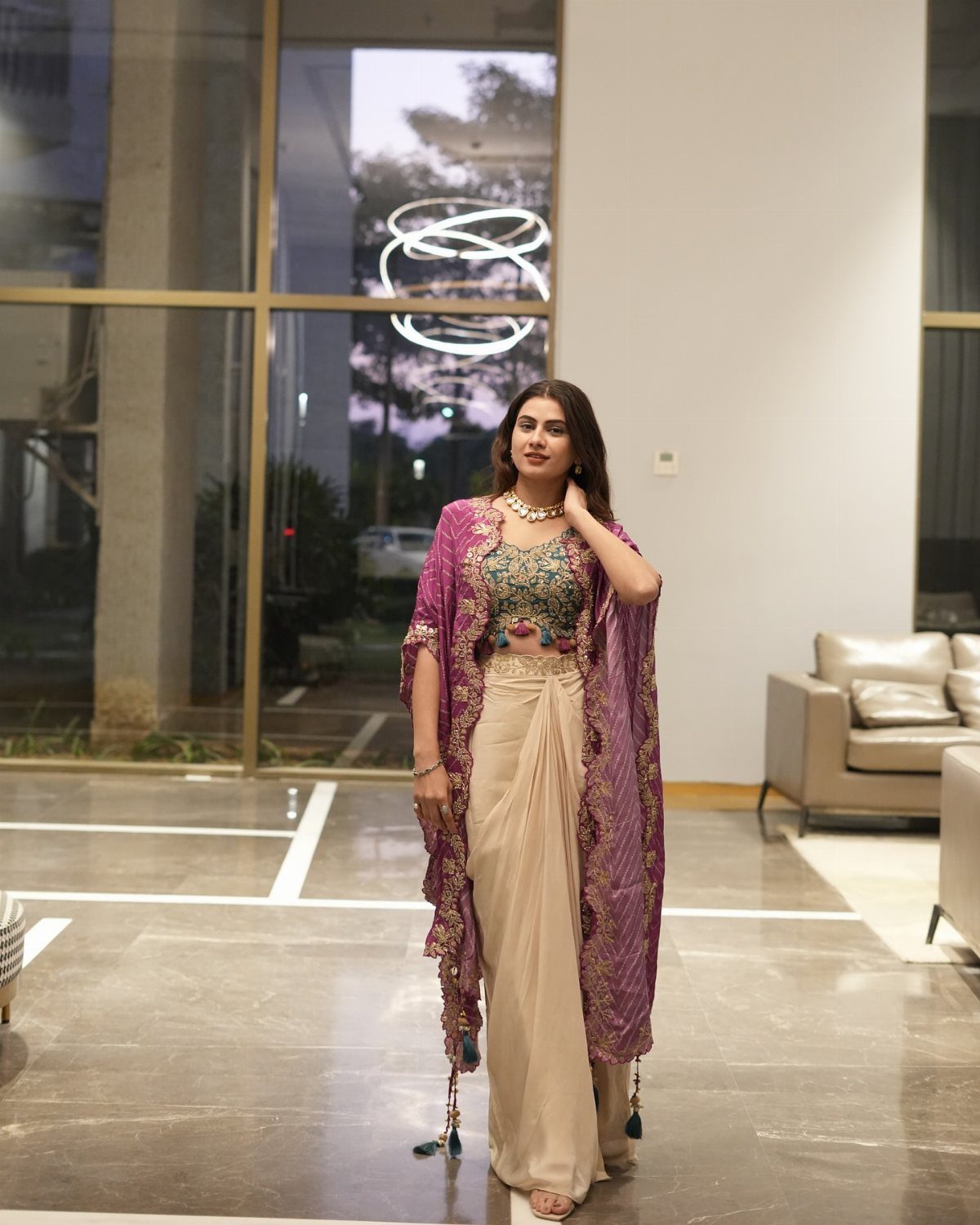
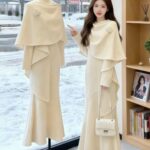
Indo-Western dresses pull from both wardrobes, mixing a draped dupatta or cape with trousers, a crop top, or a fitted jacket.
The purple cape here sits over a crop top and beige trousers, which keeps the silhouette streamlined while the embroidery on the cape does the formal work.
This style gives you more flexibility than a full traditional outfit, and you can swap out pieces depending on how dressed up the occasion is.
Pair a heavily embroidered jacket with plain trousers, or reverse it. The cape drapes like a dupatta but stays in place without pinning.
7. Patiala Suits
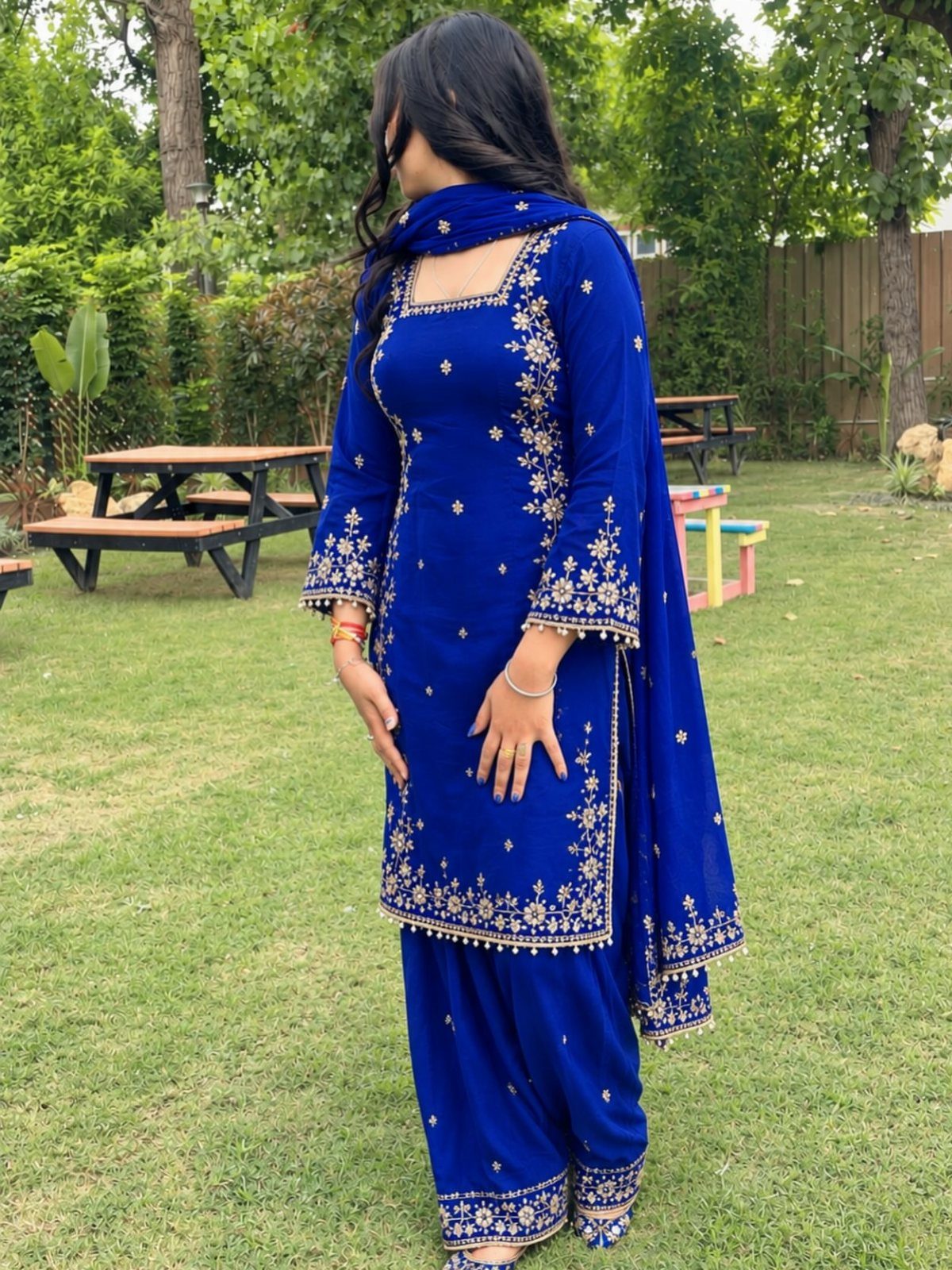
A Patiala suit pairs a straight or slightly flared kurta with trousers that gather into deep pleats at the waist and taper sharply at the ankle, creating volume through the hips and thighs.
Gold embroidery at the neckline and cuffs adds formality, and you can drape the dupatta across the chest or let it fall over one shoulder.
Cotton works for everyday wear, silk dresses it up.
The pleated trousers need more fabric than straight-cut styles, which gives you room to move but adds bulk at the waist, so the kurta length should hit mid-thigh or longer to balance the silhouette.
8. Kaftan Dress
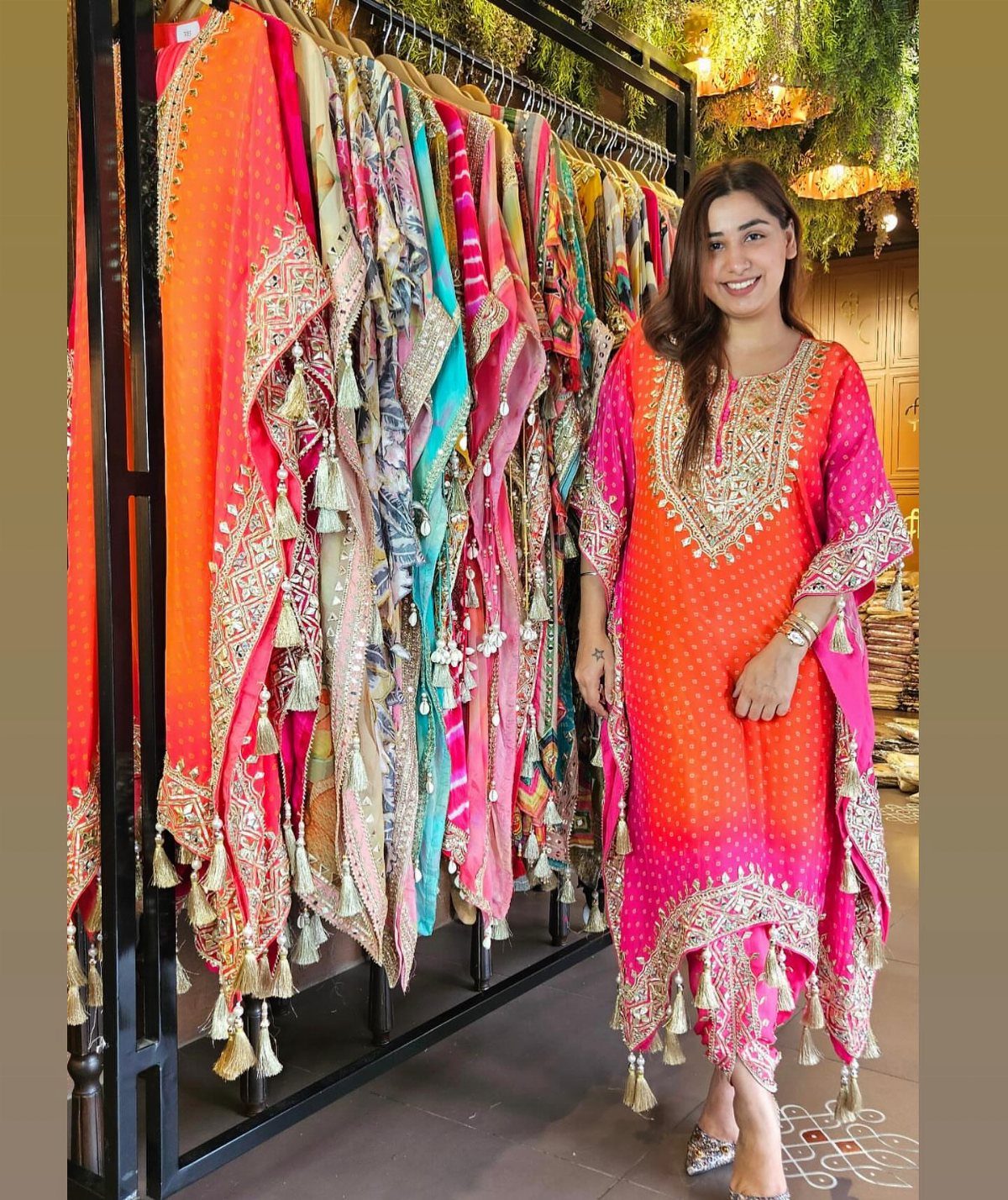
Kaftan dresses cut a loose, flowing shape from shoulder to hem, usually with wide sleeves and no waistband.
The orange and pink embroidery here runs along the neckline and down the front, and the length falls somewhere between the knee and ankle depending on how you want to wear it.
Cotton, georgette, and rayon keep it breathable, and the relaxed fit works for casual gatherings or at-home wear. You can belt it at the waist if you want more shape, but the silhouette is meant to hang straight.
9. Dhoti Style Dress
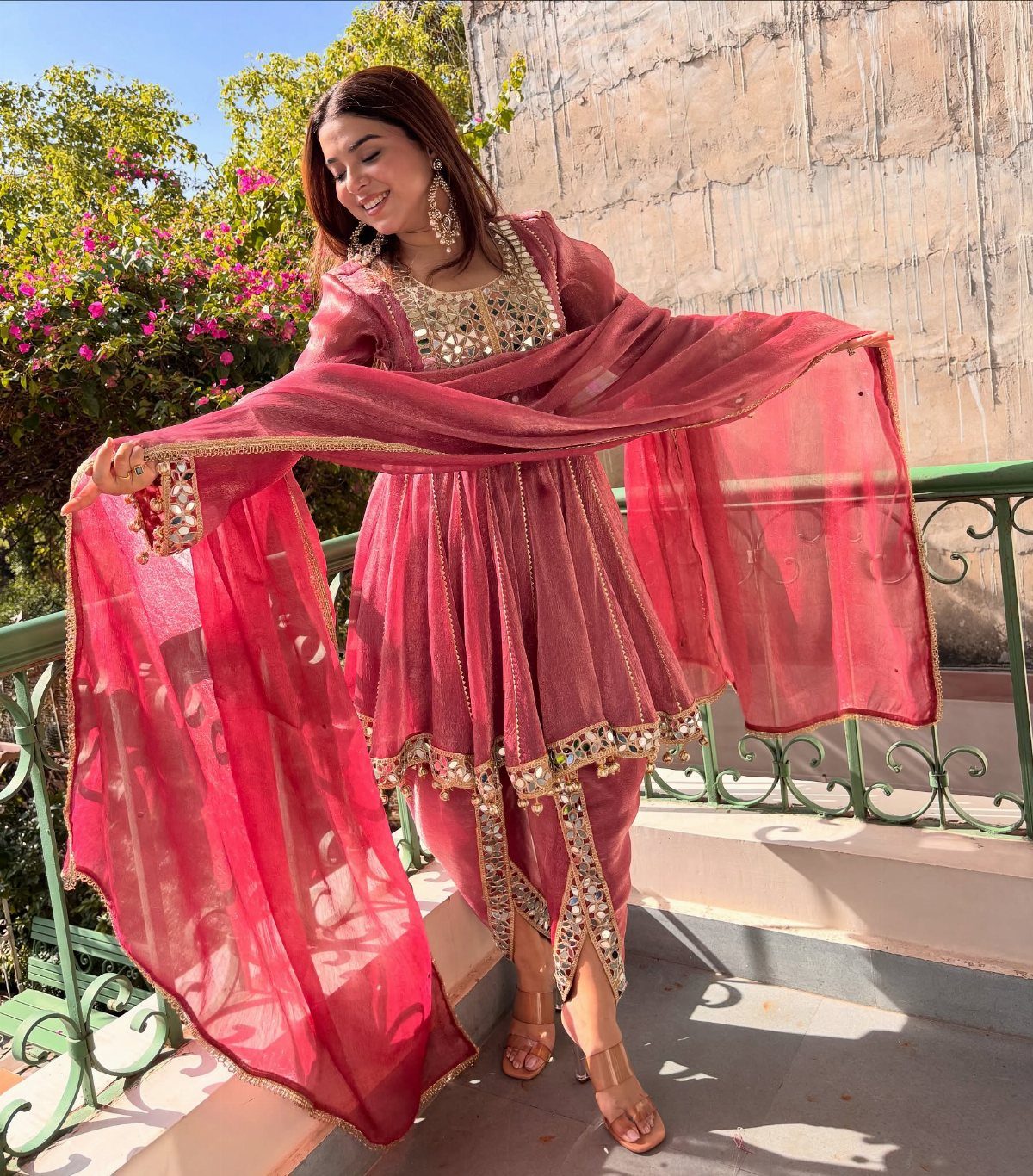
Dhoti style dresses mimic the draped trousers of traditional dhoti pants but stitch the pleats and gathers into place, pairing them with a fitted top or kurta.
The pre-stitched drape gives you the look without the pinning, and the fitted top keeps the silhouette balanced against the volume in the pants. Georgette and crepe hold the pleats well, and the hemline should clear the floor with heels.
10. Co-ord Sets
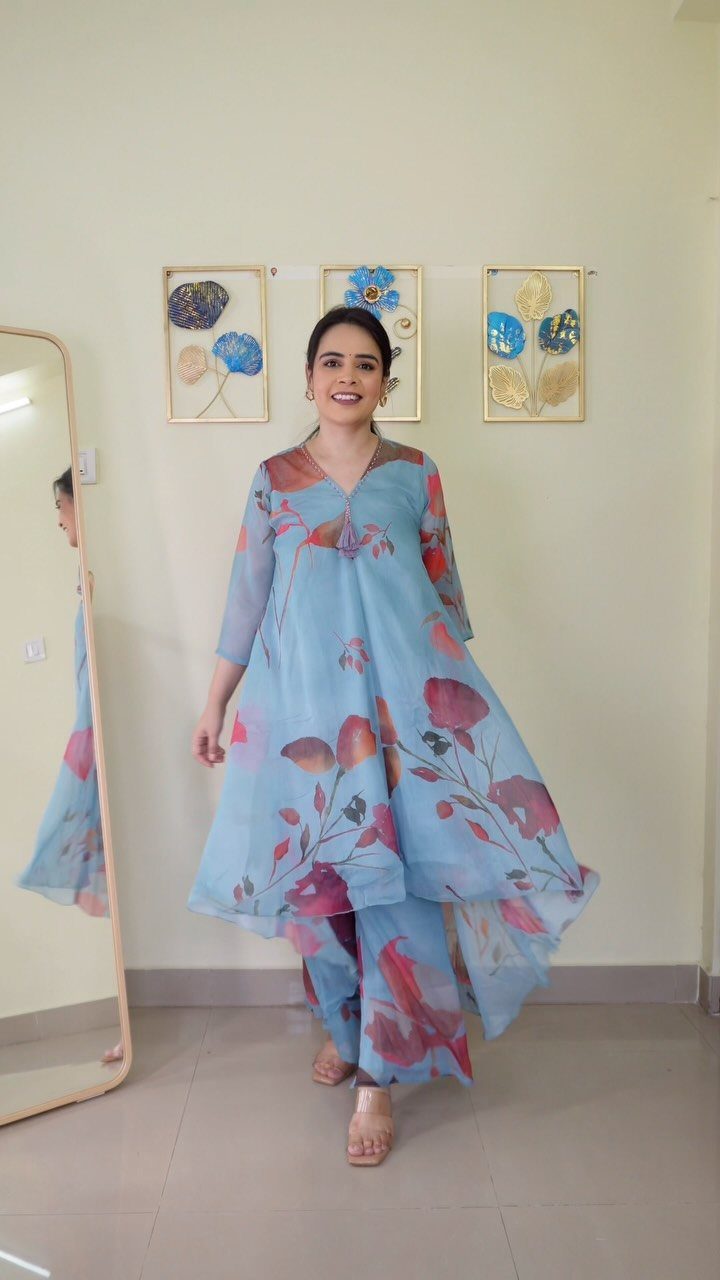
Co-ord sets match a tunic or kurta with trousers in the same fabric and print, sold as a pair.
The light blue floral print here runs through both pieces, and the tunic hits just past the hip, which keeps the look streamlined without a dupatta.
You can wear the pieces separately or add a contrasting dupatta when the occasion calls for it, and the matching print removes the guesswork from putting an outfit together.
11. Palazzo Suit
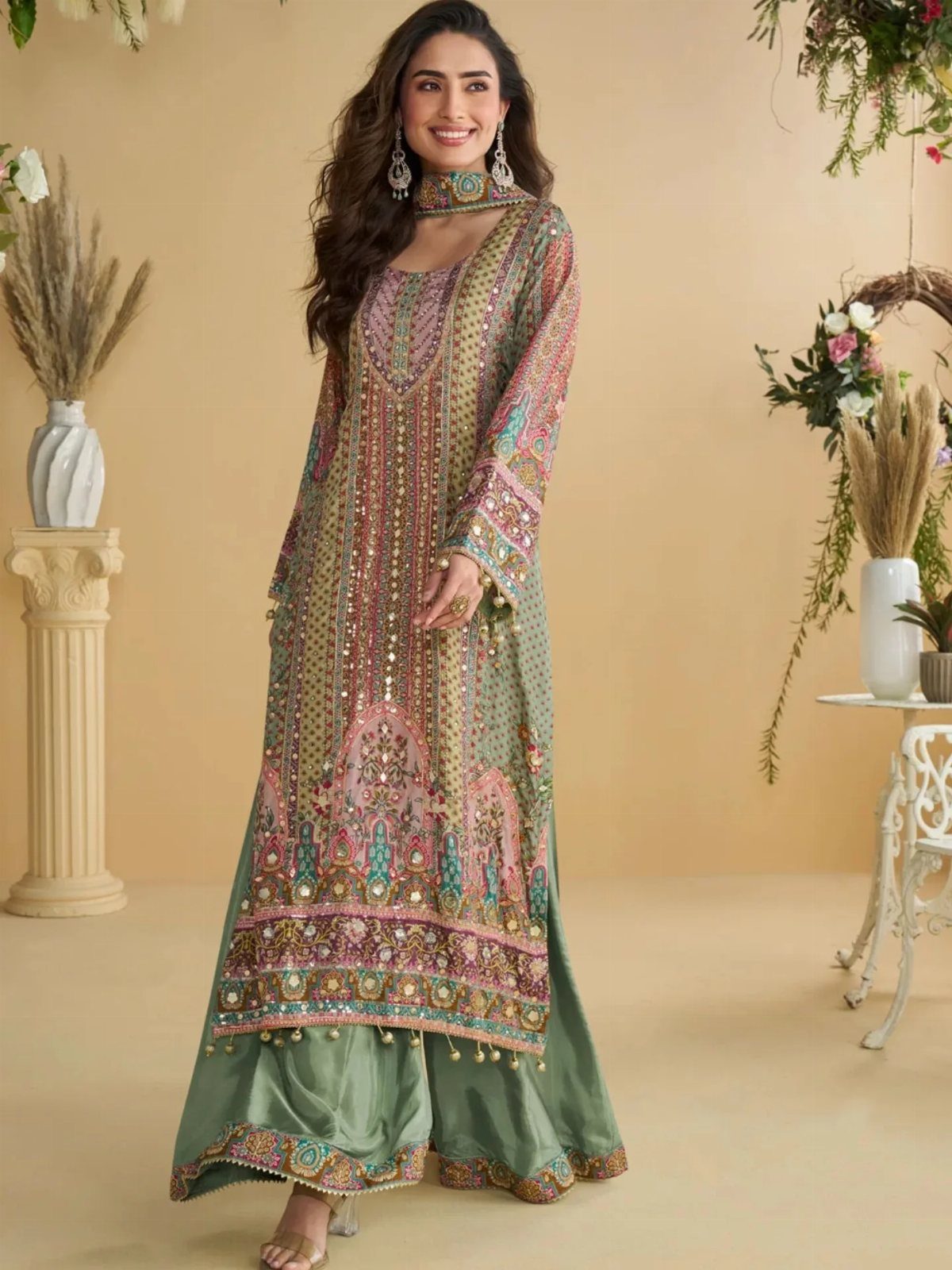
Palazzo suits pair a kurta with wide-legged trousers that fall straight from the waist to the floor, giving you the coverage of a long skirt with the ease of pants.
The green palazzo pants here anchor a heavily embroidered tunic in red, gold, and green, and the wide legs balance the detail on top.
Georgette, crepe, and silk hold the drape in the pants, and the waistband should sit at your natural waist so the length stays proportional. Flats work, but heels keep the hem from dragging.
Choosing the Right Dress
Body shape decides fit before anything else.
Silk holds structure and catches light, which makes it the right choice for weddings and formal events.
Cotton breathes better through the day, so it handles casual wear and daytime gatherings without the weight. Georgette drapes cleanly and moves well, sitting between the two.
Pick the cut that highlights what you want to show and skims what you don’t.
A cropped top works when your waist is your best feature, a longer kurta balances wider hips. Quality fabric holds its shape longer and wears better than a cheaper version of the same style.
Styling Tips
Jhumkas and a maang tikka keep the jewelry traditional, but the outfit itself tells you how much to add. A heavily embroidered lehenga or sharara needs less on top, a simple cotton kurta can take a statement necklace.
Juttis and sandals anchor most ethnic looks, while heels lift the formality of a saree or lehenga. Co-ord sets and modern cuts sit better with flats or sneakers that don’t interrupt the line.
Match the footwear to the fabric and color so the outfit reads as one piece, and choose something you can wear through the whole event without adjusting.
A bold lip or winged eyeliner shifts the mood without changing the clothes. Hair pulled back shows off embroidery at the neckline, loose waves soften a structured outfit.
Care for Indian Dresses
Store embroidered pieces and delicate fabrics in breathable fabric bags, not plastic. Folding heavy lehengas and sarees with tissue paper layered between the pleats keeps the shape intact and fights wrinkles better than stacking them flat.
Silk and zari need cool, dry storage out of direct sun, which bleaches the color and breaks down the thread. Keep them off the floor and away from damp walls.
Each style changes how formal the piece reads and how much care it needs, so check the embroidery type before you decide how to clean or store it.