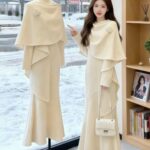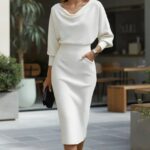
A simplistic wedding dress pulls back to silhouette and fabric, skipping beading and lace in favor of clean lines that photograph better than most brides expect.
The right one depends on the neckline, the sleeve length, and how the fabric sits on your body.
1. Minimalist Wedding Dresses
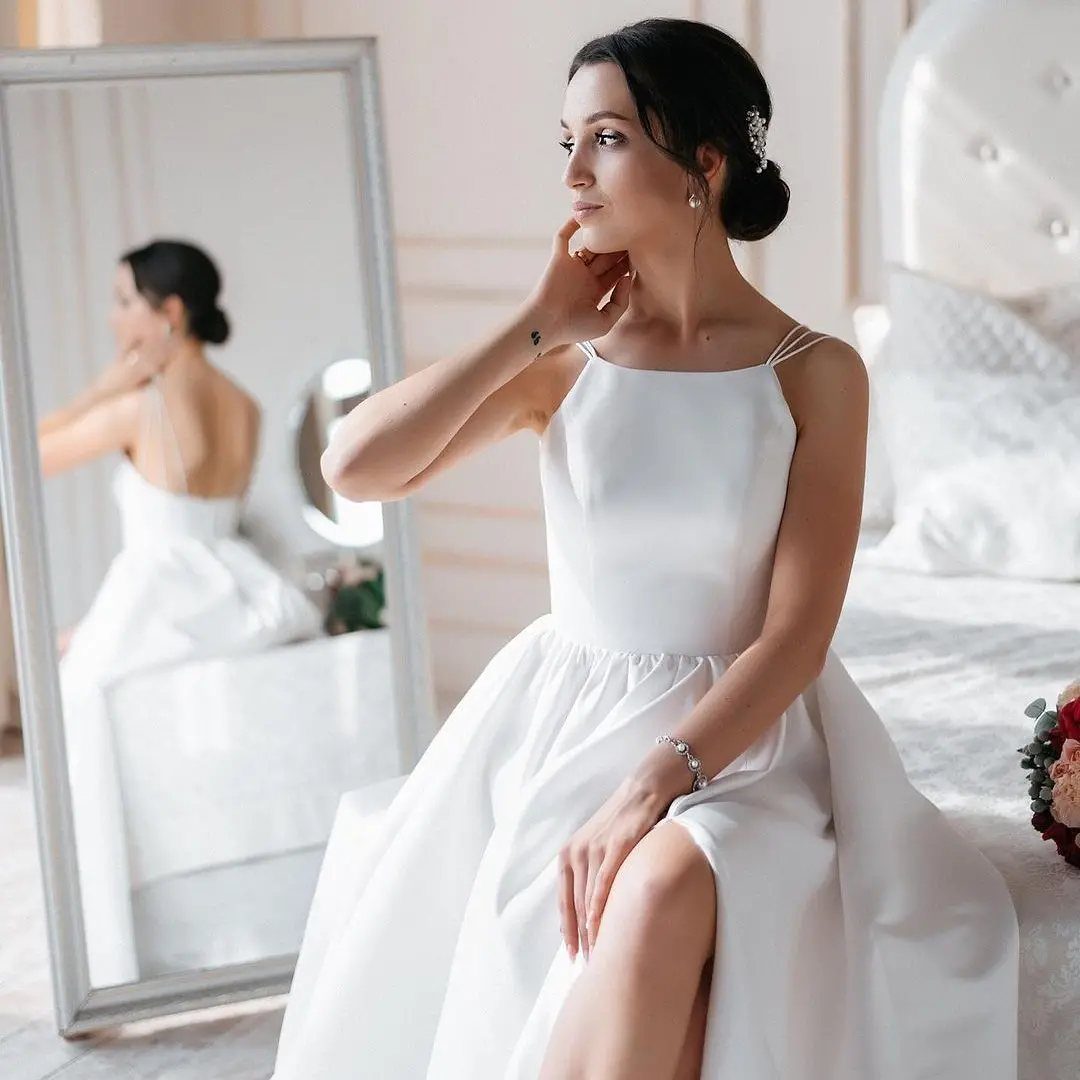
Minimalist wedding dresses pull everything back to the silhouette. You get clean lines, no beading, no lace overlay, just fabric shaped to the body and left alone.
That restraint reads as confidence, and it photographs better than most brides expect: there’s nothing competing with your face or the way you move.
The fit matters more here than it does on a busier gown.
A seam slightly off or a hem that pools wrong shows up immediately when there’s nothing else to look at. Budget time for tailoring, and bring the shoes you’ll wear to every fitting.
Weddings today often look a little different than they used to. Whether you’re getting married on the beach, in the backyard, or amongst a small intimate group of wedding guests, you may want a dress with clean, crisp lines, no train, and a non-traditional point-of-view.
2. Plain Wedding Dresses
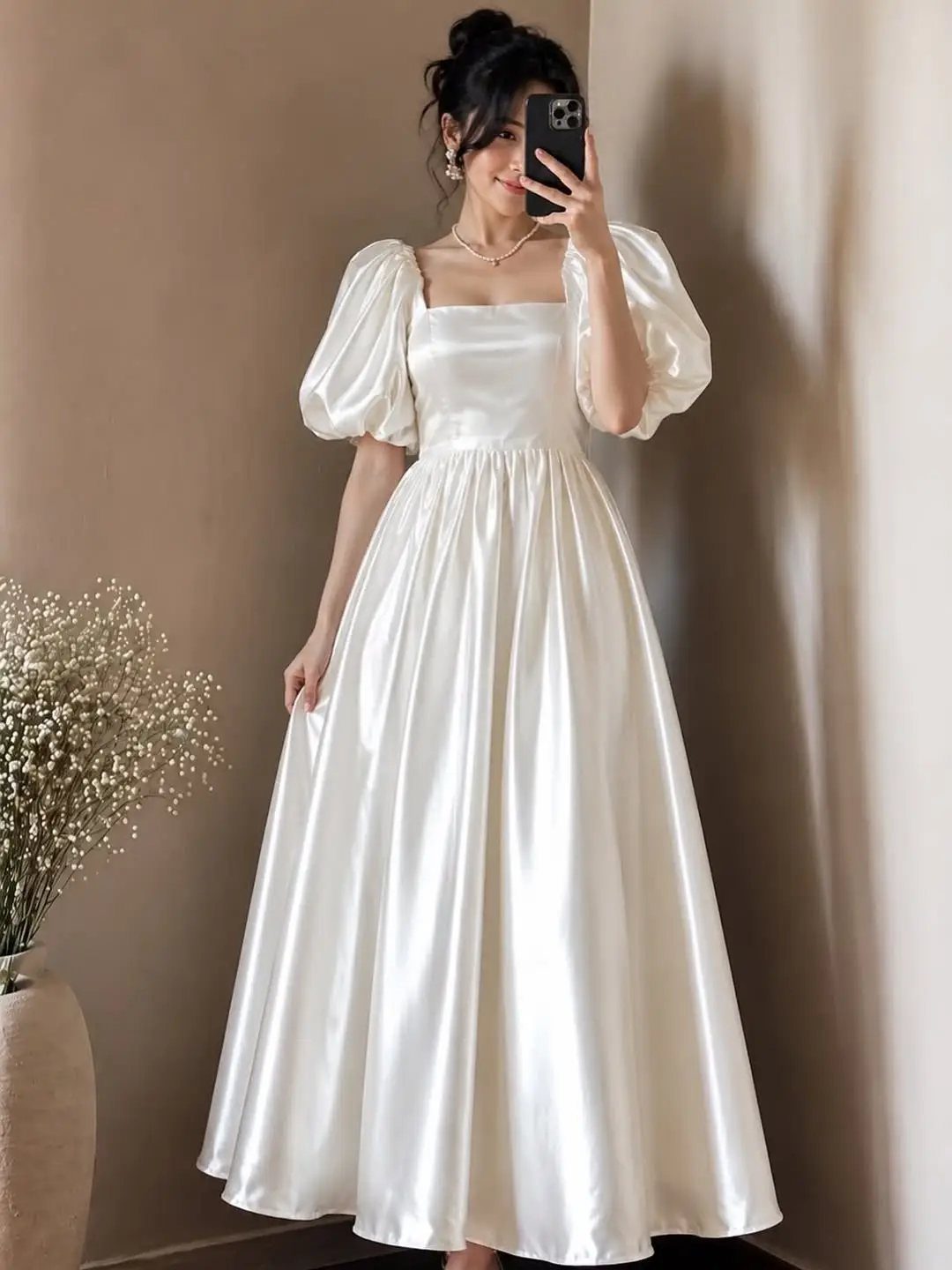
Plain wedding dresses skip the ceremony weight. These lean casual: softer fabrics, sleeves you can lift your arms in, skirts that don’t need a handler.
The puff sleeve keeps it from reading too spare, but the overall effect is closer to a really good dress than a gown you wear once and store.
This style works if your wedding involves movement.
Dancing, walking on uneven ground, sitting through dinner without adjusting a bodice. Satin or a satin-like fabric still photographs as formal, but the cut itself doesn’t fight you.
3. Stretch Satin Simplistic Wedding Dress
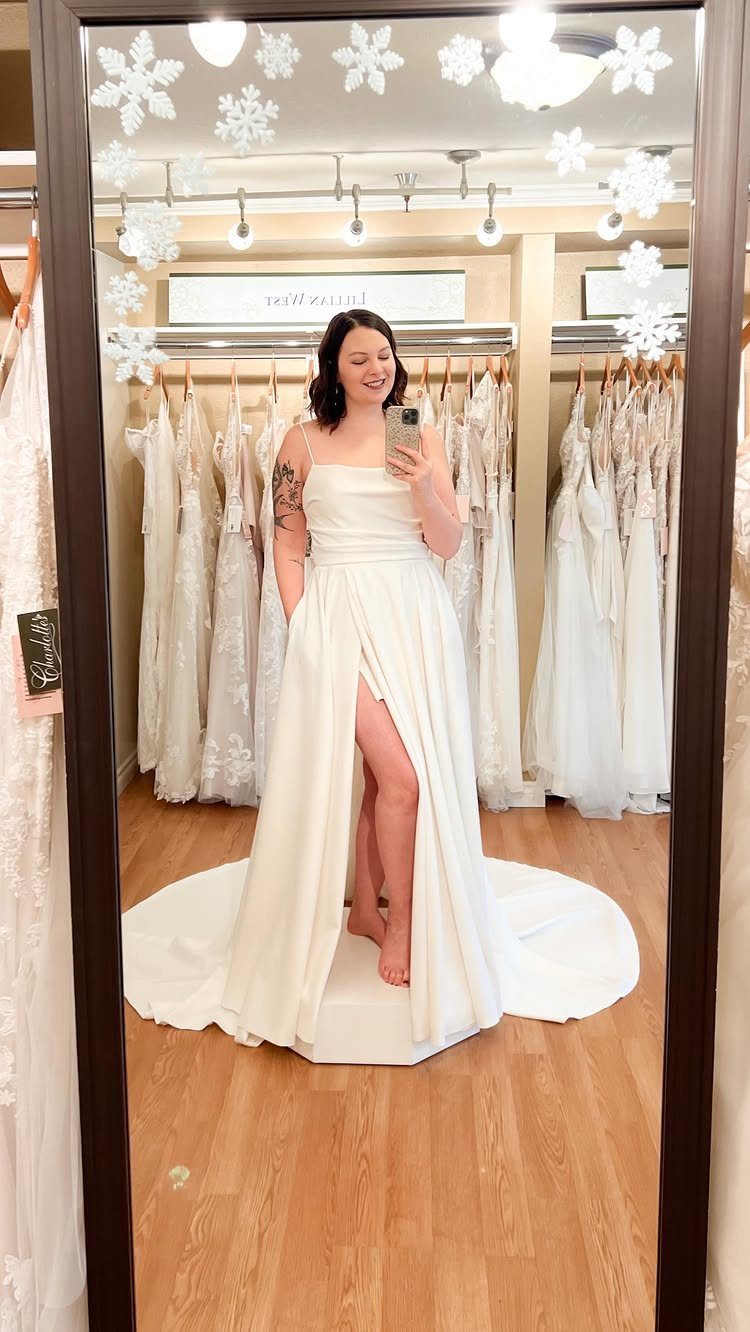
Stretch satin solves the fit problem most bridal fabrics ignore. It moves with you instead of holding a shape on its own, so the dress hugs without needing boning or a corset back.
This fabric does cling, so if you prefer more structure or want to smooth out your silhouette, regular satin or a heavier crepe will sit differently.
Stretch satin shows the body as it is, which some brides want and others don’t.
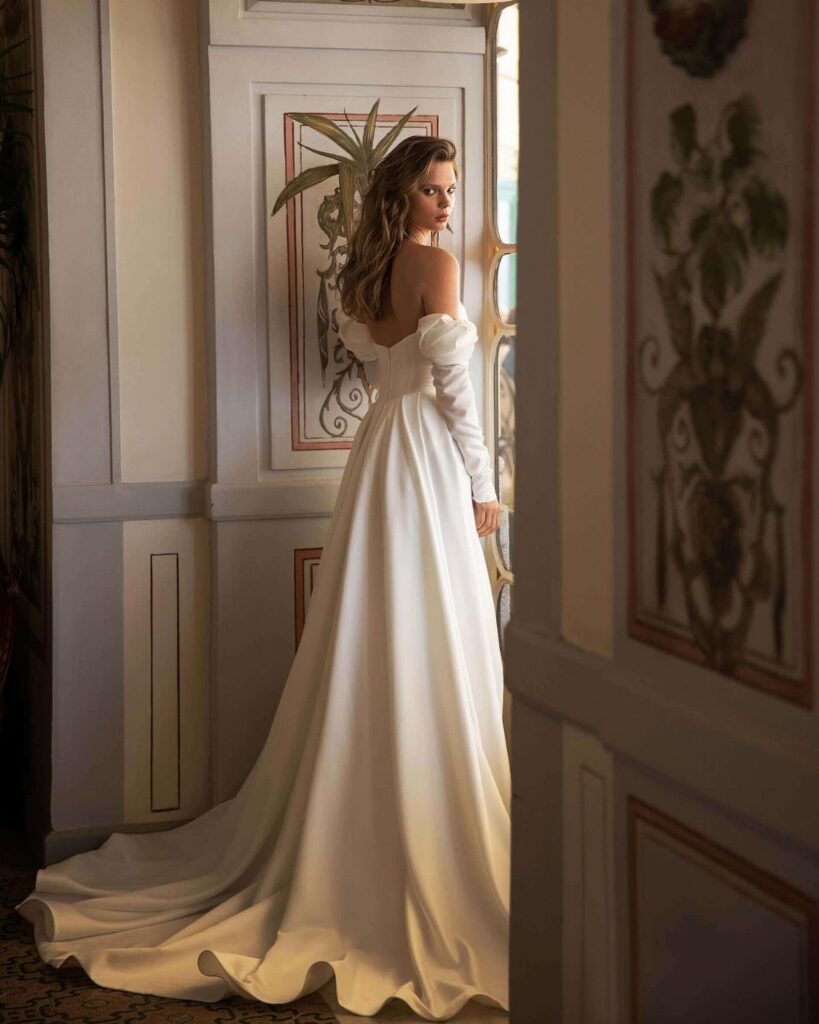
4. Off-the-Shoulder Long-Sleeve Gown
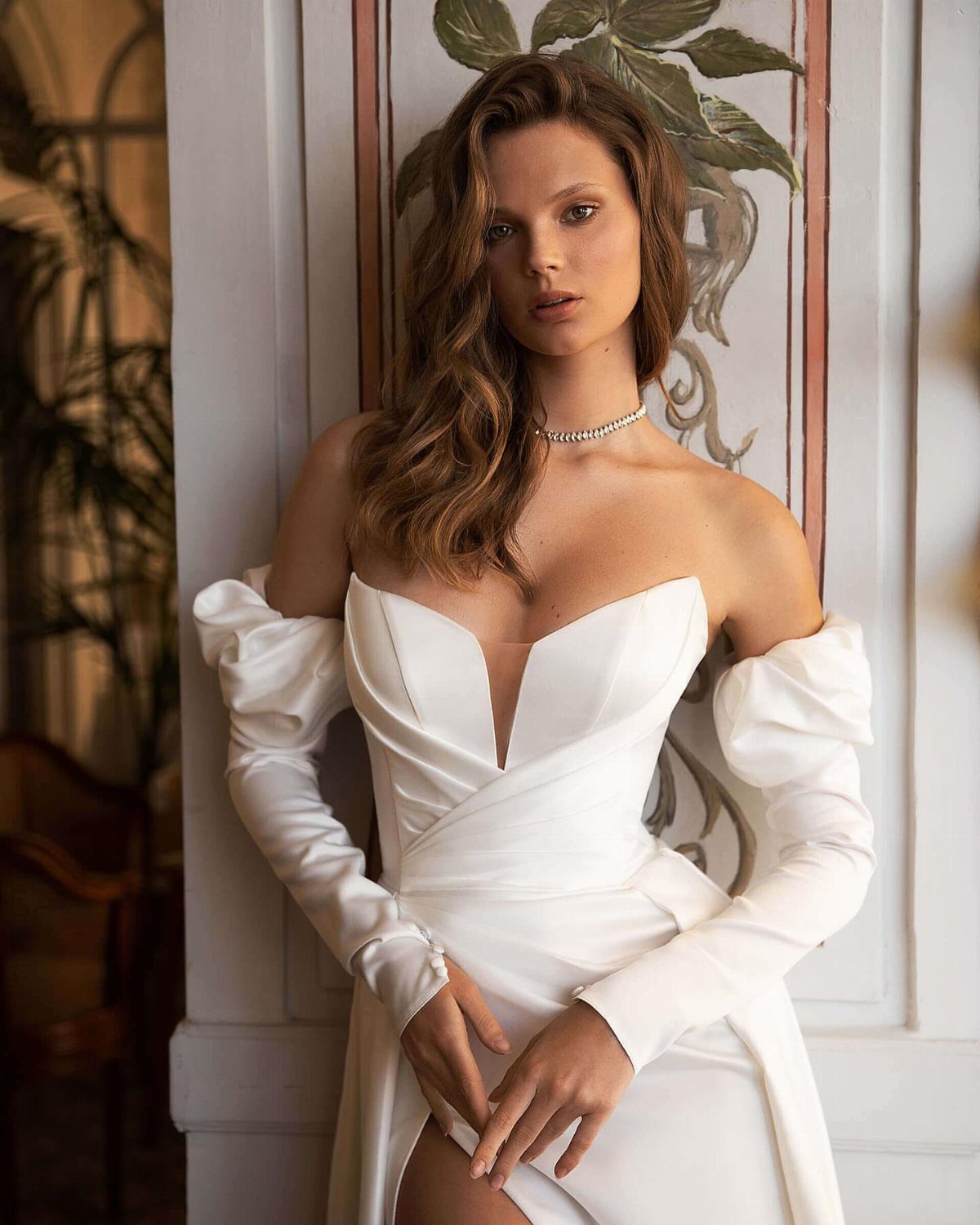
Off-the-shoulder gowns with long sleeves balance coverage and shape.
The neckline sits low enough to read as romantic without feeling too exposed, and the sleeves keep your arms warm if you’re getting married outside or in a venue that runs cold.
This cut works across seasons better than strapless or sleeveless options.
Sleeves do limit arm movement slightly, so if you plan to dance or lift anything overhead, check that the fabric has enough give. Stretch crepe or jersey moves more freely than taffeta or rigid satin.
5. Square-Neck Long-Sleeve Gown
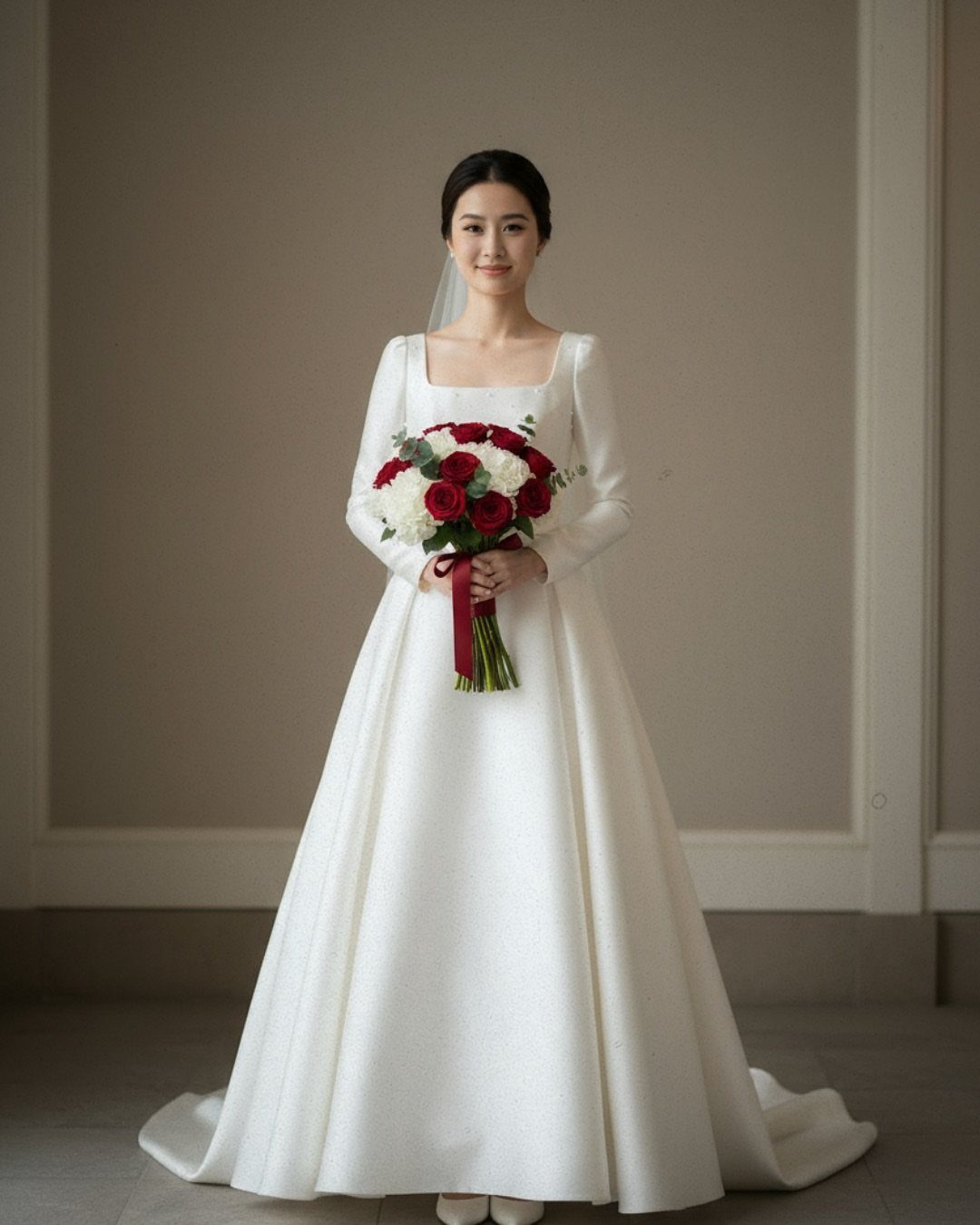
Square necklines frame your collarbone and shoulders in a way that reads as vintage without requiring period details everywhere else.
Paired with long fitted sleeves and a full skirt, the shape stays simple but structured. The neckline also sits higher than a sweetheart or V-neck, which some brides prefer for modesty or religious ceremonies.
This silhouette photographs well from the front and side. The clean angles hold up in both close shots and full-length portraits, and the neckline works with most necklace lengths if you want to wear one.
6. Strapless Satin Ballgown
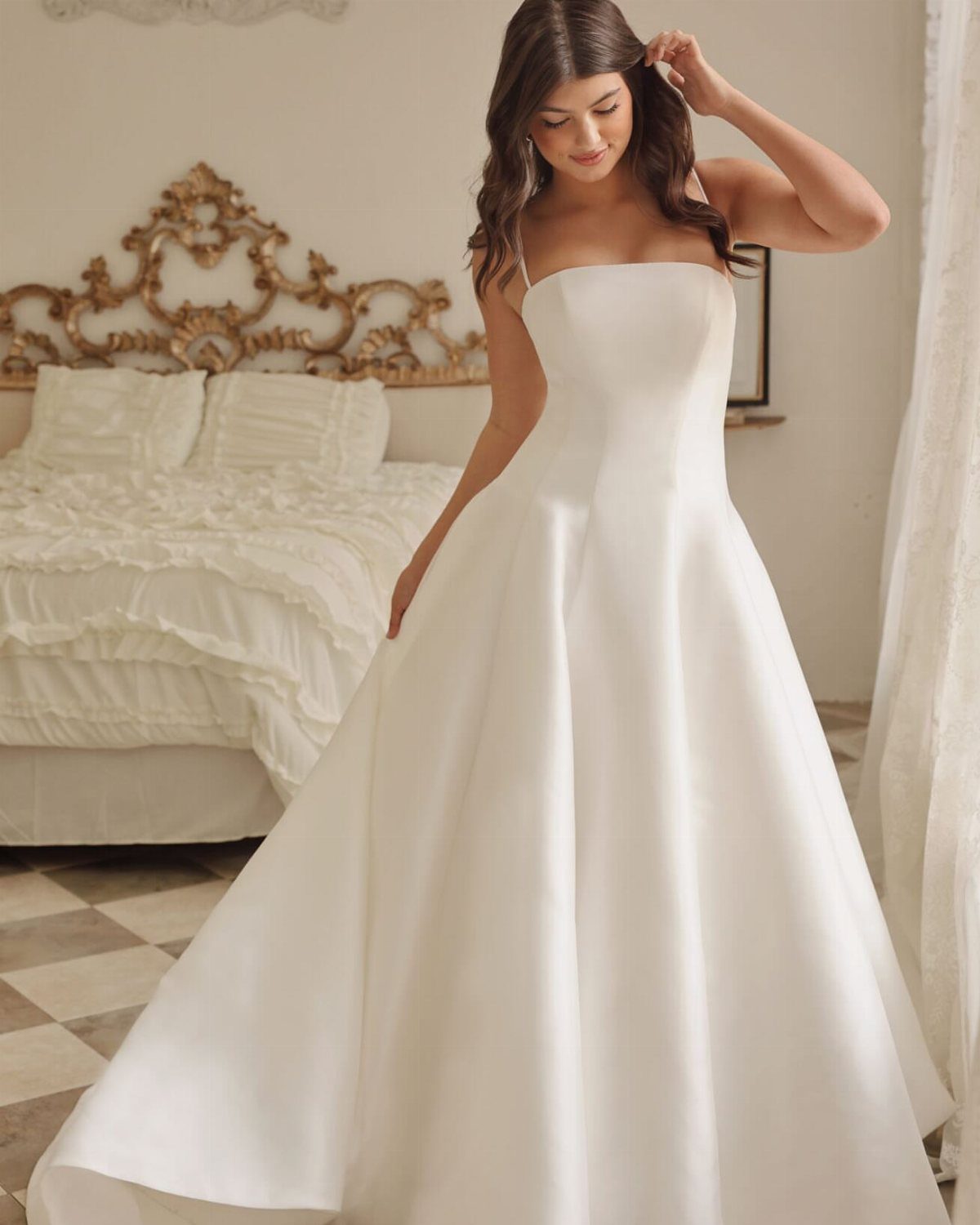
Strapless satin ballgowns deliver volume without decoration.
The bodice here fits smooth and close, then the skirt flares wide from the waist. That contrast makes your waist look smaller without needing a belt or embellishment to mark it.
Strapless gowns do require more alterations than sleeved styles, and you’ll feel the bodice all day.
If that bothers you, a gown with straps or sleeves will sit more comfortably. Satin also wrinkles easily, so plan for a steamer and someone to help you into a car without crushing the skirt.
Choosing the Right Dress
Your body shape tells you where to start. If you carry weight through your midsection, a ballgown or A-line skirt balances your proportions better than a column that clings from shoulder to hem.
If you have a straighter torso, a fitted bodice with a defined waist seam creates shape where the fabric alone won’t.
Match the dress to the venue and season. An outdoor ceremony on grass or gravel rules out long trains and heavy skirts that drag.
A formal banquet hall can handle volume and length without practical problems. If you’re getting married in cooler months, sleeves keep you warm without layering a jacket over the gown.
Fabric weight matters too. Jersey and stretch fabrics bring a relaxed feel that suits a laid-back ceremony but can feel too casual for a formal venue.
Dress Comfort
Undergarments show up immediately on a dress with no lace or beading to hide seams. Seamless styles sit flat under satin and crepe, and nude tones disappear better than white under most bridal fabrics.
If your gown hugs your body, test your undergarments during your first fitting.
Sit, move your arms, bend slightly. Anything that digs in or shifts will bother you more as the day goes on.
Frequently Asked Questions
What styles are considered minimalist wedding dresses?
Minimalist wedding dresses stick to clean lines and simple cuts with no lace, beading, or heavy embellishment. The silhouette does the work: fitted bodices, architectural shapes, and fabric that drapes or clings without decoration.
You’ll see slip dresses, column gowns, ballgowns with smooth satin bodices, and styles with sleeves or straps that frame the body instead of covering it up.
How can I accessorize a simple wedding dress?
A simple dress lets you layer in statement jewelry, a decorative belt, or a dramatic veil without fighting the gown for attention.
Pearl earrings or a single gold bracelet read as elegant, while a sash at the waist creates shape if the dress doesn’t have a defined seam.
Keep accessories minimal if you want the dress to stay the focus, or layer more if you want the look to feel less spare.