You can choose soft floral prints for garden ceremonies, satin gowns in royal blue or emerald for evening receptions, and styles with lace sleeves when the temperature drops.
Lightweight florals and tiered yellow ruffles suit daytime outdoor weddings, while deep V-neck black gowns and emerald satin with lace sleeves handle formal evening ceremonies.
1. Floral Prints Maxi Dress
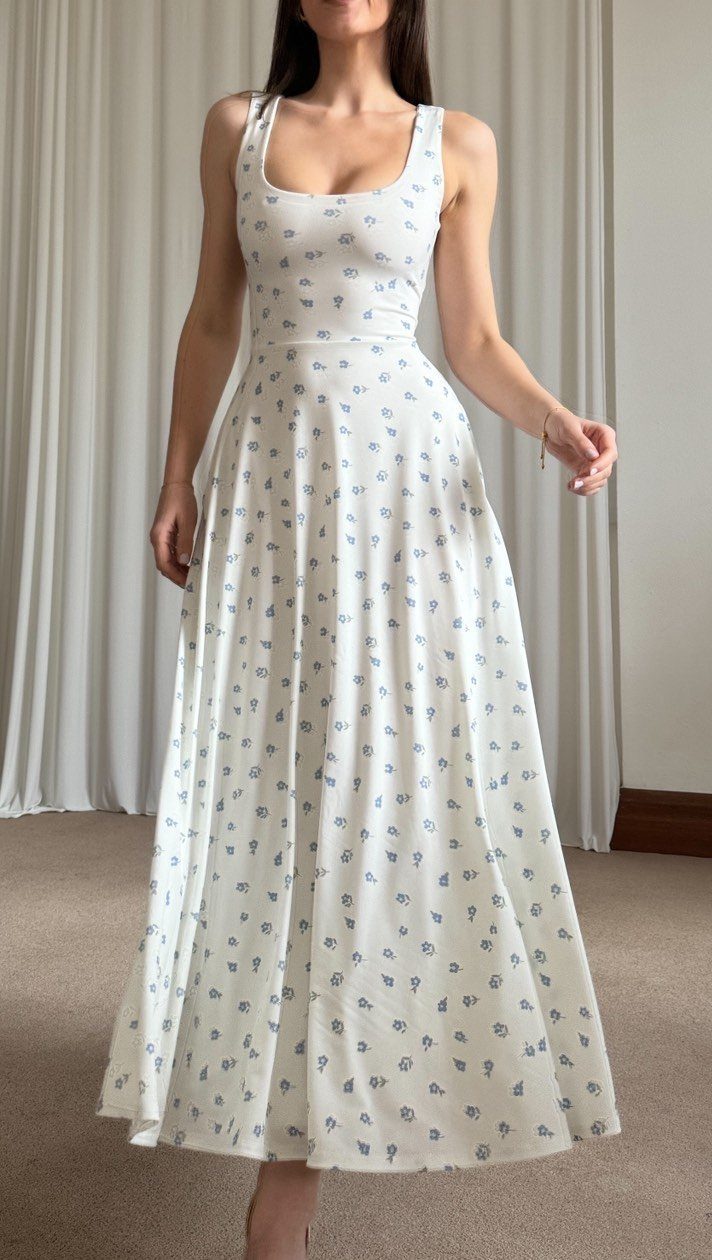
A white base covered in scattered blue florals keeps the print soft enough for a wedding while giving you something more interesting than solid color.
Sleeveless cuts work best for spring and summer ceremonies, and the light background reflects heat instead of trapping it.
Floral maxi dresses photograph well without competing with the bride, and this kind of print flatters most body types because the pattern breaks up a single visual line.
Match this with neutral heels and simple jewelry so the dress carries the outfit.
If the wedding leans formal, check the dress code. A floral maxi in lightweight fabric reads more garden party than black tie.
2. Wrap Dress
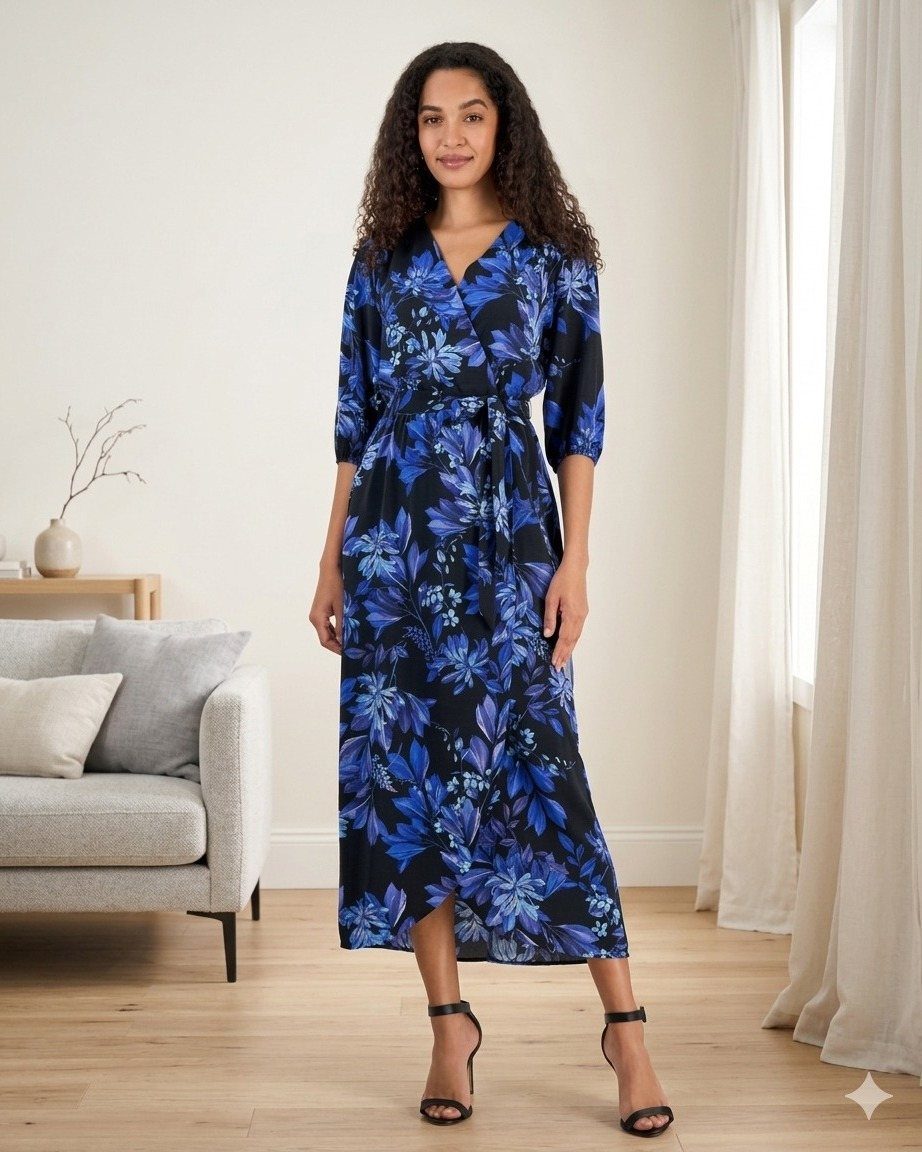
The wrap silhouette adjusts to your waist and creates a defined shape without rigid tailoring, which is why it works across different body types.
A blue floral print on a wrap dress stays polished enough for a wedding while keeping the look approachable.
The V-neckline that comes with most wrap styles elongates your torso, and the tie closure lets you control how fitted or relaxed the dress sits. Heels sharpen the look, and the length covers most venues without dragging.
Wrap dresses travel well because the fabric doesn’t wrinkle as easily as structured gowns, and you can dress them up or down depending on accessories.
3. Royal Blue Satin Maxi Dress
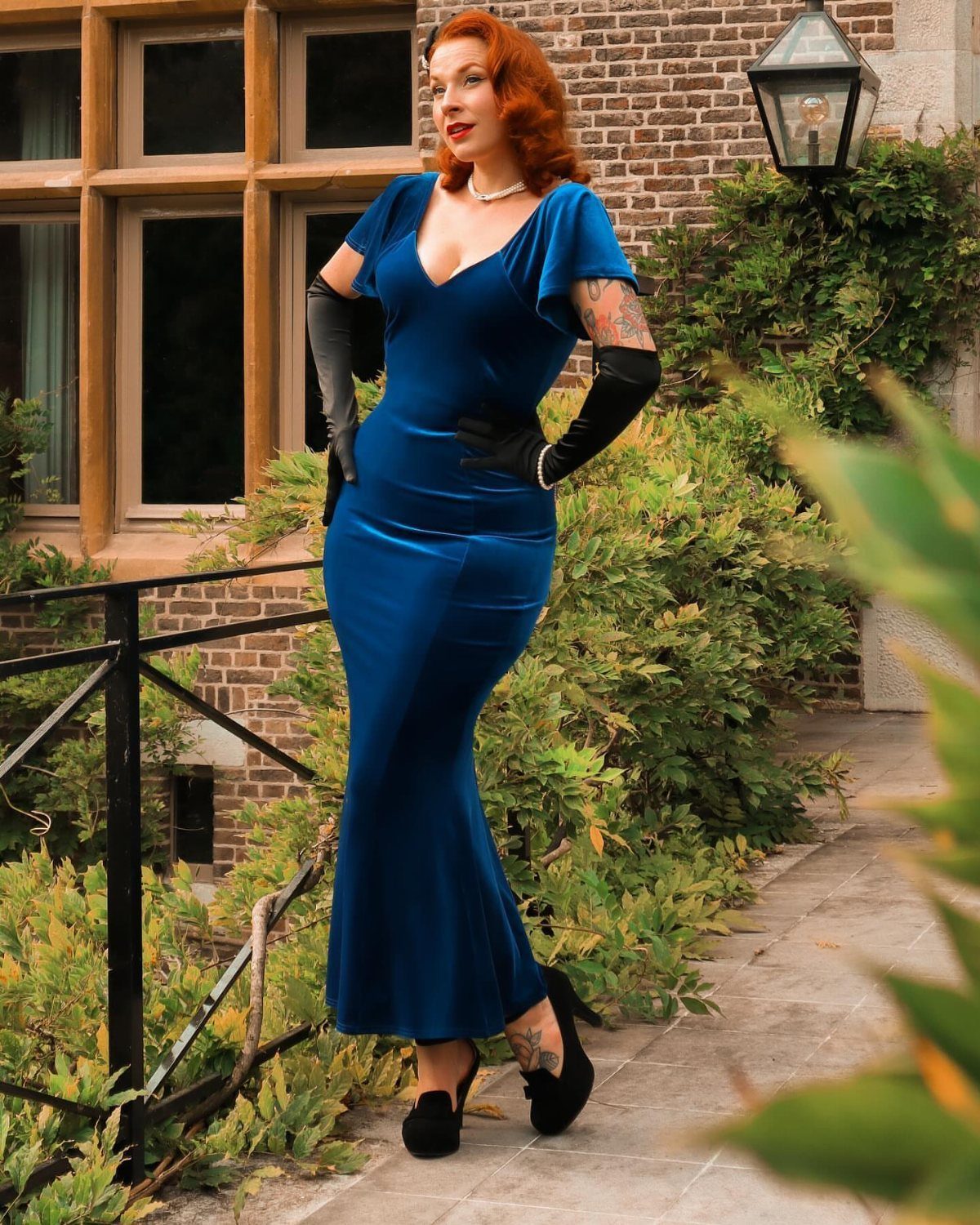
Royal blue satin sits somewhere between navy and cobalt, bold enough to stand out in photos but dressy enough for an evening wedding. The sheen on satin fabric catches light, so it reads more luxurious than matte alternatives.
Form-fitting satin shows every line, which means structure matters. If you prefer a more forgiving fit, look for a version with a slightly looser waist or princess seams that create shape without clinging.
Opera gloves add drama, but they’re optional. The dress holds its own with minimal accessories, and the deep blue works with gold or silver jewelry depending on your preference.
4. Tiered Ruffle Yellow Maxi Dress
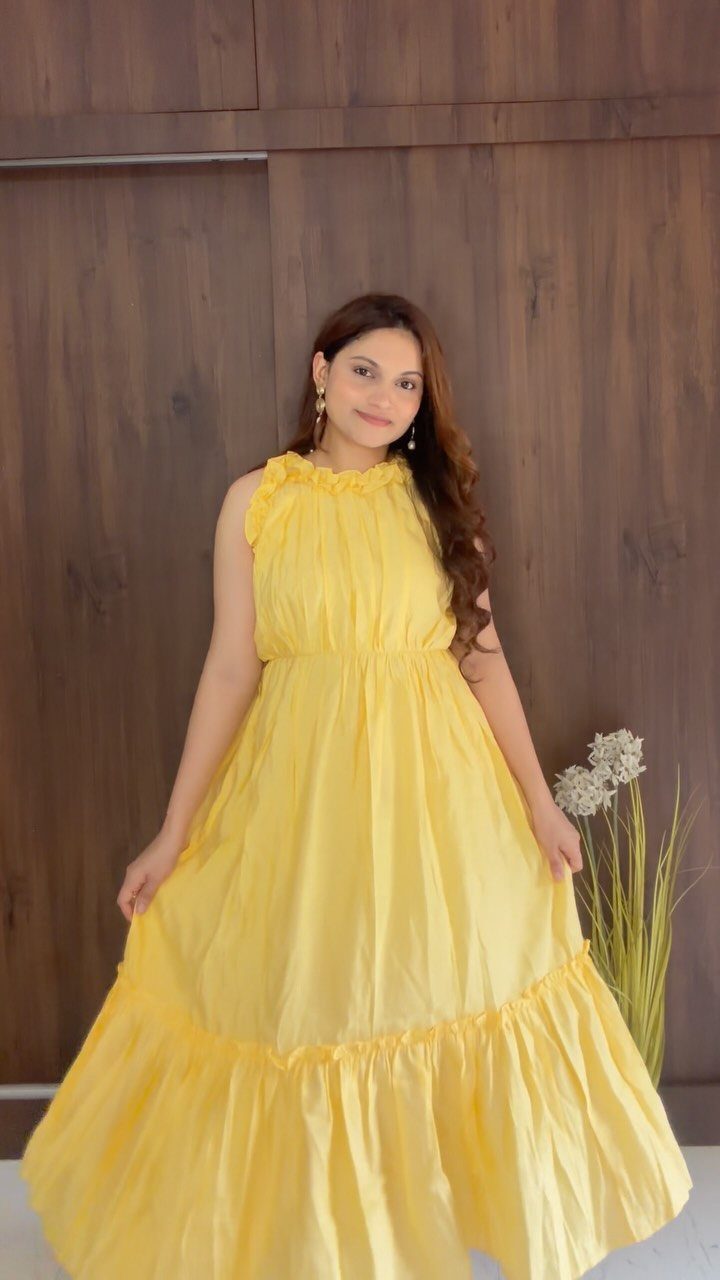
Tiered ruffles add movement and stay flattering, and the yellow reads cheerful but still appropriate. A ruffled neckline frames your shoulders, and the flowing skirt works for outdoor weddings where you’ll be walking on grass or uneven surfaces.
Yellow can wash out lighter skin tones, so check how the shade looks against your complexion before committing. If it’s too bright, a mustard or gold tone gives you the same warmth with more depth.
This style suits daytime ceremonies better than evening events, and the lightweight fabric keeps you cool when the temperature climbs.
5. Sleeveless Deep V-Neck Black Gown
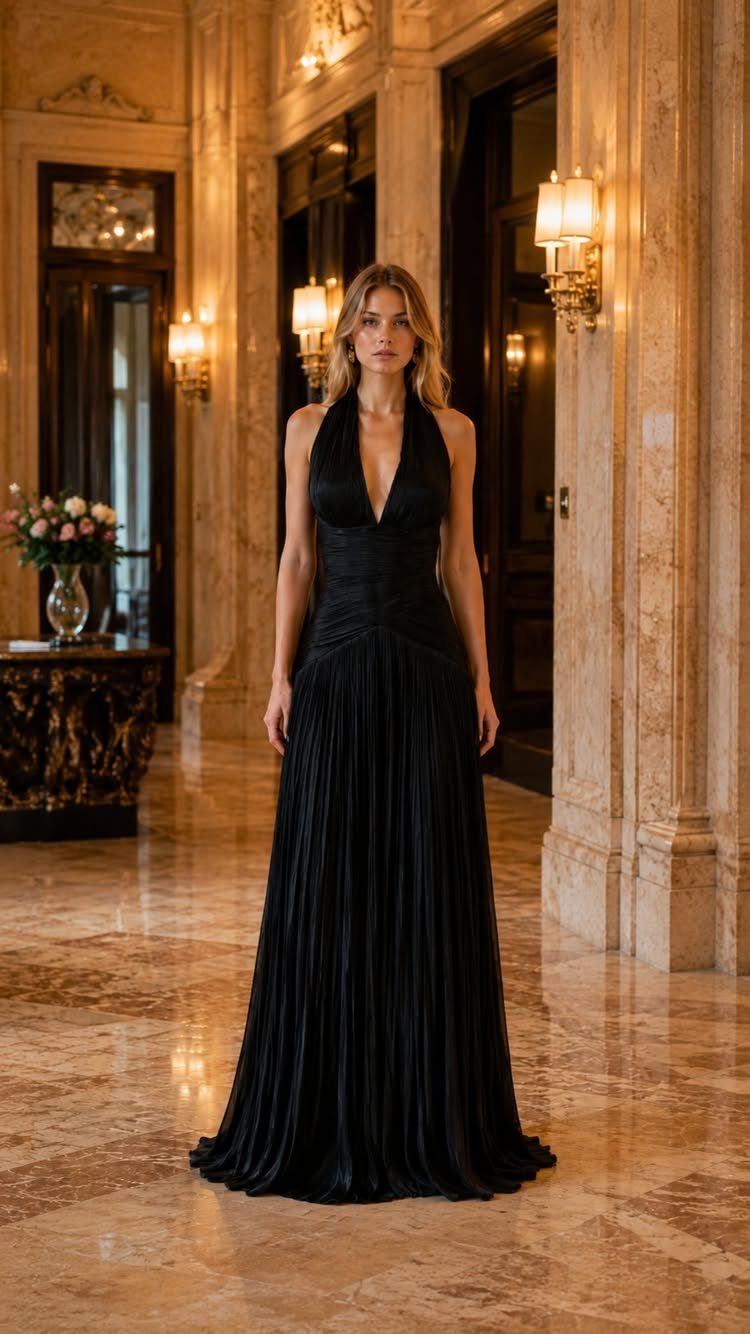
A deep V-neckline on a black sleeveless gown creates a formal silhouette that works for evening weddings without feeling overdone.
Black reads more sophisticated than risky, and the simple cut lets you add statement jewelry or a bold lip without competing elements.
The plunging neckline requires the right undergarments, so plan for a stick-on bra or built-in support. Floor-length black works year-round, and the sleeveless cut keeps it from feeling too heavy in warmer months.
If the wedding has a strict dress code that discourages black, this won’t work. Otherwise, it’s one of the safest formal choices you can make.
6. Emerald Satin and Lace Maxi Dress
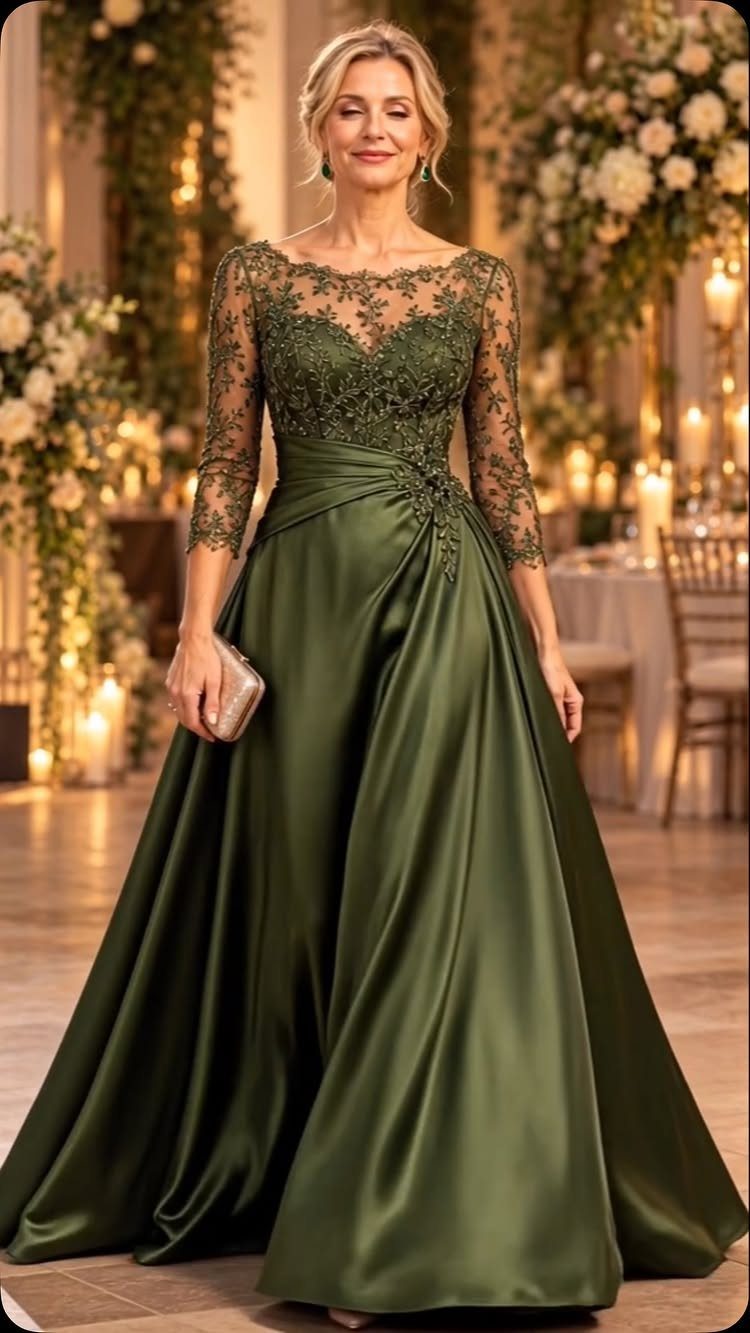
Dark green satin paired with lace sleeves and a lace bodice gives you coverage without sacrificing elegance, and the combination works for fall and winter weddings where bare arms feel out of place.
The long sleeves balance the floor-length skirt, and the lace brings detail in place of sparkle.
Emerald and dark green photograph beautifully in low light, and the color works with gold accessories better than silver. Satin wrinkles easily, so steam the dress before wearing it and avoid sitting for long stretches if you can help it.
This style suits formal and semi-formal weddings, and the lace makes it appropriate for religious ceremonies.
Maxi Dress Benefits
Maxi dresses give you formal length without the restriction that comes with a fitted gown.
A well-cut maxi creates a long vertical line that flatters a wide range of figures, and the floor-length silhouette reads elegant in photos without requiring complicated tailoring.
You can sit, dance, and move through a full day without adjusting hems or worrying about the dress riding up.
The right maxi style lets you control where the dress fits closely and where it skims.
A wrap silhouette defines your waist, while a tiered skirt adds movement without clinging. That combination of structure and ease is hard to find in shorter hemlines.
Maxi dresses travel better than many formal alternatives because the length hides shoes, which gives you more flexibility with comfort.
Frequently Asked Questions
Is it appropriate to wear a maxi dress to a wedding?
Yes, a maxi dress works well for wedding guests because the floor-length silhouette reads formal without requiring complicated tailoring.
The right style flatters a range of body types, travels easily, and lets you move through a full ceremony and reception without adjusting hems.
Choose a fabric and cut that match the formality of the event, then finish with heels and minimal jewelry.
What should a 60 year old woman wear to a wedding?
An emerald satin and lace maxi dress with long sleeves offers coverage and elegance without sacrificing style, and the lace bodice adds detail appropriate for formal or religious ceremonies.
A sleeveless deep V-neck black gown works for evening weddings if you prefer a simpler silhouette.