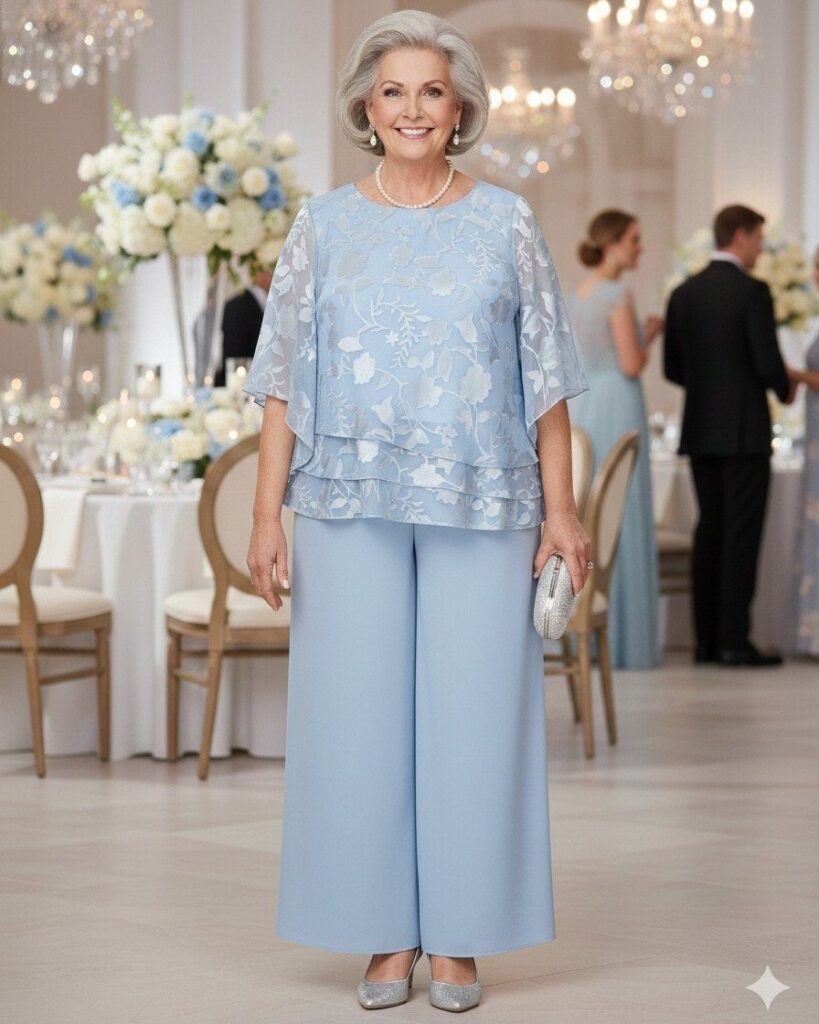
Draping that starts at the shoulder sits at one end, floral appliqués that lift off the fabric at the other, and between them you’ll find a cape overlay that solves the arm question without adding sleeves.
The formality of the event decides whether you need a floor-length hem or can wear a knee-length lace dress, and the season narrows it further: velvet holds warmth for autumn and winter weddings.
1. Draped Dress
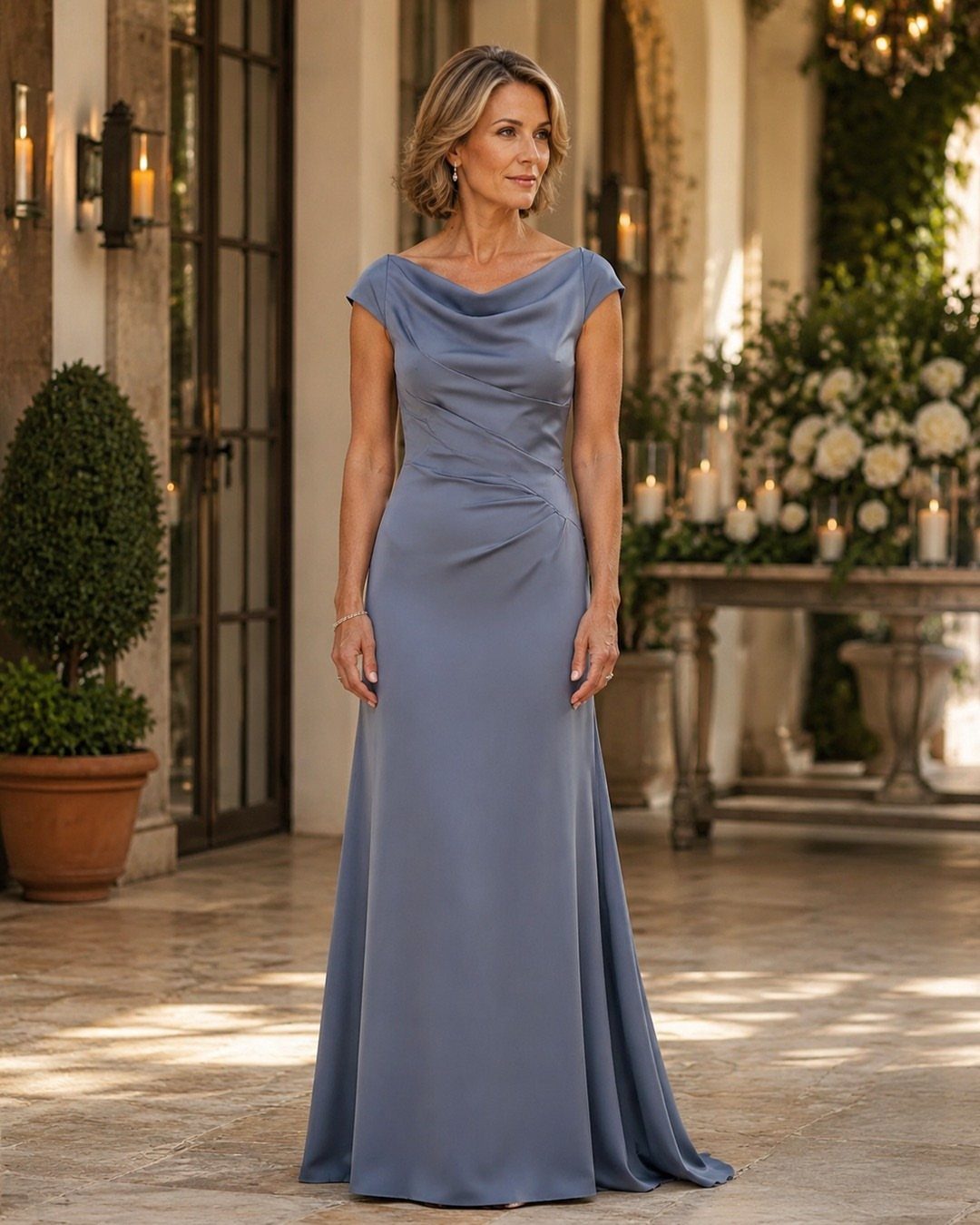
Draping adds volume and movement through fabric that gathers at the waist or shoulder, then flows away from the body. The result is a silhouette that feels structured without any need for stretch panels or a fitted seam.
Look for a dress where the drape starts at one shoulder or the bodice and continues through the skirt.
The fabric weight matters: too light and the drape won’t hold, too heavy and it adds bulk. A mid-weight silk or a matte jersey falls best and moves when you do.
2. Floor-Length Dress
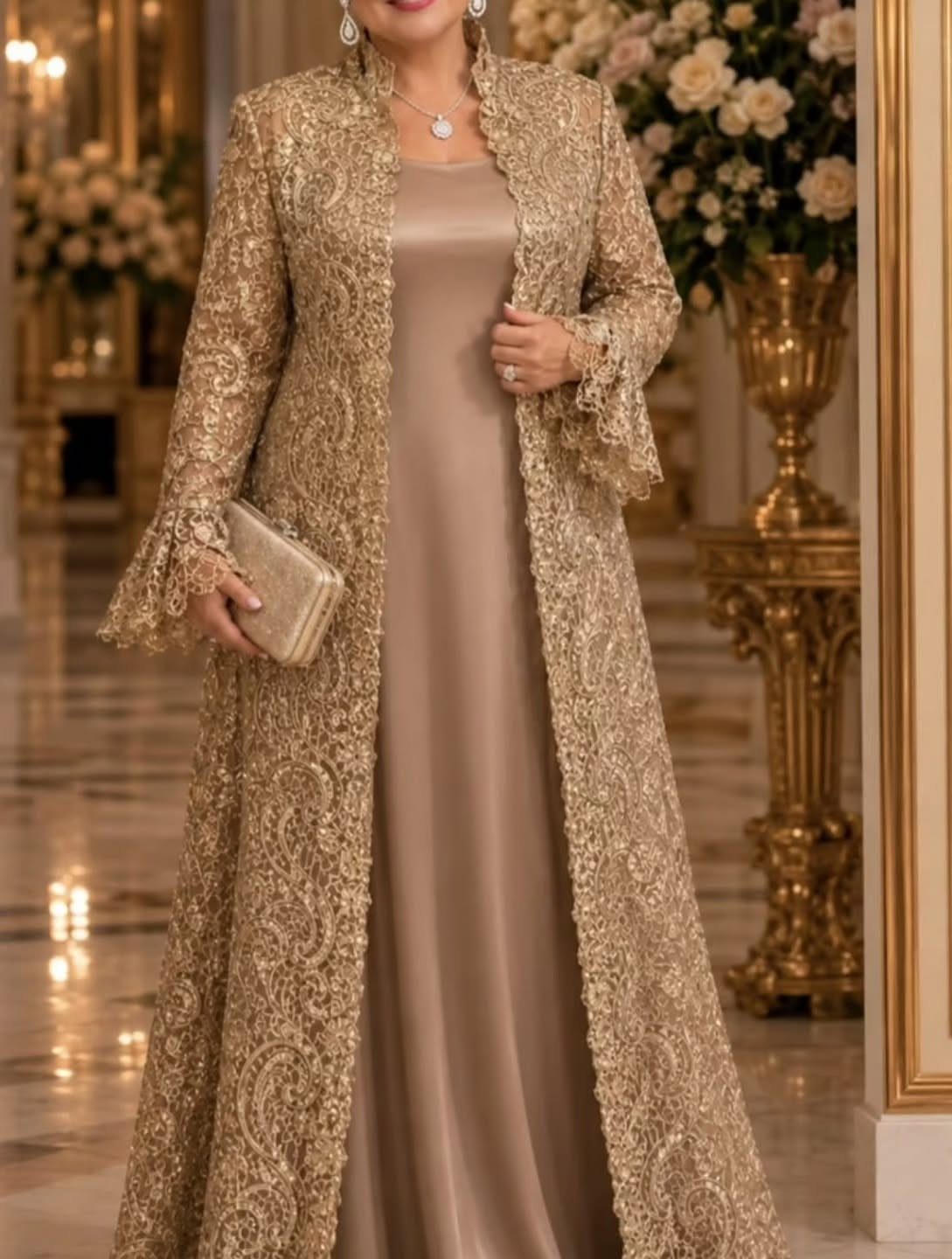
A floor-length dress meets the formality a black-tie wedding requires without locking you into a fitted skirt. The length alone signals occasion, and the right cut keeps you comfortable through dinner and dancing.
Pair it with a lace or embroidered overlay when the dress itself runs simple. Choose a hem that just touches the floor in the shoes you plan to wear.
3. Velvet Dress for Autumn and Winter
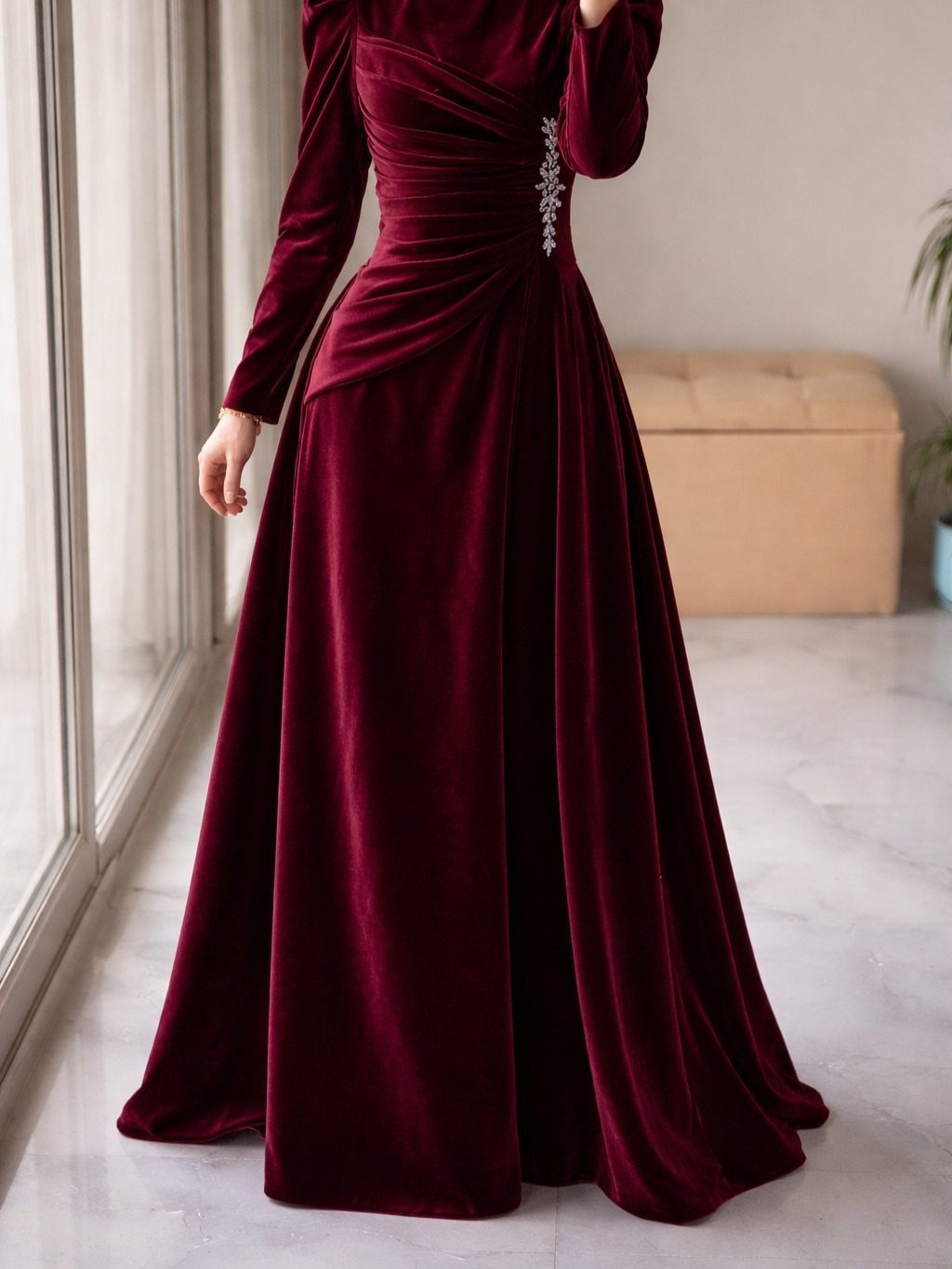
Velvet holds color in a way other fabrics don’t. The pile catches light differently depending on the angle, so a burgundy or emerald reads richer than the same shade in crepe or satin.
That density also means warmth, which makes velvet the better choice for fall and winter weddings.
A long sleeve maintains formality without needing a wrap, and the weight of the fabric smooths the line from shoulder to floor. Skip velvet for outdoor summer events; you’ll overheat before the ceremony ends.
4. Knee-Length Lace Dress
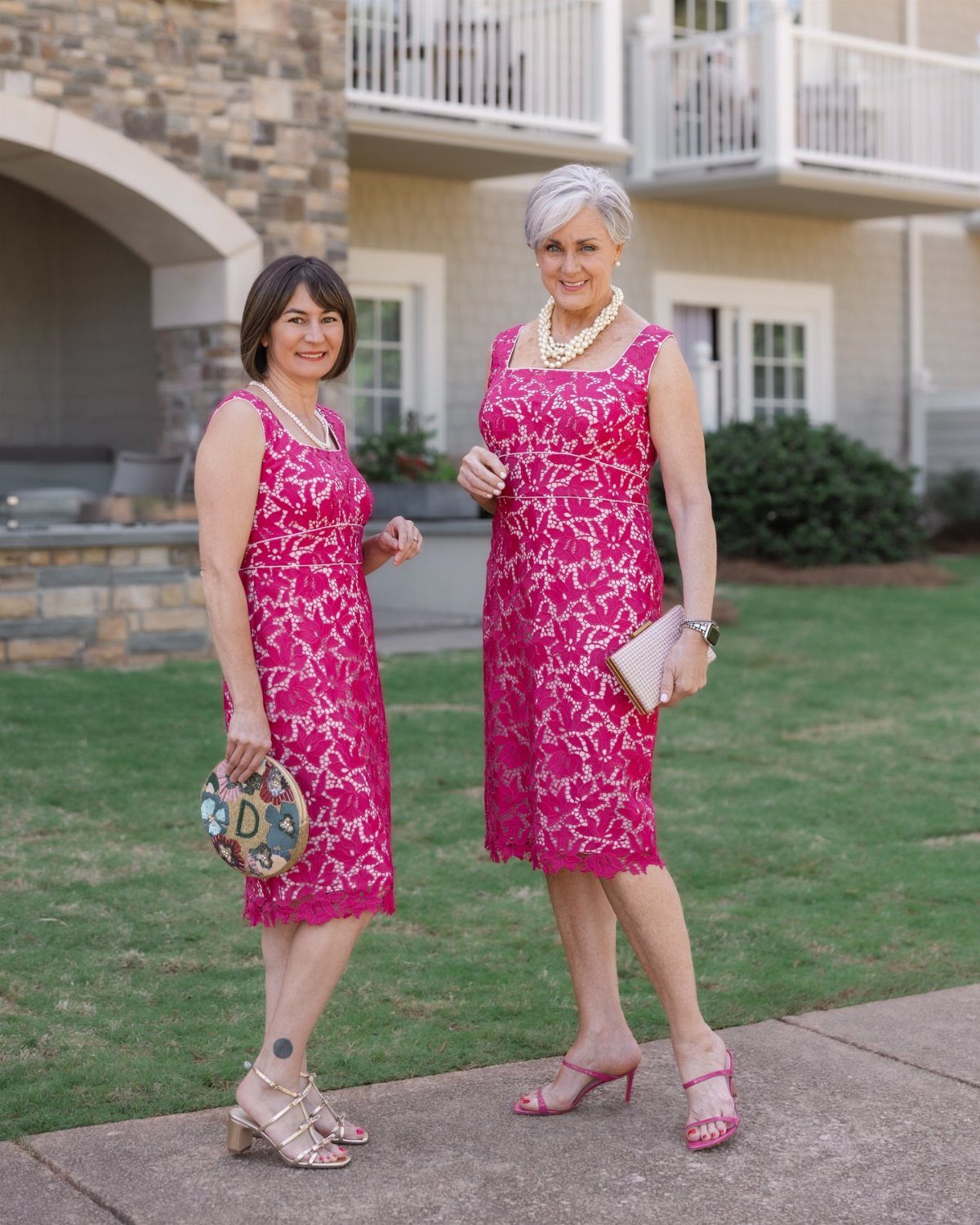
Knee-length lace offers the detail of a formal dress without the logistics of a floor-length hem.
The lace itself does the work: floral or geometric patterns add texture and keep the dress from reading as plain, even in a single color.
Bright pink isn’t the only option, but saturated color shows off the lace pattern better than pastels. A sleeveless cut works for warm-weather weddings and draws attention to the lace rather than the silhouette.
5. Off-the-Shoulder Shimmer Gown
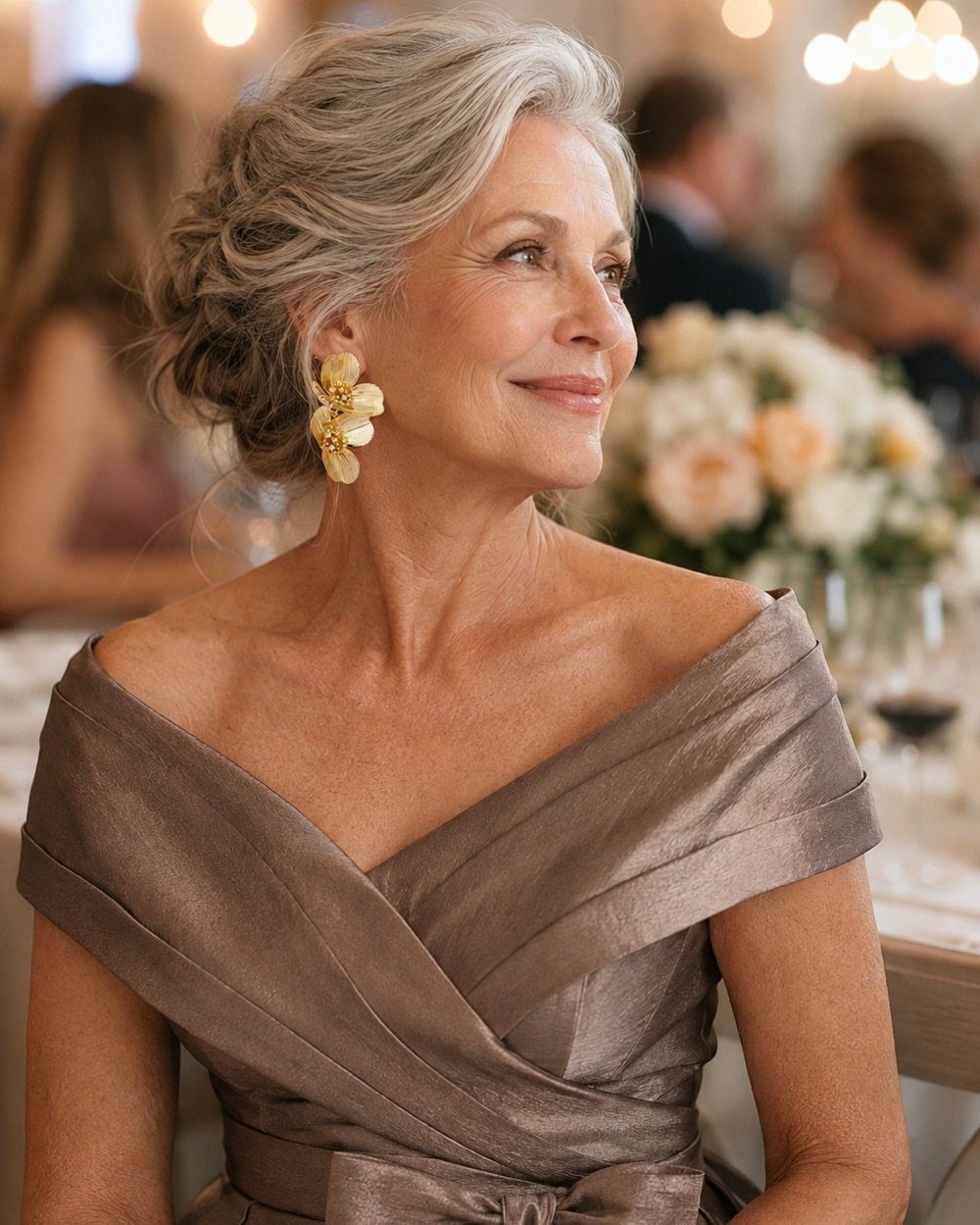
An off-the-shoulder cut balances elegance with a little softness, and shimmer fabric picks up light without reading as sequins or metallics. The taupe shade here is flattering against a range of skin tones and won’t compete with the wedding palette.
Silver or gray hair works especially well with this neckline. The horizontal line at the shoulder draws the eye across rather than down, and statement earrings fill the space between your collarbone and your hair.
Avoid this cut if the ceremony is outdoors in cold weather; the neckline sits lower than a wrap can comfortably cover.
6. Classic Sleeveless Black Dress
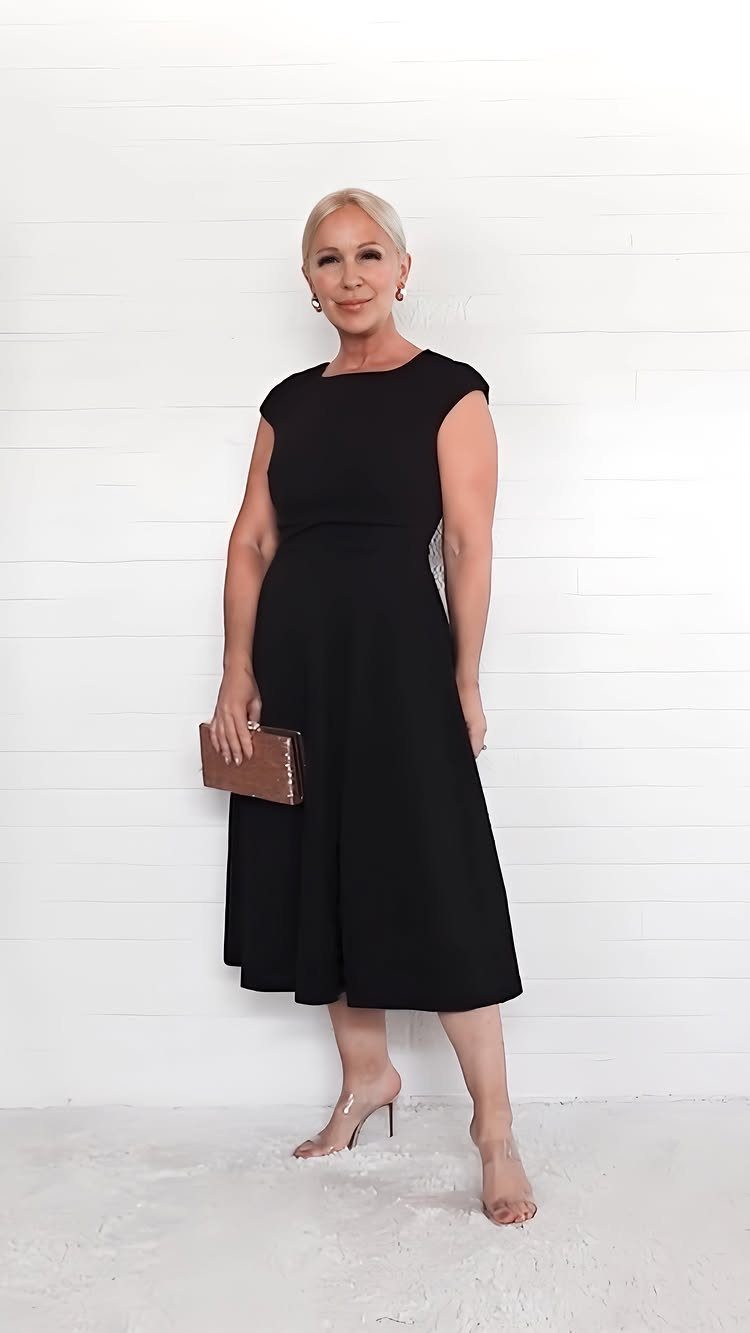
A sleeveless black A-line dress is the one piece that works for nearly every wedding that doesn’t specify a color theme.
The cut skims the body without clinging, and the knee-length hem keeps it appropriate for both religious ceremonies and casual receptions.
Nude heels lengthen the leg line without the contrast of black shoes, and a brown or tan clutch adds warmth.
The simplicity of the dress lets you change accessories based on formality: add a statement necklace for evening or keep jewelry minimal for daytime.
7. Floral Appliqué Sheath Dress
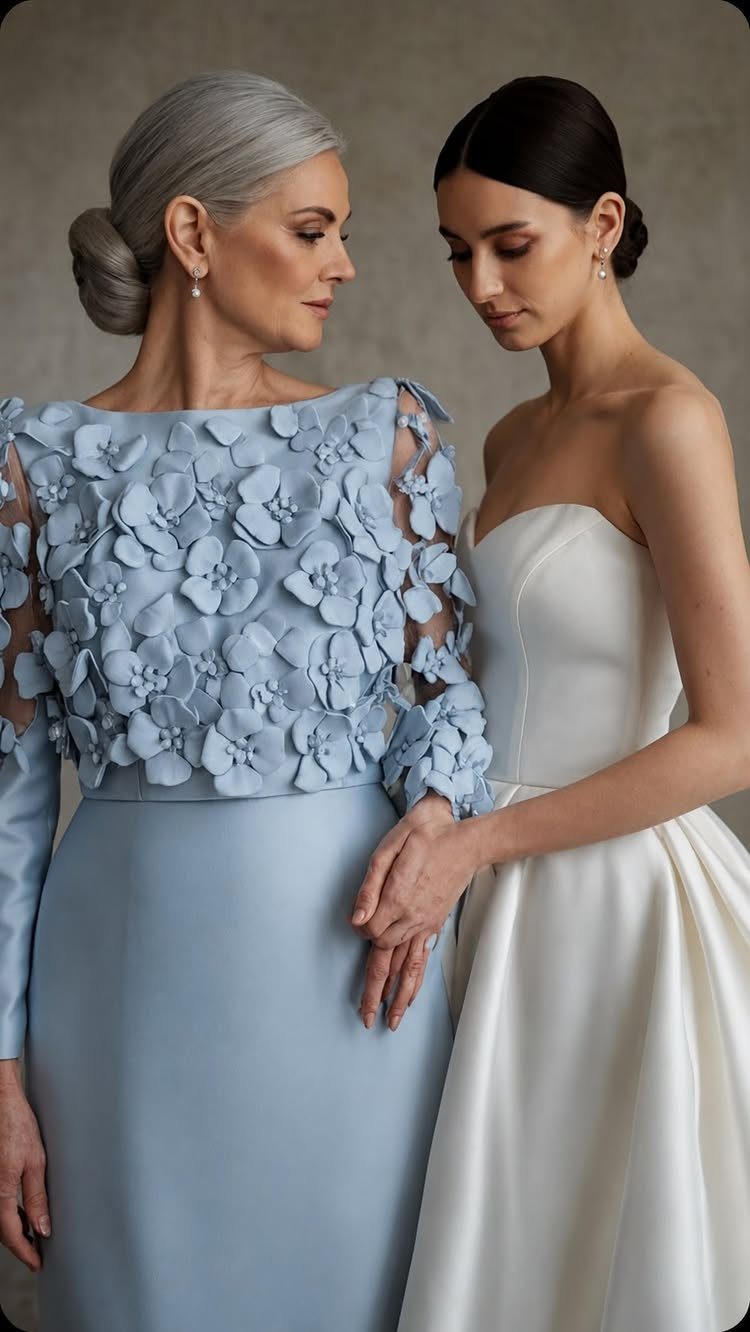
Three-dimensional floral appliqués lift off the fabric rather than lying flat, which creates texture across the bodice without adding bulk.
The light blue here reads soft and formal at the same time, and it works well for spring or summer ceremonies where pastels fit the season.
A sheath dress lets the appliqué do the talking.
The straight cut moves through the body without gathering or flare, so the flowers stand out. Pair it with simple jewelry; the appliqués already fill the neckline.
8. Gown with Cape Overlay
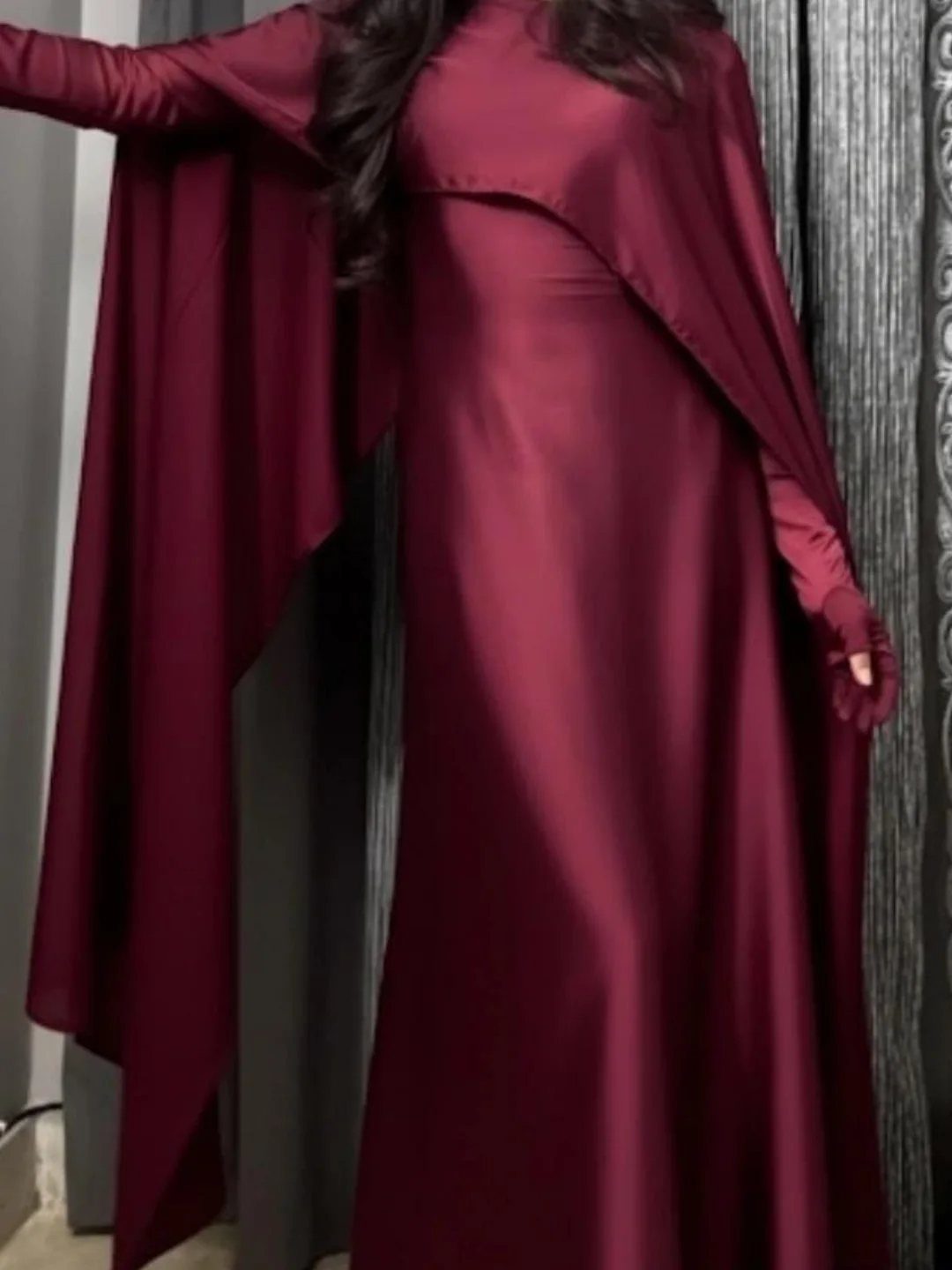
A cape overlay solves the arm question completely: fabric that moves when you move, no sleeves to bind.
The fabric drapes from the shoulders and moves independently of the gown underneath, so you can slip it off during the reception without changing your whole look.
Burgundy satin works for fall and winter weddings and photographs deeper than it appears in person.
The overlay adds formality to a simple column gown, which means you can keep the base dress streamlined and let the cape carry the detail.
Choosing the Right Dress Code
The invitation usually tells you what to wear: black-tie, formal, cocktail, or casual. That tells you whether a floor-length gown or a knee-length dress is expected.
If the invitation says nothing, the ceremony time and venue fill in the rest. An evening wedding calls for longer hemlines and richer fabrics, while a daytime event allows lighter colors and simpler cuts.
The venue matters for practical reasons. A ballroom floor supports any heel height and a long hem, but grass or sand makes a floor-length skirt harder to manage.
Religious or cultural expectations may also limit neckline depth, hem length, or shoulder coverage.
Prioritizing Comfort
Sit in the dress and lift your arms overhead.
The bodice should stay in place, the waist should not bind, and the skirt should allow you to cross your legs without pulling. A dress that fits only when you’re standing still will need adjustment every time you move.
Walk a few steps in the shoes you’re planning to wear. The hem should clear the floor enough that you’re not stepping on it, and the skirt should allow a normal stride.
If the dress restricts your step or forces you to shuffle, the fit is wrong or the skirt is too narrow.
A neckline that shifts, a waistband that digs in, or straps that slip will become uncomfortable long before the event ends.
Coverage and Undergarments
A fitted bodice, a low back, or sheer panels may limit the bra you can wear. Try the dress with the undergarments you plan to use, not the ones you wore to the fitting.
A strapless bra, a stick-on cup, or a built-in shelf bra each create a different line under the fabric, and some dresses require a slip to prevent the skirt from clinging or showing too much in certain light.
High slits, sheer lace, or cutouts also affect coverage. If you’ll be adjusting the dress constantly or feeling exposed, the dress is wrong for the occasion, no matter how well it fits otherwise.
Leave time for alterations. A hem that drags, sleeves that pull, or a waist that gaps can all be fixed if the tailor has enough time.