
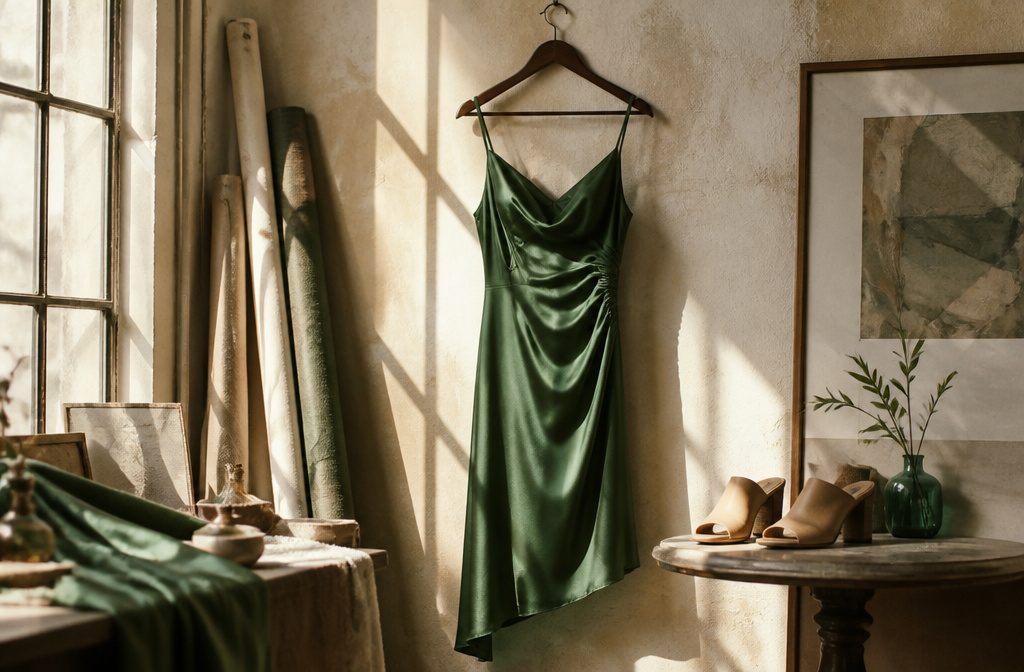
Silk cocktail dresses are semi-formal styles cut from silk or silk-blend fabric, designed to work for events between business-casual and black-tie.
The fabric wrinkles fast and clings where you don’t want it to unless you choose a silk-viscose or silk-cotton blend, which holds shape better and survives normal washing.
A slip dress worn with sandals during the day becomes evening-ready with heeled mules and statement earrings, no change to the dress itself required.
What Silk Does for a Cocktail Dress
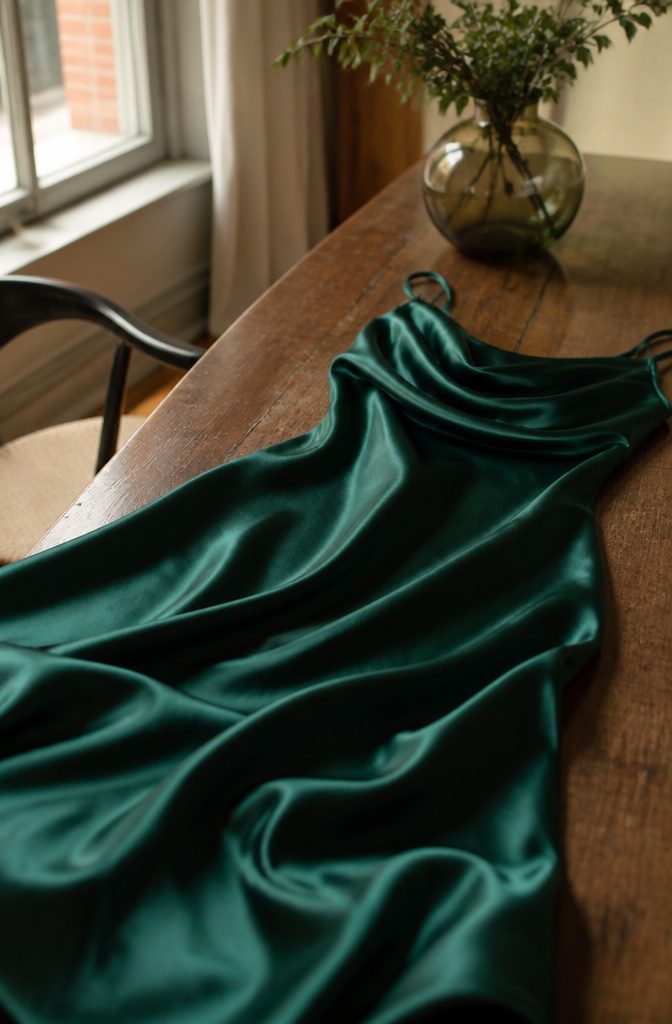
Silk’s defining quality is the way it catches light. The fiber has a triangular structure that reflects light at different angles, producing a soft sheen rather than the flat glare synthetic fabrics give off.
That sheen reads as expensive before anyone checks the label, and it moves with you instead of sitting still on the surface.
The fabric also breathes. Silk regulates temperature by wicking moisture away from your skin, so you stay cool when the room warms up and feel gentle warmth when the air conditioning tips too far the other way.
Synthetic cocktail dresses trap heat and make you aware of it by the second drink. Silk lets you forget what you’re wearing.
Then there’s drape.
Silk charmeuse and other smooth weaves are weightless enough to fall in clean lines without clinging or standing away from the body. The fabric follows movement without fighting it, which matters when you’re shifting from seated dinner to standing conversation.
Stiff fabrics hold one shape. Silk holds none, and that’s the point.
Slip Dresses
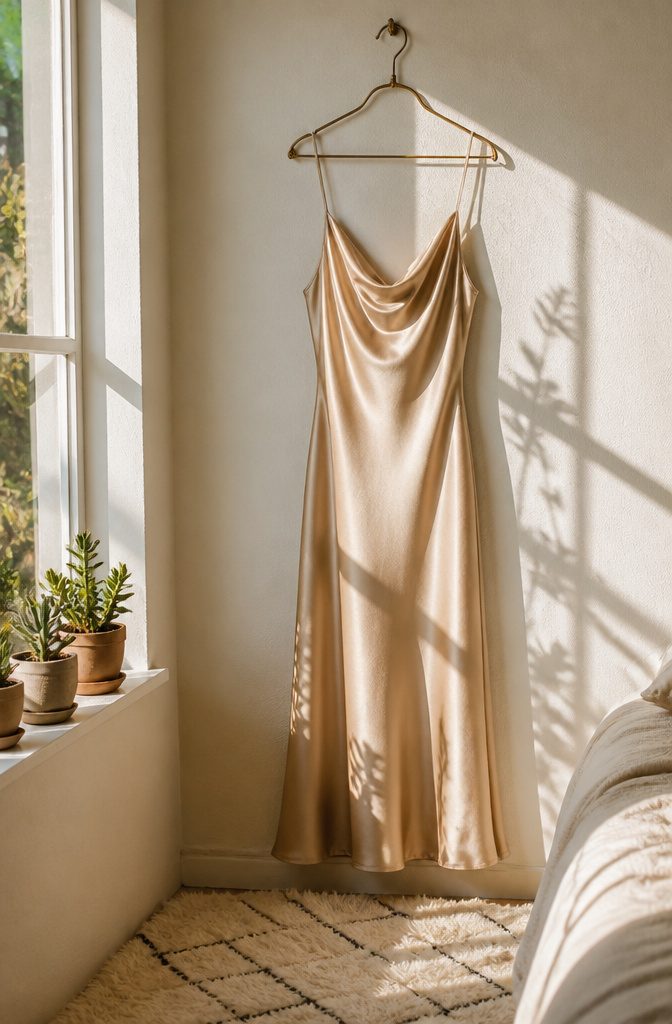
The slip dress is the most stripped-back silhouette in the silk cocktail category, and that simplicity is what makes it adaptable.
Cut on the bias with thin straps and a close fit through the body, it skims rather than clings, and the fabric does most of the work.
Silk charmeuse is the standard here because it drapes without adding stiffness, and the weight keeps the dress from looking like lingerie when you wear it alone.
I think of slip dresses as a base layer that happens to work on its own.
Layer a fitted turtleneck or blazer over it for day, and the dress reads as a skirt until you pull the layer off at night.
The neckline stays simple, usually a straight or cowl cut, so nothing competes with what you add. That narrow silhouette does require a smooth line underneath, and most people size up half a size to avoid visible seams.
A-Line Silk Dresses
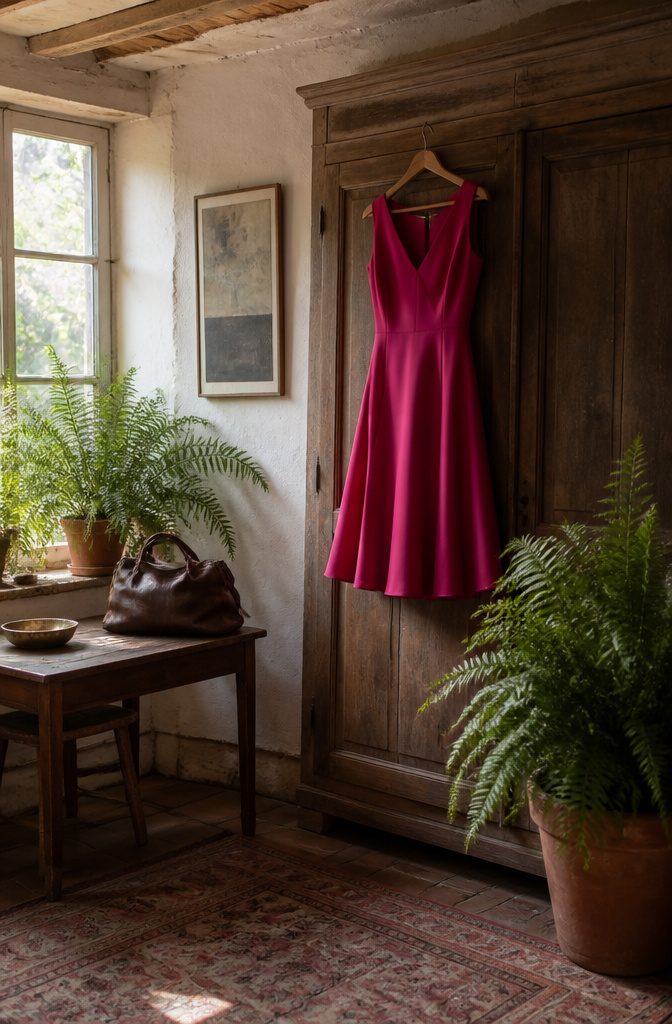
The A-line silhouette does what most cocktail dress shapes can’t: it flatters nearly every body type without drawing attention to itself.
The shape fits close at the shoulders and bust, then skims outward from the waist in a gentle flare that stops somewhere between mid-thigh and knee.
That narrow-to-wide taper keeps the dress from clinging at the hips or thighs, which is exactly why it works on pear shapes, apple shapes, and straight figures equally well.
Silk amplifies what the A-line already does.
The fabric moves with the flare rather than fighting it, so the skirt portion swings when you walk without adding stiffness or bulk. On an hourglass figure, the shape acknowledges the waist without cinching it.
On a straighter build, the flare suggests shape without requiring it. The result is a dress you can wear to a work event at six and dinner at eight without feeling overdressed for either.
Shift Dresses
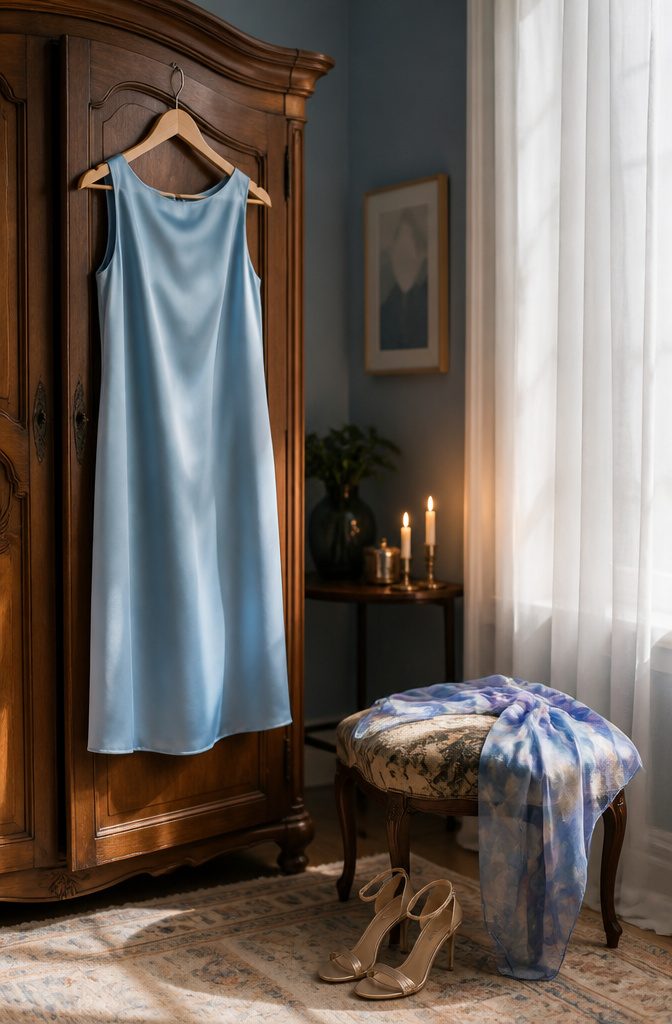
The shift dress falls straight down from the shoulders with no shaping at the waist or hips, and in silk that becomes something particularly useful for events that run long.
You move freely without fabric pulling or cinching, and the drape skims rather than clings.
When you’re standing through cocktails and then sitting for dinner, the relaxed fit holds its line without wrinkling into your lap or riding up at the hem.
Silk adds weight that keeps the shape clean without structure underneath.
A cotton shift can look boxy; silk settles closer to the body without actually hugging it. The result reads polished enough for a cocktail dress code but comfortable enough that you’re not adjusting anything all night.
I’d pick a shift in a heavier silk charmeuse over crepe de chine if the event skews formal, since the extra weight gives the straight cut more presence.
Shirt Dresses
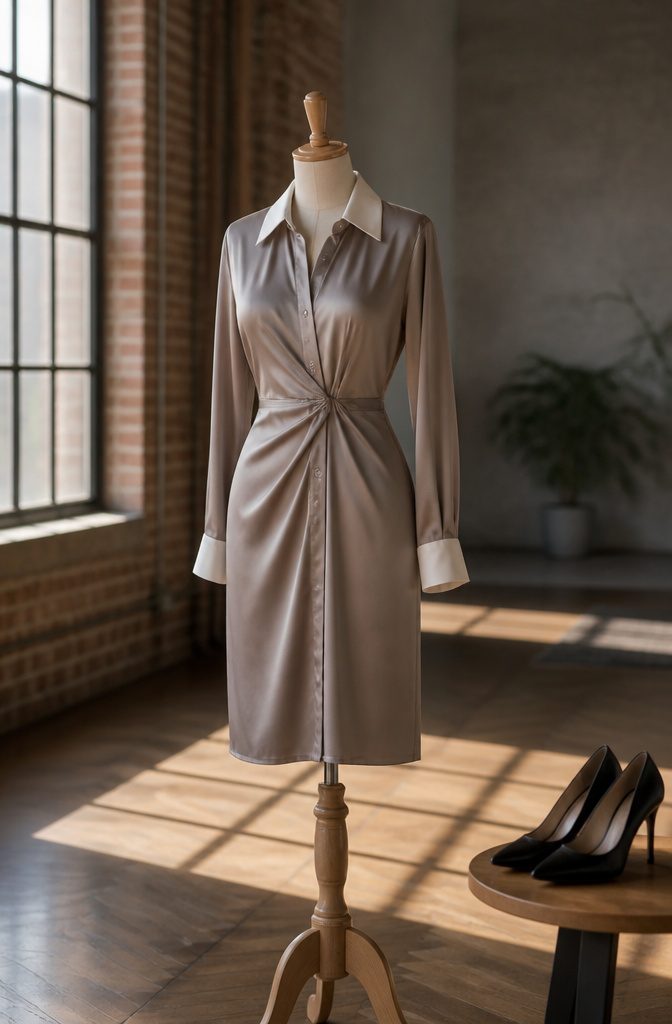
The button-front shirt dress cut in silk translates formal menswear structure into something you can wear to a cocktail event without looking underdressed.
The collar and placket hold the shape through the bodice, which means the silhouette reads as tailored rather than draped, and silk softens what would otherwise feel too office-rigid.
I’ve seen these work best when the hemline lands just above the knee and the fit through the waist is defined enough that you don’t need a belt to give it shape.
The semi-formal edge comes from keeping accessories minimal.
A pair of low heels and small earrings let the dress carry the look, and because the structure is already built in, you don’t have to layer or accessorize your way into formality the way you might with a slip style.
The shirt dress does that work on its own.
Tea Length Silk Dresses
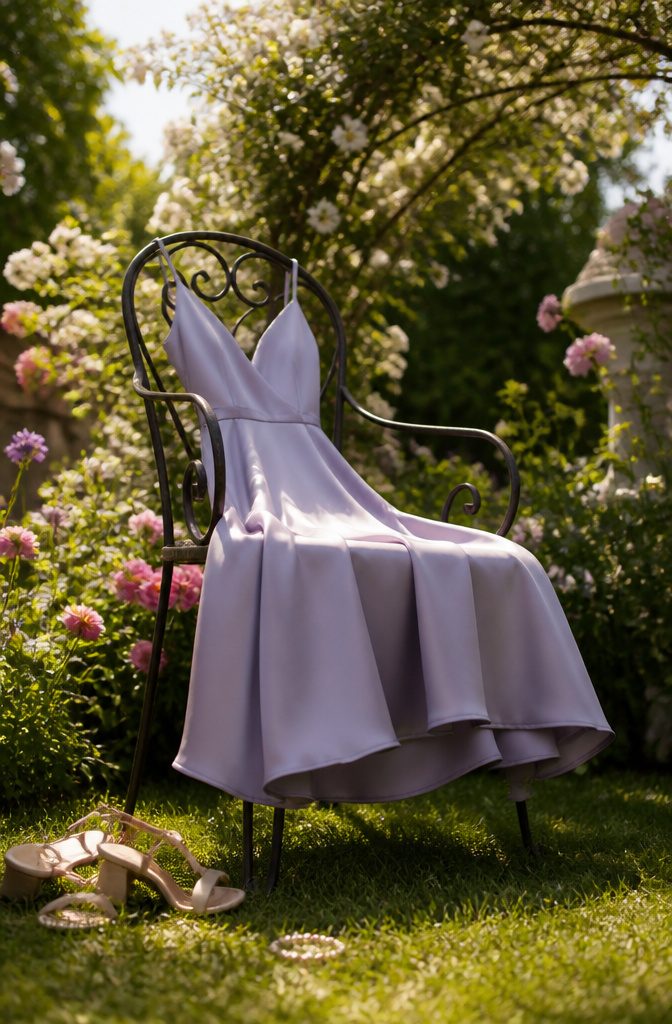
Tea length sits between the knee and the ankle, and that middle ground is what makes it work for cocktail events where full-length formality feels heavy but a short hemline reads too casual.
The length keeps the dress grounded enough for semi-formal settings without the sweep of a floor-length skirt, and you get full movement through your legs without lifting fabric to walk or sit.
Silk at this length holds structure better than it does when cut short, so an A-line or fit-and-flare silhouette stays put rather than clinging or riding up.
I’d choose tea length when the event leans traditional but not black-tie, garden parties and daytime weddings especially, where ankle-length silk reads polished without the ceremony of evening wear.
Pair it with mules or low heels for daytime ease, then swap in statement jewelry and a structured clutch when the same dress moves to evening.
How Silk Dresses Move Between Casual and Formal
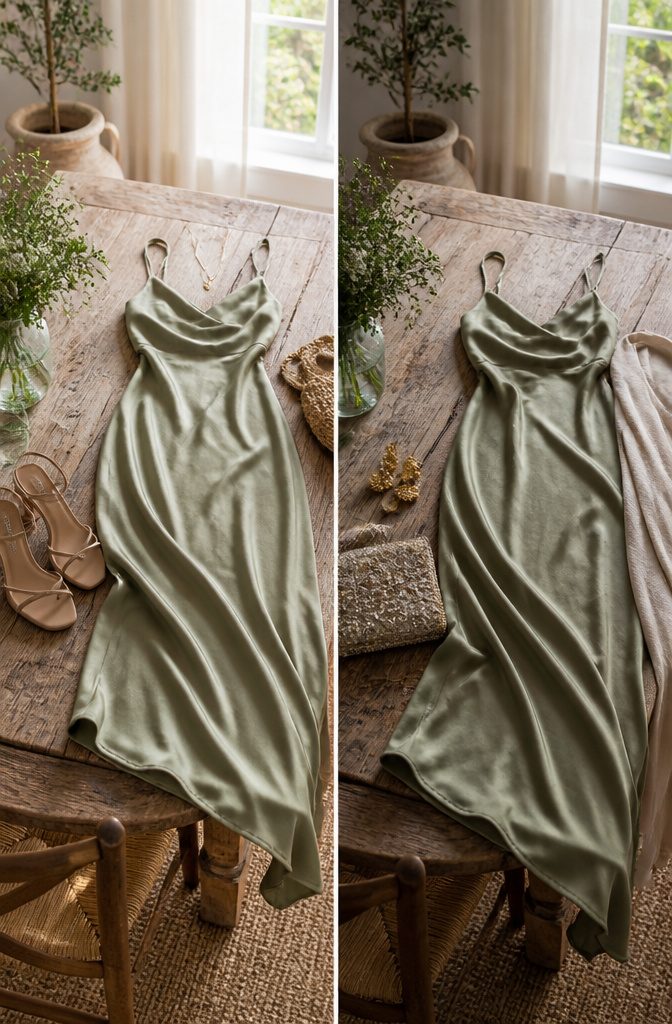
The same silk slip dress that works for a garden party in the afternoon can carry you through a formal cocktail hour after dark, and the shift happens mostly through accessories and shoes.
A midi silk dress worn with leather sandals and a crossbody bag reads casual enough for brunch with friends.
Swap the sandals for heeled mules, add bold earrings or a beaded clutch, and the silhouette becomes evening-ready without changing the dress itself. The fabric stays the same, but the frame around it tells a different story.
Keeping accessories minimal during the day preserves that relaxed feel silk naturally carries.
A wide-brimmed hat and simple jewelry let the dress breathe. For formal occasions, you layer on statement pieces that pull focus upward: chandelier earrings, a metallic clutch, or a structured blazer if the venue leans cooler.
Even a maxi silk dress adjusts this way, moving from a beach dinner to a semiformal event with nothing more than a change in footwear and jewelry weight.
Silk Blends That Add Comfort
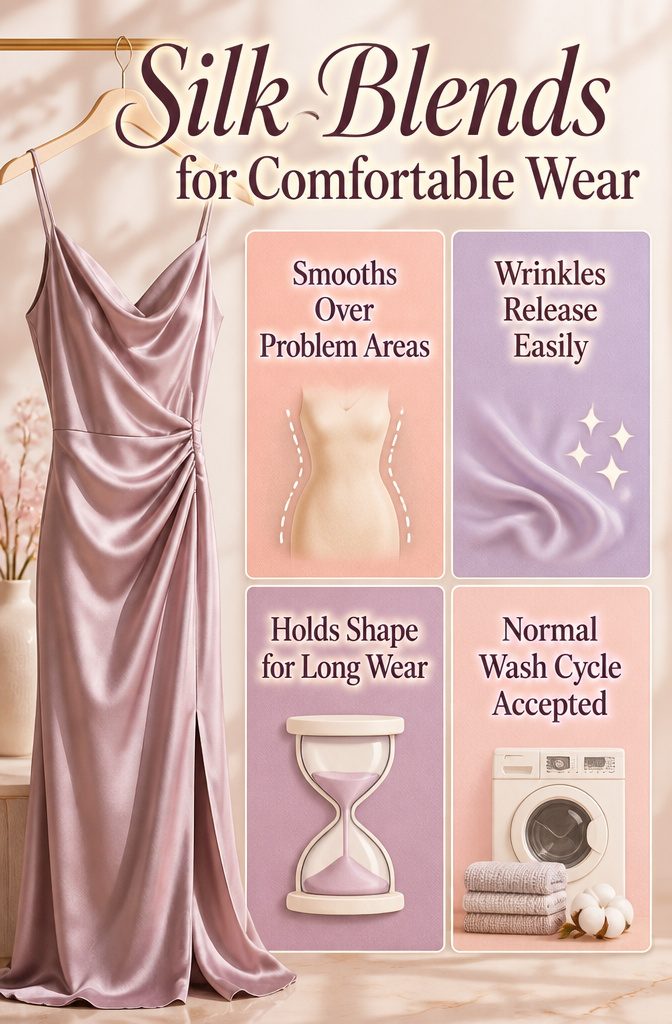
Pure silk wrinkles fast, clings in the wrong places, and needs dry cleaning after nearly every wear. That’s where silk blends with viscose or cotton change the equation.
A dress cut from silk-viscose keeps most of the drape and sheen you want from silk but adds enough structure to smooth over problem areas without pulling a seam every time you sit down.
The viscose also means the fabric releases wrinkles more easily, so you’re not walking into an evening event looking like you drove there in a ball.
Cotton blends pull silk in a different direction. Silk-cotton feels more substantial against the skin, holds its shape through long dinners, and tolerates a normal wash cycle.
You lose some of the liquid movement pure silk gives you, but you gain a dress that works for repeat wear without a standing appointment at the dry cleaner.
For cocktail dresses that need to move between a work dinner and drinks after, a blend makes more sense than fighting with something too precious to live in.
Keeping Silk Cocktail Dresses Beautiful
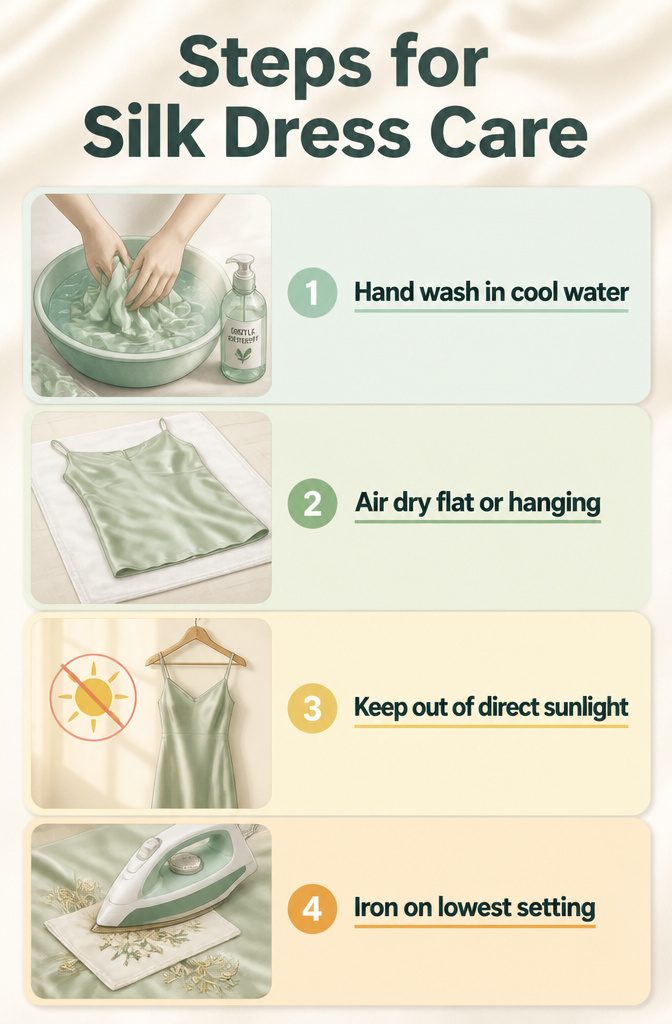
Silk holds color and drape better than almost any cocktail dress fabric, but only if you handle it correctly. The care routine is simple enough that most of what can go wrong comes from skipping a step or rushing it.
- Hand wash in cool water with a gentle detergent, or take embellished styles to the dry cleaner to keep beading and embroidery intact.
- Air dry flat or hanging to stop the fabric from stretching, and keep the dress out of direct sunlight while it dries so the color doesn’t fade.
- Iron on the lowest setting while the silk is slightly damp, and use a pressing cloth over embroidered areas to protect the finish.
The flat-dry step matters more than it sounds like it would.
Silk loses its shape when you wring it or hang it soaking wet, and that’s the kind of damage you notice immediately the next time you put the dress on.
Frequently Asked Questions
What makes silk a good choice for cocktail dresses?
Silk has a triangular fiber structure that reflects light at different angles, creating a soft sheen that looks expensive.
The fabric breathes and regulates temperature by wicking moisture away from your skin, so you stay comfortable whether the room is warm or cold.
Silk also drapes in clean lines without clinging, following your movement instead of holding one stiff shape.
Can silk cocktail dresses work for both daytime and evening events?
Yes, the same silk dress moves between casual and formal settings through accessories and shoes.
Wear it with leather sandals and a crossbody bag for a daytime garden party, then swap to heeled mules and statement earrings for a formal cocktail hour. The fabric stays the same, but the frame around it changes the read.
How do I care for a silk cocktail dress?
Hand wash in cool water with a gentle detergent, or dry clean embellished styles to protect beading and embroidery.
Air dry flat or hanging to prevent the fabric from stretching, and keep it out of direct sunlight while drying so the color doesn’t fade.
Iron on the lowest setting while the silk is slightly damp, using a pressing cloth over embroidered areas.