
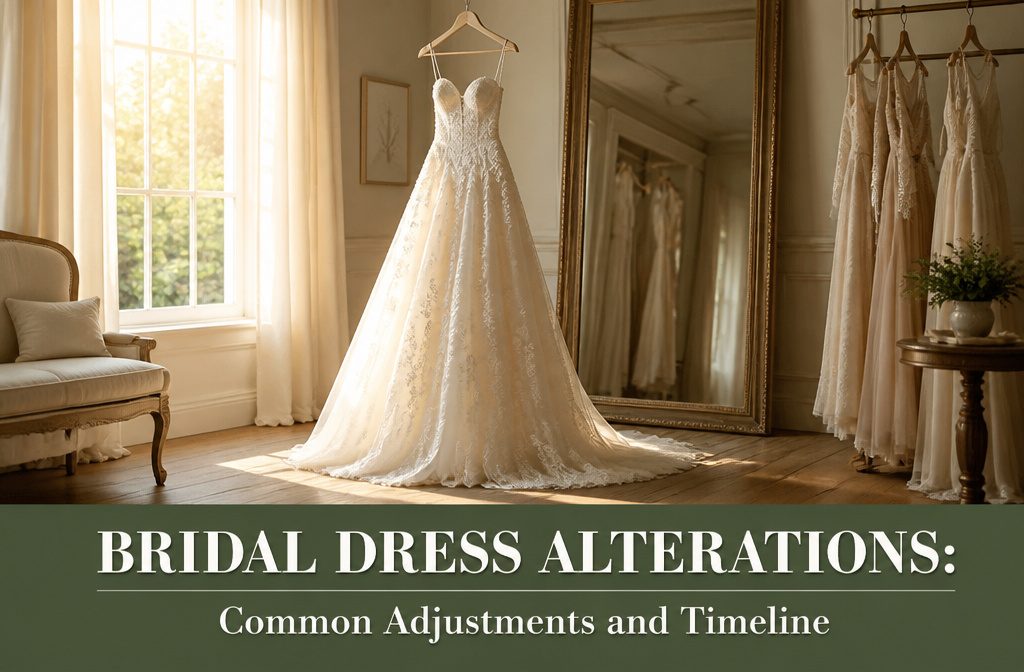
Bridal dress alterations are adjustments a seamstress makes to your gown after it arrives so it fits your body, matches your height with your wedding shoes, and feels comfortable all day.
Most dresses need hemming, and the timeline matters: book your first fitting 8 to 12 weeks before your wedding to leave room for the two to four appointments most gowns require.
What Bridal Dress Alterations Are
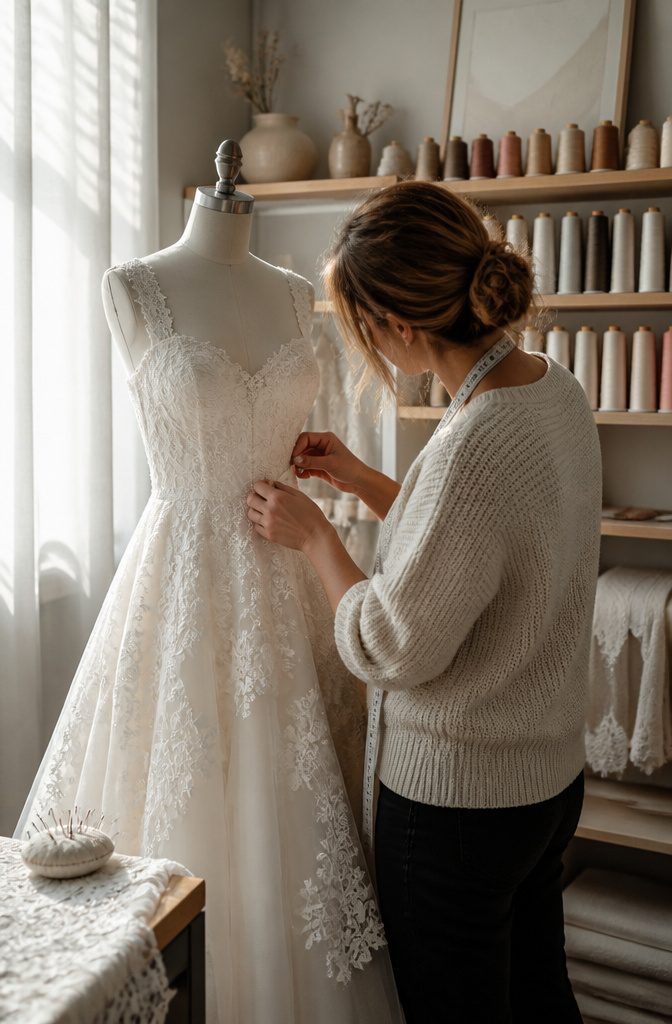
Bridal dress alterations are adjustments made to your gown after it arrives so it fits your body, matches your height and shoes, and feels comfortable throughout your wedding day.
The dress you order is the starting point. Once it shows up, a bridal seamstress refines the fit for your proportions.
Wedding dresses are made according to standard size measurements, while your body has its own unique shape.
Even if you ordered the correct bridal size, alterations are completely normal. Most gowns come long and need hemming.
Others require adjustments to the bust, waist or hips. You might add a bustle so the train can be lifted for the reception, or modify straps and sleeves to get the neckline exactly where you want it.
A bridal seamstress is a professional who specializes in tailoring wedding gowns. Because bridal dresses often contain multiple fabric layers, boning, lace, beadwork and trains, working with someone experienced in bridal alterations can save you trouble later.
Hemming the Dress to Match Your Height
Hemming the Dress to Match Your Height
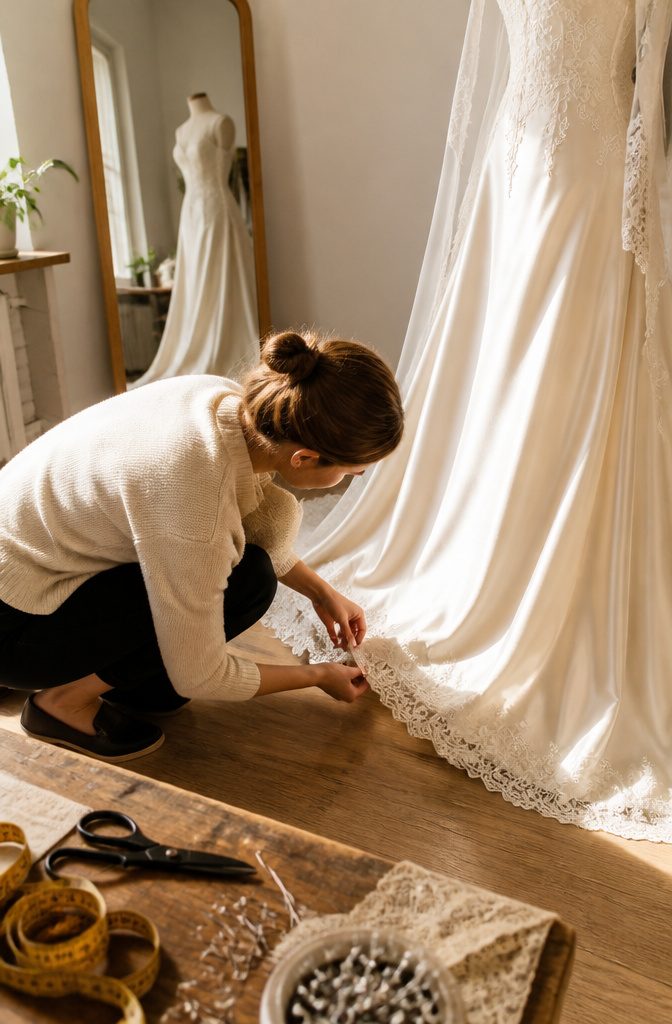
Hemming shortens the bottom of the dress so it falls at the right length with your wedding shoes, and it’s one of the most common bridal alterations.
The seamstress determines the hem while you’re wearing the shoes you plan to wear on the wedding day, which is why bringing the same shoes to your fitting matters.
A clean satin skirt may look simple, but its smooth surface makes precision especially noticeable. A lace gown with a decorative border may require trim or appliqués to be carefully removed and repositioned when the length changes.
The majority of dresses need re-hemming, but a hem isn’t always a simple fix if your gown has a lace border at the bottom or multiple layers of fabric or tulle.
Often, there’s a petticoat, lining and self layer to contend with, sometimes with a lace scallop edging, crinoline edging or other details.
Taking In or Letting Out the Bodice and Waist
Taking In or Letting Out the Bodice and Waist
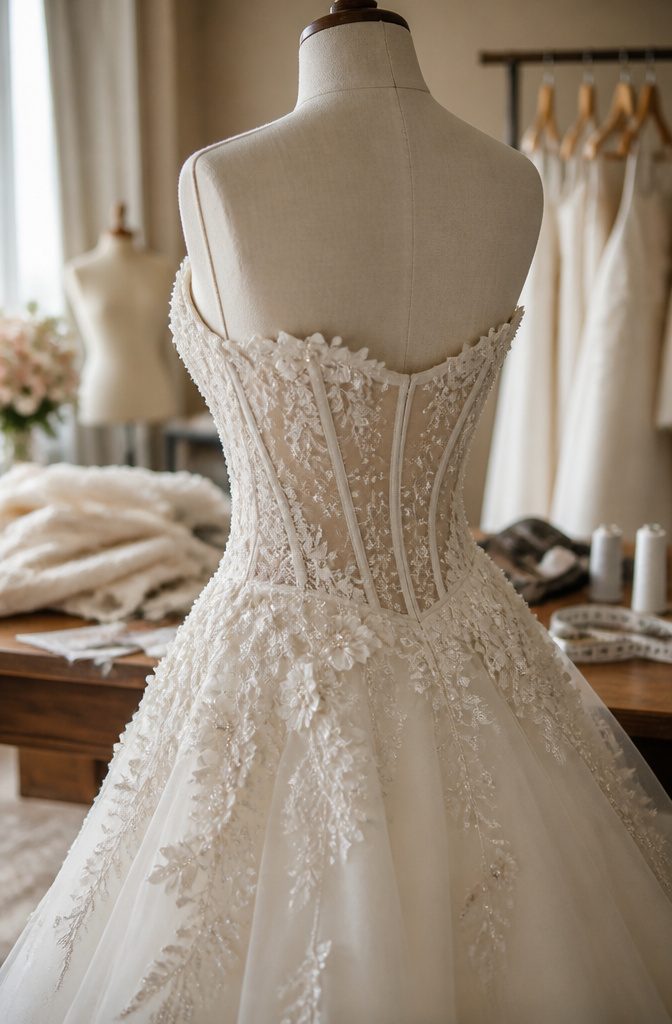
A seamstress may take in the waist, refine the bust, adjust the hips or shorten straps so the gown follows your shape more naturally.
The bodice is the upper portion of your wedding dress, and getting it right matters for more than aesthetics. A well-tailored bodice should help you feel secure while walking, sitting and celebrating, not just look beautiful.
Intricate designs can require additional handwork.
A gown with a corset bodice, shimmering lace or floral appliqués may involve carefully working around decorative details. The adjustment is about support, proportion and comfortable movement rather than the number on the gown tag.
Every body is unique, and bringing the fabric in at the right points makes the silhouette you loved during your bridal appointment actually fit.
Adding a Bustle for the Reception
Adding a Bustle for the Reception
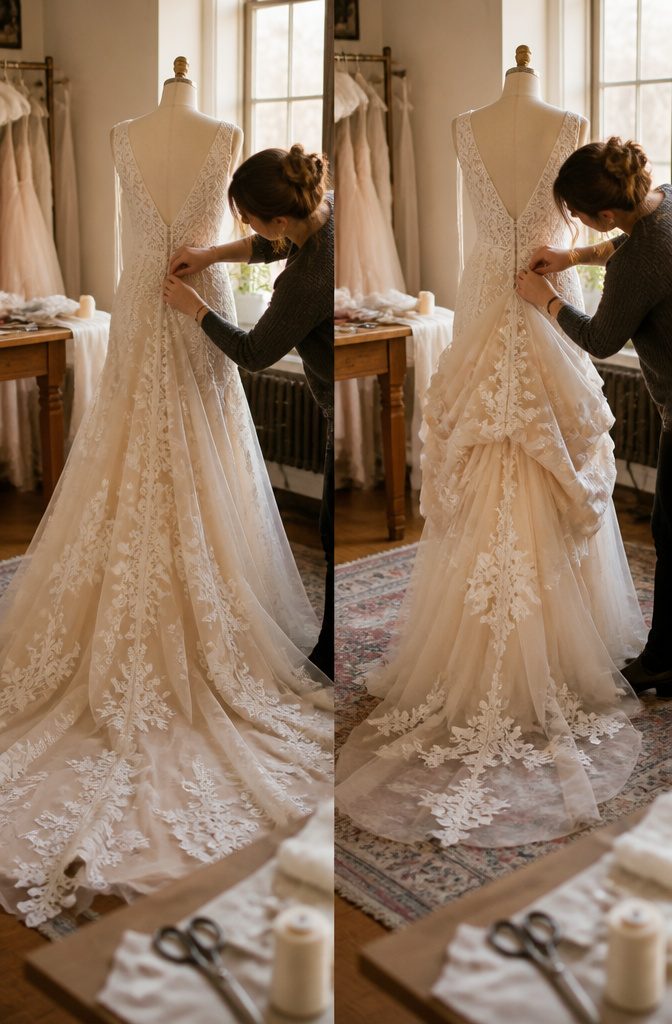
A bustle lifts and secures your train after the ceremony so it doesn’t drag behind you through the reception.
Small loops, buttons, hooks or ribbons are added to the gown, letting the fabric gather into a shorter shape you can actually move in.
Without one, that statement train you loved at the altar becomes a tripping hazard the moment you step onto the dance floor.
Your seamstress can recommend a bustle style that works with the weight, length and design of your train. Placement matters for both function and aesthetics, especially on gowns with heavy or elaborate trains.
Bring whoever will bustle your dress to one of your final fittings and take a video of the process. You’ll have an easy reference on the wedding day when nerves are high and nobody wants to fumble with unfamiliar hooks.
Adjusting Straps and Sleeves
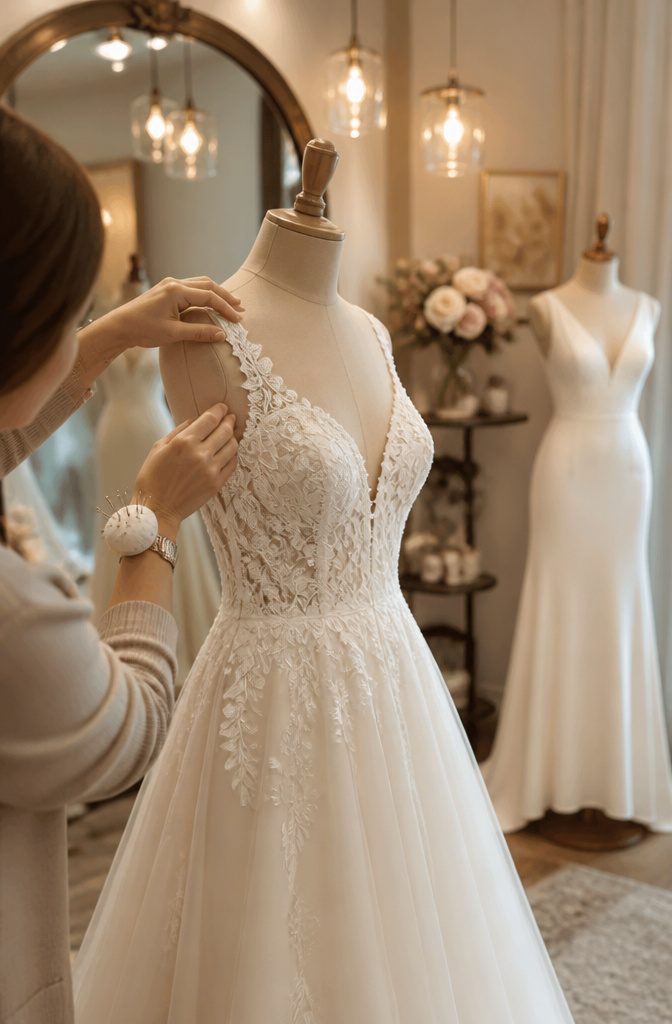
Straps that slide off your shoulders or sit too tight across the back can throw off the entire bodice, so shortening or repositioning them is one of the first adjustments a seamstress will recommend.
Straps that are too long let the neckline sag forward, which changes the silhouette you saw when you tried the dress on.
Taking them up a half inch or an inch pulls the bodice back into place and keeps it there through the ceremony.
Some gowns arrive with straps you don’t want at all. Removing them entirely opens up the neckline and shifts the look from supported to strapless, though that only works if the bodice has enough internal structure to hold without them.
Adding straps where none existed is the opposite move: you’re building support and coverage from scratch, either by extending the existing bodice seams or attaching ribbon, lace, or fabric that matches the gown.
Both changes affect how the dress sits on your frame, so they’re worth evaluating early in the alteration timeline.
Adding Embellishments or Changing Design Elements
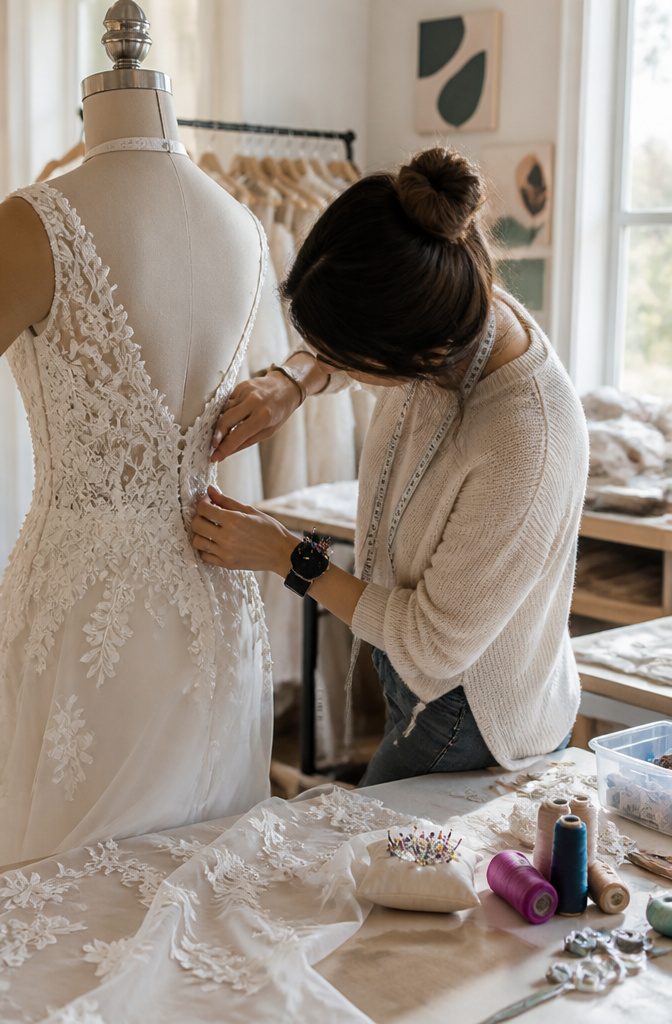
Customization takes bridal dress alterations past fit and into personal style.
Adding lace appliqués, beading, or embellishments gives a dress character that reflects the bride wearing it, whether that means extra sparkle, coverage, or updating a silhouette to feel more current.
Some brides use these changes to make an off-the-rack gown feel custom, others to refresh a vintage dress or family heirloom.
Typical customizations include adding lace overlays, beading detail work, or changing necklines and sleeve styles. Adjusting or adding straps, refining coverage with lining, or adding internal support like bra cups all fall under design modification.
Not every change works on every gown. Structural alterations can shift the proportions or compromise the support the original design relies on, so a professional assessment matters before committing to anything that changes how the dress is built.
When to Schedule Your Alterations
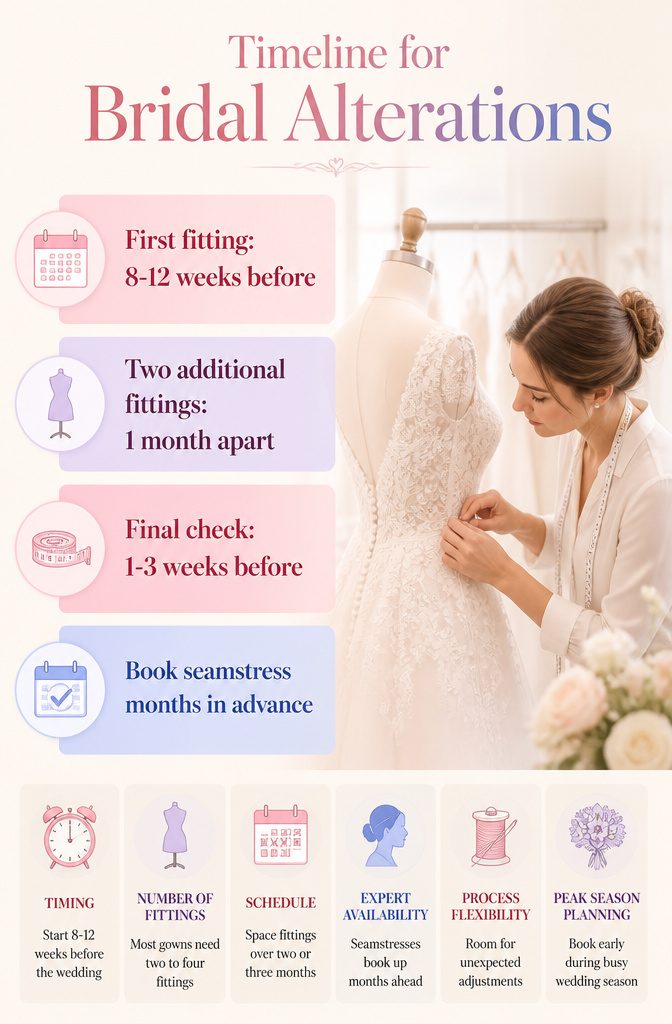
Book your first fitting 8 to 12 weeks before your wedding date. That window gives your seamstress time to make adjustments, assess how the dress reacts, and refine the fit without racing the calendar.
Most gowns need two to four fittings before they’re ready, and spacing those appointments over two or three months keeps the process calm rather than compressed.
The timeline splits into two parts: reserving your seamstress and starting the actual work. Experienced bridal alterations specialists fill their schedules months ahead, especially during peak wedding season, so you can lock in your spot before your dress even arrives.
The fittings themselves typically begin about two months out, with a second round roughly one month after the first and a final check one to three weeks before the wedding.
Starting early leaves room for the unexpected. A seam that needs more work, a bustle that requires a second try, or a subtle shift in fit all get handled without panic when you’ve built in cushion time.
What Alterations Cost
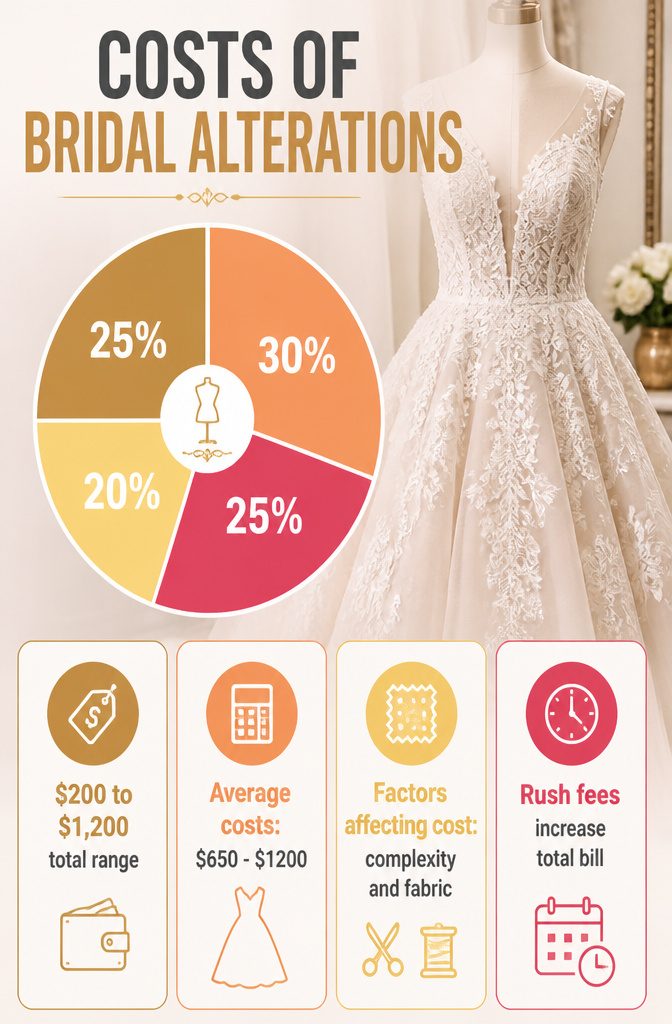
Alteration costs can range from $200 to $1,200 depending on how much work your dress needs. The wide spread comes down to a few specific factors, and understanding them helps you budget more accurately than guessing at a flat fee.
When budgeting for the cost of your wedding dress, don’t forget to add in the additional bill that will come with alterations. On average, professionals say the total can come between $650 and $1200.
— Vogue
Treat alterations as a separate line item from the dress itself, not something rolled into the purchase price.
What drives the cost higher is complexity. A hem on multiple layers of embellished lace costs more than a single-layer chiffon skirt because each layer has to be cut, finished, and reattached individually.
Beading or appliqués that sit along the hemline often need to be removed, the fabric adjusted, and the details sewn back on by hand.
Bodice restructuring, especially on gowns with boning or corsetry, takes more hours than a simple strap adjustment. Adding sleeves, changing a train, or building a bustle with multiple pickup points all add to the final bill.
Fabric matters too.
Delicate materials like silk charmeuse or tulle require more careful handling than satin or crepe, and that care shows up in the price. Rush work shortens the timeline and usually comes with an upcharge, so booking early keeps costs lower.
Your location and the alterations professional you choose also affect what you pay, since market rates vary and experienced seamstresses typically charge more for their skill.
The Fitting Process and How Many You Need
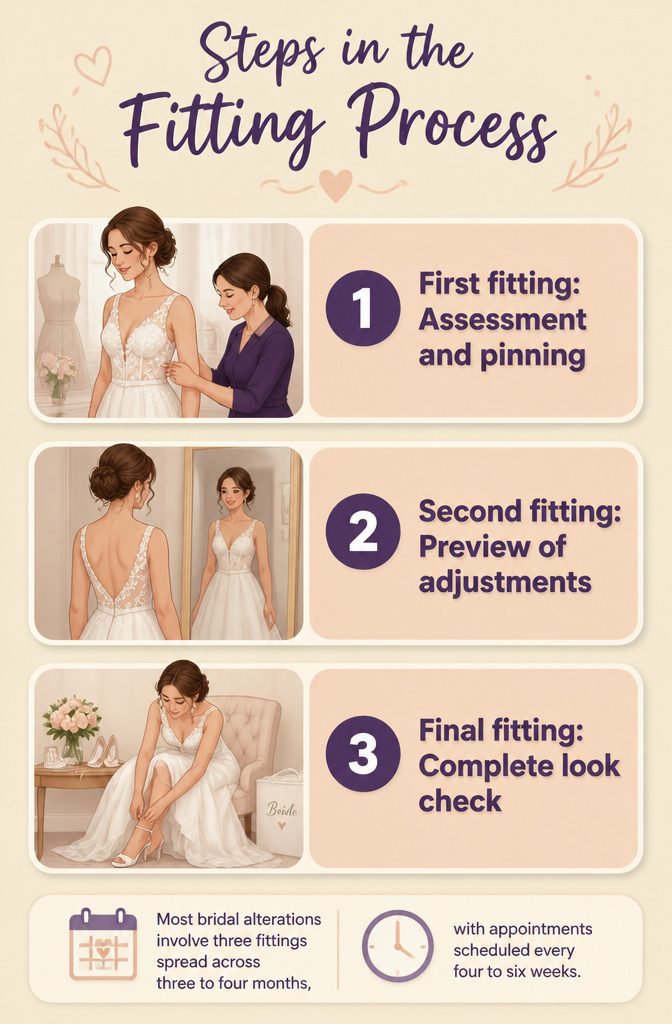
Most bridal alterations involve three fittings spread across three to four months, with appointments scheduled every four to six weeks. Each fitting serves a specific purpose, and the alterations stay reversible until the final visit.
- First fitting. Your alterations specialist assesses what needs to change, pins the dress to show you the end result, and provides a quote. This appointment usually takes an hour. If you want to add customization like a sash or swag sleeves, mention it now. The specialist will also walk you through bustle options so you can move freely at the reception.
- Second fitting. The seamstress will have basted the alterations discussed at the first fitting but won’t cut any fabric yet, so you can see a preview of the changes and adjust them if needed. Move around in the dress to confirm it feels comfortable.
- Final fitting. This is where you see the complete look with your shoes, undergarments, and accessories. Practice walking, sitting, and working the bustle. Any last tweaks happen here, and you can ask how to store and transport the dress afterward.
What to Bring to Your Fittings
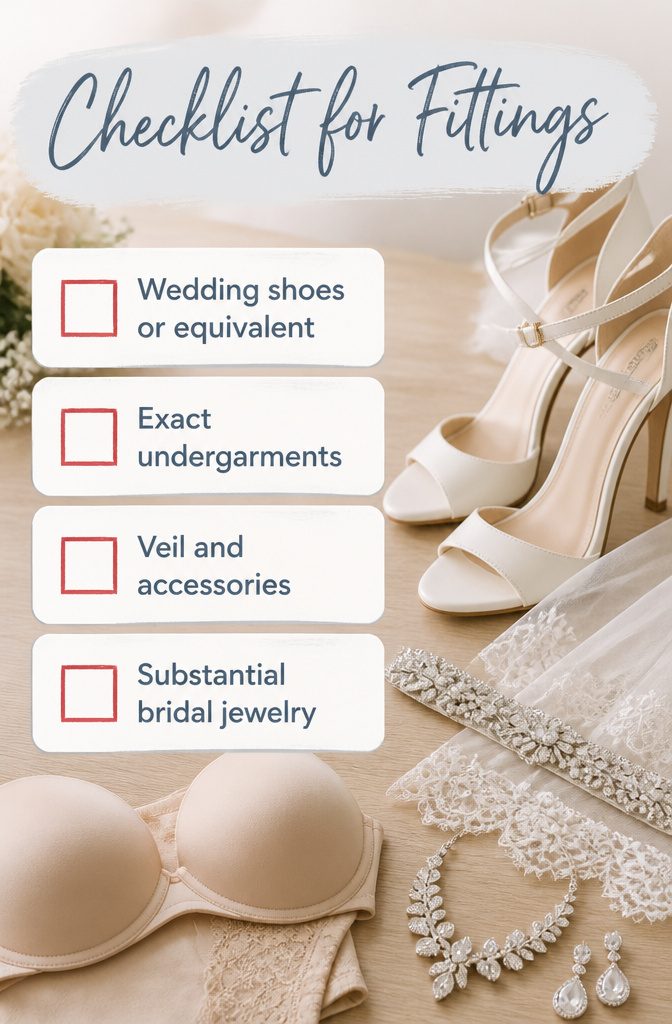
Your alteration appointments get more accurate when you bring what you’ll actually wear down the aisle, so I pack everything that affects fit or length at the first fitting.
- Your wedding shoes or something with the same heel height. Getting hemmed in flats and then stepping into four-inch heels on the day leaves your dress too short. The shoe decides the hemline, so if you haven’t bought your pair yet, bring something close in height.
- The exact undergarments you plan to wear. Shapewear, a strapless bra, or a slip all change how the bodice sits and where the waist hits. A seamstress pinning over the wrong bra is pinning for a dress that won’t exist.
- Your veil and any belt or sash. Many seamstresses will steam your veil as a complimentary service, and if you’re attaching a belt to the gown itself, they need to see it during the fitting to get the placement right.
- Bridal jewelry, if it’s substantial. A chunky necklace or statement earrings won’t change the fit, but they complete the picture and help you see whether anything competes with the neckline.
Choosing Between a Bridal Salon and an Independent Seamstress
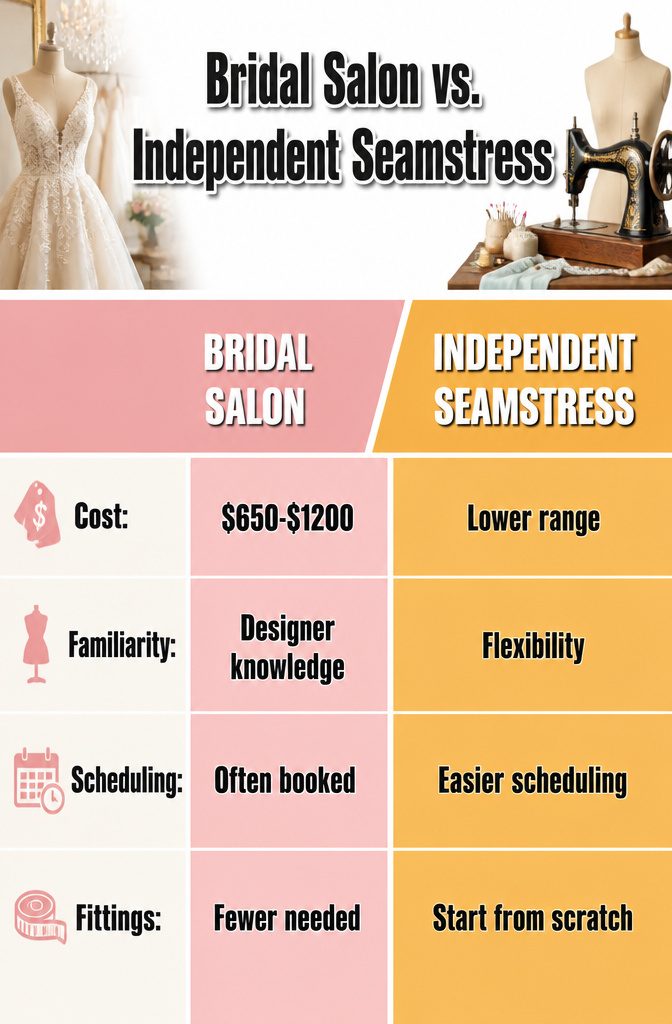
The cost difference can be striking. Bridal salons often charge between $650 and $1,200 for alterations, while independent seamstresses may come in lower.
But the price reflects more than convenience. A salon that already knows your dress has an edge: they understand how the designer builds the gown, which seams can move and which can’t, and they’ve likely altered that exact silhouette before.
That familiarity can mean fewer fittings and a cleaner result.
Independent seamstresses bring flexibility.
If you need an alteration the salon doesn’t offer in-house, you won’t be turned away. Scheduling can be easier too, especially during peak wedding season when salons book solid for weeks.
You’re starting from scratch with someone who may not have worked with your specific dress construction before. I’d ask to see photos of past bridal work and confirm they’re comfortable with the fabrics and structure your gown uses before committing.
Keeping Your Weight Steady During Alterations
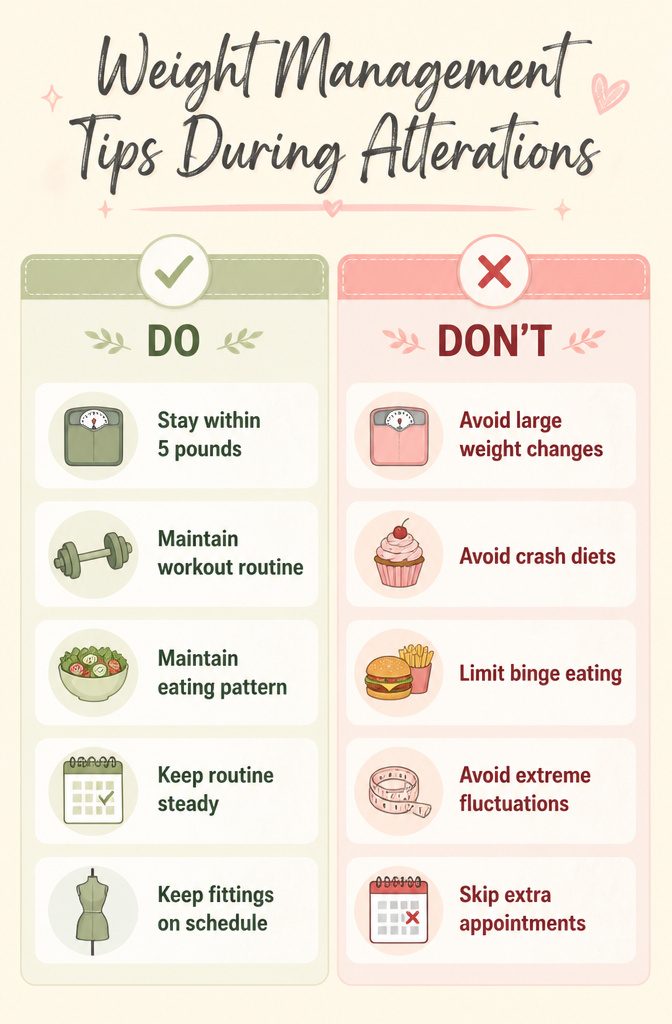
Your weight staying within about five pounds through the alteration timeline saves you from paying twice for the same work.
A dress that fits perfectly at the second fitting will gap at the bust or bind across the hips if you drop or gain ten pounds before the final appointment, and those changes mean new seams, new darts, sometimes a complete re-cut of the bodice.
Most alterations specialists build the dress to your body as it is at each fitting, so fluctuations push the cost up and add appointments you weren’t planning for.
Some bridal boutiques now ask you to sign a waiver promising your body won’t change between purchase and wedding day.
David’s Bridal doesn’t require that, their Fit Guarantee covers shifts in either direction, but the alterations themselves still cost more when your measurements move.
The simplest way to avoid that is to keep your routine steady: same workout schedule, same eating pattern, no crash diets and no binge stretches in the months between fittings.
Your body will likely shift a little anyway, and a good seamstress plans for small adjustments, but holding close to your starting weight keeps those tweaks minor instead of structural.
Managing Stress During the Alteration Process
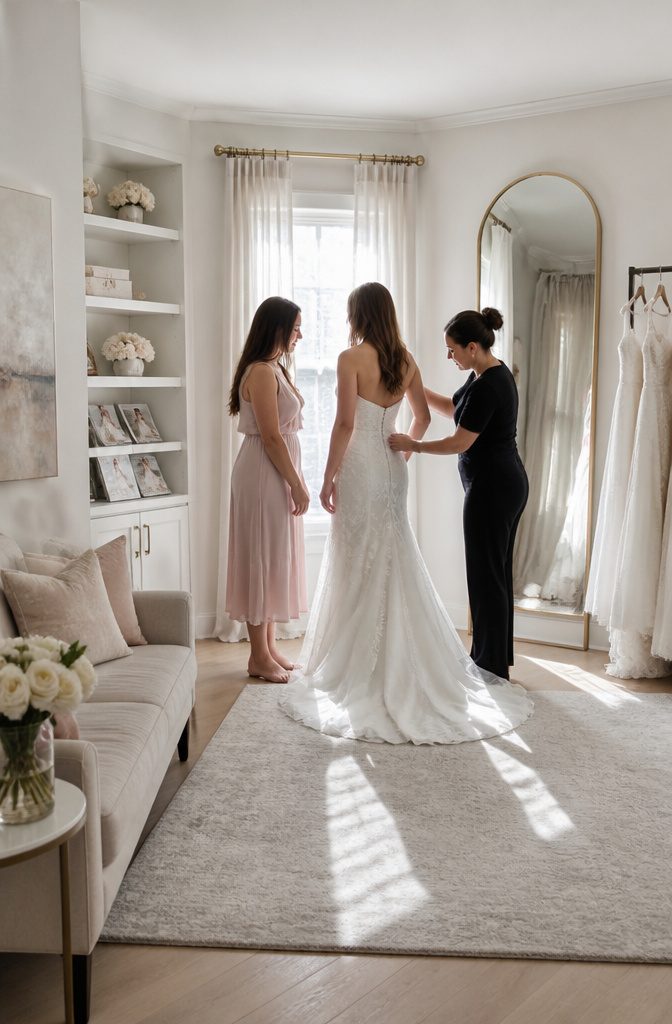
Alterations can feel like the last test between you and the dress you chose, and the weight of that shows up differently for everyone.
Some brides arrive at fittings calm and excited. Others walk in anxious about whether the dress will sit right, whether a seam will hold, or whether the person holding the pins understands what they want.
The difference often comes down to who you bring with you, or whether you bring anyone at all.
A positive entourage matters more than a large one.
If someone in your circle has strong opinions, a habit of body shaming, or a tendency to second-guess your choices, leave them home. You need a peaceful headspace during fittings, not negativity or pressure.
Bring a trusted friend or family member who can help you bustle the dress later and who will stay supportive when you’re standing in front of the mirror in your undergarments and pins.
If that person doesn’t exist, go alone. Better to have no one than the wrong one.
Practical steps help, too. Schedule your fittings two to three months out so you’re not racing the calendar.
Bring your actual wedding shoes and undergarments to every appointment so the seamstress can mark the hem and bodice accurately. Speak up if something feels wrong or too tight.
You should be able to breathe and sit down in the gown, not just stand still. Ask questions when you don’t understand a suggestion, and be open to the seamstress’s advice without abandoning your own sense of what looks right.
Frequently Asked Questions
How much do wedding dress alterations cost?
Bridal dress alterations typically cost $200 to $1,200 depending on the complexity of the work.
A simple hem on a single layer costs less than bodice restructuring or working around beaded lace. Fabric type, rush fees, and your location all affect the final price.
When should I start my wedding dress alterations?
Book your first fitting 8 to 12 weeks before your wedding date. Most gowns need 2 to 4 fittings spaced over 2 to 3 months, so starting early keeps the process calm and leaves room for unexpected adjustments.
How many fittings will I need for my wedding dress?
Most brides need 3 fittings spread across 3 to 4 months. The first assesses what needs to change, the second shows basted alterations you can still adjust, and the final fitting confirms everything is ready with your shoes and accessories.
What should I bring to my first wedding dress fitting?
Bring your wedding shoes or something with the same heel height, the exact undergarments you’ll wear, and your veil or any belt. The shoe decides the hemline, and shapewear or a strapless bra changes how the bodice sits.
Does David’s Bridal do alterations on dresses not purchased there?
Yes, David’s Bridal accepts alterations appointments for gowns purchased elsewhere. You can book an alterations appointment online to work with their alterations specialists even if you bought your dress at a different salon.