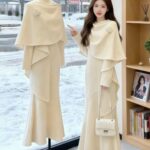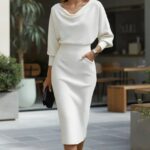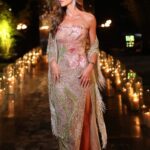
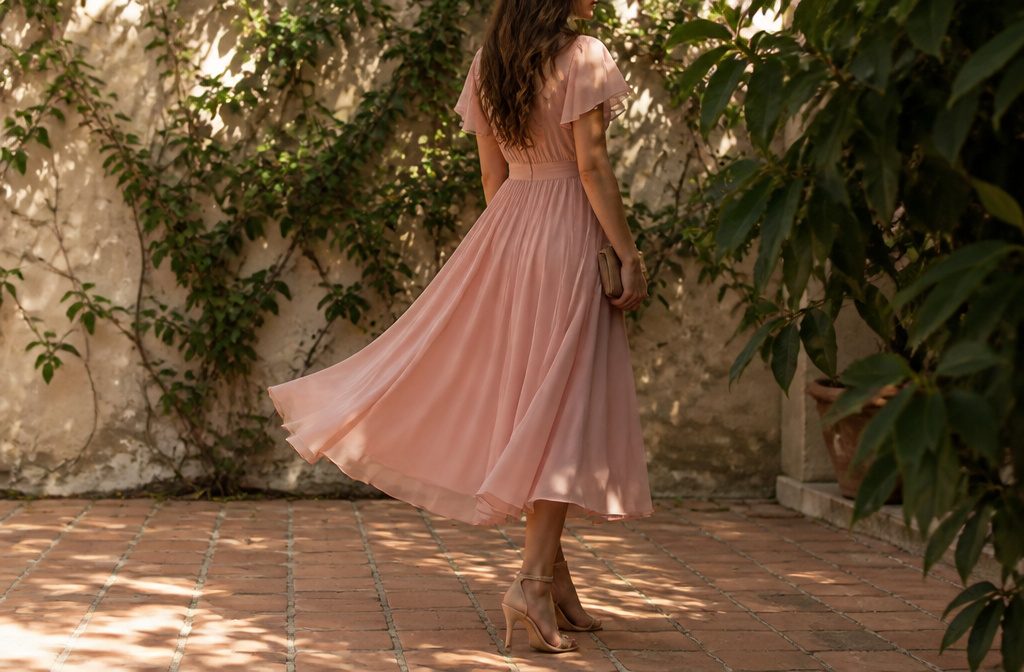
A semi formal dress for a wedding sits between dressy cocktail and black tie, which means you can wear a midi dress, tailored jumpsuit, or elegant separates without needing a full evening gown.
The venue and time of day decide whether you reach for chiffon and pastels or satin and jewel tones, but the length and silhouette stay polished rather than glamorous.
What Semi Formal Wedding Guest Attire Actually Means
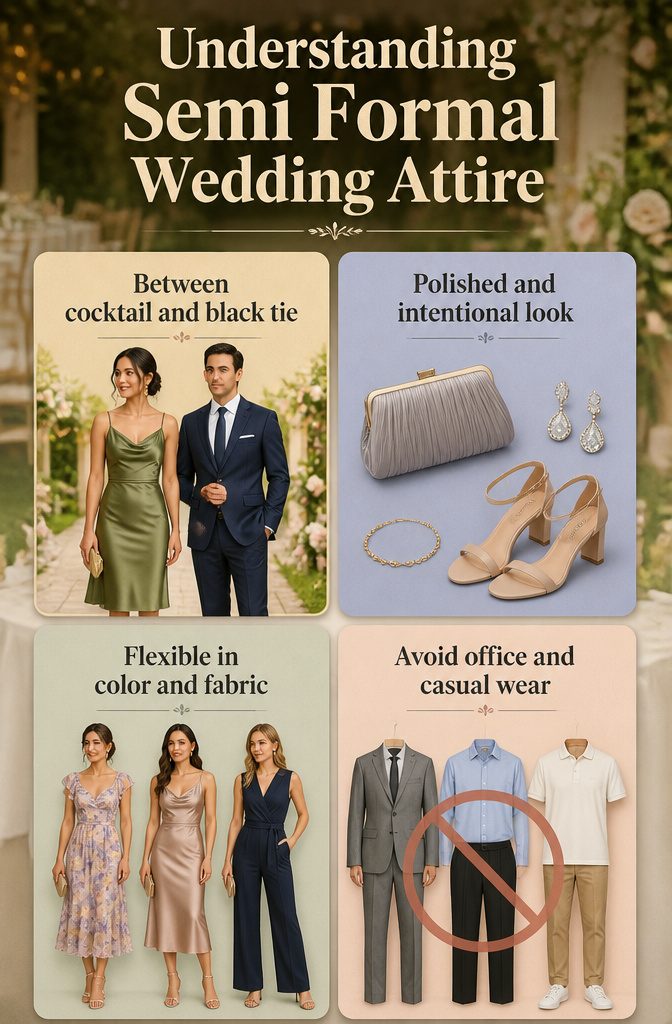
Semi formal wedding attire lands between dressy cocktail and full black tie. The outfit should look polished and intentional without the full elegance of a formal evening gown or the relaxed ease of everyday clothing.
You have flexibility with length, color, fabric, and accessories in a way you wouldn’t with formal or black tie dressing.
A satin midi dress, floral chiffon style, crepe silhouette, or tailored jumpsuit can all work. The determining factors are venue, time of day, and season.
An afternoon garden ceremony in spring calls for lighter fabrics and brighter colors than an evening ballroom reception in winter. What ties them together is that the complete outfit reads as dressy rather than glamorous, elevated without feeling overdone.
Skip anything that feels too much like officewear, beachwear, or everyday casual clothing. Choose something that feels wedding-appropriate and thoughtfully styled without crossing into red carpet territory.
1. Midi Dresses
Midi Dresses
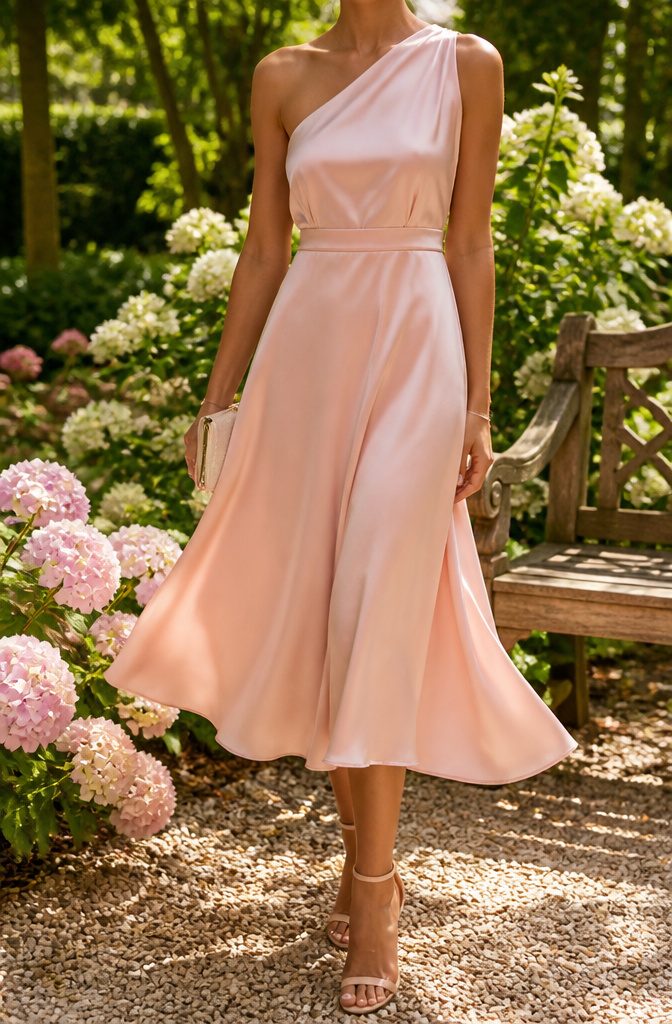
A midi dress works across most venues and seasons because it lands between casual and formal in a way that feels natural for semi formal weddings.
The length itself reads as polished without pushing into black-tie territory, and you have more room to play with fabric and silhouette than you would at cocktail length.
Satin slip dresses, floral wrap styles, and fit-and-flare shapes all sit comfortably in this category.
One-shoulder midi dresses and softly draped crepe styles work just as well. The reliability comes from the fact that a midi holds up in warm weather and transitions easily to cooler months when you add a jacket or heavier accessory.
I reach for a midi first when the venue or season feels uncertain, because the dress length itself doesn’t box you into one setting the way a mini or full-length gown might.
2. Maxi Dresses
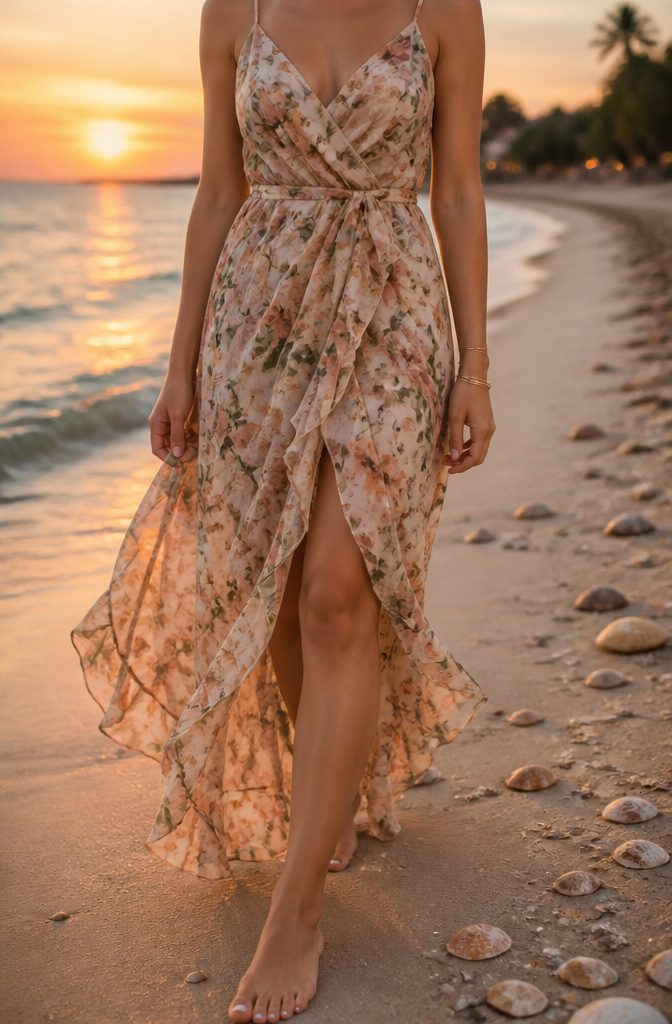
A maxi dress can work for a semi-formal wedding, but the shape needs to stay simple.
Avoid dramatic volume or heavy embellishment that pushes the outfit closer to black tie. A fluid column silhouette, lightweight fabric, or a subtle slit usually feels more appropriate than anything that reads bridal or overly elaborate.
Lightweight chiffon, soft satin, and floral prints keep a longer dress from feeling too formal. The styling matters too.
I’d pair a maxi with minimal jewelry and softer accessories rather than anything too dramatic. You want to look polished and occasion-ready without overdressing, and a maxi that leans too formal can tip that balance quickly.
3. Cocktail-Length Dresses
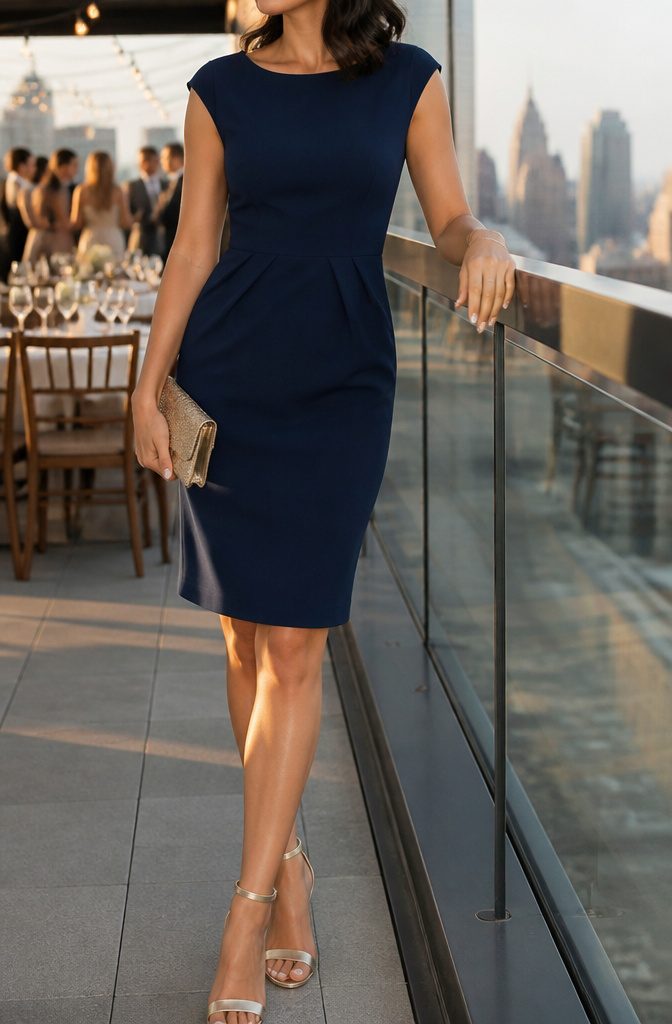
Cocktail-length dresses sit at or just above the knee, and that makes them one of the most reliable silhouettes for semi formal weddings.
The length reads polished without tipping into full-gown territory, which means you look elevated without overdressing. A knee-length or just-below-the-knee hem works best when the dress code lands between dressy cocktail and black tie.
I reach for this length when the venue and time of day feel mid-range: an afternoon garden ceremony, a barn reception that still expects heels, or an evening event that stops short of ballroom formal.
The silhouette works because it gives you room to style up or down with fabric and accessories, and it avoids the risk of looking too casual or too formal.
Midi and maxi options exist, but cocktail-length wins when you want something wedding-appropriate that feels neither bridal nor red-carpet.
4. Tailored Jumpsuits
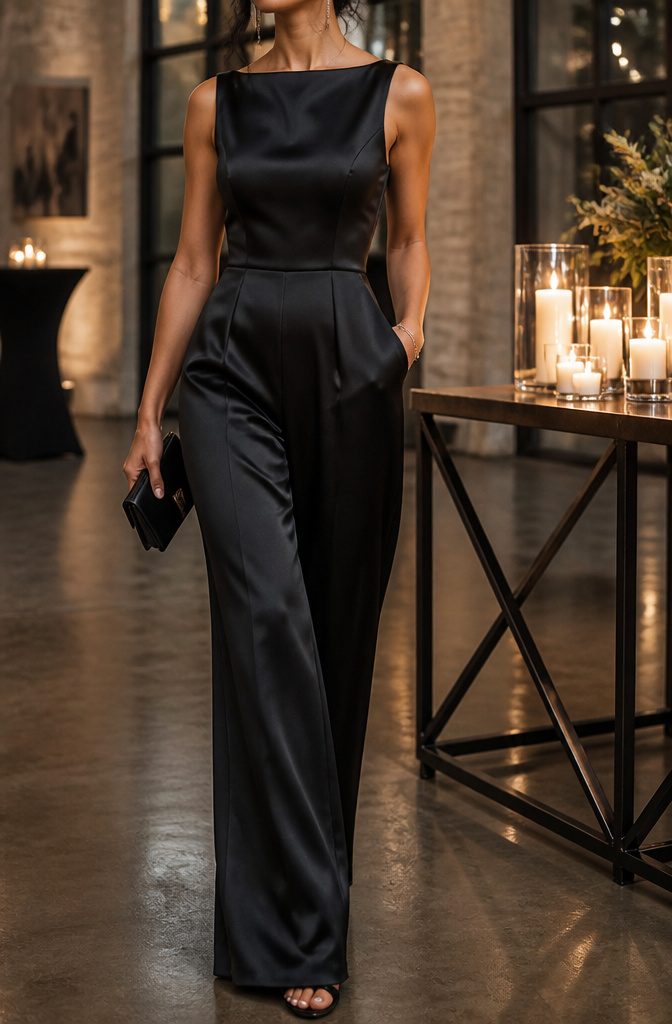
A tailored jumpsuit in a polished fabric can work beautifully for a semi-formal wedding when the fit and finish are intentional.
The silhouette needs to feel structured rather than casual, which usually means a fitted bodice, clean lines through the waist, and a leg that skims rather than balloons.
Crepe and satin both read as elevated, and they hold their shape better than jersey or linen blends that can look too relaxed for the occasion.
The styling matters as much as the garment itself. I pair a solid-colored jumpsuit with heeled sandals or pointed-toe pumps, simple jewelry, and a small clutch to keep the whole outfit polished.
Wide-leg cuts tend to photograph better than tapered styles, and they move more naturally during the reception. Coverage should match the venue, so sleeveless or short-sleeve versions work for warmer settings, while long sleeves suit evening ceremonies.
What makes a jumpsuit feel appropriate instead of like workwear or everyday clothing is the combination of fabric, fit, and accessories.
A softly structured piece in a refined fabric finishes the same way a midi dress would, just with a different silhouette.
5. Elegant Separates
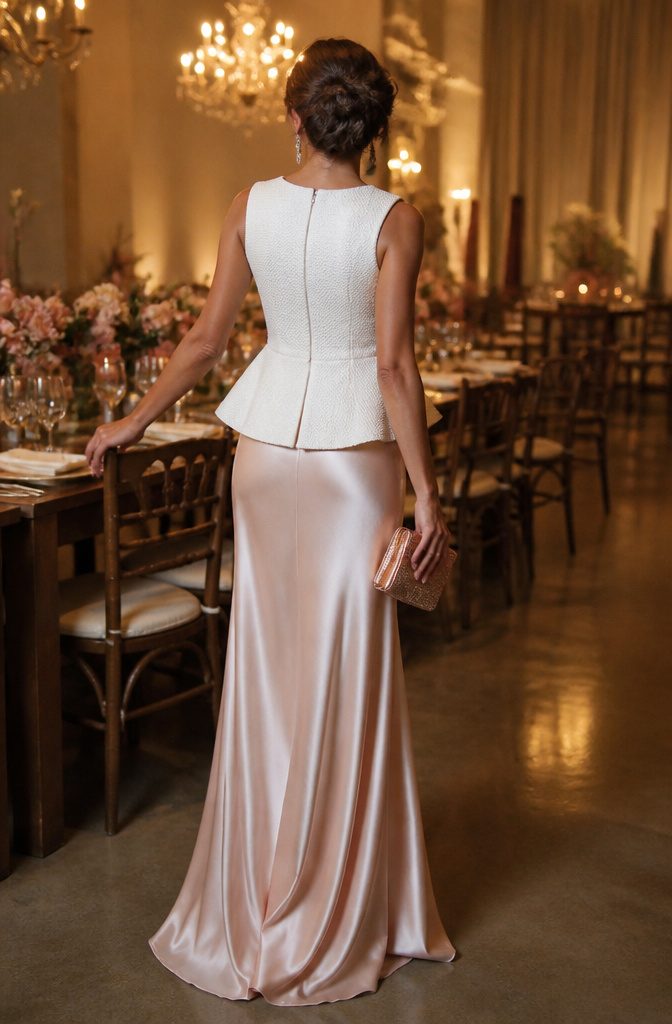
A structured top and skirt give you flexibility most dresses don’t, but the line between polished and underdressed lives in fabric weight and silhouette.
Separates work when both pieces carry enough substance to read as formal rather than daytime casual. That means a silk charmeuse blouse or a tailored peplum top paired with a midi or floor-length skirt in satin, taffeta or structured crepe.
The volume should stay controlled: a fitted top with a fuller skirt, or a draped blouse tucked into a sleek pencil shape.
Where separates fail is when either piece looks too relaxed on its own. A cotton button-down or a jersey knit top, no matter how expensive, tips the outfit toward office wear rather than celebration.
The skirt has to carry enough presence to anchor the look, which usually means length past the knee and a hem that moves with intention.
Separates ask the wearer to judge both pieces as a single outfit, and that makes them harder to get right than a dress that already arrived as one decision.
Fabrics That Read as Polished
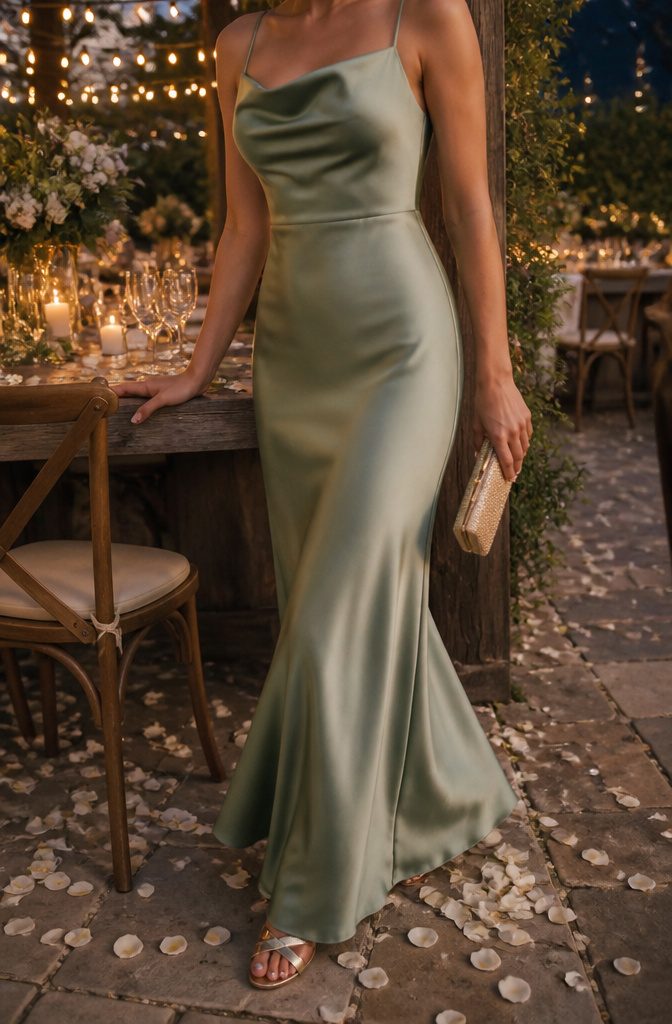
The fabric is what sells the silhouette as wedding-appropriate, especially when the cut itself is simple. Satin, chiffon, crepe, lace, and jacquard all carry enough polish that a straightforward dress reads as formal without needing much else.
Satin works particularly well for evening weddings because of its soft sheen, though matte or softly draped versions wear more easily than anything too reflective.
Chiffon creates movement and suits spring, summer, and outdoor ceremonies, while crepe offers a cleaner, more structured look if you prefer something tailored.
Lace adds romance when it shows up as sleeves, overlays, or subtle trim rather than covering the entire dress.
Cotton jersey and linen sit too far down the formality scale for semi formal wedding attire, and anything that wrinkles easily or looks obviously casual should stay home.
Colors That Work for Daytime and Evening
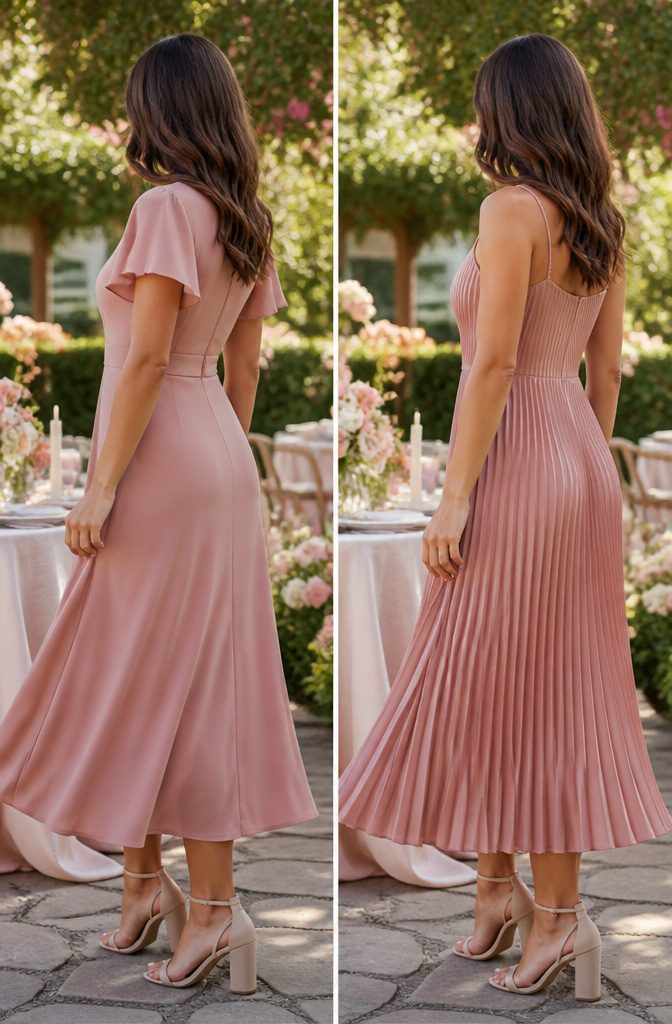
Color matters more than most guests realize, and timing decides which shades land right.
Avoid white, ivory, and anything pale enough to photograph as bridal—that includes champagne and very light blush. Beyond that, the clock and the calendar give you most of the direction you need.
Daytime weddings suit softer colors: sage, dusty rose, soft blue, lavender, light floral prints. Evening ceremonies call for richer tones that hold up under low light—emerald, navy, burgundy, plum, deep blue.
The shift isn’t arbitrary; darker colors read as more formal after sunset, and lighter fabrics look washed out under string lights or chandeliers.
Season follows the same logic. Spring and summer weddings open the door to pastels and muted prints, while fall and winter guests reach for jewel tones, chocolate, and deeper greens.
Black works for evening celebrations as long as you soften it with satin texture or polished jewelry so the look stays celebratory rather than severe.
Accessories That Complement Without Overwhelming
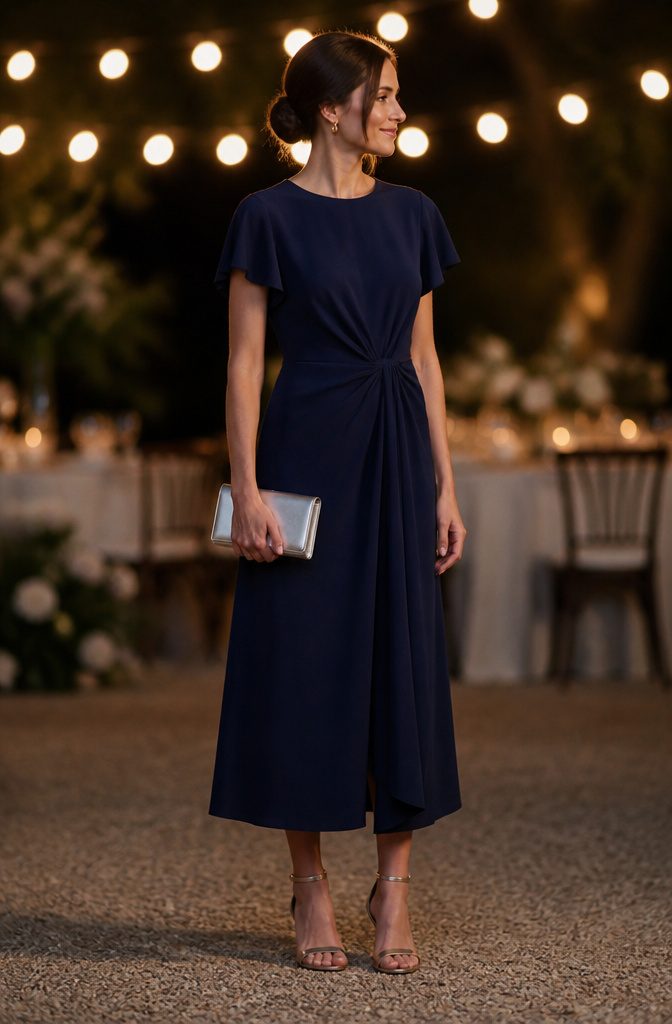
You want a finished look that supports the dress rather than competing with it. A statement earring or necklace can carry the whole jewelry moment, but layering too many pieces at once pulls focus from the outfit itself.
If the dress already has a strong neckline, draping, or a bold floral print, I keep jewelry understated. For a simpler silhouette, statement earrings or a stronger bracelet add personality without overwhelming.
A straightforward formula: earrings plus one additional jewelry piece, a small bag, and dressy shoes.
Daytime weddings call for pearls, delicate gold, or subtle metallics. Evening events give room for richer textures like satin or velvet and slightly bolder jewelry.
A slim clutch, structured mini bag, or compact shoulder bag works better than a large everyday tote.
Metallic finishes or soft leather always land well, and the size should hold essentials like your phone, lipstick, and tissues without turning into a grocery run.
What to Skip
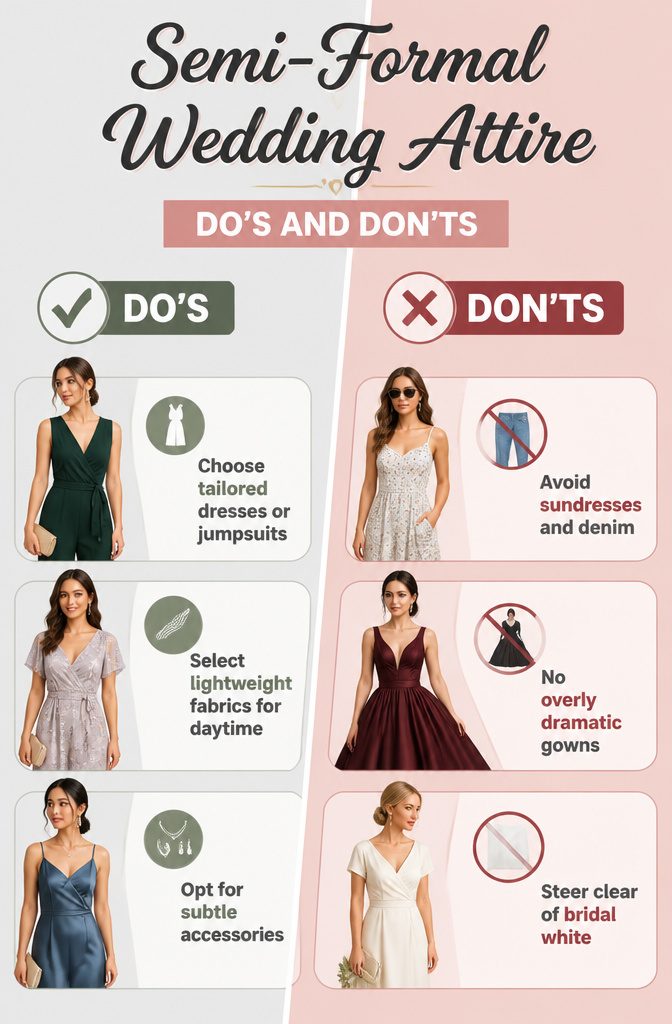
Semi-formal weddings call for a level of polish that sits above your everyday wardrobe but below full black-tie territory. A few categories miss that mark entirely:
- Casual sundresses and denim. Cotton sundresses, jeans, and anything that reads as errands or weekend wear doesn’t carry enough formality for a wedding.
- Overly dramatic gowns. Floor-length ball gowns with trains belong at black-tie events, not semi-formal weddings. You want something elevated, not red-carpet formal.
- White, ivory, or champagne. These shades risk looking like bridal or wedding-party attire.
- Club-style or very revealing dresses. Semi-formal weddings call for something polished, not outfits that look like they belong at a nightclub.
- Athleisure or overly casual sandals. Sneakers, athletic pieces, and flip-flops sit too far on the casual end.
I also skip anything that requires constant adjustment. Weddings mean hours of sitting, walking, dancing, and posing for photos, and tugging at straps or fabric all night ruins the experience.
Season and Venue Adjust the Choice
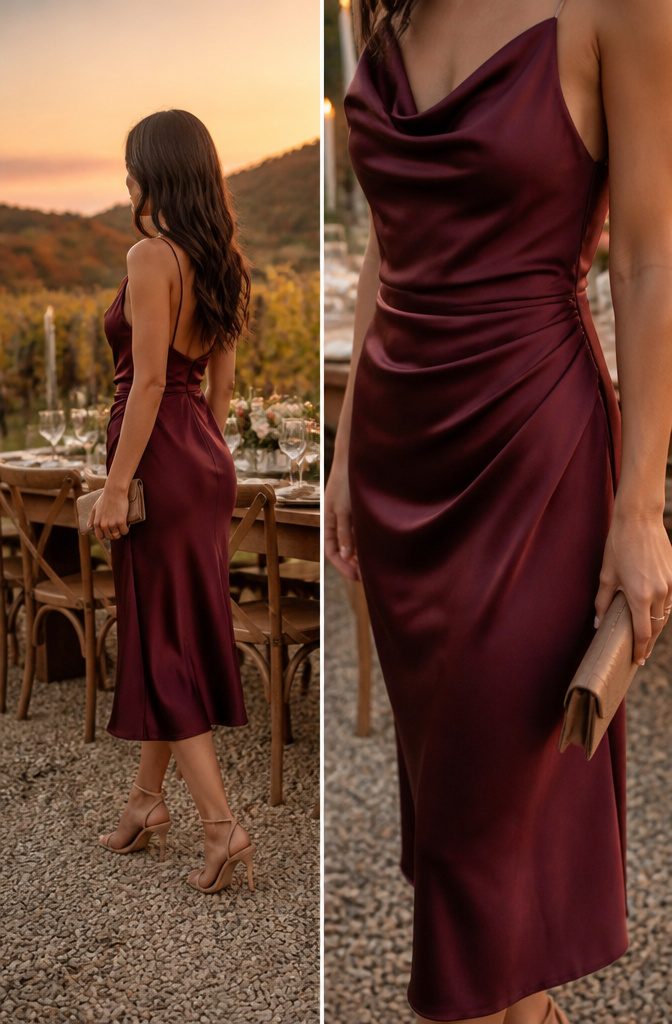
The fabric and color you choose shift with the calendar. Lighter materials like chiffon and soft satin work well for spring and summer weddings, especially when paired with pastels, soft blue, sage, blush, lavender, or light floral prints.
Breathable fabrics keep you comfortable in warm weather, and daytime ceremonies suit softer colors naturally.
Fall and winter weddings call for richer textures and deeper shades. Velvet, satin, and crepe feel right when the temperature drops, and burgundy, plum, deep green, navy, chocolate, and muted jewel tones all look polished in cooler months.
Evening weddings can handle darker colors without feeling too heavy, and black works if you add softer jewelry or a satin finish so the outfit reads as celebratory.
Venue formality adjusts the approach too. A hotel ballroom or country club leans more refined, so structured silhouettes, lace details, and elegant heels fit the setting.
Garden or vineyard weddings suit softer fabrics and lighter colors, while destination or beach ceremonies need flowing midi or maxi dresses in breathable materials that stay polished without overheating.
Frequently Asked Questions
What does semi formal attire mean for a wedding?
Semi formal wedding attire sits between dressy cocktail and full black tie. The outfit should look polished and intentional without the full elegance of a formal evening gown or the relaxed ease of everyday clothing.
You have flexibility with length, color, fabric, and accessories in a way you wouldn’t with formal or black tie dressing.
Can you wear pants to a semi formal wedding?
Yes, a tailored jumpsuit in a polished fabric can work beautifully for a semi formal wedding when the fit and finish are intentional.
The silhouette needs to feel structured rather than casual, which usually means a fitted bodice, clean lines through the waist, and a leg that skims rather than balloons.
Pair it with heeled sandals or pointed-toe pumps, simple jewelry, and a small clutch to keep the whole outfit polished.
What should you not wear to a semi formal wedding?
Skip casual sundresses, denim, overly dramatic gowns with trains, and anything that reads as errands or weekend wear.
Avoid white, ivory, or champagne shades that risk looking like bridal attire, and skip club-style or very revealing dresses. Sneakers, athletic pieces, flip-flops, and anything requiring constant adjustment throughout the night should stay home.